
Tilt and position sensors
We fit limit switches, inclinometers and wireless angle sensors to tipper bodies, booms, buckets, blades and sweeper brushes. In Wialon every body lift or working cycle appears on the map with a time and a place, and work by the mechanism is separated from idling with the engine running. The sensor records and warns, but it does not replace a crane's own safety systems.
Every movement of the mechanism you have decided to record - a body lift, a working cycle of the boom, a lowered brush - is recognised by the system and lands in a report with a place and a time. The detection rule and the results of the control cycle are written into the certificate, so six months later it is clear why the system counts things the way it does.
Not just where the machine is, but what it is doing
A GPS tracker will tell you that a tipper stood for ten minutes by the road near Garadagh. It will not tell you whether it raised its body there. An excavator with the engine running for eight hours - was it digging, or was the operator keeping warm in the cab? A tilt and position sensor answers those questions.
The sensor records the lift of a tipper body, the movement of a boom and bucket, the position of a blade or of a municipal machine's brush. Combined with the position, that shows where the load was tipped, how many cycles the excavator completed and how long the brush was actually working along the cleaning route.
Sensors like these are most often ordered by hauliers carrying aggregates from the quarries of Absheron, by contractors on the reconstruction sites in Karabakh and by municipal services. How much it will save you in particular depends on how much is being lost now - so we work that out after a pilot.

How the work goes, step by step
Mechanism and mounting point
Body, boom or blade: we choose a spot well away from the hydraulic rams and flying soil.
Sensor and cable
A bracket or a welded plate, cable in metal conduit along the chassis, connection to the tracker.
Zero and thresholds
We fix the resting position on level ground and the operator runs several full cycles.
Control cycle
Every lift or working cycle has to appear in the Wialon report with the right time.
Certificate and rules
The certificate records the detection rule and the result of the control cycle. We watch the first shift.
How a day on quarry machinery goes
An illustrative example: two tippers and an excavator at a quarry in the Garadagh district, fitted in a single visit.
- Inspection of the bodies and the excavator boom 3 machines
For the tippers a raised-lowered limit switch is enough; the boom gets an inclinometer.
- Limit switches fitted to the tippers 2-3 h
The sensor goes near the tipping axis, with the cable in metal conduit along the chassis.
- The excavator is standing on sloping ground calibration
We set the zero on level ground by the entrance, otherwise the slope of the ground would be taken for boom work.
- Control cycle: body lifts and boom cycles acceptance
Full and partial body lifts are checked against the report, and the excavator's idling is separated from its work.
- Certificate, tipping geofences, notifications done
A body lift outside the permitted places and movement with the body raised both go to the dispatcher.
Limit switch, inclinometer or wireless sensor
Different tasks call for different sensors, and the most expensive is not always the best.
A limit or inductive switch says raised or lowered. For a tipper body that is usually enough: the system knows every unloading event and where it happened. Cheap, reliable, almost no setup required.
An inclinometer gives the angle in degrees on one or two axes. It is needed when what matters is not only that something moved but how: the angle of a crane boom, the position of a bucket, the tilt of the whole machine on the ground.
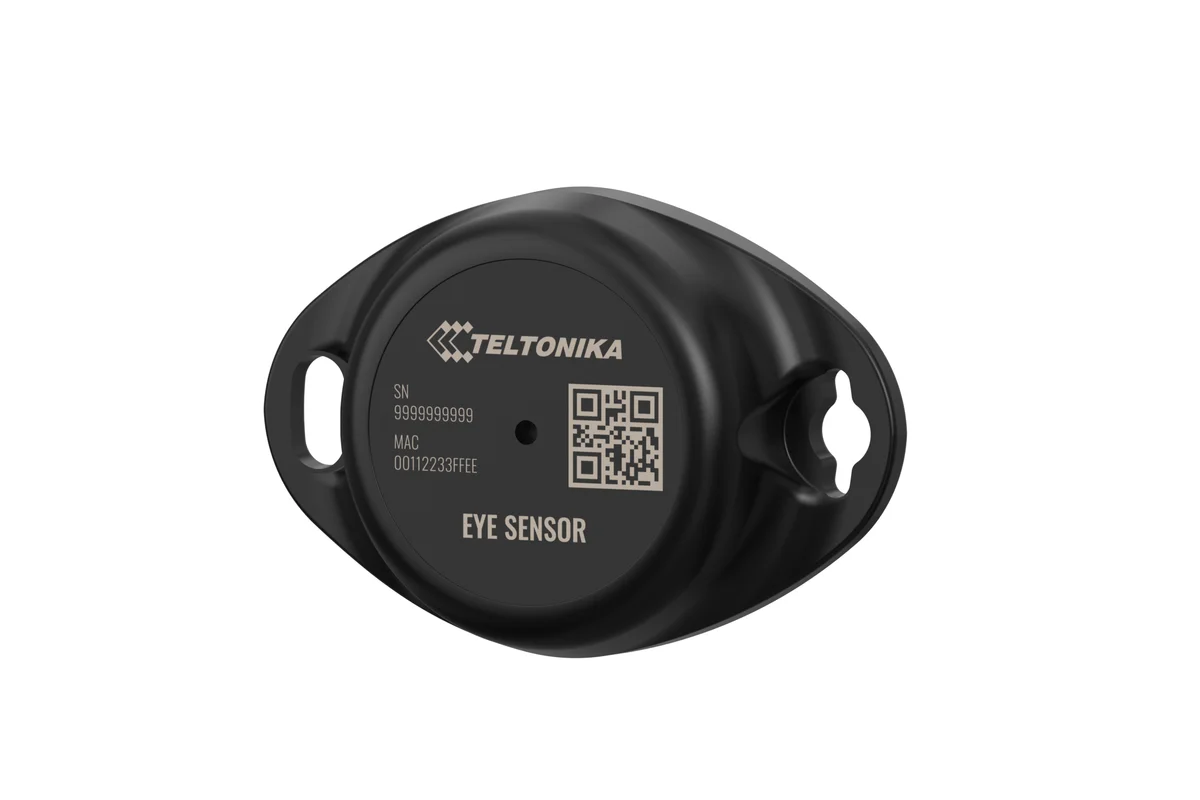
A wireless sensor that measures angle, such as the Teltonika EYE Sensor, fits without a cable. It helps on attachments that are frequently removed and swapped, and on machines where a cable running to a moving joint chafes through quickly.
The tracker itself can do a little too: its built-in accelerometer senses impacts, sharp manoeuvres and tilt of the vehicle body. But it cannot see the position of a tipper body or a boom - that takes a separate sensor on the mechanism itself.
What the service includes
We hand the work over once every movement of the mechanism in the test cycle has appeared in the Wialon report.
Choosing and fitting the sensor
A limit switch, an inclinometer or a wireless sensor, chosen for the particular mechanism. Mounted on the body, boom or blade with protection against impacts and dirt.
Connection to the tracker
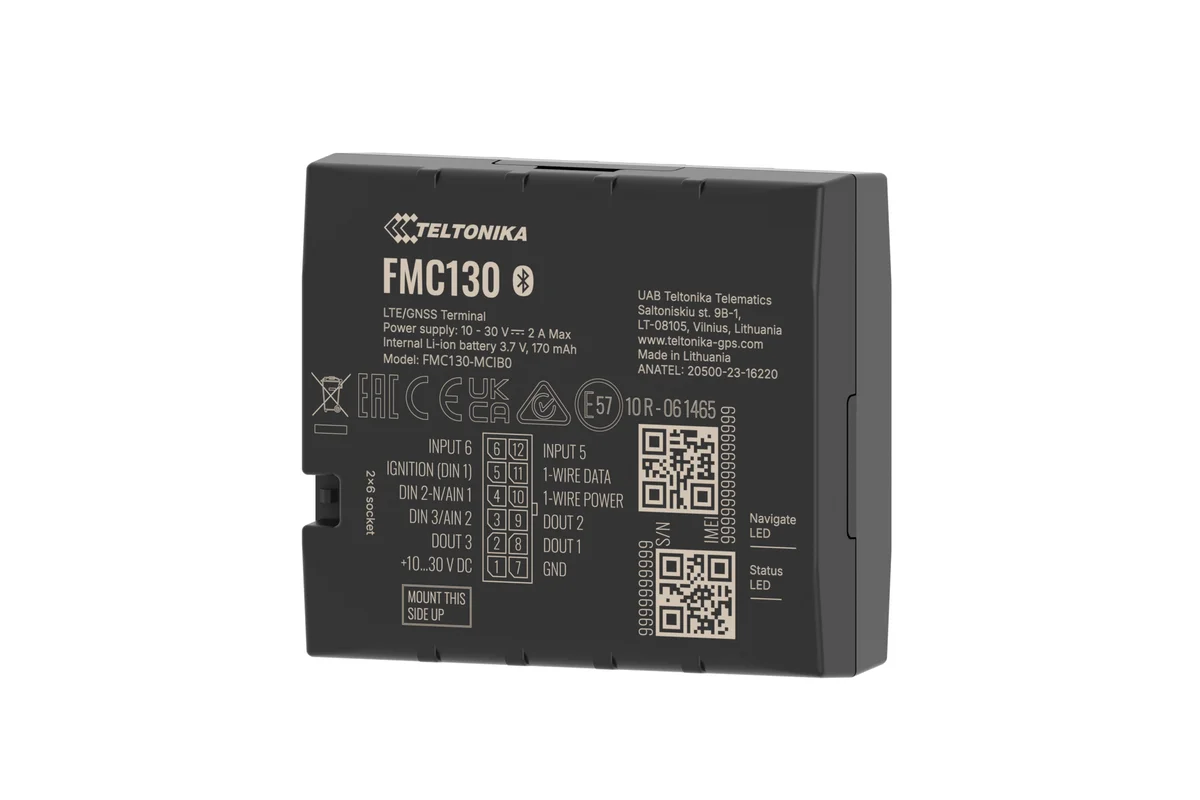
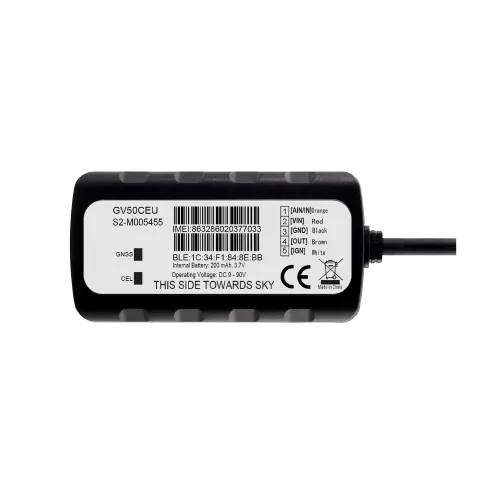
Teltonika FMC130, FMB140 or Queclink GV50: a digital or analogue input, or Bluetooth for wireless sensors.
Angle calibration
We set the zero on level ground and record the working positions of the mechanism, so the system can tell work apart from an accidental rocking motion.
Reports and notifications
Unloadings on the map, the number of working cycles, how long the mechanism was working, notifications about a body lift outside the permitted zones.

How the fitting goes
Inspection. We look at the mechanism and choose the mounting point: on a body, near the tipping axis; on a boom, on a rigid section, well away from the hydraulic rams and from anywhere soil lands.
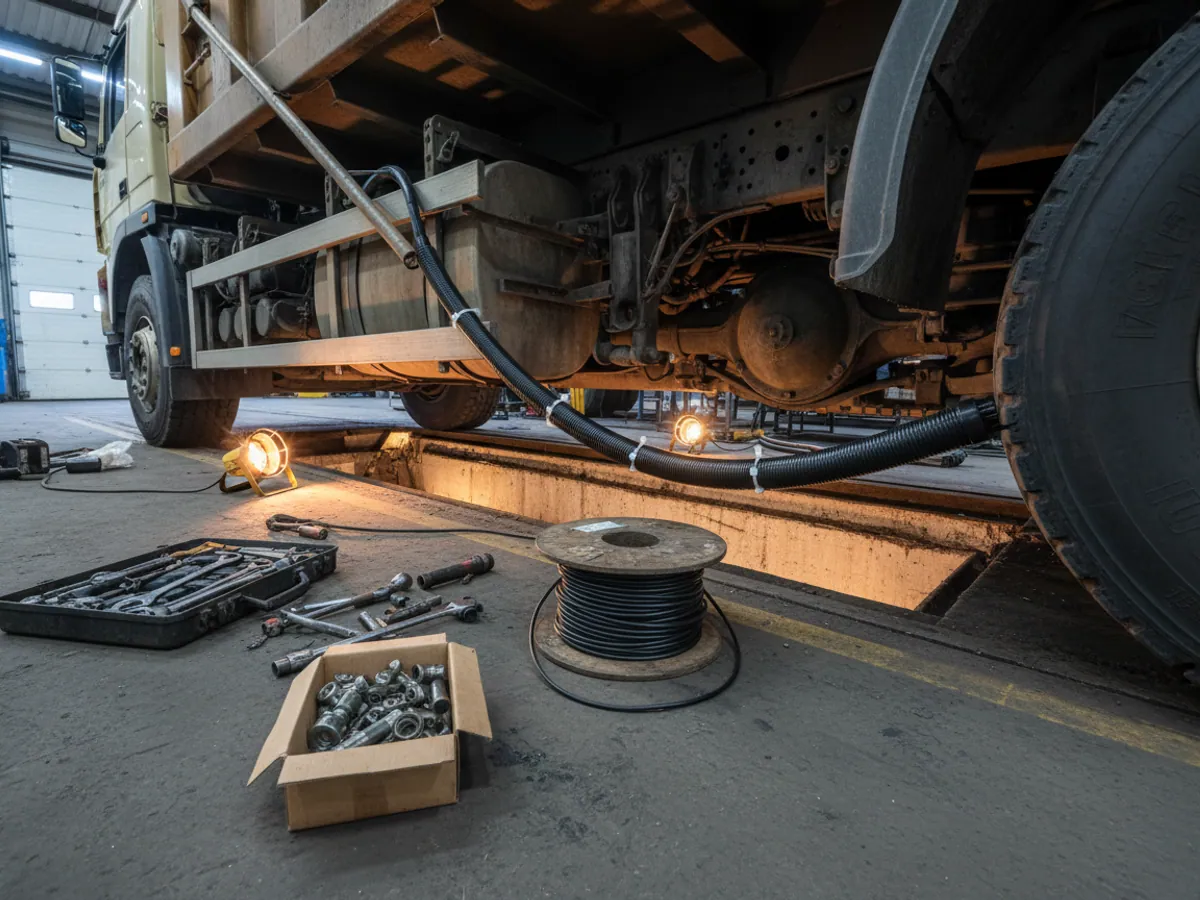
Fitting. The sensor goes on a bracket or a welded plate, and the cable runs in metal conduit along the chassis. A tipper with a limit switch takes 2-3 hours including the tracker; an excavator with an inclinometer on the boom takes up to 4-5 hours.
Calibration. The machine goes on level ground, we fix the resting position, and then the operator runs a full working cycle several times. The thresholds are set from that data.
Checking it in service. We watch the first shift: does the number of unloadings or cycles match what was seen on site.
What we need from you is the machine on level ground, an operator for the duration of the calibration, and a list of the permitted tipping places for the geofences. If the machine is at a remote site, we travel there.
How the system decides that an event took place
The resting position
On level ground we fix the zero: body down, boom in the transport position, brush raised. Every angle after that is measured from it.
The trigger threshold
The angle or state above which the mechanism is treated as working. For a body that is usually an unmistakable lift rather than a rock over a pothole; for a boom, it is leaving the transport position.
Minimum duration
The mechanism has to hold the position for a set time, otherwise the event is not counted. That filters out shaking, vibration and short movements during parking.
Engine and speed conditions
An unloading only counts while the vehicle is stationary, and boom work only with the engine running. A body lift while moving is singled out as a separate dangerous event.
Geofences
An event inside a permitted zone is normal work; outside it, the dispatcher gets a notification. We take the list of zones from you.
The control cycle at handover
Tipper body
The driver raises and lowers the body several times at a known location, including partial lifts. Every full lift has to appear in the report with the right time, and partial ones according to the agreed rule.
Boom and bucket
The operator runs several full working cycles and then sits with the engine running. The cycles are counted and the idle time is separated from the work.
Blade, brush, attachment
A short run with the working attachment lowered and then raised. In the report, work is marked only over the stretch where the attachment was down.
What is not included
Manufacturing complex brackets for non-standard mechanisms, hydraulic repairs, and certified overload and tip-over protection systems. If they are unavoidable, we say so during the inspection.
Uses on different types of plant and heavy equipment
Monitoring buckets and booms




What it looks like on an ordinary working day
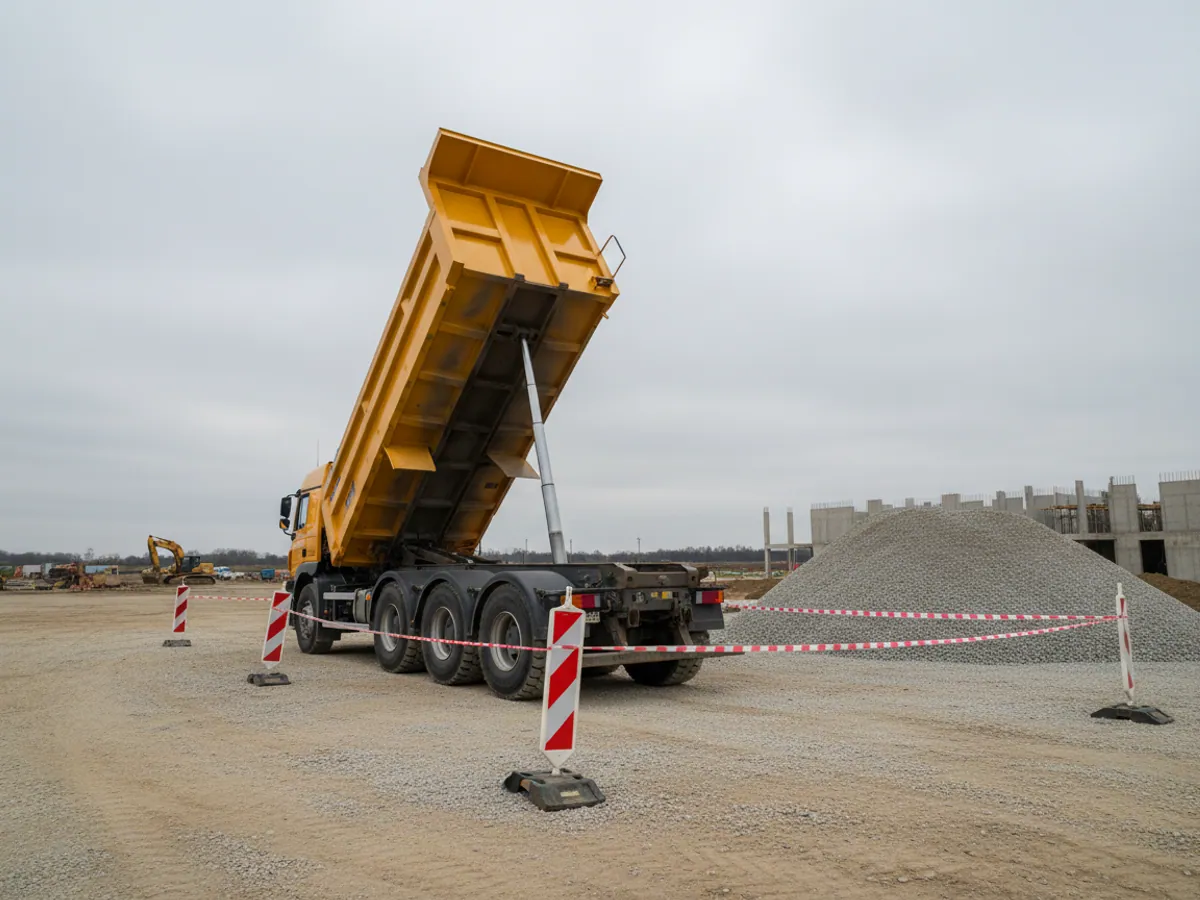
A tipper hauls crushed stone from a quarry in the Garadagh district to a building site in Khirdalan. The waybill says ten runs in a shift, and the site booked in ten loads. It all adds up.
The body sensor report shows eleven lifts. Ten were on the site; the eleventh was in a private yard in a village along the way, at 17:40, lasting five minutes. The track confirms the detour. So the vehicle was either loading more at the quarry than it delivered, or it made an extra run for itself on your fuel.
Without the sensor this story is invisible: a five-minute stop by the road looks like any other. With the sensor it surfaces in the report the next morning, and the conversation with the driver is about facts.
The same logic works for municipal services: if a sweeper drove along a street with its brush raised, that street does not go into the cleaning report, however many kilometres appear in the track.
What to take into account in advance
A sensor on a moving mechanism lives in hard conditions. Here is what we warn about before fitting:
Impacts and dirt
Soil, stones and pressure washing are the main enemies of a sensor on a tipper body. A protective housing and cable in metal conduit are essential, otherwise the sensor will need replacing within a month.
Rocking on uneven ground
In a quarry the machine stands at an angle, and a cheap inclinometer confuses the slope of the ground with work by the mechanism. Proper calibration and a time threshold deal with that.
This is not a safety system
Our sensor warns and records, but it does not replace certified load moment indicators and crane protection devices. Those have requirements of their own.
Repairs to the mechanism
After a hydraulic ram, a body or a boom is replaced, the sensor has to be recalibrated and sometimes moved.
What changes after fitting
You can see where the load went
Every tipper unloading is on the map. Sand or crushed stone tipped on the side stops going unnoticed.
The timesheet matches reality
Hours of work by the mechanism are counted from the sensor, not from notes on paper. Arguments about the timesheet become rarer, because both sides are looking at the same data.
Less running for nothing
Once an excavator idling with its engine running is visible, there is less of it - and less fuel burnt with it.
Proof of work for the client
A report of the runs completed and the unloadings on site is an argument when handing work over to a main contractor or a municipality.
Warranty and pairing with other data
We give a one-year warranty on the fitting and a one-year warranty on the sensors and trackers. You can check the quality of the installation on the very first day: ask the driver to raise the body at a known location and see whether the unloading appeared on the map with the right time. Every six months, at a scheduled service, it is worth inspecting the mounting and the cable - on quarry machinery that matters especially.
A tilt sensor is most useful alongside other sensors. With axle load sensors you can see not only where the load was tipped but how much. Together with engine hours, you can see how much of the engine's running time was actual work by the mechanism. The overall picture for construction machinery is on the page construction machinery monitoring, and industry scenarios are in the sections aggregates and municipal services.

Which sensor for which mechanism
The most expensive option is not always needed: for a tipper body a limit switch is often enough.
| Limit switch | Inclinometer | Wireless sensor | |
|---|---|---|---|
| The fact of a lift or of work | Yes | Yes | Yes |
| The angle in degrees | No, only two positions | Yes, on one or two axes | Yes |
| No cable to the mechanism | No | No | Yes, over Bluetooth |
| Simple to set up | Yes | Thresholds need calibrating | Thresholds need calibrating |
| Where we fit it most often | Tipper body | Boom, bucket, crane | Demountable attachments |
Questions about “Tilt and position sensors”
Request a call
A specialist will call back and match a solution to your fleet and your task.