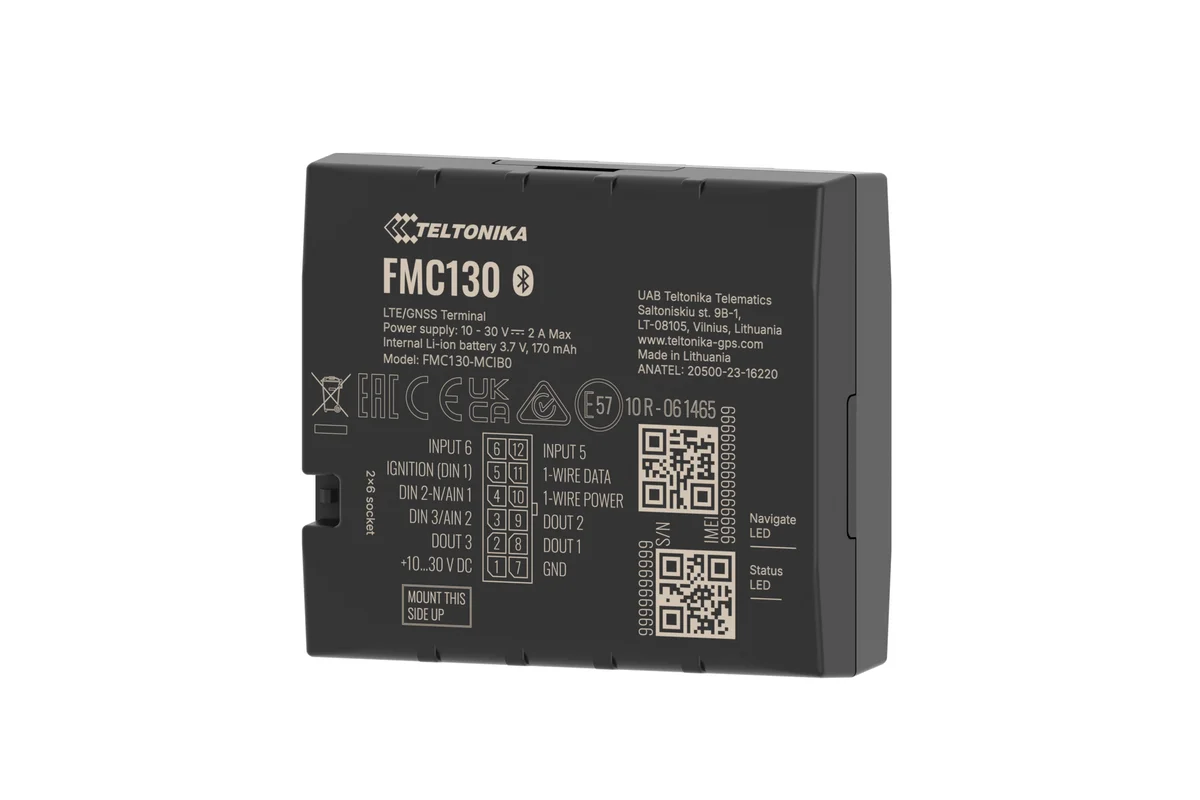
Teltonika FMC130:
an advanced 4G tracker for demanding jobs
A 4G tracker (LTE Cat 1) with flexible inputs for plant, freight haulage (MAN, Isuzu) and refrigerated transport. Fuel, temperature and CAN bus data through an adapter.
4G speed and versatile interfaces
The FMC130 is the big brother of the popular models. Its main advantage is that it works on 4G networks (LTE Cat 1) with a fallback to 2G. Where there is LTE, data goes out faster and more steadily than over a congested 2G network. Where there is no LTE, the tracker drops to 2G, and with no connection at all it collects points in memory and sends them once the network returns.
The device has a negative input, which makes it simpler to connect door sensors, alarm buttons or seatbelt switches. A range of peripherals connects to it, from analogue fuel level sensors to flow meters.
Professional fuel and CAN monitoring
Flow meters, fuel level sensors and a CAN adapter all connect to the FMC130 — which of them you need depends on the vehicle and the job.
-
Pulse inputs
These let you connect fuel flow meters (for quarry plant and diesel generators) so that real engine consumption is counted from the meter's pulses.
-
CAN adapter support
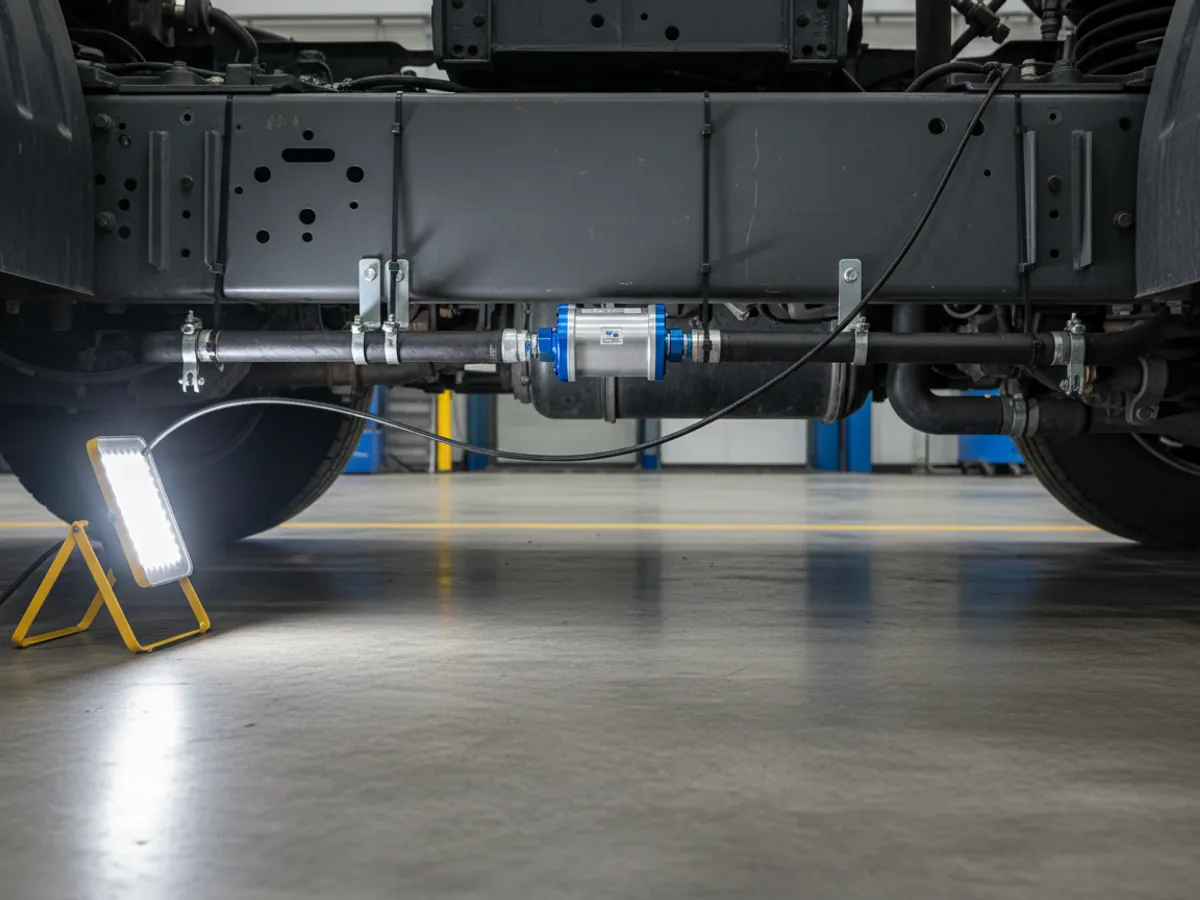
Connected through an adapter (LV-CAN200 / ALL-CAN300), the tracker reads on-board computer data (consumption, engine speed, fuel level) without cutting into the tank. It suits leased Chevrolet Tracker and Onix models and new Sitrak tractor units, provided the model is on the adapter's support list.
When an ordinary tracker is not enough
Basic models such as the FMB920 are fine for tracking; people choose the FMC130 when sensors and equipment have to be wired to the tracker:
Poor coverage
In areas of patchy 2G (mountains, remote regions) the tracker uses whichever network is available, and with no connection at all it holds the track in memory until one appears.
Siphoning through the return line
An ordinary fuel level sensor cannot see fuel taken through the return line. The FMC130's pulse input lets you connect a flow meter that counts what the engine actually burns.
Cargo theft
The negative input makes it easy to connect van door sensors that switch to earth, which simplifies the installation.
Monitoring machinery
Accurate logging of PTO (power take-off) use on tractors, or of a concrete mixer drum turning.
Technical strengths of the FMC130
LTE with a 2G fallback
2G networks are gradually being switched off in many countries. The FMC130 works on LTE Cat 1 and drops to 2G where there is no LTE. For immobilisation commands that means a shorter delay when there is a connection, but not instant execution: the command goes out when the tracker is online.
SOC %
Battery state of charge.
Status
Charging status and remaining range.
For electric vehicles
With its wide supply range (10-30V) and protection against voltage surges, the FMC130 is suitable for fitting to BYD, Zeekr and other electric vehicles; which battery data can be read depends on the model.
Ready for the electric era
Paired with a CAN adapter it reports battery state of charge (SOC), charging connection status and remaining range. For taxi fleets moving to electric vehicles that is a convenient combination, provided the vehicle model is on the adapter's support list.
Why the FMC130
4G reliability
Works with Bakcell, Azercell and Nar SIM cards.
Versatile
Suits most vehicles and machines: from a car to a tractor unit or a piece of plant.
Internal memory
Keeps the route history when the network drops.
Certification
European build quality, IP41 housing.
What the cost is made up of
The final figure depends on the type of vehicle, the set of sensors and the size of the fleet. We will prepare an exact quote for your case free of charge after a short audit — within one working day.
Questions about the FMC130
Request a call
A specialist will call back and match a solution to your fleet and your task.
Case studies using this hardware
Teltonika scenarios where this model is used