
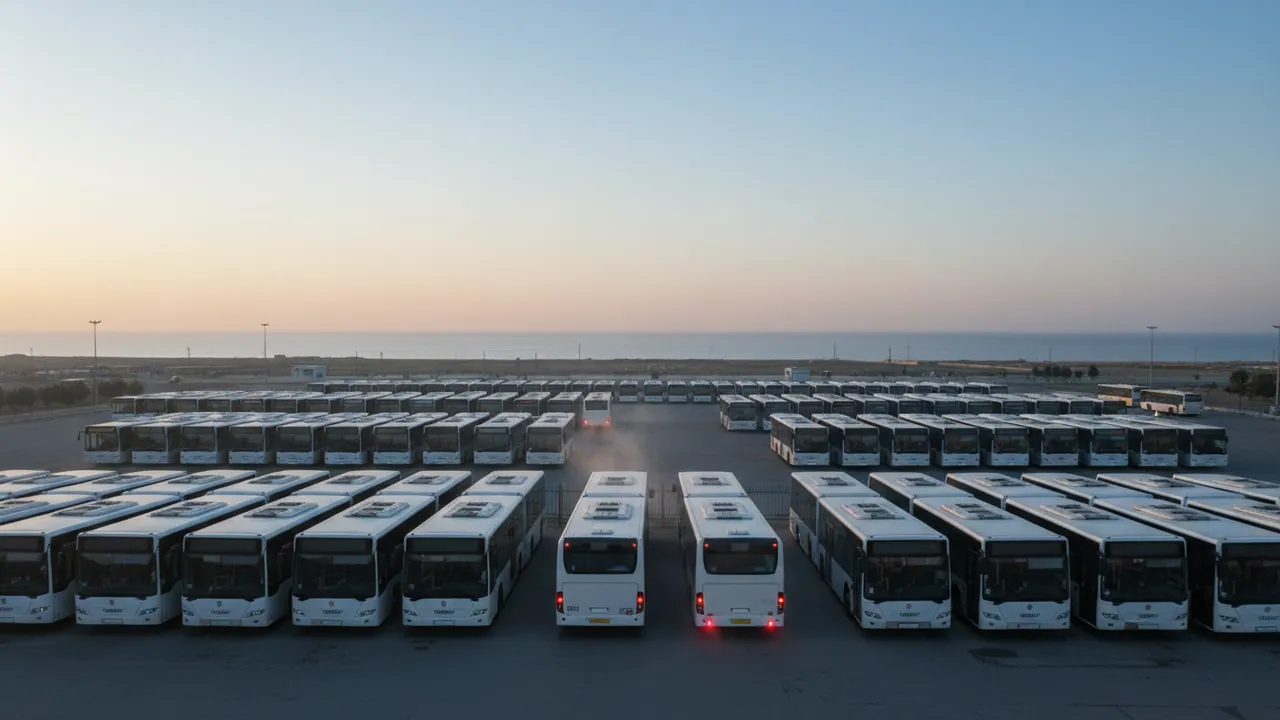
Monitoring system for passenger and municipal transport in Azerbaijan
A public transport monitoring system for urban and suburban bus depots, intercity operators and minibus services. The dispatcher sees every bus on the route, the actual headway and how far behind the timetable it is running, while the manager sees fuel consumption, mileage and takings for each vehicle duty.
We fit trackers, passenger counters and video recorders in buses in Baku, Sumgait, Ganja and district centres, and set up the control room on the Wialon platform. The paper waybill stays for the accounts department, and disputes are settled by the track.
Why public transport needs satellite monitoring
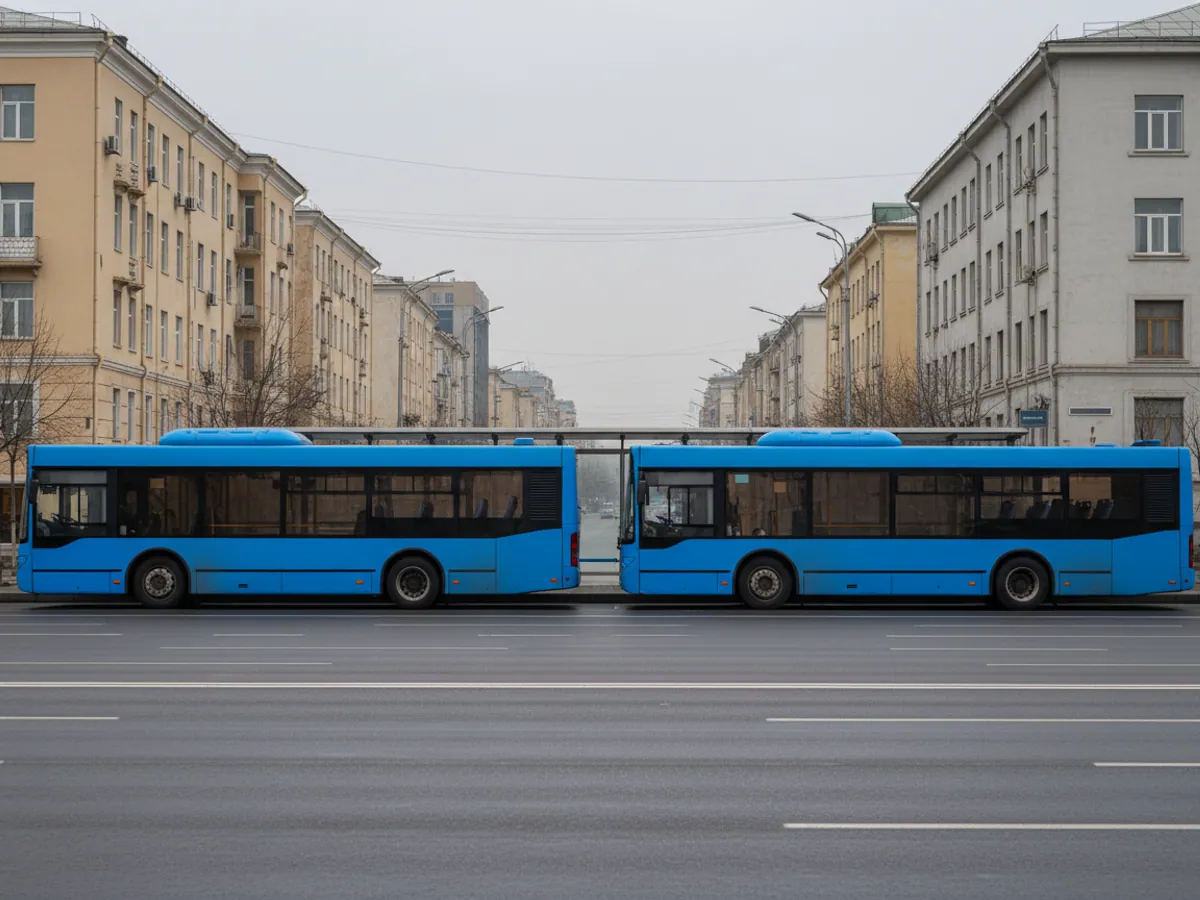
Passengers do not see your waybills. What they see is two buses on the same route arriving one behind the other at the stop by 28 May metro station, and then nothing for 25 minutes. The complaint goes to the operator, and sometimes to AYNA, the land transport agency, as well — and it has to be answered without any facts to hand.
In heavy Baku traffic a bus does not lose its timings through the driver alone. A jam on Heydar Aliyev Avenue, roadworks, an accident on a slip road — every one of these shifts the headway. The difference between the driver sat an extra 15 minutes at the terminus and the bus stood 15 minutes in a jam near Koroglu is visible only on a track with speeds and stops.
GPS monitoring of public transport gives the dispatcher that picture in real time, and gives management reports on every duty: how many trips were made, how many were missed, where the bus left the route and how much diesel or gas it burned doing so. That principle runs through all the solutions for operators that we have collected in the section GPS monitoring for transport companies, but passenger fleets have their own particulars: the timetable, the stops and the people in the saloon.
What a dispatcher's shift looks like when the buses are on the map
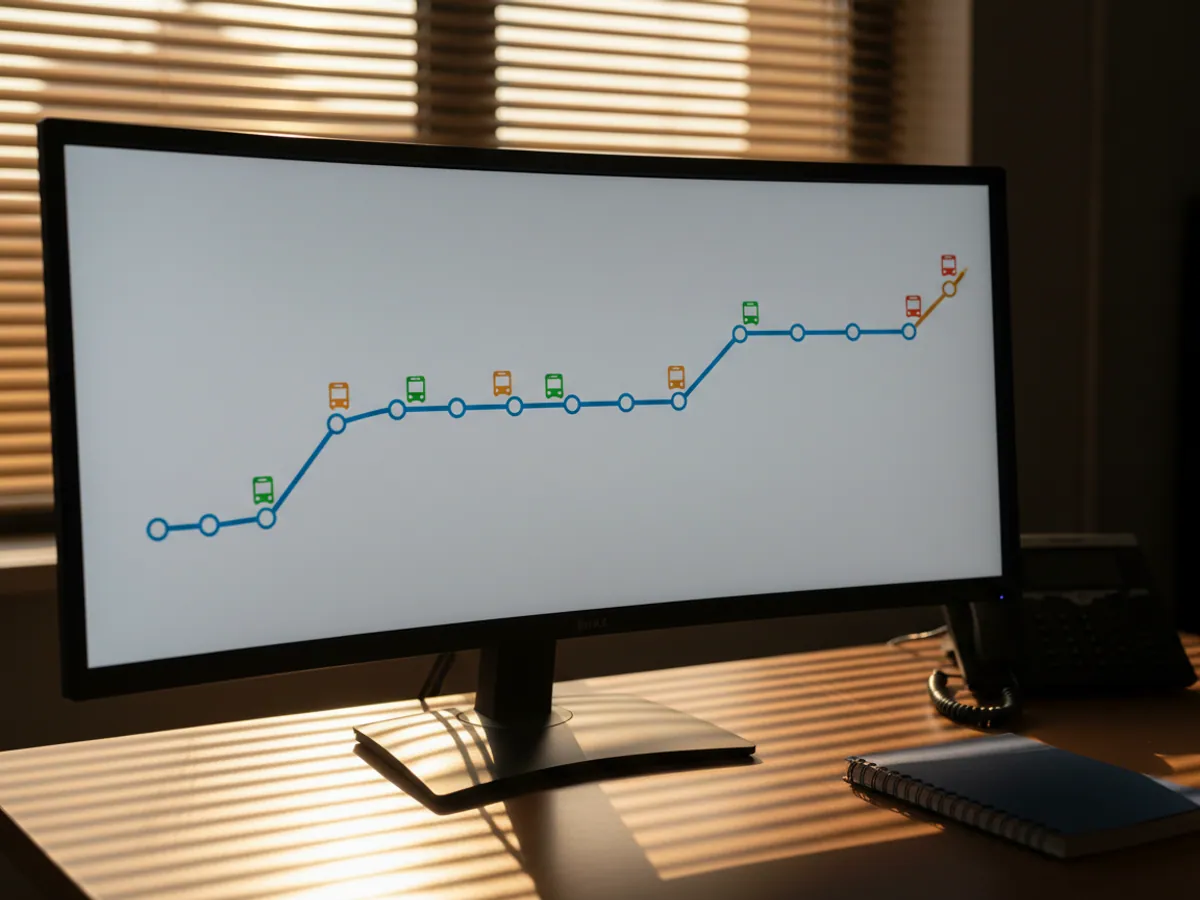
Morning, 7:40. On the dispatcher's screen the route appears as a line with its stops, and on it there are 14 buses. Three are highlighted amber: more than 4 minutes behind the timetable. One is red — it has not moved for 9 minutes between two stops.
The dispatcher opens the red bus: speed zero, engine running, and nearby on the map two buses from other routes are stationary as well. So it is a jam, not an unauthorised stop. He rings the driver of the next duty and asks him to hold at the terminus for 3 minutes, so that the headway does not collapse.
Without monitoring, a decision like that is made on the strength of phone calls from drivers, or not made at all. With monitoring it takes a minute, and afterwards it can be shown in the report: why duty No. 6 ran one trip short.
The Wialon control room interface is configured to suit the depot: a separate tab for each route, colour coding by deviation from the timetable, an audible alert when a bus leaves its route. There is more about what it can do on the passenger transport monitoring page.
Where a passenger fleet loses money and reputation
More often than not we are called in once the problem has already reached the complaints desk or the accounts department. From our experience with bus depots in Baku and the regions, the losses come from four sources.
Headways break down
A driver hangs about at the terminus or, on the contrary, races to get ahead of the bus in front and pick up more passengers. There is a crowd at the stops, and then two empty buses one after the other. The complaints land on the operator, not on the driver.
Unrecorded trips and takings
A trip was run but does not appear in the report, or the other way round. On routes with cash fares the gap between passengers who boarded and passengers who paid can reach a quarter of the takings — without counters there is no way to prove it.
Fuel and gas
Many city buses run on methane and suburban ones on diesel. Diesel siphoned off and extra gas fills on receipts get written down to traffic. CAN or a fuel level sensor shows how much really went on each trip.
Accidents and disputes
Hard braking with a full saloon means injured passengers and an investigation. Without video and speed data it comes down to the driver's word against the passenger's.
What the monitoring system can do for municipal transport
Monitoring of timetable and route adherence
Every stop on the route is entered into the system as a small geofence with a radius of 30-50 metres. The tracker records the bus entering and leaving the zone, and the system compares the times with the planned timetable for that duty.
- Stops served. You can see which stops the bus drove past without stopping and where it stood longer than usual.
- Headways. If the gap between two buses on a route grows to twice the planned figure, the dispatcher gets a notification.
- Leaving the route. A bus turns off the line by more than 300 metres — an entry in the log and an audible signal.
- Pulling out of the depot. The time of leaving the depot and of the first trip is recorded automatically, without an entry in the gatehouse book.
The trip performance report is produced for each duty and route over a shift, a week or a month — in whatever form is needed to reconcile with the authority that commissions the service.
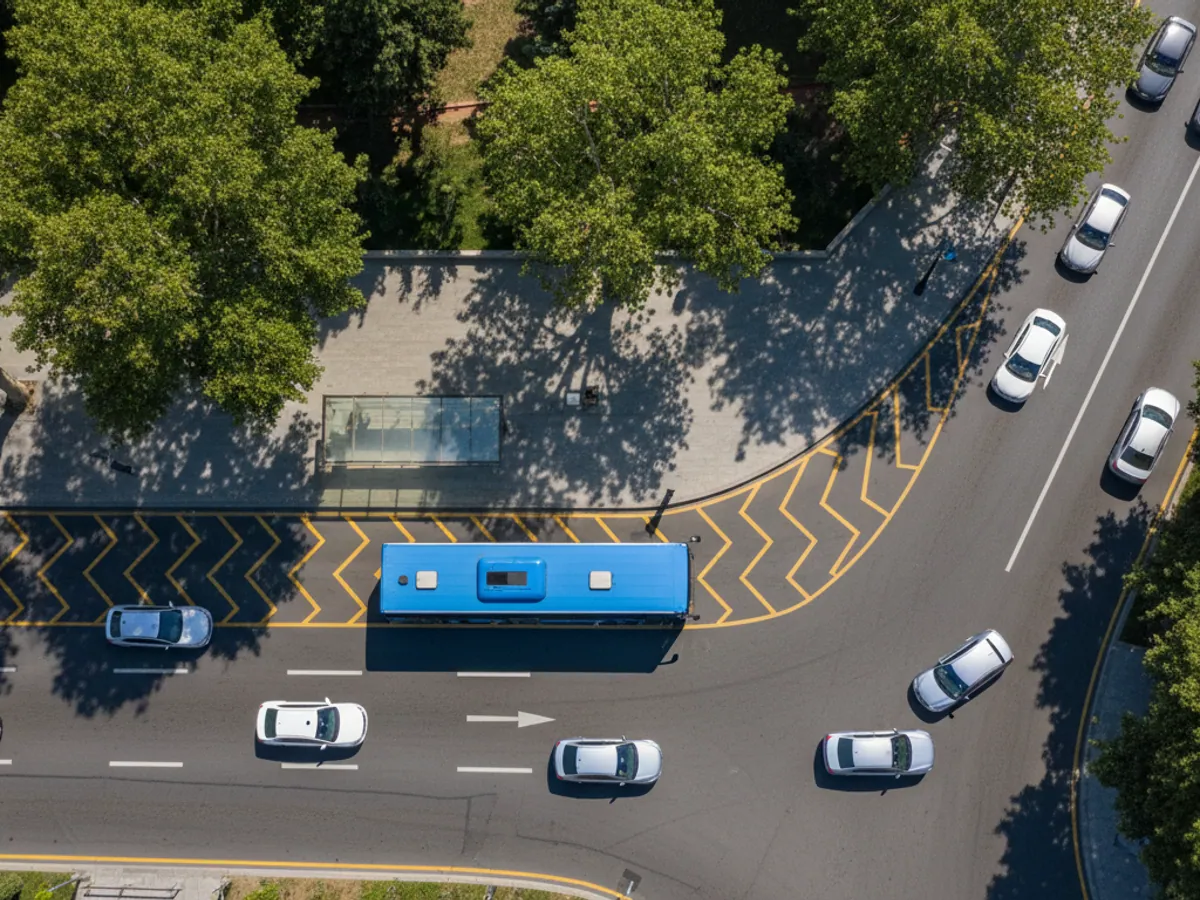
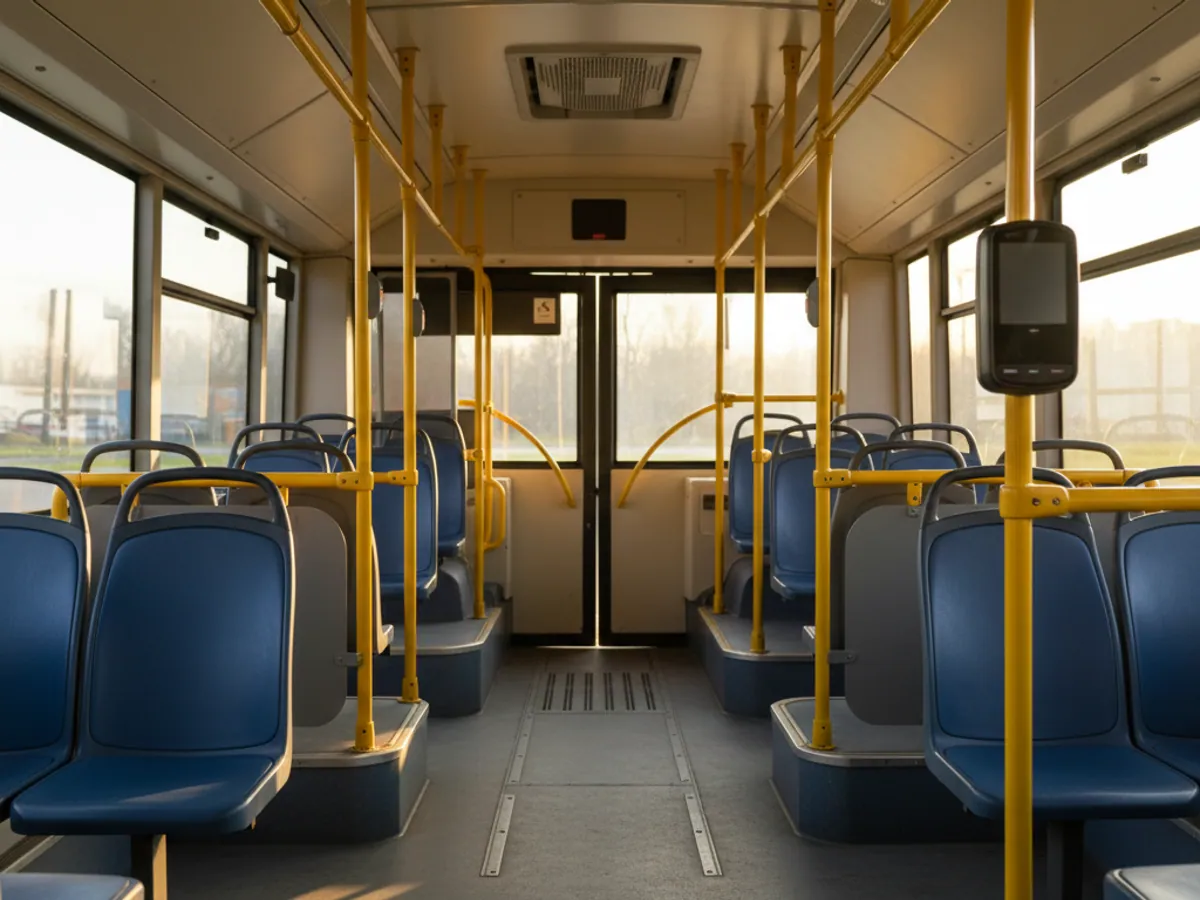
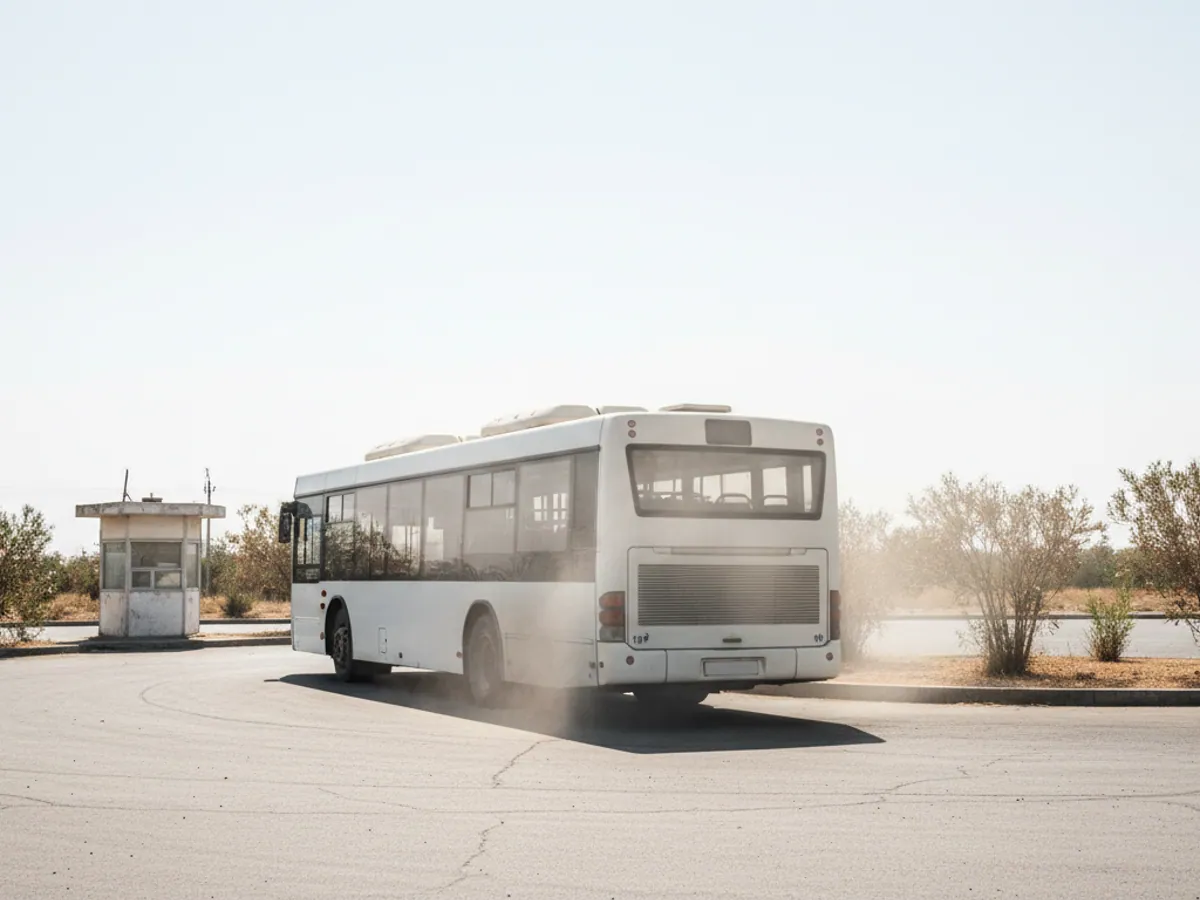
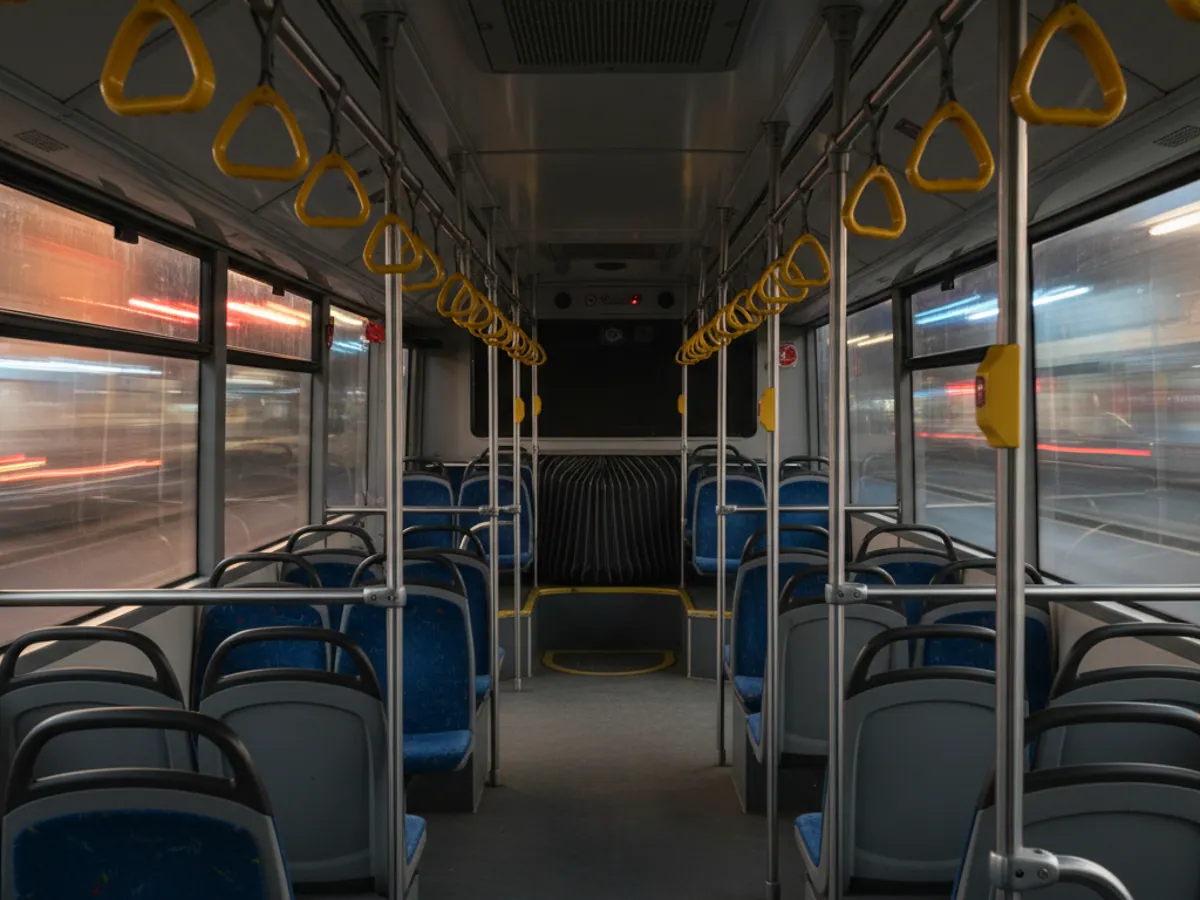
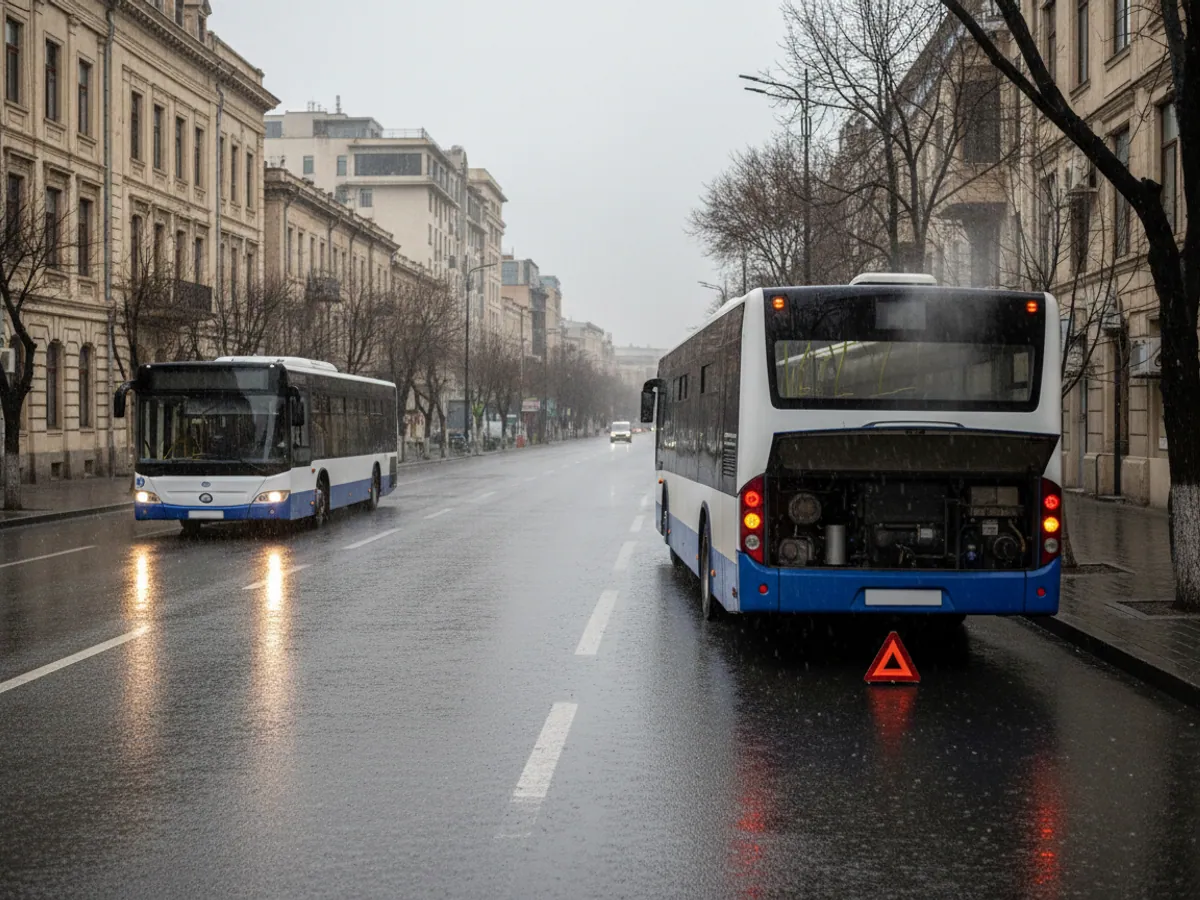
Duty No. 6 broke down at 10:15: plan against actual, the replacement and a passenger complaint
The days that cause most argument in the reports are not the ones that ran to timetable, but the ones where the bus on the route was changed. Let us go through such a day step by step.
- The plan. The timetable is entered in the system: duty No. 6 has 12 trips on the route, with departure times from the termini and timing points.
- Actual up to the breakdown. The tracker on the bus whose registration is assigned to that duty records the stops served. By 10:15 four trips are complete and the fifth is broken off halfway — the bus is standing with its hazard lights on.
- The replacement. A spare bus leaves the depot. The dispatcher reassigns duty No. 6 to it in the system, and the remaining trips are counted against that duty rather than lost. If the reassignment is not made, the system sees a spare bus with no timetable and a duty that fell short — a frequent cause of discrepancies in the first few weeks.
- Passenger numbers. The counters above the doors give boardings and alightings by stop. If there are no counters, card validations remain the source — but those are passengers who paid, not everyone who boarded. In the report we state where the figure came from.
- The complaint. A passenger writes that at 10:40 nothing came to the stop for 30 minutes. The dispatcher opens the route track for that interval and sees the gap caused by the breakdown and by the time it took to send the spare. The reply is built on the track, not on the driver's word.
The plan-against-actual report by duty looks like a table: route, duty, registration (with a note of any replacement), driver, trips planned and trips run, stops missed, deviation from the timetable at the timing points, mileage, boardings where counters are fitted, and a reason column for trips not run, which the dispatcher fills in.
The limits of the system. Monitoring shows where and when the bus was and how many people boarded according to the counter. It does not draw up the timetable on the transport agency's behalf, does not collect fares and does not decide by itself who was at fault for a trip that failed — the reason is confirmed by the dispatcher. Validation data appears in the report only if the payment operator grants access to it.
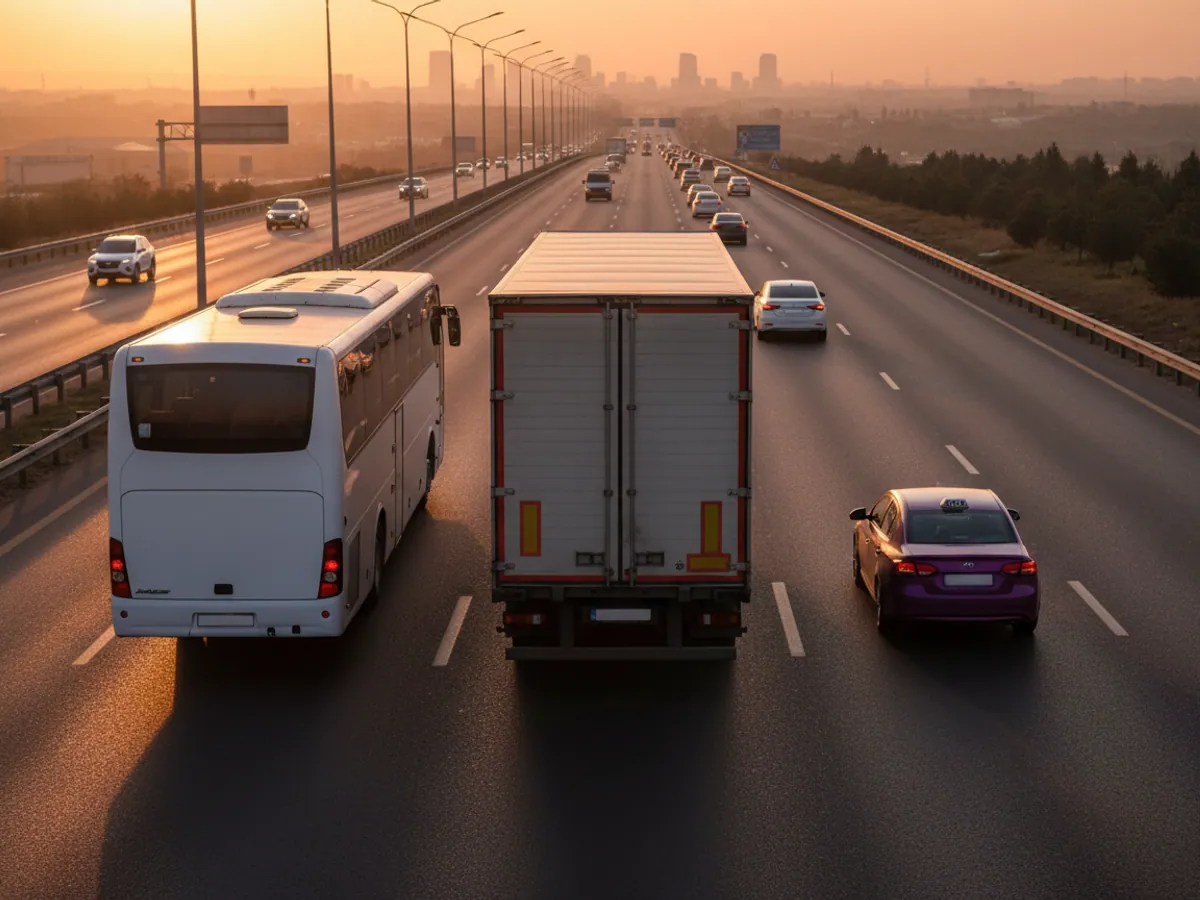
What we fit in a city bus
The set of equipment depends on what the depot needs. The minimum is a tracker. After that you add whatever closes the particular problem.
- A GPS tracker with CAN. A Teltonika FMC130, or an FMC650 for buses with a large number of sensors. Powered from the vehicle supply, with a backup battery and memory for when the connection drops.
- Passenger counters above each door. They connect either to the tracker or to the video recorder.
- Video recorder. 4-8 cameras: road, saloon, doors, driver's position. For buses we fit a multi-channel Howen MDVR with storage on disk and online upload of alert clips.
- Driver identification. A card or key the driver presents before the shift. That ties the duty to a particular person — a Driver ID reader will do the job.
- A panic button at the driver's position: a disturbance in the saloon, a passenger taken ill, an accident — the signal goes straight to the dispatcher with a coordinate.
Fitting one bus with a tracker and CAN takes 1.5-2 hours. With cameras and counters, half a day. We work at night in the depot so that vehicles do not have to be taken off the road.
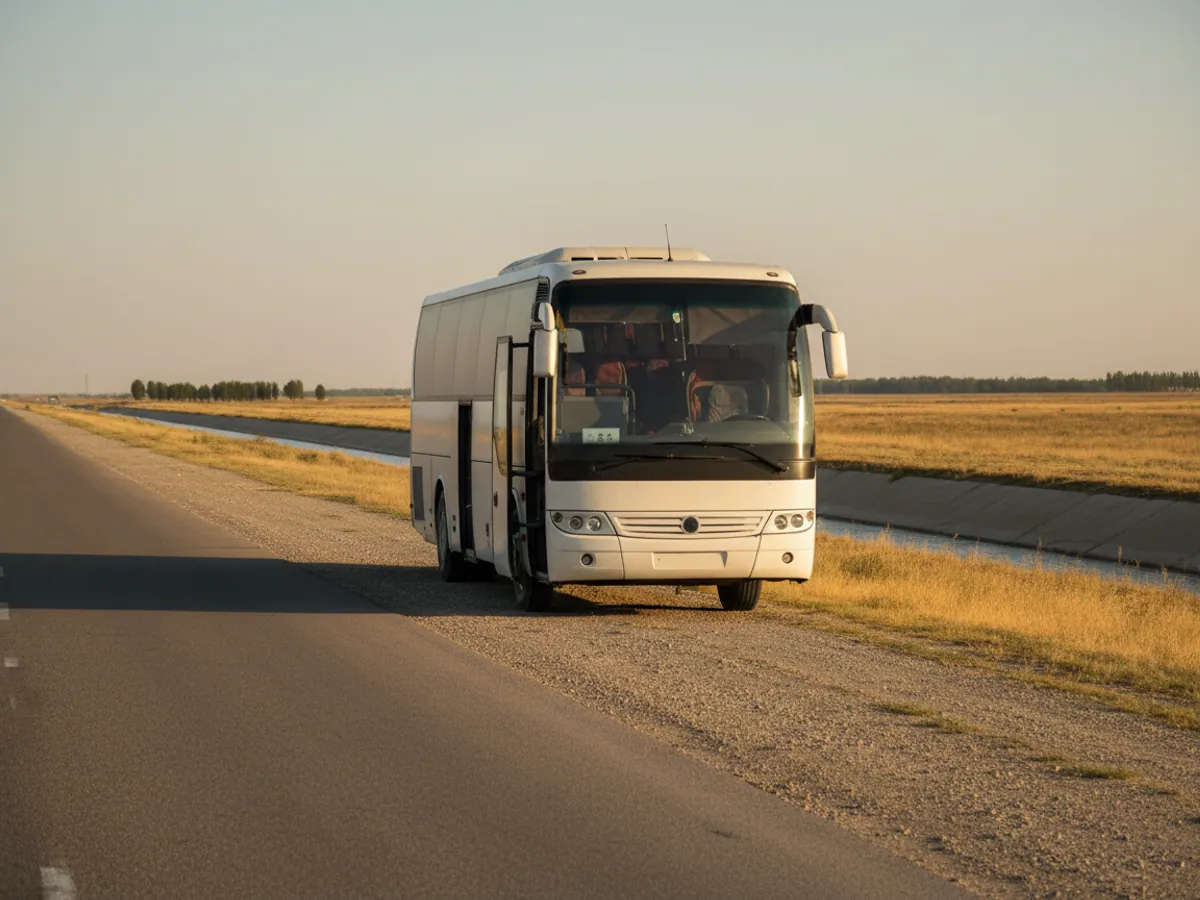
Suburban and intercity routes
Intercity operators have a different set of problems. A Baku — Sheki or Baku — Lankaran coach runs for 4-6 hours, and the common trouble is not lateness but passengers picked up along the way without a ticket, and stops made where the timetable has none.
The track shows every stop longer than a minute, with a coordinate. If the coach pulled up three times on the M-3 near Salyan where the timetable has no stops, that is a question for the driver. A passenger counter will add how many people boarded while it stood there.
On mountain sections — the road to Guba and Gusar, say, or the hairpins up to Shamakhi — Azercell and Bakcell coverage drops out for a few kilometres. The tracker writes points to memory and sends them as soon as the network returns. The track in the report will be complete; the bus simply jumps on the live map a couple of minutes later.
For passengers you can open a public link showing where the bus is — it goes on the operator's website or is sent to the bus station dispatchers.
How deployment in a bus depot proceeds
1. Survey of the depot
We look at the bus models, whether they have a CAN bus, the fuel type, and how waybills and timetables are kept at present. That takes 1-2 days, after which it is clear what equipment each vehicle needs.
2. A pilot on one route
We fit out 5-10 buses on a single route and spend two weeks reconciling the system's data with what the dispatchers see. This is also where we tune the stop radii and the deviation thresholds. From the depot we need: the duty timetable for the route, a list of buses with registrations, the waybills for the pilot days, and a dispatcher responsible for the reconciliation. Acceptance criteria are agreed in advance — for instance, that trips in the system match the waybills and every discrepancy is explained by a replacement, a diversion or a loss of signal; and that the counters have been checked against a manual count on several trips.
3. Loading routes and timetables
We enter all the routes with their stops and the duty timetables. If the timetables are kept in Excel we transfer them from there; if they are in another system, we agree on an import.
4. Fitting out the whole fleet
We fit the equipment at night, in teams of 2-3. A depot of 100 buses is usually fitted out in 3-4 weeks with no vehicles taken off the road.
5. Training and procedures
We teach the dispatchers to work with the map and the notifications, the engineers with the fuel reports, and management with the summary reports. We help write the procedure: who reacts to which event, and within how many minutes.
Mistakes we see when fitting out passenger fleets
Stops entered by eye
If the geofence for a stop is drawn 100 metres from the actual shelter, the system will treat it as missed. Stop coordinates need to be taken on site or checked against the track over the first few days.
Too many notifications
A dispatcher who gets 300 messages a shift stops reading them. We start with three or four important events and add the rest once people have got used to it.
Drivers were not told
The tracker went in quietly, and a week later the penalties started. The result is sabotage and pulled-out wiring. It is better to explain in advance what is being monitored and how it will affect the bonus.
Counters without a check
In the first few weeks the passenger counter data needs to be checked against a manual count on several trips. Without that, any conclusion about missing takings is easy to challenge.
What depots and transport authorities get out of it
Lower fuel costs
In our deployments on passenger fleets consumption usually falls by 15–25% through control of drains, idling and driving style.
Even headways
The dispatcher manages the headway in real time instead of learning about a breakdown from complaints. Fewer queues at stops and fewer empty buses in convoy.
Facts for the report
Trips run, mileage and passenger numbers for each duty — as a report you can hand to the transport authority or use to calculate subsidies.
Frequently asked questions (FAQ)
What is used in this sector
What we do end to end
Wialon modules for this sector
How it is used in this industry
Case studies from “Fleets & Transportation Companies”
Thinking of rolling out GPS monitoring in “Public transport”?
Send us an enquiry and we will price it up for your fleet and pick the hardware for this sector: fleets & transportation companies.
- 1 We pin down the task
A specialist calls back and asks about the vehicles, how many there are and what you need to keep an eye on.
- 2 We put a solution together
We propose the hardware and the features, and set out the one-off and the monthly cost separately.
- 3 We agree the fitting
At your yard or at ours, on a schedule that keeps the vehicles working.
Request a call
A specialist will call back and match a solution to your fleet and your task.