
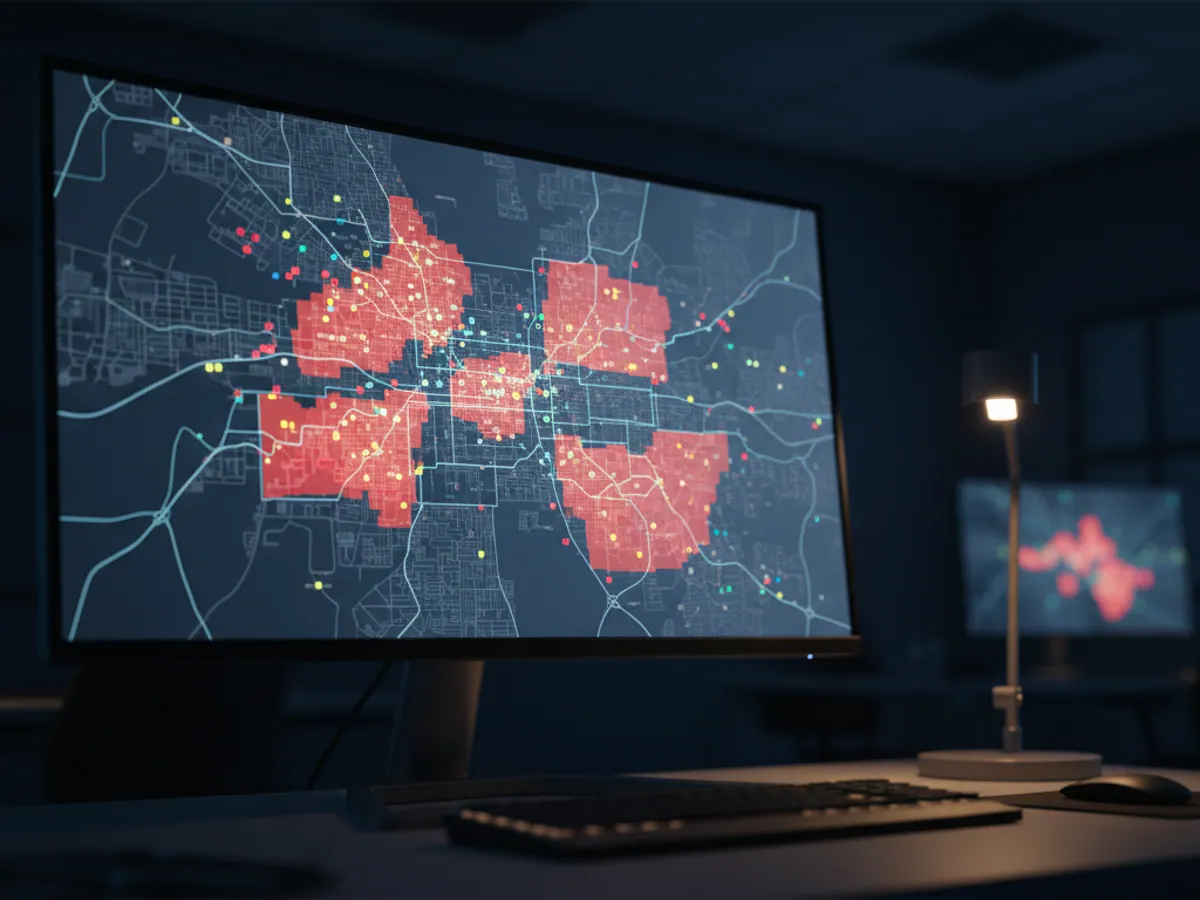
Monitoring for ambulance, emergency service and police fleets
GPS monitoring for fleets of ambulances, fire and rescue appliances and patrol cars — with the emphasis on vehicle readiness, fuel, emergency signals and crew safety.
For city and district units alike: from the stations of Baku and Sumgait to the fire stations of Sheki, Guba and Lankaran, where a call can be 40 km of mountain road away.
A vehicle that has to be able to leave at any moment
Monitoring for the ambulance service, the emergency services and the police is usually discussed as a dispatcher's tool: who is nearest to the call. That matters, and there is more about it on the emergency service dispatch management page. But an emergency fleet has a second side to it that comes up less often.
Every vehicle has to be ready to leave right now. With a full tank, in working order, with the emergency signals tested and a driver who has had his rest. An intensive care ambulance that went in for repair in the morning without the dispatcher hearing of it is as much of a problem as a jam on the avenue.
We fit trackers, connect the emergency signals and sensors, and configure Wialon so that the garage manager, the senior doctor on shift and the station commander can see the state of the fleet without making phone calls. The other municipal and city topics are in the section GPS monitoring for municipal services.
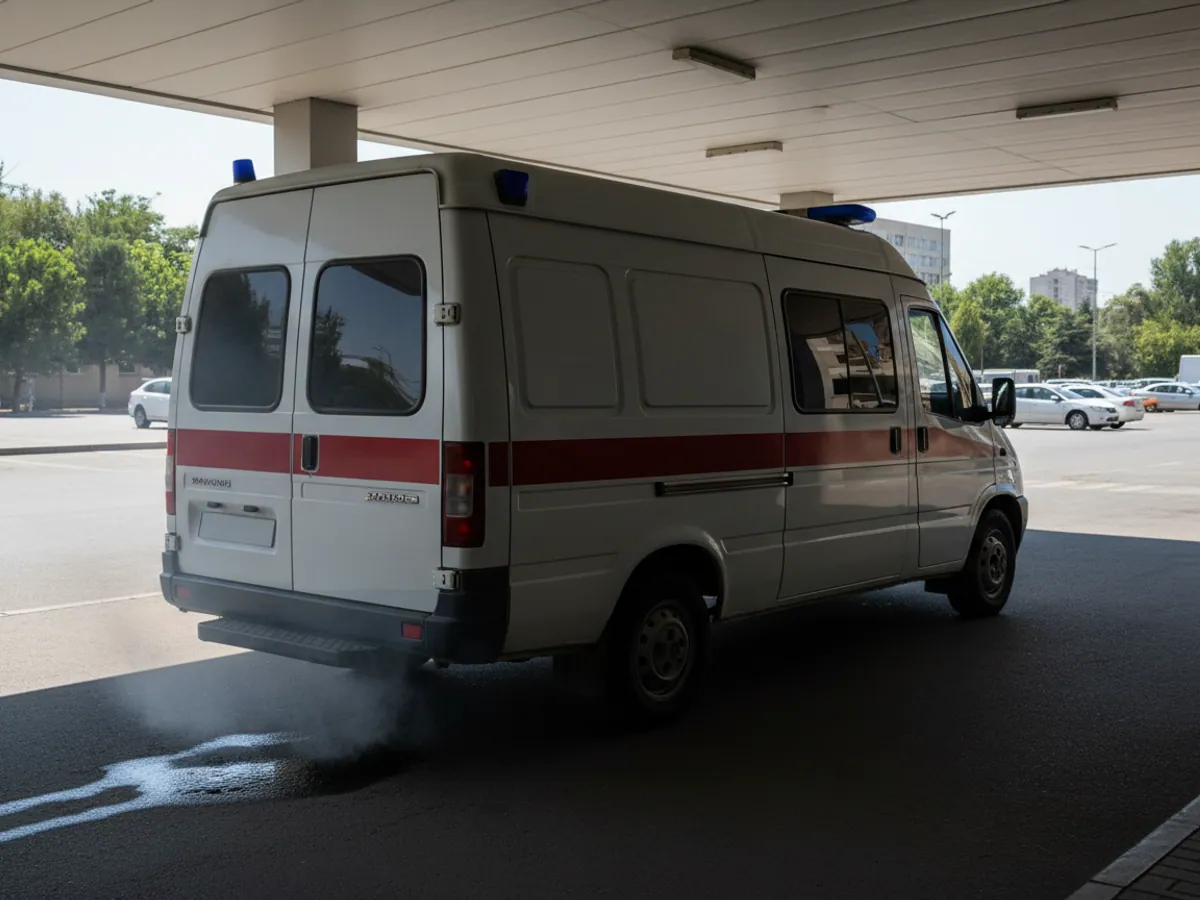
Three hours with the engine running — is that normal?
The first question a manager asks after a month of monitoring an ambulance fleet is why the vehicles spend so long standing with the engine on.
The answer is not clear cut. In summer at +40 °C you cannot keep a patient and medicines in the back of an ambulance without air conditioning. In winter the districts need heating. Some of the equipment runs off the vehicle supply. So idling in an emergency fleet is not always a breach of the rules.
But the report shows the difference. Idling outside a hospital's A&E department while the crew hands over a patient is work. Two hours outside a block of flats in Mardakan where the driver lives, on a night with no calls, is not. Geofences for stations, hospitals and call locations let the two be separated automatically.
It is on that distinction that an honest fuel allowance for an emergency fleet is built — not from the vehicle handbook, but from the work actually done.
Problems in managing emergency vehicles
These problems are rarely visible from the control room, yet they are exactly why a vehicle turns out to be in the wrong place or in the wrong condition:
The vehicle is not ready
An empty tank, a missed service, a beacon that does not work. The problem comes to light at the moment of the call, when it is already too late.
Journeys off duty
A service vehicle is used for private errands during the hours with no calls. That means wear, fuel, and the risk that the vehicle will not be there when it is needed.
Accidents while running on blue lights
Going through a red light without the emergency signals on, or speeding where there was no need. Without data, the investigation turns into an argument.
A crew out of contact
A fire crew in the forest near Gabala or a patrol on a mountain road loses contact. Command does not know where the men are or whether all is well.
A fire appliance turn-out: what you see besides a dot on the map
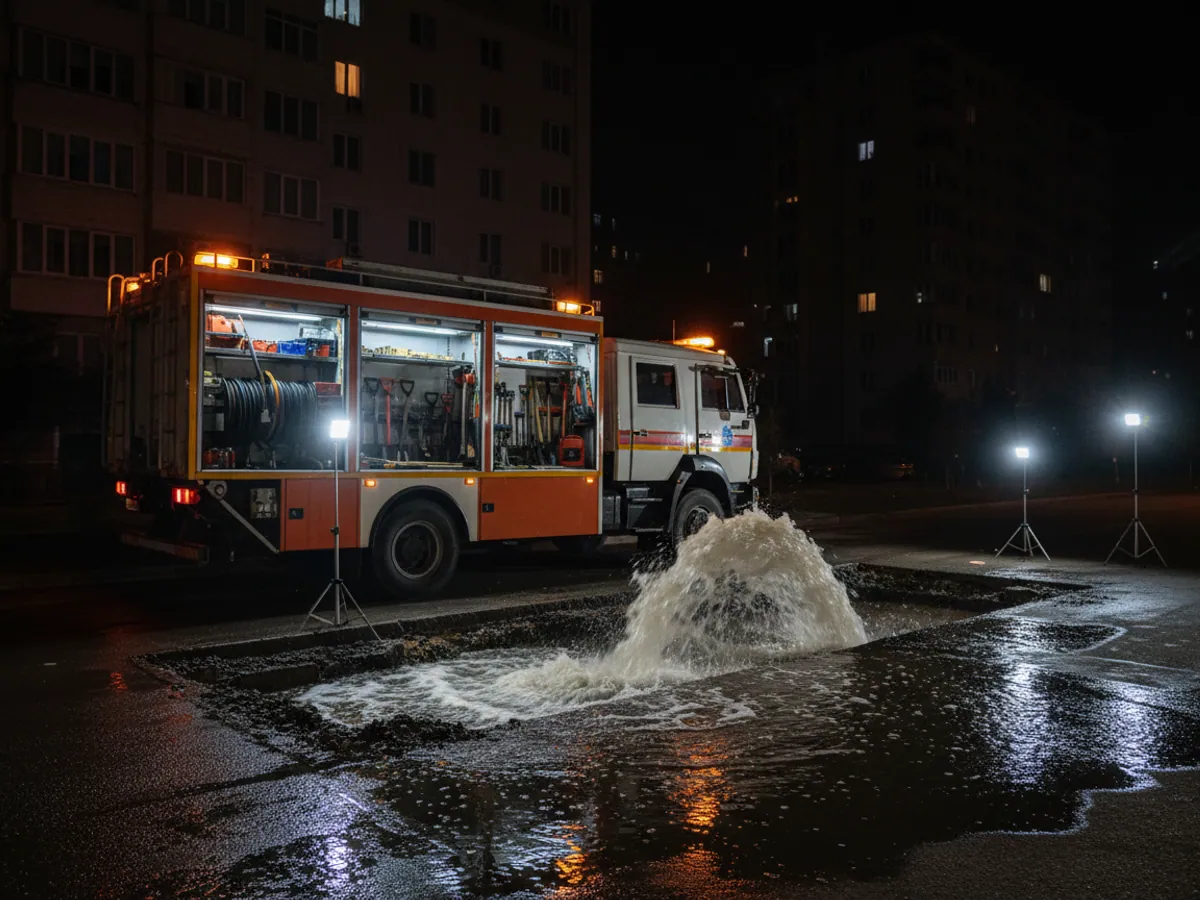
For fire and rescue appliances a track alone is not enough. What matters is what the appliance did at the scene: whether it delivered water, whether the ladder worked, whether the generator was running. So on vehicles like these we connect sensors to the working equipment, not just GPS.
How a turn-out looks in the report:
- the station doors — the time of leaving and the emergency signals coming on;
- the road — route, speed, the stretches run with the siren and without;
- the incident — time of arrival by the geofence of the address, or by the stop beside it;
- work at the scene — the PTO and the pump engaging, the ladder or boom being raised, where sensors are fitted; and with a level sensor in the tank, how much water was used;
- the return — time of arrival back at the station and fuel remaining.
The turn-out export usually carries these columns: date and turn-out number from the station log, appliance, driver, times of leaving, arriving and returning, running time of the pump or other unit, mileage and fuel.
What such a report will not tell you is how the fire was fought and what decisions the officer in charge took at the scene. Those stay in the watch log and in the service's own paperwork. Monitoring helps reconcile times and appliance operation against them.
Functions for the 101, 102 and 103 services
The state of the fleet on one screen
For each vehicle you see: fuel level, supply voltage, mileage and engine hours until the next service, engine fault codes from the CAN bus. If a vehicle has less than a quarter of a tank or an engine warning light is on, the garage manager gets a notification.
Scheduled servicing is counted by actual use rather than by the calendar. A vehicle that worked twice as hard in a month goes in for service sooner. There is more on the service planning page.
Districts and mountains: where monitoring is harder
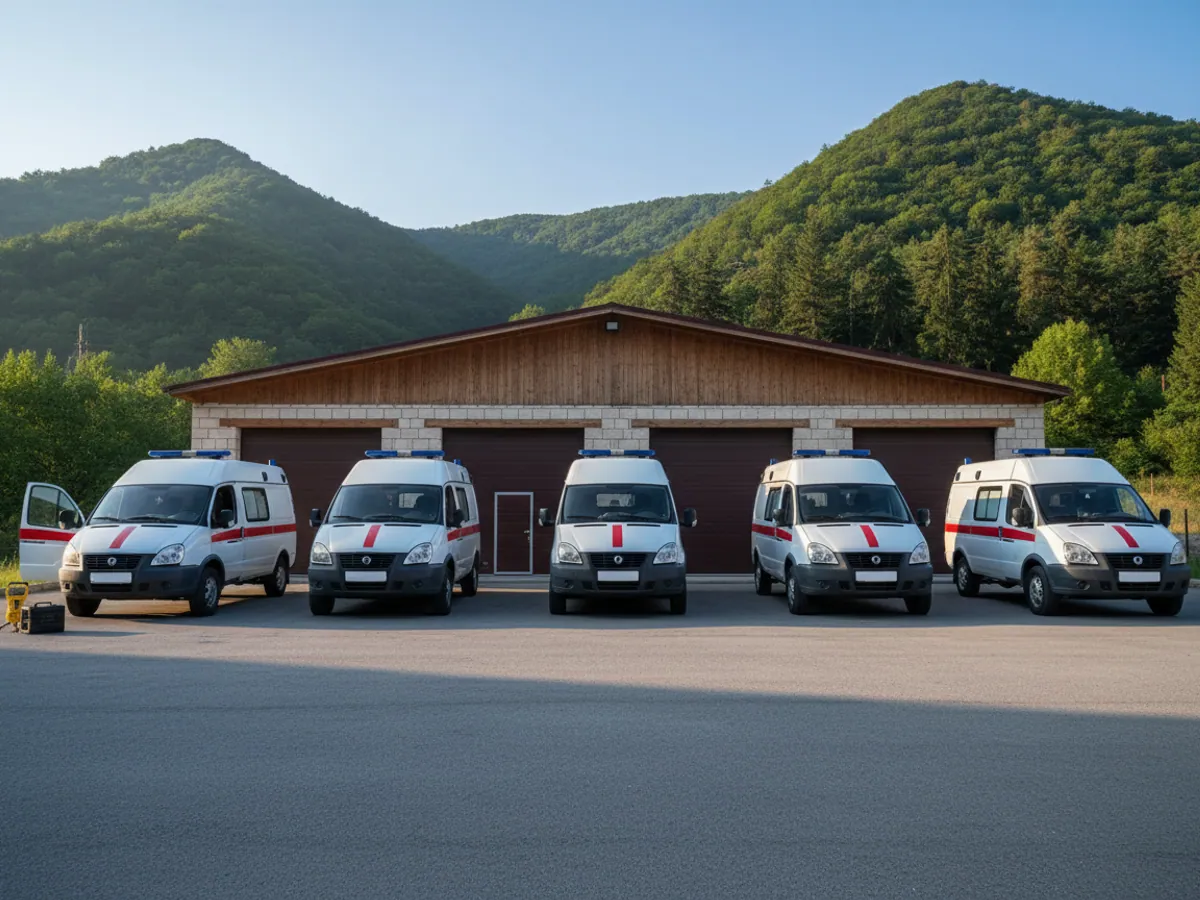
In Baku a vehicle is almost always in contact. In the districts things are different. The fire station in Guba serves villages in the mountains an hour away up the hairpins. The ambulance service in Lankaran goes out to villages near the Iranian border, and in Sheki towards Gakh and Zagatala.
For conditions like these there are three rules. A tracker with plenty of memory: when the network drops out the data accumulates and goes off at the first opportunity, so the track is not broken. A multi-operator SIM card: it switches between Azercell, Bakcell and Nar if one network is out of reach. A backup battery in the tracker: even if the vehicle supply is lost after an accident, the vehicle's last position will be known.
To be honest about the limits: where there is no network at all, no data will arrive in real time. The dispatcher will see the vehicle once it reaches coverage. For crews working on foot in such places, a personal tracker with satellite positioning and an SOS button is the better answer.
What a station should prepare before fitting
Emergency vehicles cannot be taken off duty for long, so the preparation is best done in advance. Fitting can then be done in short windows, and the first reports make sense from week one.
- A vehicle register. Registration, make, year, type of specialist equipment and which units need monitoring: pump, ladder, generator, the refrigerator holding drugs.
- Fitting windows. A schedule showing when a vehicle can be released for 1-3 hours, and someone from the garage who knows its electrics.
- Geofences. The addresses of stations, hospitals, filling stations and parking places — so that working idling can be told from idling that is not.
- Responsible people. Who watches vehicle readiness and servicing, who reviews emergency signals and driving style, who receives the crew's panic button.
- Reconciliation. The turn-out log and the fuel records for the first month.
A pilot at one station counts as accepted against criteria agreed in advance. For example: turn-outs in the system match the log, the operation of the units is visible for every turn-out, and notifications about low fuel and engine faults reach the garage manager and have been dealt with.
What we fit to emergency vehicles
A tracker with CAN and backup power
A Teltonika FMC130 or equivalent. Speed, mileage, fuel, engine fault codes, and operation with the battery disconnected.
Emergency signal inputs
Connection to the beacon and siren circuits without interfering with the standard wiring. Separately, an input for the rear door of an ambulance.
Driver identification
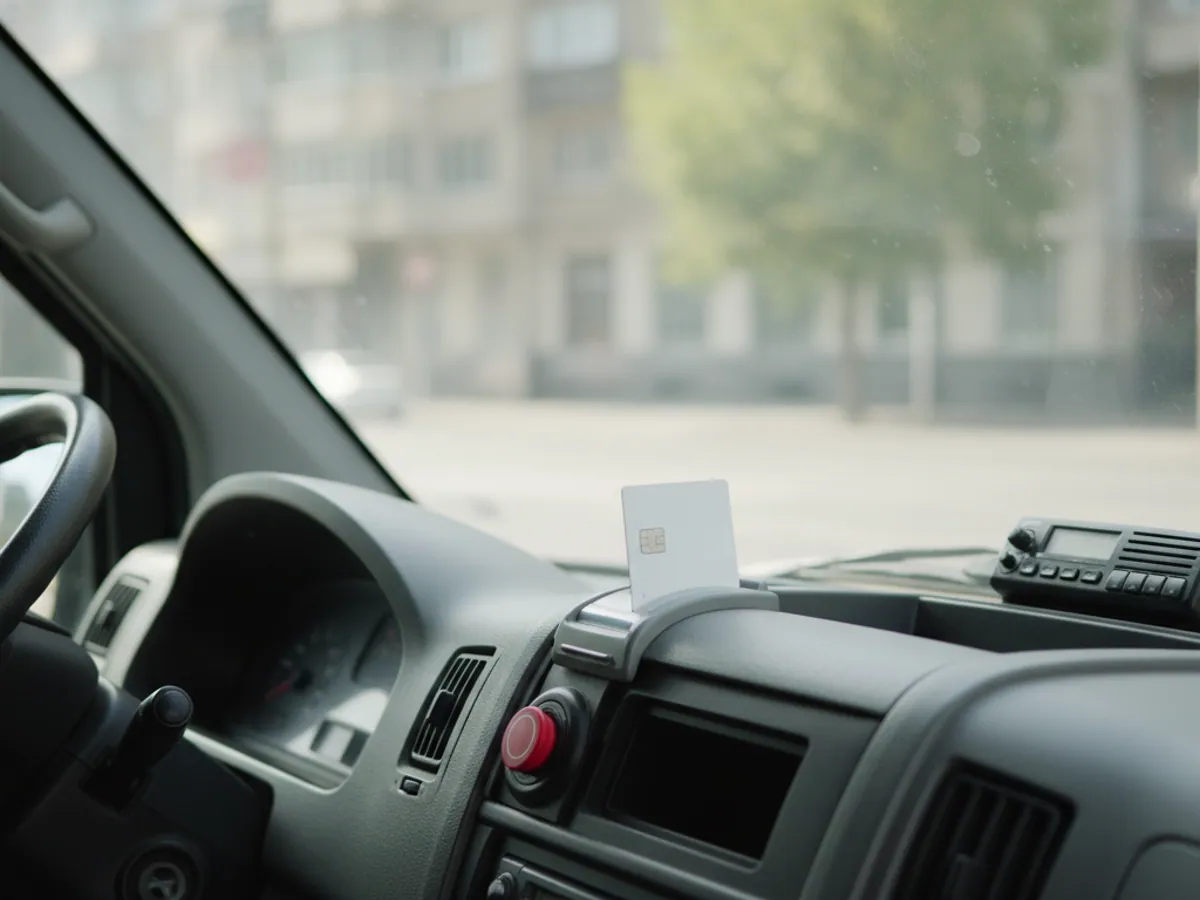
A card or key, without which the tracker marks the journey as driver not identified. It suits shifts worked by different drivers too.
Video recorder
Cameras for the road and the cab. Recording of accidents and of disputes on a call. Fitting is described on the video monitoring page.
Temperature sensor
For the medicines compartment and the refrigerator holding drugs that need a controlled temperature.
The service budget: where monitoring gives money back
Emergency services have no revenue, but they do have a budget for fuel, repairs and spare parts. And it is almost always smaller than anyone would like. Monitoring gives part of that budget back under three headings.
Fuel. Once idling is divided into working and non-working, and refuelling is reconciled against the level sensor, writing fuel off against generous allowances comes to an end. In our deployments on service fleets the saving is usually 10-20%.
Repairs. Engine fault codes reach the garage manager before the vehicle fails on a call. A small repair made in time costs less than a major one and does not take the vehicle off duty for a week.
Accidents. Drivers who know that speed and emergency signals are being recorded take fewer unnecessary risks. Every accident avoided is a repair, a vehicle off the road and, above all, the health of the crew and the patient.
The cost of fitting out we shall calculate for your fleet once we have looked at several vehicles of different types.
What we do not promise
A green wave at the traffic lights
Switching the lights ahead of an emergency vehicle is a job for the city traffic control system. We can pass it vehicle coordinates through the API, but we do not switch the lights ourselves.
A replacement for the 112 system
Call taking and patient records live in the agencies' own systems. Monitoring supplies them with vehicle coordinates and statuses; it does not replace them.
Coverage where there is none
In areas with no mobile network the data arrives late. Satellite communications for continuous transmission are a separate and expensive project.
Results without people
Reports only work if the garage manager or the shift supervisor reads them. We help name the people responsible, but the decision is yours.
Questions from emergency and municipal services
What is used in this sector
What we do end to end
Wialon modules for this sector
How it is used in this industry
Case studies from “Utilities & Emergency Services”
Thinking of rolling out GPS monitoring in “Municipal services”?
Send us an enquiry and we will price it up for your fleet and pick the hardware for this sector: utilities & emergency services.
- 1 We pin down the task
A specialist calls back and asks about the vehicles, how many there are and what you need to keep an eye on.
- 2 We put a solution together
We propose the hardware and the features, and set out the one-off and the monthly cost separately.
- 3 We agree the fitting
At your yard or at ours, on a schedule that keeps the vehicles working.
Request a call
A specialist will call back and match a solution to your fleet and your task.