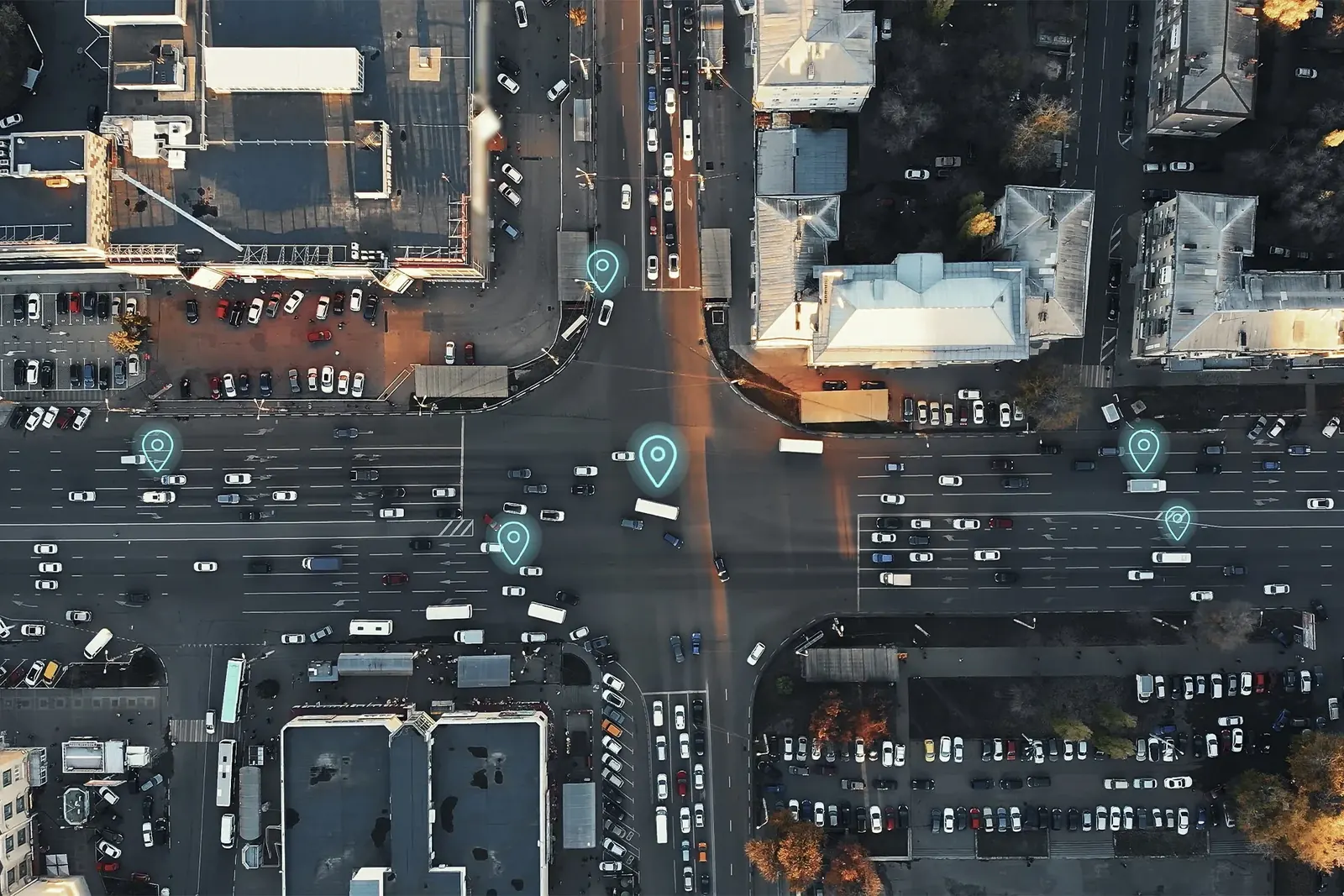
GPS monitoring for passenger transport
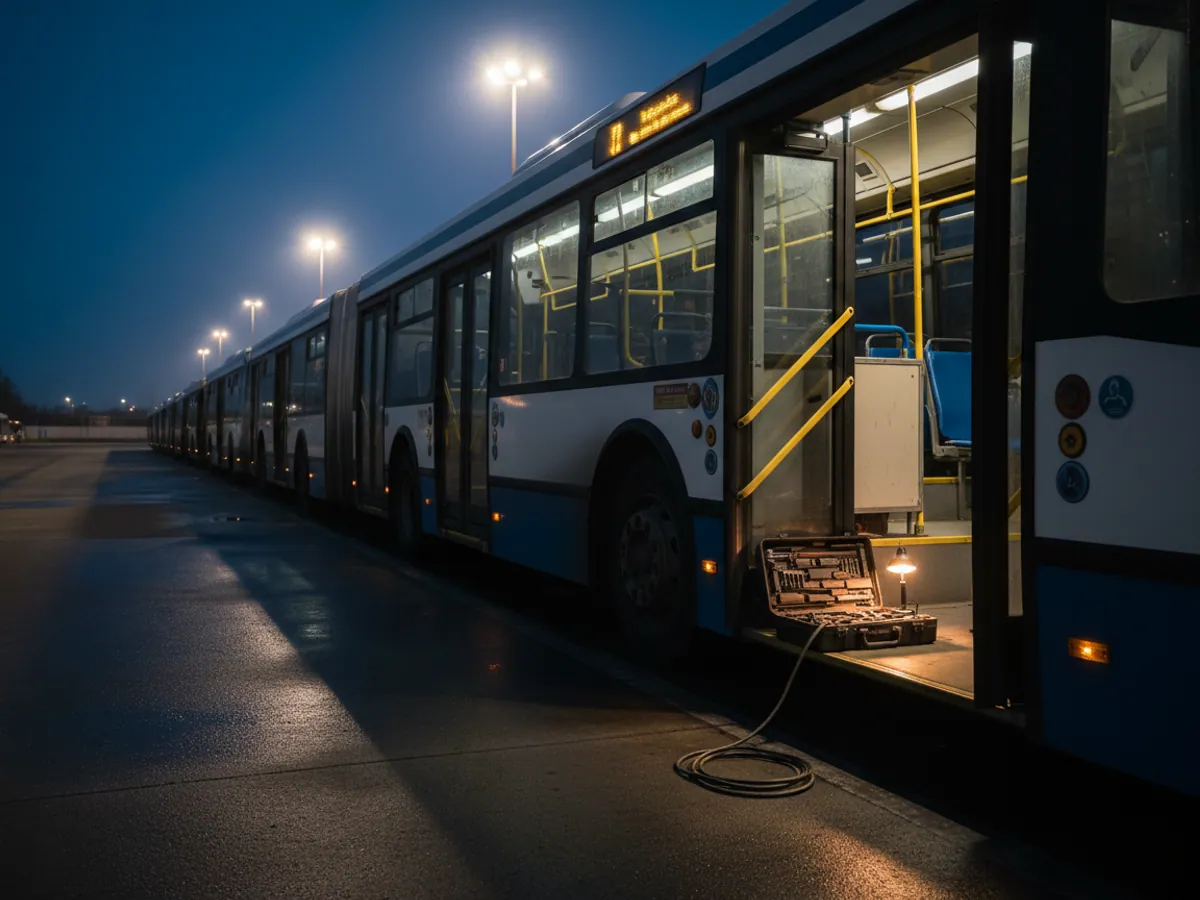
We fit intercity, shift, school and tourist coaches with trackers, video recorders and, where needed, passenger counting sensors. Routes and stops go into Wialon so that the dispatcher can see late running, missed stops and speeding on every trip. Fitting happens at night or between trips, and we start with a pilot on 2–3 coaches.
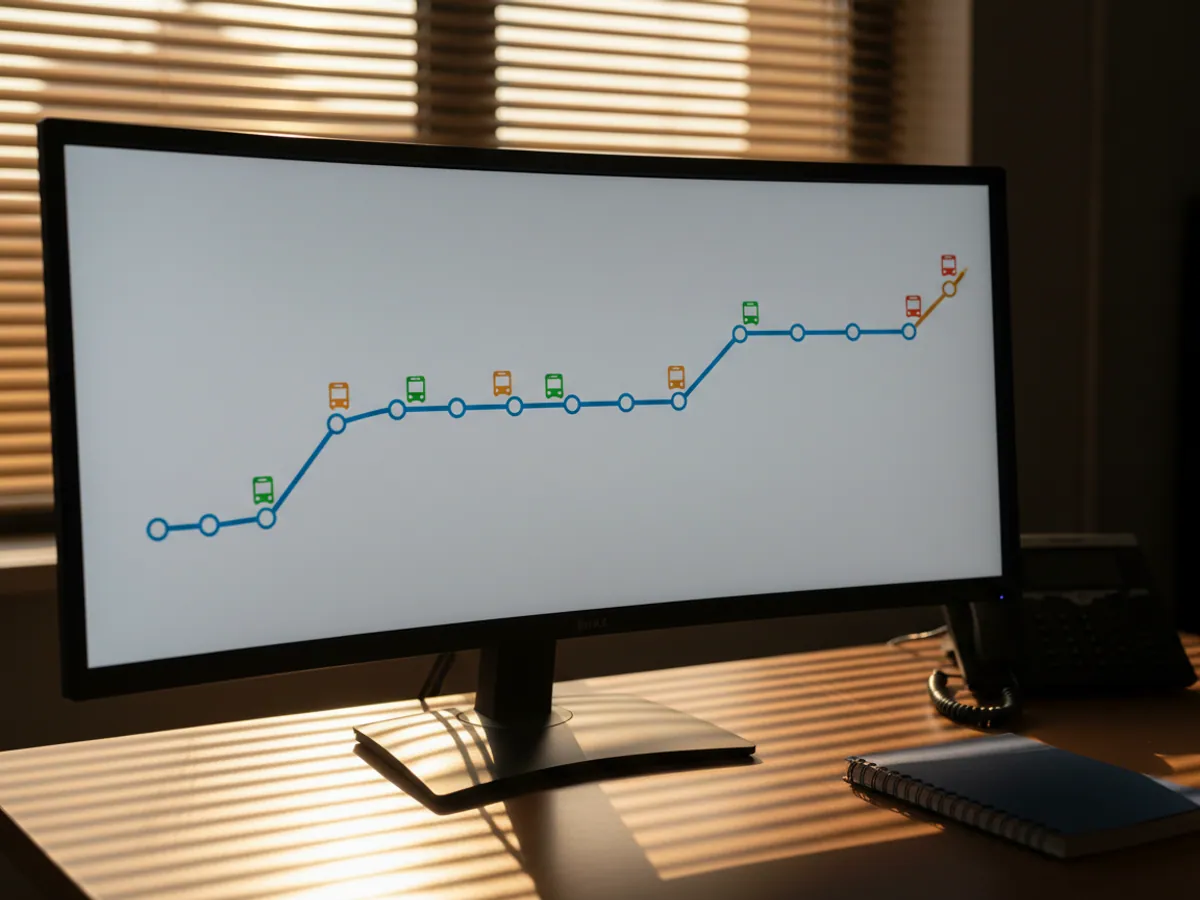
- 07:00 10-BS-214 left the coach station on time
- 08:52 Shamakhi: 6 min behind plan, within tolerance
- 09:40 Unscheduled stop at a cafe, 25 min
- 10:05 108 km/h on the main road, coach fully loaded
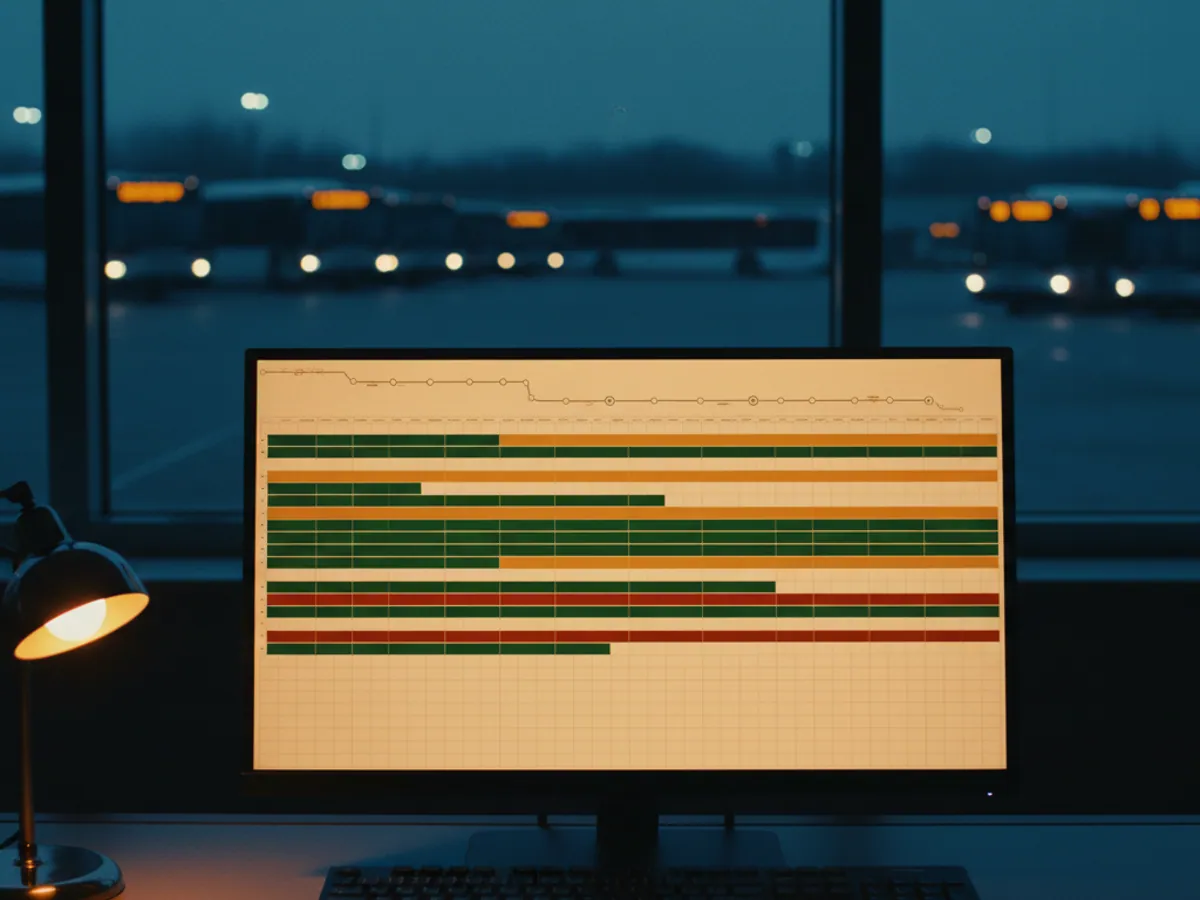
The coaches are fitted out and visible in Wialon, the routes with their stops and scheduled times are entered, and the plan-against-actual report works for every trip. The dispatcher receives notifications about route deviations, missed stops and speeding. If video or passenger counters were fitted, their data is tied to the track and has been checked on the pilot coaches.
A coach with people on board should never be somewhere out on the road
When an operator is carrying people, the question of where a vehicle is stops being a question of saving money. The intercity coach from Baku to Sheki is an hour and a half late and the passengers are ringing the control room. The shift coach taking workers to a field on the Absheron peninsula left the depot 20 minutes late, and the shift began without half the crew. The school bus was speeding on a wet road.
GPS monitoring of passenger transport gives the operator an exact picture of every coach and minibus: where it is, whether it is keeping to the timetable, how the driver is driving, how much fuel a trip used. The data arrives in Wialon in real time, and anything out of the ordinary reaches the dispatcher as a notification straight away.
We work with private operators on intercity routes, with companies running staff shuttles, and with school and tourist transport. This page is about the roll-out: what we fit, how we configure it and how long it takes. The capabilities of the system for passenger operations are described in the passenger transport section.
How the work goes, step by step
Fleet, routes, tolerances
The list of coaches, the stops with their scheduled times, speed limits and who receives the notifications.
2–3 coaches
Fitting at night or between trips, then a week of checking the stops and watching for false alerts.
Stops as geofences
A radius of 50–100 m out on the road, larger at a coach station. Scheduled time and tolerance for each.
Results of the pilot week
The timetable report, the notifications, the panic button and the video — by day and by night.
The remaining coaches
We fit them to the pilot's template, train the dispatchers and brief the drivers.
A pilot week on an intercity route
A worked example: 3 coaches on the Baku — Sheki route, fitted at night in the operator's yard.
- Night fitting: tracker, panic button, cameras 3 coaches
With a video recorder and cameras this takes 4–6 hours per coach. The vehicles are back on the route for the morning departure.
- The first trips in the plan-against-actual report timetable
The stops are entered as geofences, with a tolerance of ±15 minutes for intercity trips.
- False missed stops at the Baku coach station adjustment
The stop zone is too small for a coach station: the coach pulls up at a far platform. We increase the radius.
- Speeding with a full load of passengers breach
The notification reached the dispatcher, and the camera recording for that exact minute is found from the track.
- Pilot handover, decision on the fleet results
We adjust the tolerances in light of the week and fit the remaining coaches to the same template.
Who needs this and why
Different operators have noticeably different problems, so we choose the set of equipment to match the particular kind of operation:
Intercity routes
Trips from Baku to Ganja, Sheki, Lankaran and Guba. What matters is keeping to the timetable, speed on the open road, fuel consumption and unscheduled stops.
Staff shuttles
Carrying employees to factories, oilfields and building sites. What matters is arrival time relative to the start of the shift, the route taken, and that the coach is not used for private work between trips.
School buses
Speed, route, stops and video inside the saloon. Parents and the school need to know where the bus is and when it will arrive.
Tourist transport
Excursions to Gabala, Sheki, Guba and around the Absheron peninsula. Driving style on mountain roads and a clear fuel figure for every tour.
How we set up timetable monitoring
The timetable in the system has to be set up carefully. To make the plan-against-actual report honest, we do the following:
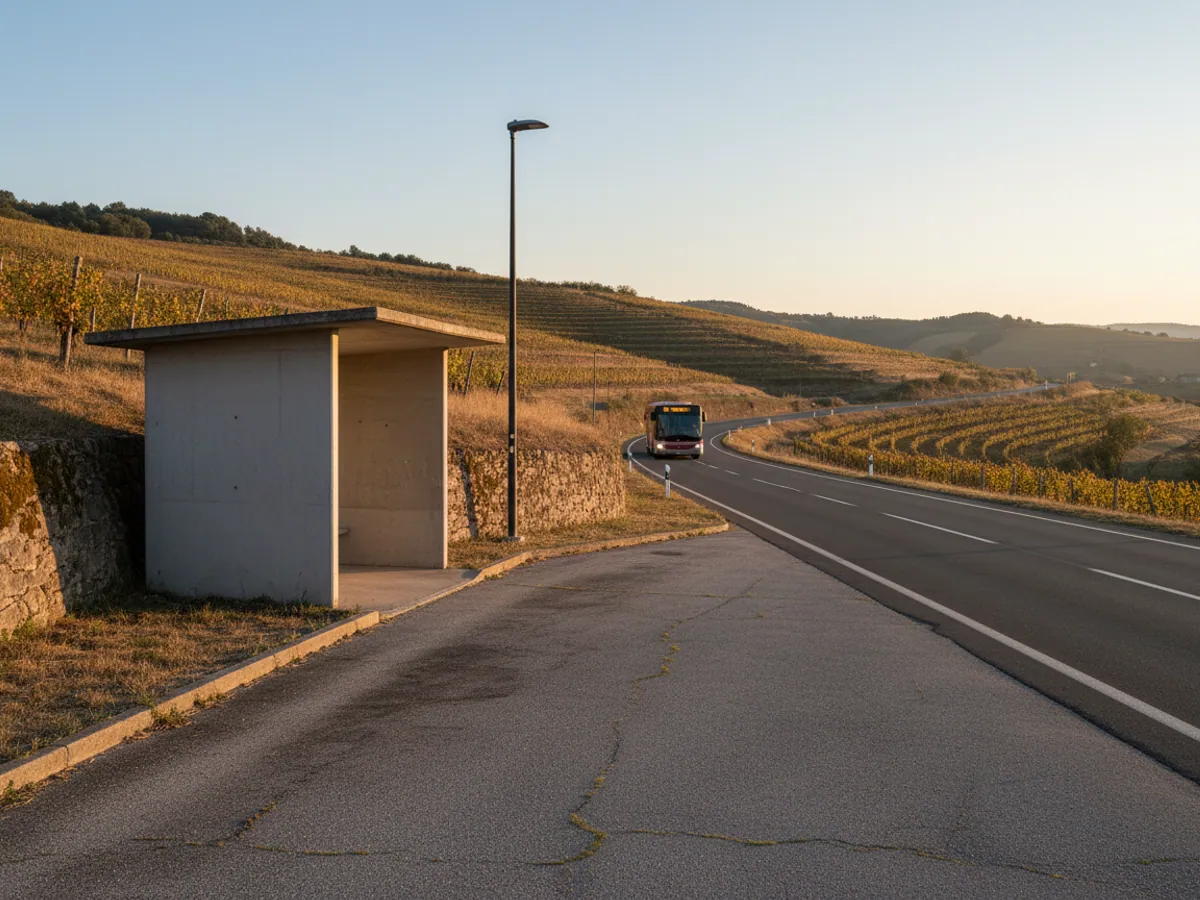
- Enter every stop and terminus as a geofence with the right radius: out on the road 50–100 metres is enough, at the Baku coach station a larger zone is needed.
- Build the route out of the stops in the right order and enter the scheduled time for each one.
- Set a tolerance for running late and running early, for instance ±5 minutes for city stops and ±15 minutes for intercity trips.
- Configure the notifications: the coach did not leave the terminus on time, missed a stop, or strayed more than a kilometre from the route.
The output is a daily report on each trip: what time it reached each stop, where it ran late, where it missed a stop. For intercity routes, unscheduled stops show up separately: at roadside cafes, filling stations and the driver's own home.
If the operator needs to show the coach's progress to passengers or to the company that booked the shuttle, we use a public tracking link.
What we need from the operator before we start
Fleet and duty roster
A list of the coaches with models and years of manufacture, where they are parked overnight and when they stand at termini. We build the fitting plan around that roster so that no trip is lost.
Routes and timetable
The list of stops for each route and the scheduled arrival times, in whatever form suits you: a spreadsheet, a scan of the timetable, a list from the dispatcher. Without this the timetable report cannot be built.
Rules and tolerances
How much lateness counts as a breach, what speed limits apply on your sections, and who should receive notifications and through which channel.
Someone responsible on your side
A dispatcher or a mechanic who knows the routes, can open a coach at night and will go through the pilot data with us.
Solutions by type of operation
Routes from Baku to the regions
A tracker reading the CAN bus: fuel consumption, speed, engine revs, mileage. Timetable monitoring by stop, speed limits on particular sections of the road, notifications about long stops.
On the mountain sections towards Sheki, Guba and Lerik we also look at driving style on descents and bends. For trips carrying large numbers of passengers we recommend a video recorder with a road-facing and a saloon camera.
A roll-out that does not take coaches off the route
A coach that stands idle for a day to be fitted out means lost trips. So we organise the work around the operator's roster.
- Trackers and sensors are fitted at night or between trips in your own yard. A coach without a video recorder takes 1.5–2 hours, one with a video recorder and cameras 4–6 hours.
- We start by fitting 2–3 coaches and spend a week checking the data: whether the stops are working correctly and whether there are any false alerts. Then we fit the rest.
- In parallel we enter the routes and the timetable into Wialon from your own documents.
- We train the dispatchers on live trips and give the drivers a short briefing.
For a fleet of 20–40 coaches the whole process usually takes three to four weeks. The first timetable and speed reports are available after the pilot week. If some of the coaches carry older equipment from another system, we check whether it can be reconfigured for Wialon so that you do not have to replace everything at once.
The scope of the work and its limits
Included in the fitting
A tracker connected to CAN where the bus is available, a panic button, a video recorder and cameras to an agreed layout, sealing, and photographs of the fitting locations for the handover report.
Included in the configuration
Geofences for stops and termini, routes with scheduled times, lateness tolerances, speed limits by section, notifications and reports for the dispatcher, and access for the company booking the shuttle.
Not included
Repairs to factory wiring and door mechanisms, integration with fare collection systems without the agreement of their operator, electronic displays at stops, and a passenger app of your own.
Changes as you go
New routes, timetable changes and new stops are entered after go-live. Who does that — your dispatcher after training, or us on request — is something we agree in advance.
What usually surfaces in the first month
The first weeks of data at passenger operators tend to show similar things. None of them is visible from the control room without monitoring:
Long stops at termini
The coach stands for 40 minutes with the engine running instead of the allotted 15. In summer for the air conditioning, in winter for the heater.
Shortened trips
The driver turns back before the terminus when there are few passengers, missing the last stops.
Private work between trips
After the morning run, a shuttle coach takes a private booking and comes back in time for the evening shift.
Speed on the open road
On the level stretches of the M-2 and M-4 some drivers consistently hold 110 km/h or more with a full load of passengers.

Passenger counting: what is realistic and what is not
We are asked about counting passengers often, and here it is important not to promise too much.
Passenger counting sensors are fitted above the doors and count people getting on and off. On coaches with a normal doorway the accuracy is usually high, but at peak times, when people board in a dense crowd, the error grows. For decisions about timetables and loadings that accuracy is enough; for working out takings to the manat it is not.
The system is good at reconciling against the driver's takings: if the sensor counted 45 people boarding and money was handed in for 25 tickets, that is grounds for a conversation.
Integration with fare collection systems is possible only if the operator of the fare system grants access to its data. That is settled separately in each project, and we do not promise it in advance. How counting works in public transport is described in the public transport section.
How we set up passenger counting
A sensor on every door
A counter goes above every door that passengers use. If one door is left without a sensor, the figures for the trip will be incomplete, and that shows up in the report.
Tied to the stops
Boardings and alightings are counted by the geofences of the stops, so the route has to be entered in the system before the passenger flow report is switched on.
A control trip
On the pilot coach a member of staff counts passengers by hand over several trips, and we compare those figures with the sensor. Any discrepancy is recorded in the handover report.
Where accuracy is lower
A dense crowd at peak times, children, passengers with bulky luggage, someone stopping in the doorway. For planning trips these figures are enough; for settling up with the driver to the manat they are not.
Handover after the pilot week
The timetable report
For each pilot trip the system marks the stops correctly: no false missed stops at large coach stations and no spurious triggers at neighbouring stops.
Notifications
Route deviation, speeding and the panic button all fire and reach the dispatcher. We test the button press with you present.
Video
The cameras are recording, the picture from each one is visible, and the footage for a chosen moment can be found from the track. We check this by day and by night.
The decision on the rest of the fleet
After the pilot we look at the reports together and adjust the tolerances. Only then do we fit the remaining coaches to the same template.
What changes for the operator
Punctuality
Late running and missed stops are visible for every trip. The dispatcher reacts before passenger complaints start.
Safety
Speeding and aggressive driving are recorded automatically. Video helps in investigating accidents and incidents in the saloon.
Fuel
Consumption per trip and per 100 km for each coach. On coaches with long stops at termini the main saving is in idling.
Transparency for the client
A company that books a shuttle can see its own coaches. Fewer complaints and fewer arguments about trips performed.
What we use on the job

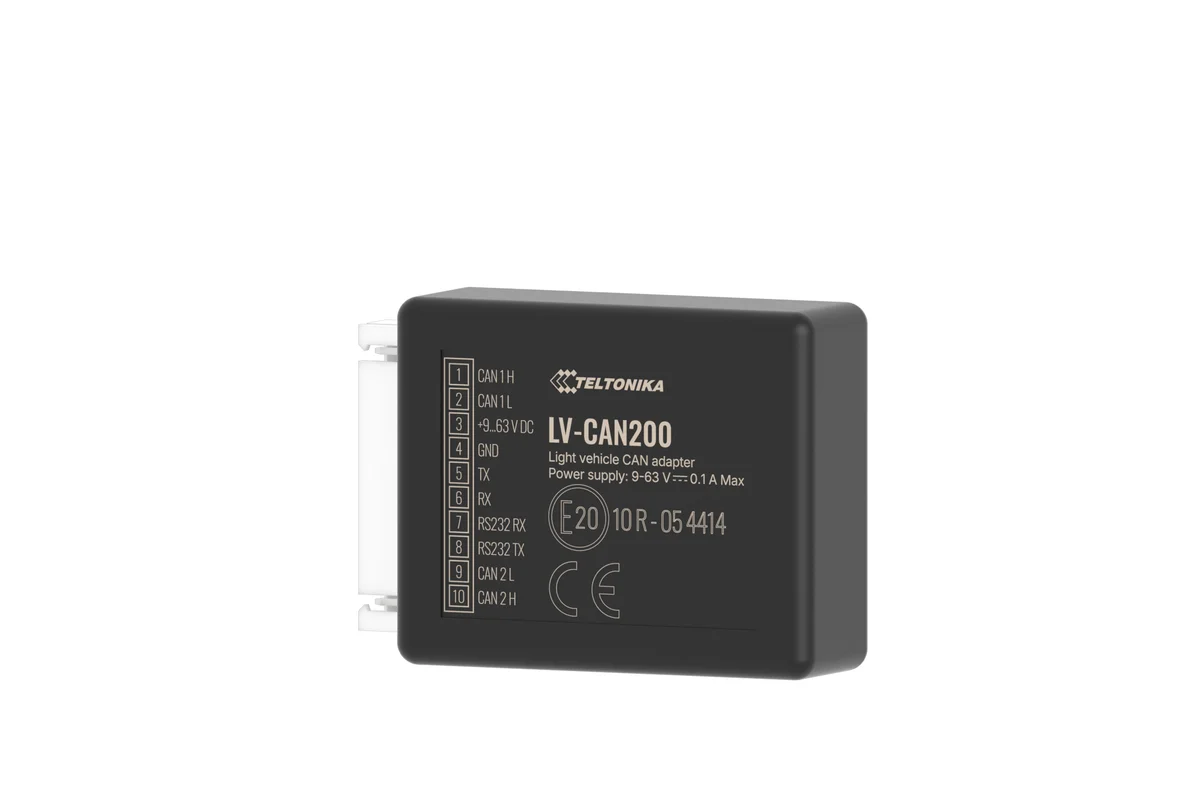
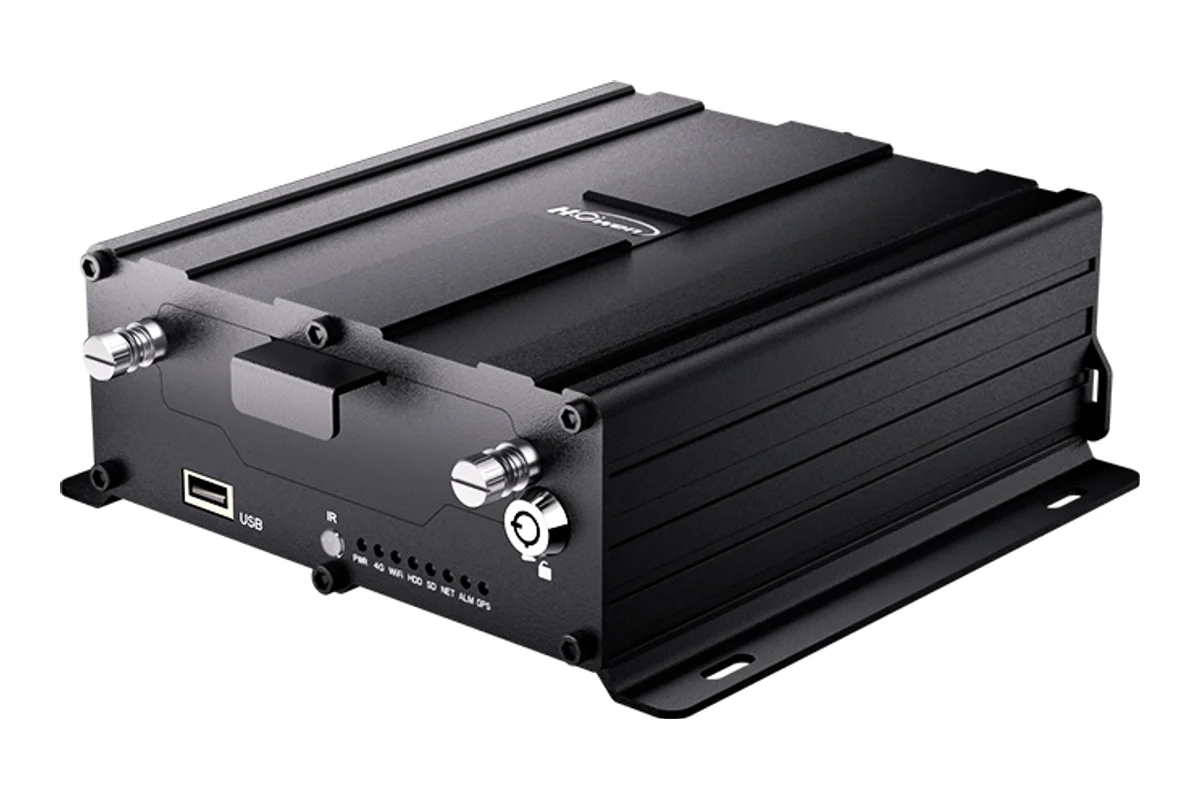
A tracker, or a tracker with video
Video is most often fitted to school buses and to trips carrying large numbers of passengers.
| Tracker with CAN | Plus a video recorder | |
|---|---|---|
| Timetable and stops | Yes | Yes |
| Speed and driving style | Yes | Yes |
| Recording of the saloon and the doors | No | Yes, 4–8 cameras |
| ADAS and fatigue warnings | No | Yes, on cameras with ADAS |
| Fitting time per coach | 1.5–2 hours | 4–6 hours |
Questions about “GPS monitoring for passenger transport”
Request a call
A specialist will call back and match a solution to your fleet and your task.
Similar scenarios
How similar jobs are done on Teltonika hardware