
Drivers’ hours from VDO Counter data
A Teltonika use case: an FMC650 tracker reads data from a digital tachograph, including the VDO Counter function, and the dispatcher sees in real time how much longer a driver can keep going before his compulsory rest.
A Teltonika use case: an FMC650 tracker reads data from a digital tachograph, including the VDO Counter function, and the dispatcher sees in real time how much longer a driver can keep going before his compulsory rest. In international logistics a driver’s time is as much a resource as fuel. If a driver goes over his limit, the company gets a fine, the load is late, and a tired man ends up on the road at the wheel of a forty-tonne vehicle. If the dispatcher does not know how much time is left, he plans runs blind. Teltonika has added reading of the VDO counter to the FMx6 series trackers. This use case is about what data that gives and how to use it in planning.
What this scenario solves
Most hauliers keep an eye on driving style but hardly watch drivers’ hours and rest.
Drivers forget to take a break in time or deliberately breach their rest period.
Schedules slip as a result, deliveries are late, and the company fails to meet the terms of its contracts.
On long runs, breaches of the driving and rest rules turn into heavy fines.
Most hauliers keep an eye on driving style but hardly watch drivers’ hours and rest. Drivers forget to take a break in time or deliberately breach their rest period. Schedules slip as a result, deliveries are late, and the company fails to meet the terms of its contracts. On long runs, breaches of the driving and rest rules turn into heavy fines.
Why this happens. The tachograph records everything, but the data is usually downloaded once every few weeks, for reporting. In the moment the dispatcher cannot see how far the driver has already driven today and over the week. He rings and asks, and the driver answers from memory or from the tachograph display. It is easy to get it wrong.
How it ends. The dispatcher gives a driver one more run when the man has three hours left on his weekly limit. The driver either drives in breach of the rules and risks a fine at the next checkpoint, or stops for his rest in the middle of the route and the load is late. Either way the customer suffers, and the company loses money and reputation.
What is needed. A strategy for managing drivers that takes account of the requirements of the law, of what the equipment can do and of the human factor. The technical part is seeing tachograph data in real time rather than once a month.
What Teltonika offers
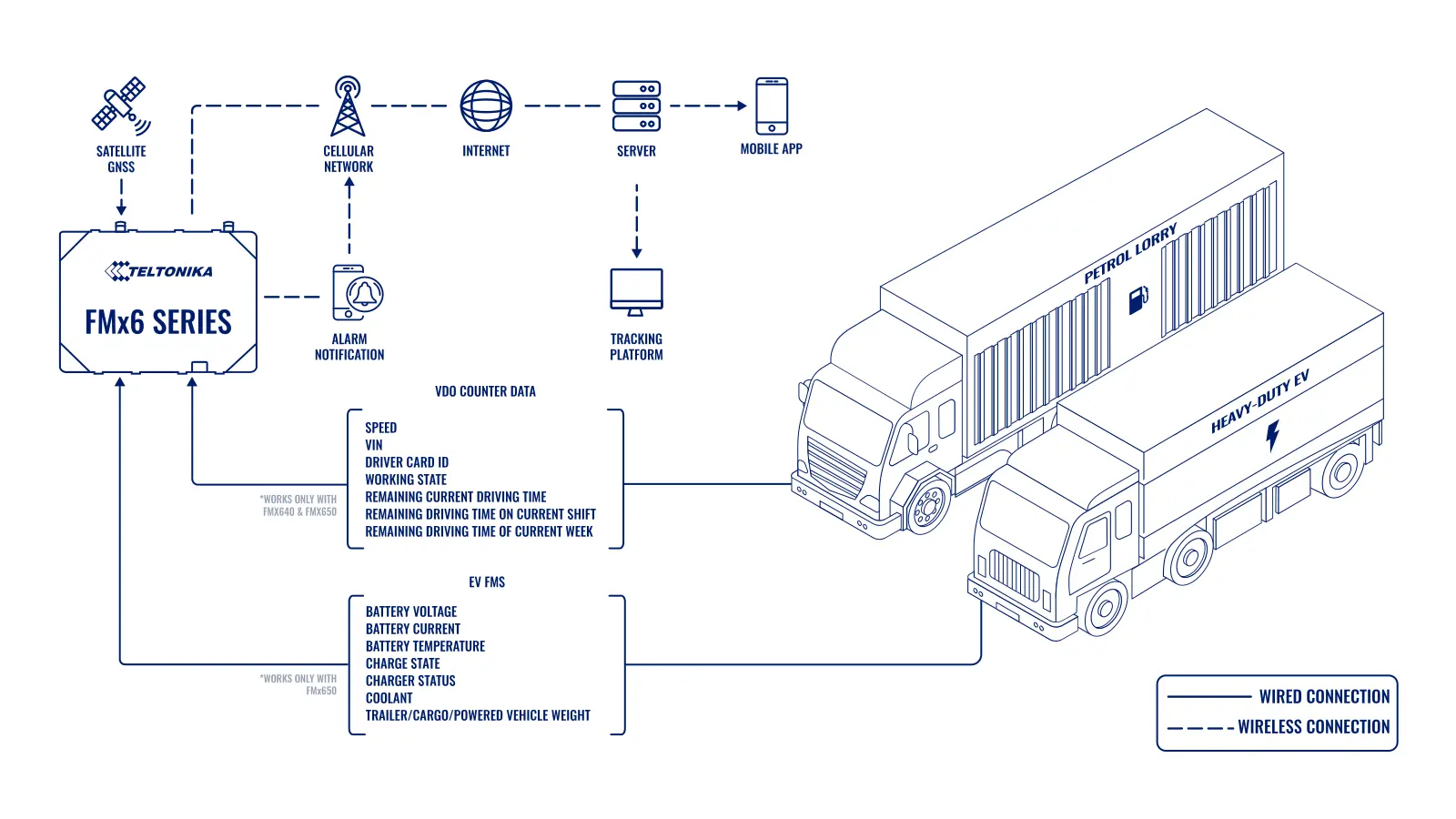
Teltonika has implemented reading of the VDO Counter function from digital tachographs in the FMx6 series trackers. The use case uses the FMC650 with a 4G LTE Cat 1 network: the tracker connects to the tachograph and sends the remaining driving times, the driver’s status and the card data to the server.
Installation and setup
Fitting the device and configuring it for the fleet scenario at hand.
Data transfer
The device collects data and sends it to the monitoring platform; how often depends on the model and its settings.
Analysis and control
The person in charge gets reports and alerts and looks into what stands out.

How to start. The fleet’s lorries are fitted with an FMC650, it is connected to the digital tachograph, and the parameters are set to suit the company’s needs: which data to send, how often, and under what conditions to send notifications.
The three main parameters of the VDO counter.
• Remaining Current Driving Time — how many minutes the driver may still drive before a compulsory stop. It helps in planning the next parking place and break.
• Remaining Driving Time On Current Shift — how much driving time is left in the current shift. It shows whether the driver will reach the unloading point today.
• Remaining Driving Time Of Current Week — how much driving time is available until the end of the week. It is needed for longer-term planning and for keeping within the weekly limits.
What else the tracker sends. Driver card identifiers, the tachograph’s diagnostic records, data on overlapping working time, and the remaining working time. Together with the vehicle’s VIN this shows which driver is at the wheel of which lorry right now. The dispatcher no longer has to compare the paperwork against the shift schedule.
How it looks to the dispatcher. The map shows the vehicles, their speed and the driver’s status: driving or resting. When the driving time limit is coming to an end, the system sends a notification. The dispatcher contacts the driver in advance and agrees where to stop for a rest, so as not to breach the limit and not to stop in an awkward place.
An episode. A lorry is running with a load towards the border. On the VDO counter the driver has 50 minutes left before his compulsory break, while the crossing point is an hour and a half away. The dispatcher sees this in good time and suggests stopping at a lorry park 40 minutes’ drive away, where there is security and a café. The driver takes his rest and joins the queue at the border with a full allowance of time. Without the VDO data the driver could have run into the limit while sitting in the queue at the border.
How planning changes. The dispatcher used to build the weekly plan on experience: this driver usually manages it. With the counter data the plan is built on the time actually left. On Monday it is clear who has less time in hand after the previous week, and he is given short runs. On Friday it is clear who can take an extra load without going over the weekly limit. Swapping drivers in a two-man crew is planned more precisely too: it is clear at what point the second driver should take the wheel.
Watching driver cards. If somebody else’s card has been put into the tachograph, or the driver is driving with no card at all, that is visible in the tracker data at once rather than at the next download. For the company it is a way of stopping the practice where one driver drives on his mate’s card to get round the rules. Such cases are better dealt with straight away, while the driver is still on the run and the situation can be put right without a fine.
Electric lorries. Along with the VDO counter, Teltonika has extended the FMS protocol for heavy electric vehicles (EV FMS). The tracker receives data about the traction battery: its state of health, charge level, temperature and other parameters. The manager of an electric fleet sees which vehicle is ready for a run, assigns drivers with the charge in mind, notices battery problems at an early stage and plans servicing in advance.
Compatibility and file downloads. VDO Counter is a function of VDO tachographs, and its support depends on the model and the firmware version of the tachograph. On tachographs of other makes the remaining times cannot be obtained this way, although the tracker can pass on the basic tachograph data. No company card is needed for the remaining times in real time, but the remote downloading of DDD files is a separate task: it requires a company card and an authentication service, WEB Tacho from Teltonika for instance.
Keeping track of the downloads. The files go into an archive with a backup copy, and a named member of staff is responsible for completeness. If a download has failed — the tracker was out of contact, the company card was unavailable, the tachograph did not answer — that has to be visible in the list of downloads, and the file is fetched again or downloaded by hand before the deadline arrives.
What the company gets in the end. The Professional series trackers collect the key tachograph data: driver activities, card data, daily and weekly working time. For a large fleet that is the basis for planning runs, managing drivers’ hours and rest, and going through disputed situations. And there is no need to wait for data to be downloaded from the tachograph, since all of it is visible straight away.
What you get
Easier to keep within the rules
Tachograph data arrives automatically, and the company sees the risk of a breach before it happens rather than after an inspection.
The fleet is loaded sensibly
The remaining times show who can be given another run and who is due a rest, and vehicles do not stand idle because of unexpected stops.
Drivers do not drive tired
Keeping track of rest and driving time protects people, and the load and the vehicle along with them.
Problems are visible at once
Every run is tracked in real time, and departures from the schedule or breaches of the rules are spotted in good time.
Data for decisions
Routes, driving time and behaviour at the wheel add up to reports on which runs and staffing are planned.
A conversation with drivers that has substance
The VDO counter data makes it possible to go through real mistakes in planning rest and to teach from them.
Why this solution
Teltonika’s FMx6 series was designed from the start for heavy lorries: FMS CAN support, tachograph reading, several interfaces for sensors. The VDO Counter function extends this range with what international hauliers need most: the remaining driving times in real time. The FMC650 meanwhile carries on with its other jobs — fuel, CAN data, sensors, driver identification.
What is worth taking into account. The VDO counter is a function of VDO tachographs, and the full set of data is available on compatible models. Before any purchase, the model and version of the tachograph on every lorry are checked. The counter data helps with planning but does not replace the official download of tachograph files for reporting and inspections: those still have to be downloaded and kept. And the driver has to use his card and the tachograph modes correctly, otherwise the counter will show what was selected on the tachograph rather than what actually happened.
How this works in Azerbaijan. The scenario is needed by international hauliers carrying goods to Europe, Turkey, Russia and Central Asia: their vehicles run along the M-2 to the Georgian border, along the M-1 to the Russian border, and by ferry from the port of Alat to Aktau and Turkmenbashi along the Middle Corridor. A tachograph is compulsory on such routes, and the queues at borders and ferries easily eat up the remaining driving time. When rolling this out we check the tachograph models in the fleet, connect the FMC650 and, if needed, an Escort fuel level sensor, and set up notifications about an approaching limit. GPS.az, as a Teltonika GOLD partner in Azerbaijan, fits and configures the FMC650 with the tachograph and brings the data onto the Wialon platform, where the dispatcher sees the remaining driving time for every driver.
Related case studies
Related rollouts and equipment
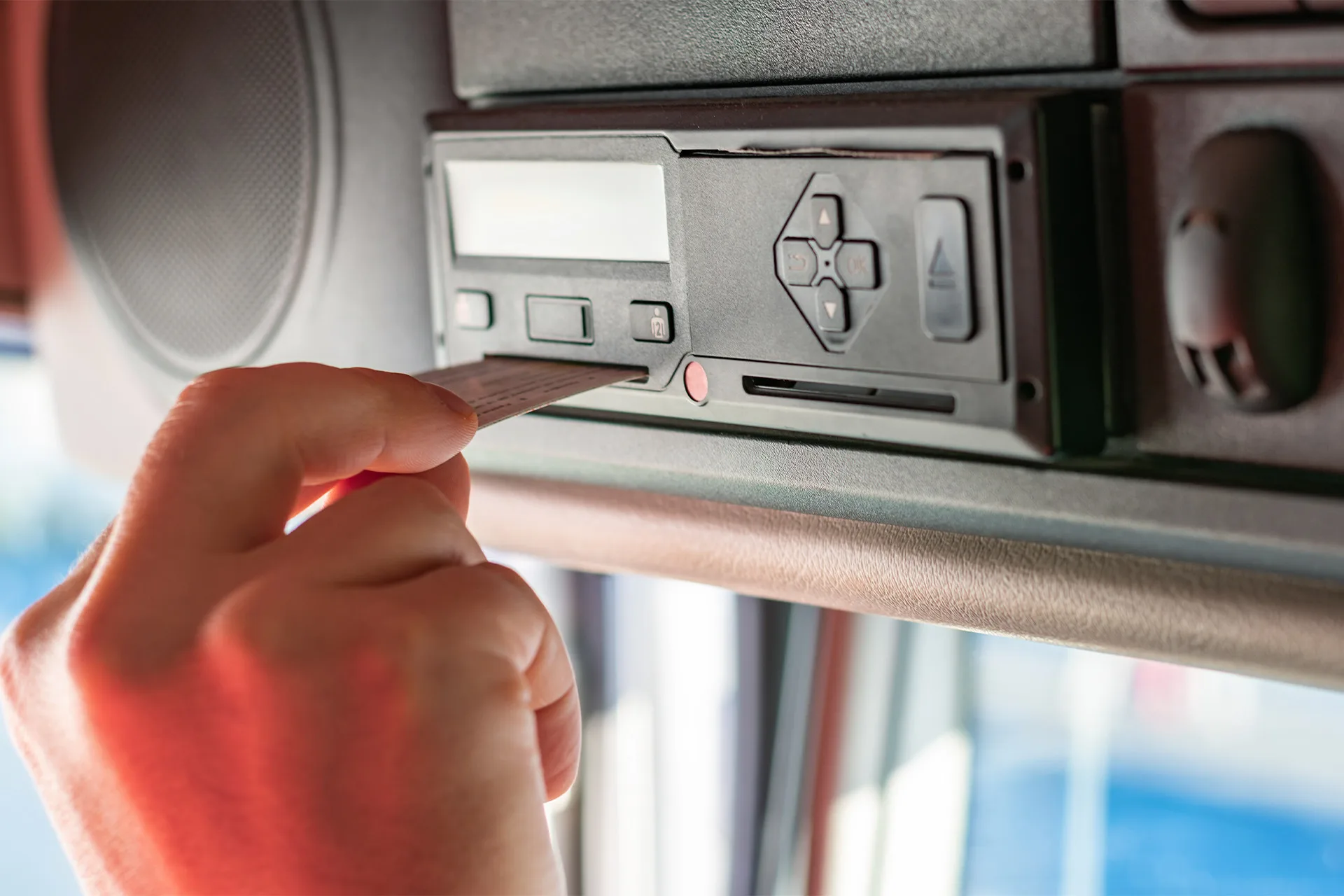
Remote tachograph downloads through the FMC650
Logistics and delivery
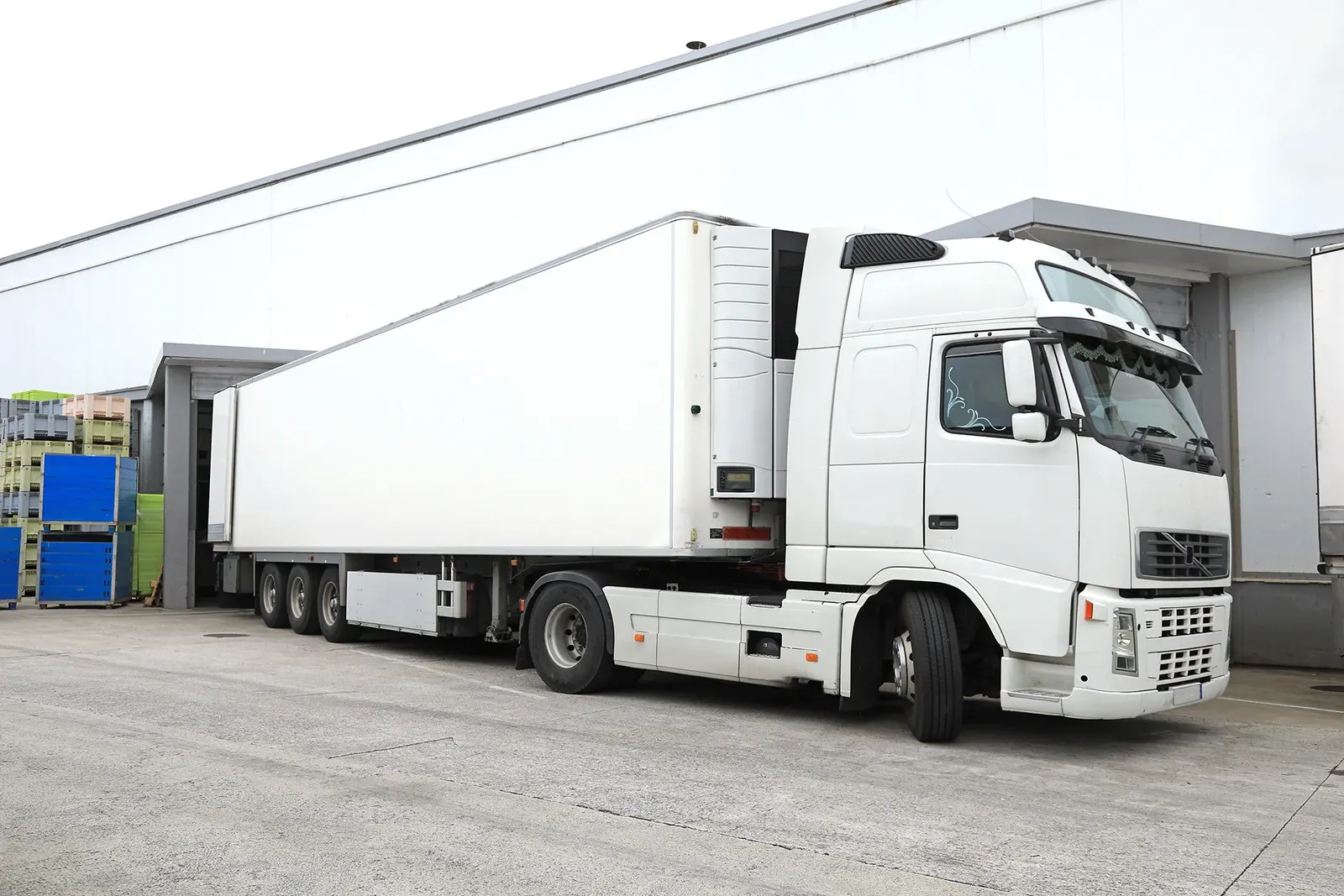
Cold chain: temperature recorder plus FMC650 tracker
Logistics and delivery
Vehicle monitoring where there is no cellular coverage
Logistics and delivery
Questions about the “Drivers’ hours from VDO Counter data” scenario
Request a call
A specialist will call back and match a solution to your fleet and your task.