
Cold chain: temperature recorder plus FMC650 tracker
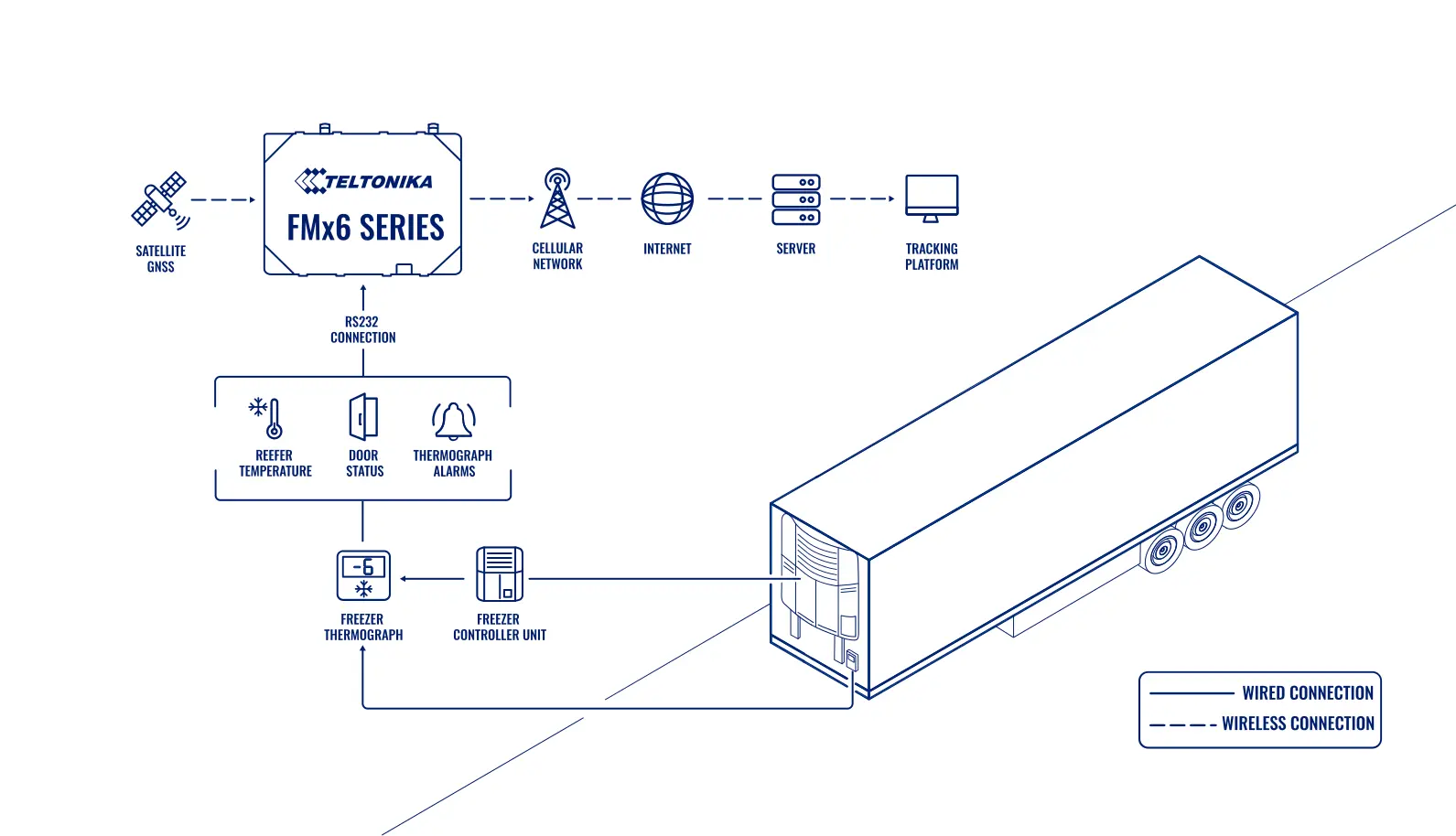
The FMC650 tracker connects to the temperature recorder of a refrigerated vehicle over RS232 and gives the dispatcher the temperature in the load space, the door status and unit alarms in real time, while the server keeps a log for the consignee and the inspectors.
The FMC650 tracker connects to the temperature recorder of a refrigerated vehicle over RS232 and gives the dispatcher the temperature in the load space, the door status and unit alarms in real time, while the server keeps a log for the consignee and the inspectors. Frozen fish, dairy, meat, vegetables, vaccines — all of it travels in refrigerated vehicles, and the quality of the cargo rests on a single parameter: temperature. While the vehicle is on the road, the dispatcher usually learns of a problem only when the cargo is being accepted at the warehouse and found to be spoiled. This Teltonika use case shows how to change that with PROFESSIONAL series trackers, the FMC650 and FMM650, and the factory-fitted Carrier and Thermo King temperature recorders.
What this scenario solves
Cargo in the cold chain can spoil at any of three stages: before loading, on the road and after unloading at the consignee.
The carrier answers for the middle stage, but has to prove its case for all three.
A wrong set point on the unit ruins a consignment in a few hours.
A door that is not shut tight lets the cold out even when the unit is working properly.
Cargo in the cold chain can spoil at any of three stages: before loading, on the road and after unloading at the consignee. The carrier answers for the middle stage, but has to prove its case for all three. A wrong set point on the unit ruins a consignment in a few hours. A door that is not shut tight lets the cold out even when the unit is working properly.
The temperature window is narrow in both directions. A little warmer and bacteria and mould multiply, and the product spoils. A little colder and large ice crystals form in chilled meat or fruit, and the goods lose their appearance and their price. A deviation has to be noticed within minutes, not on arrival.
Doors are a headache of their own. A loose hinge, a torn seal, a driver who does not push the handle home after unloading at an intermediate stop. The cold escapes, warm air comes in, the unit runs itself into the ground and the cargo warms up. Condensation and ice build up inside the van: the floor is slippery, the walls go mouldy, and that is already a question of safety for the loaders.
And finally the paperwork. If the consignee finds spoilage, they or an inspecting body will ask for the temperature data for the whole run. No data and the carrier pays. Data that shows a breach and the carrier still pays, but at least knows where and when it happened. The best case is to see the problem on the road and put it right before it turns into spoilage.
There is a human factor too. A driver may switch the unit off at a stop to save fuel and then switch it on again before reaching the warehouse to catch the temperature back up. On a printout at the end of the run that is not always visible; on a live graph it is obvious at once.
What Teltonika offers
The arrangement is simple: an FMC650 tracker (or an FMM650 with LTE Cat M1/NB-IoT) is connected to the refrigerated vehicle's temperature recorder and sends its data to the server along with the location, so the dispatcher sees the temperature in the load space in real time and can step in.
Installation and setup
Fitting the device and configuring it for the fleet scenario at hand.
Data transfer
The device collects data and sends it to the monitoring platform; how often depends on the model and its settings.
Analysis and control
The person in charge gets reports and alerts and looks into what stands out.
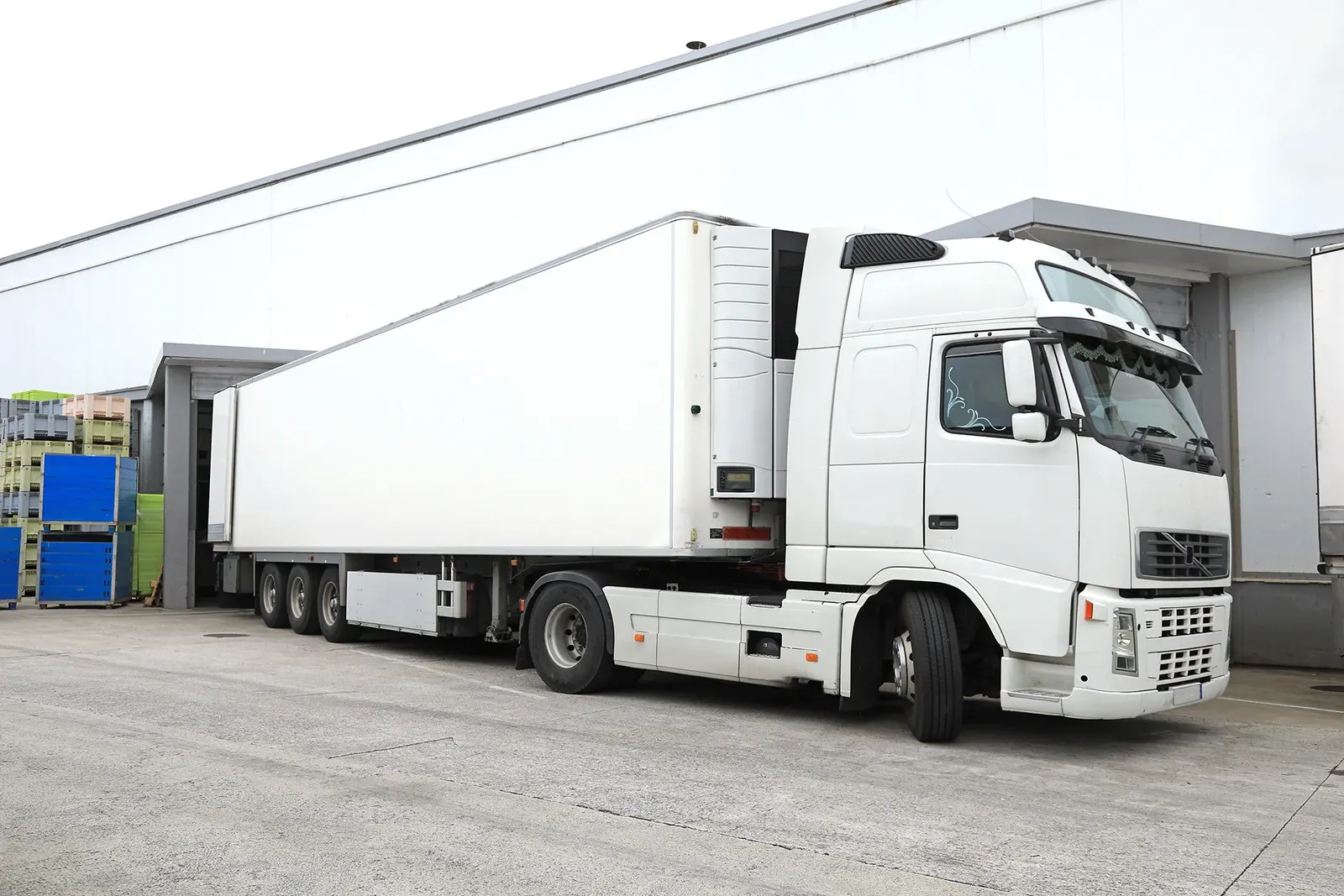
What a temperature recorder is. It is a logger fitted to the refrigeration unit that measures the temperature in the load space and keeps its history. Many models can output data over the RS232 serial interface. The FMC650 has two ports, COM1 and COM2, and the recorder is connected to one of them. The PROFESSIONAL series supports three models:
• Carrier DataCOLD 600;
• Thermo King Transcom 2;
• Thermo King TouchPrint.
What reaches the server. Once connected, the tracker takes the temperature per sensor, the refrigerated body's door status and the alarm signals from the recorder. All of it goes to the monitoring platform together with the GPS position, the speed and data on how the vehicle is running.
What the dispatcher sees. The vehicle on the map and, beside it, the current temperature in the load space. If it moves outside the window, a notification arrives. After that it is straightforward: a call to the driver, who stops and checks the set point or the door. The setting can be corrected en route, without waiting for arrival at the warehouse.
Doors. The recorder registers that a door is open or not shut tight, and the tracker passes the event on. The dispatcher sees a door opening away from an unloading point — and that too is a reason to call: either the cargo has been left unsecured, or it is being unloaded where it should not be.
Alarms. Temperature recorders have alarm signals of their own, for instance a sharp rise in temperature in the load space. The tracker can watch for them and send a notification. In the Teltonika Configurator you choose which alarms to pass on, so that the dispatcher is not drowned in minor events. The exact set of signals depends on the recorder model.
Event priorities. The FMC650 lets you give each event its own priority. High priority ones — temperature leaving the window, a door open in transit — are sent straight away, while the rest build up and go out as a batch. That is how the integrator separates what matters from the background.
The archive. All the data is kept on the server. When the consignee sends a claim a week later, the dispatcher opens the run and exports the temperature graph with the door events marked on it. If everything stayed within limits throughout the run, the argument is closed on the facts.
How it looks on a run. A refrigerated vehicle carrying chilled chicken leaves the warehouse at +2 °C. Two hours later it is stuck in traffic, the driver switches the engine off, and on some units the refrigeration plant stops with it. The temperature in the load space creeps up: +4, +5, +6. At +6 a rule fires, the dispatcher gets a notification, calls the driver, and he starts the engine. 15 minutes later the load space is back at +3. Without a tracker this episode would only have come to light from the recorder printout at the consignee's warehouse — if anyone had bothered to look at it.
A second typical case is an intermediate unloading. A driver is delivering goods to several shops, is in a hurry at the third stop and does not close the door fully. The recorder registers an open door while moving, the dispatcher sees the event on the map two kilometres from the shop and turns the driver back. The loss is five minutes rather than all the remaining cargo.
What is set up during the roll-out. The order is usually this:
• establish the recorder model and whether it has an RS232 output;
• run the cable from the recorder to the tracker and choose port COM1 or COM2;
• enable support for the relevant model in the Configurator and tick the alarms that have to be passed on;
• set the temperature windows for each cargo type on the platform, along with the recipients of notifications;
• test the whole chain on a trial run: open a door, change the set point, and see how quickly the event reaches the dispatcher.
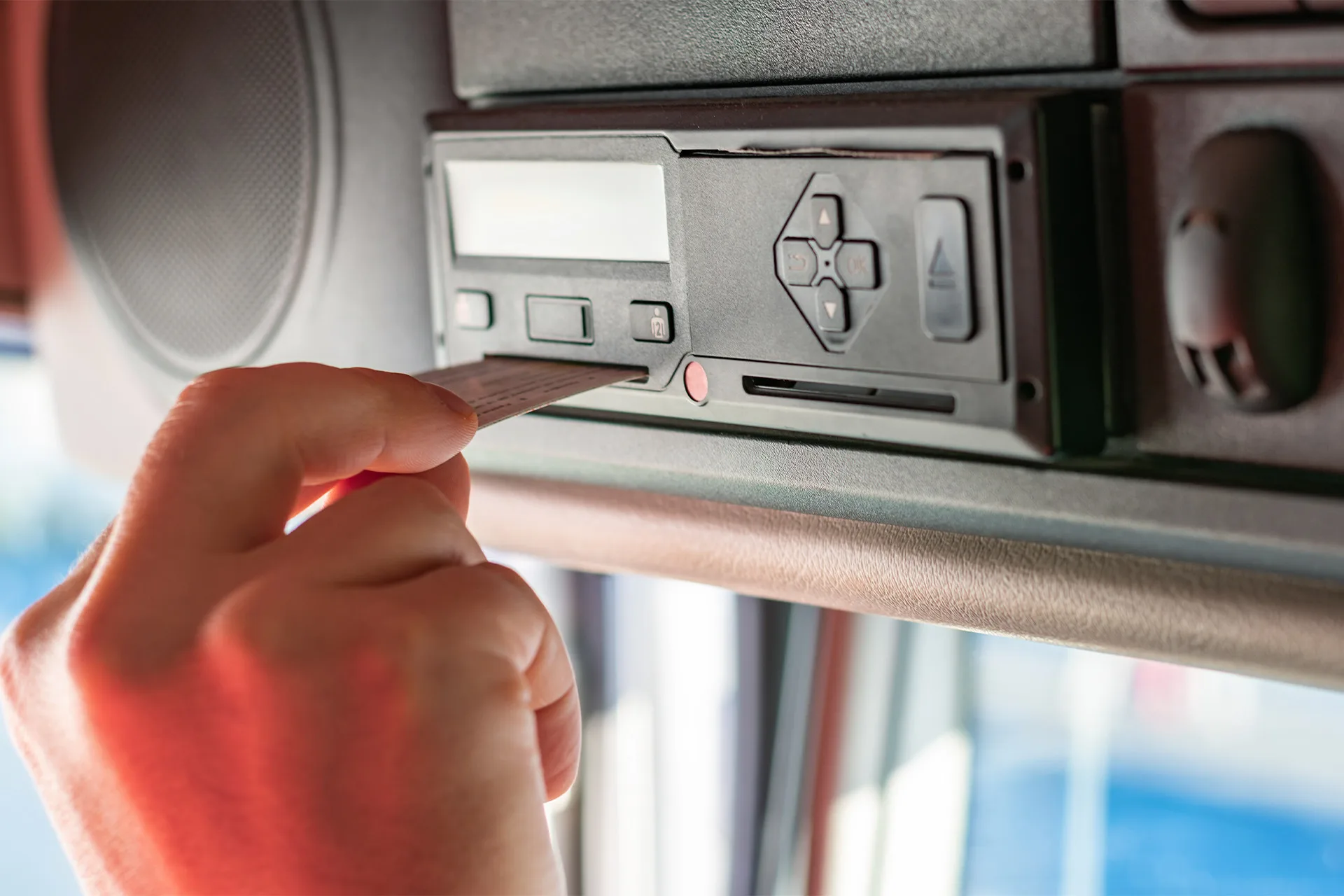
Hardware. The FMC650 is a tracker for commercial vehicles: LTE Cat 1, external GNSS and GSM antennas, a built-in 550 mAh battery, four digital inputs and four outputs, and a transparent RS232 mode for reading external devices. The data sending frequency is configured to suit the scenario — more often on the move, less often at a standstill. Besides the temperature recorder, fuel level sensors are connected to it, and it reads the tractor unit's CAN bus and tachograph data.
What the temperature shows and what it does not. Accuracy and the point of measurement are determined by the recorder and its sensors: the tracker passes on what the recorder measured and recalculates nothing. The sensor measures the air at its own point in the load space, not the temperature of the product in the middle of a pallet, so a brief spike when a door opens does not always mean the cargo has spoiled. Verification and calibration of the sensors follow the refrigerated vehicle owner's own schedule, and the alarm log on the platform serves as the basis for an investigation, but does not replace the goods acceptance record.
An honest limitation: if the refrigerated vehicle has a recorder with no RS232, or a model that is not on the supported list, this route will not work. In that case separate temperature sensors — wired or Bluetooth — are fitted directly in the load space. You will have the data, but without the alarms and statuses of the unit itself.
What you get
The temperature in the load space is visible en route
The dispatcher learns of a deviation within minutes and has time to correct it before the cargo spoils.
An open door is no longer a surprise
The recorder notes a door left unclosed and the tracker passes the event to the server at once.
Unit alarms reach the control desk
A sharp temperature rise and other refrigeration faults become notifications rather than an entry someone reads after the run.
A log for the consignee and for inspections
The run's temperature graph is kept on the server and exported on request, and disputes are settled on the data.
Route and idle time under control
GPS shows where the vehicle is standing with the unit running and why the delivery is late.
Tractor unit diagnostics in the same tracker
The FMC650 reads CAN, so a mechanical fault shows up before it wrecks a run with perishable cargo.
Why this solution
PROFESSIONAL series trackers are built for heavy vehicles: two serial ports, external antennas, plenty of inputs and outputs. For a refrigerated vehicle that means one device can take the temperature recorder and a fuel sensor at the same time and still read the tractor unit's CAN. There is no need to fit two units and reconcile data from two systems.
Support for Carrier and Thermo King recorders comes out of the box — you simply choose the model in the Configurator. These are the two makes fitted to most refrigerated trailers and vans, in Azerbaijan included.
The FMM650 is a version of the same platform for LTE Cat M1 and NB-IoT networks. The choice between them depends on coverage where the vehicles run.
Another reason is the saving on integration. The recorder is already on the refrigerated vehicle and already measuring the temperature. Rather than duplicating it with sensors of its own, the tracker simply takes what is there and sends it to the server. For the carrier that means less hardware in the load space, fewer cables and fewer points of failure. And the data in the archive matches what the recorder printout shows, so the consignee is never left wondering whose figures to trust.
How this works in Azerbaijan. Cold logistics here means dairy and meat products for the supermarket chains of Baku, fruit and vegetables from the Guba-Khachmaz zone and Lankaran, fish, medicines for pharmacy chains and transit refrigerated vehicles through the Middle Corridor and the port of Alat. The chief enemy here is the summer heat: +40 °C on the M-2 between Ganja and Baku, standing in the sun in the queue at the border at Red Bridge or Samur, the unit working at its limit. Those are exactly the hours when it matters to see the temperature in the load space rather than learn of spoilage at unloading. In winter, on the passes and in the Guba-Gusar region, the opposite task arises: not to freeze chilled cargo. When rolling this out we first look at which recorder is fitted to the refrigerated vehicle and whether it has RS232; if not, we fit temperature sensors in the load space. On mountain stretches where the connection drops, the tracker writes points and temperatures to memory and sends them as soon as an Azercell, Bakcell or Nar network appears. GPS.az installs the FMC650, connects the temperature recorder and an Escort fuel level sensor, and sets up the temperature window for each cargo type in Wialon along with notifications to the dispatcher in Telegram.
Related case studies
Related rollouts and equipment

Questions about the “Cold chain: temperature recorder plus FMC650 tracker” scenario
Request a call
A specialist will call back and match a solution to your fleet and your task.