
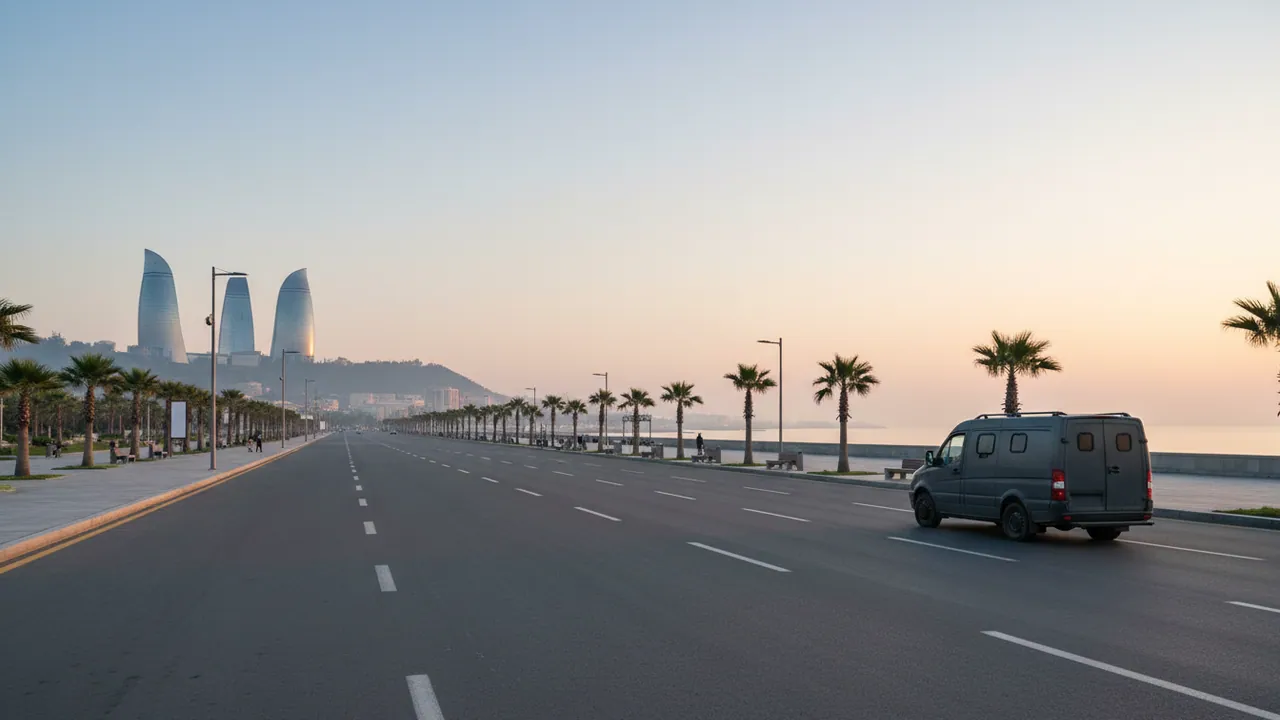
GPS monitoring for cash in transit and bank vehicles
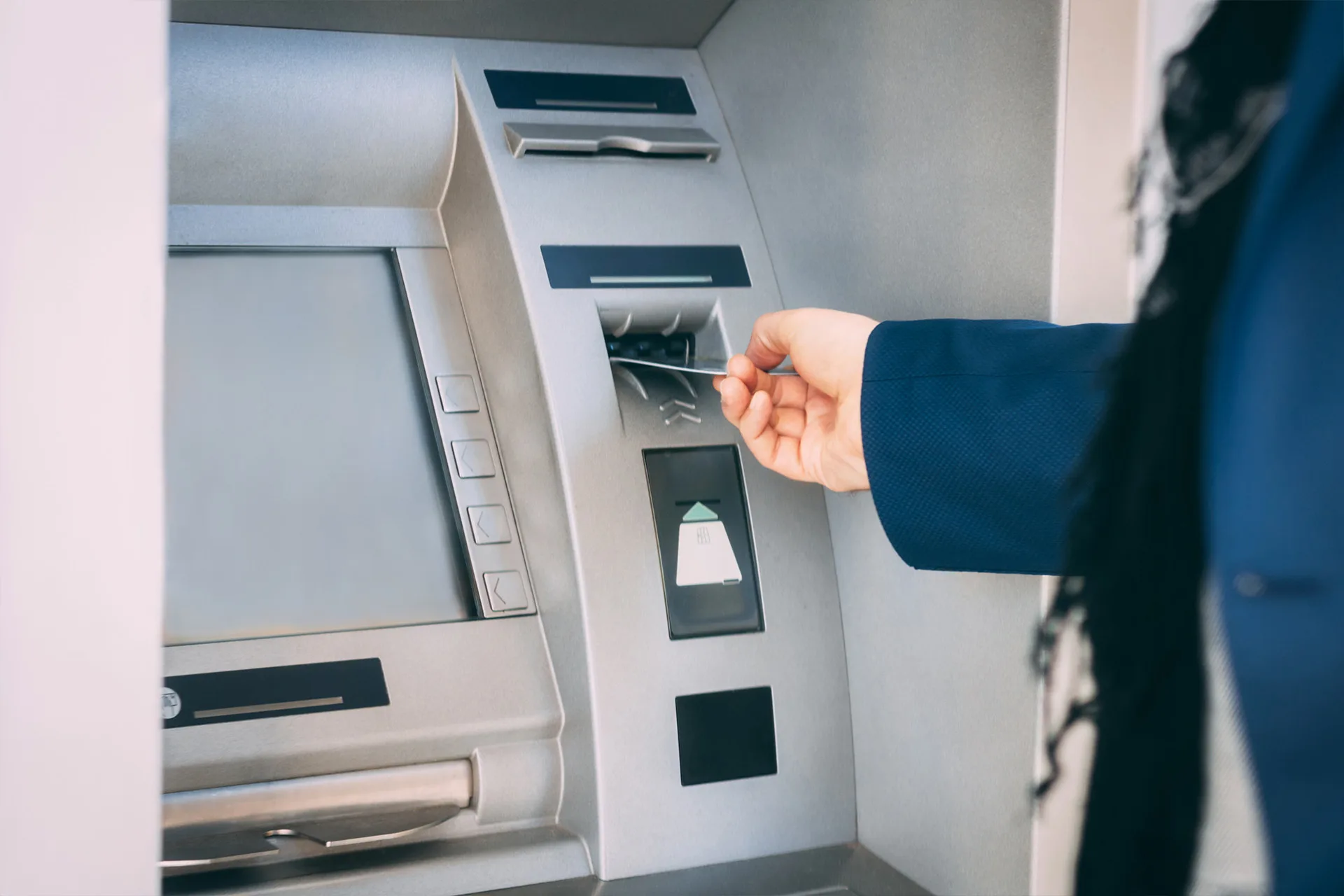
Monitoring for cash-in-transit armoured vans and the service fleets of banks: route and doors under control, panic buttons for the crew, video from the crew compartment and the cash compartment, and a report on every visit to an ATM.
The security department sees the crew's whole shift, not just the final destination.
Security of valuables in transit
Cash in transit is the riskiest part of banking logistics. In a single shift an armoured van calls at dozens of ATMs and branches, and at any moment it may be carrying a large sum. The threat comes from outside, in the form of an attack on the route, and from inside, when the crew breaks the rules.
The security department needs answers to simple questions. Where is the vehicle right now? Is it following the approved route? Was the cash compartment door opened where it should not have been? Has anyone pressed a panic button?
We bring this data together into one picture: tracker, door sensors, buttons, video recorder. The dispatcher sees everything on a screen in the control room, while alerts reach that dispatcher and the responsible staff on their phones.
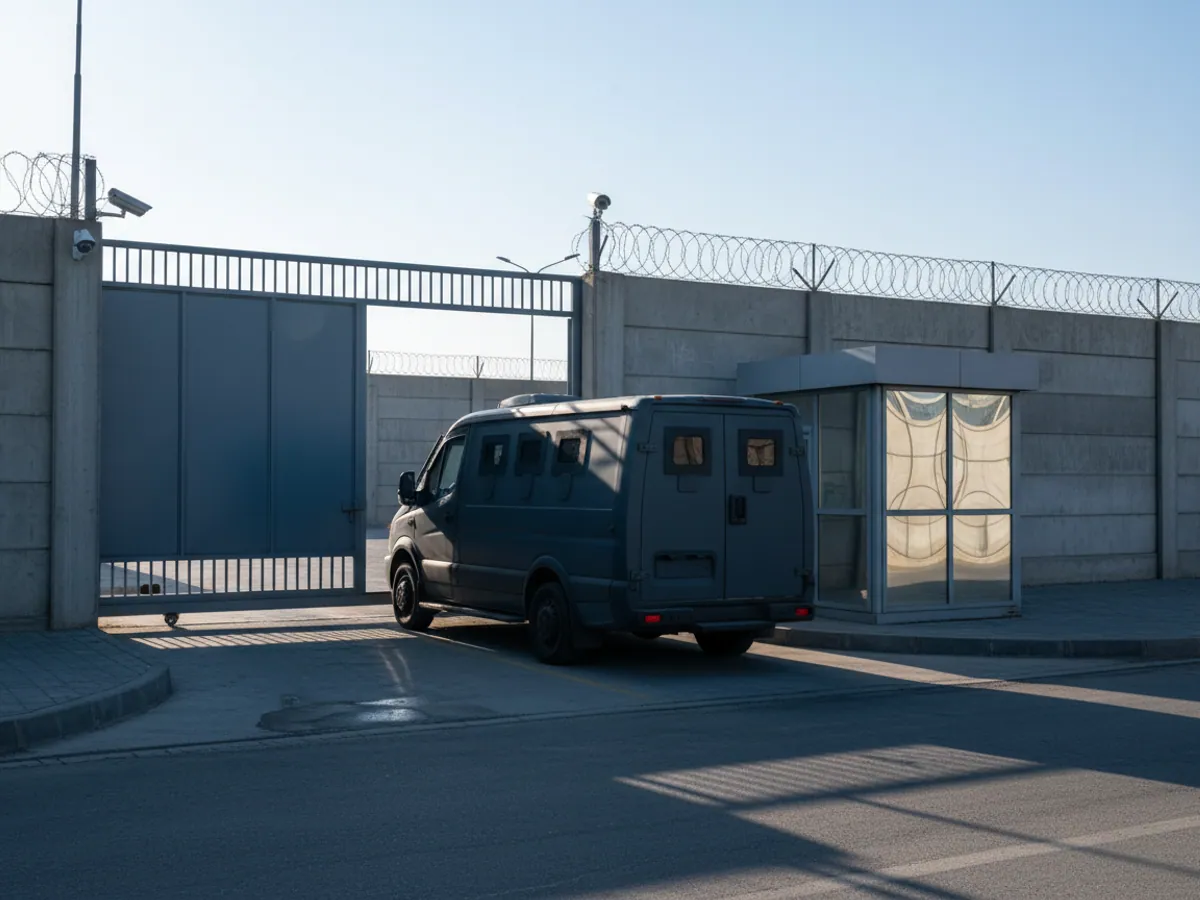
A crew's shift as the security department sees it
08:40. The armoured van leaves the cash centre, and the tracker records the exit from the base geofence. The day's route was loaded in advance: 14 ATMs in the Yasamal and Nasimi districts and two branches in Khatai.
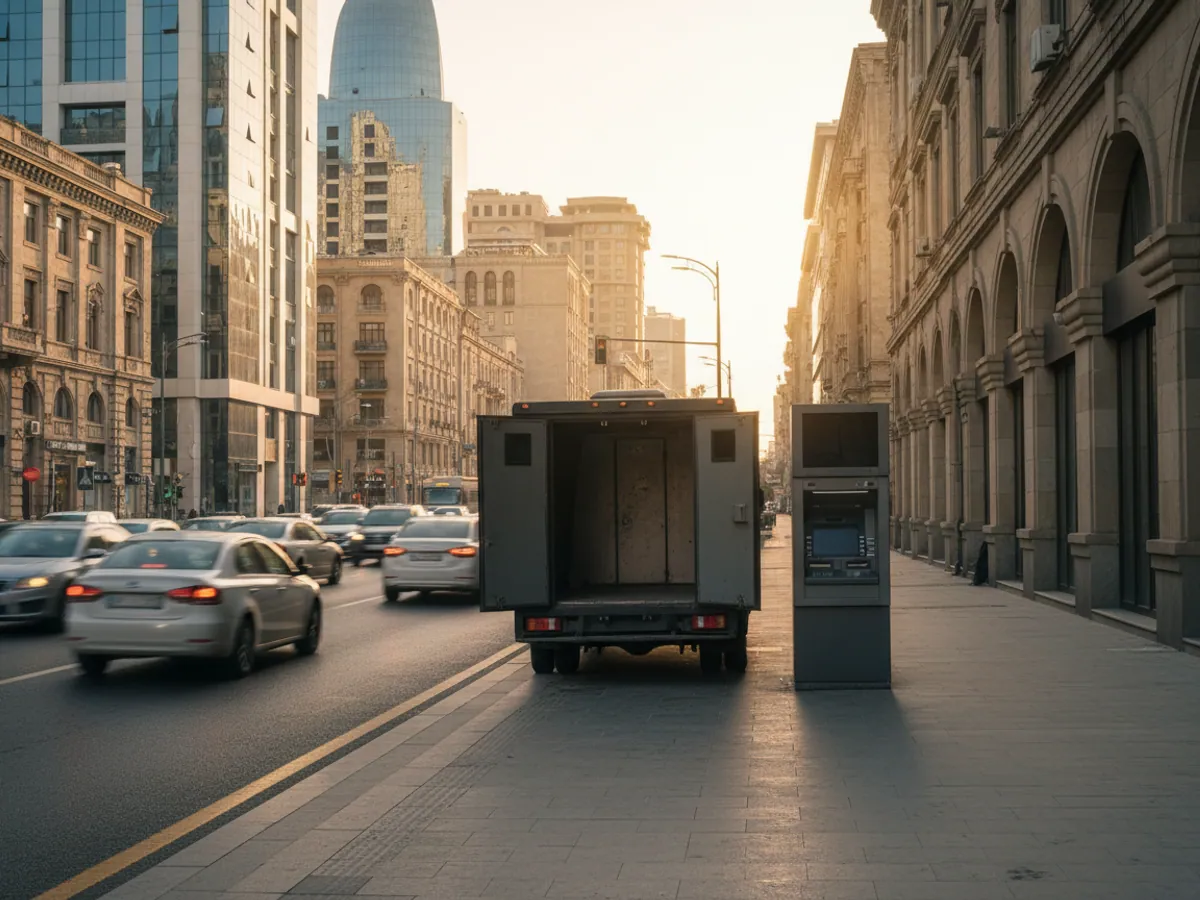
09:15. The first stop. The vehicle entered the ATM geofence, the cash compartment door opened and closed again 11 minutes later. The report records the arrival time, the service time and the departure time.
11:02. Between the fifth and sixth stop the van left the route and pulled up outside a block of flats. Three minutes later the side door opened. The dispatcher receives a notification, rings the crew leader and writes the explanation into the log.
Perhaps the stop had a good reason. Perhaps not. What matters is that the question was asked the same minute, rather than a week later while checking the waybill.
What we are protecting against
The risks of cash in transit are well known to every security department. Monitoring does not replace guards and procedures, but it makes any deviation visible:
An attack on the route
An attempt to stop or seize the vehicle. The crew presses the button, the dispatcher sees the position and the direction of travel and passes the data to the response team.
The crew breaking procedure
Stops outside the schedule, doors opened away from a service point, passengers in the cabin. Often this is the first sign of collusion that precedes a theft.
Signal jamming
Many Teltonika tracker models can recognise GSM jamming, which we take into account when choosing the device. The device records the event and can, under a preset scenario, sound a siren or block engine starting even while there is no connection.
Equipment being disabled
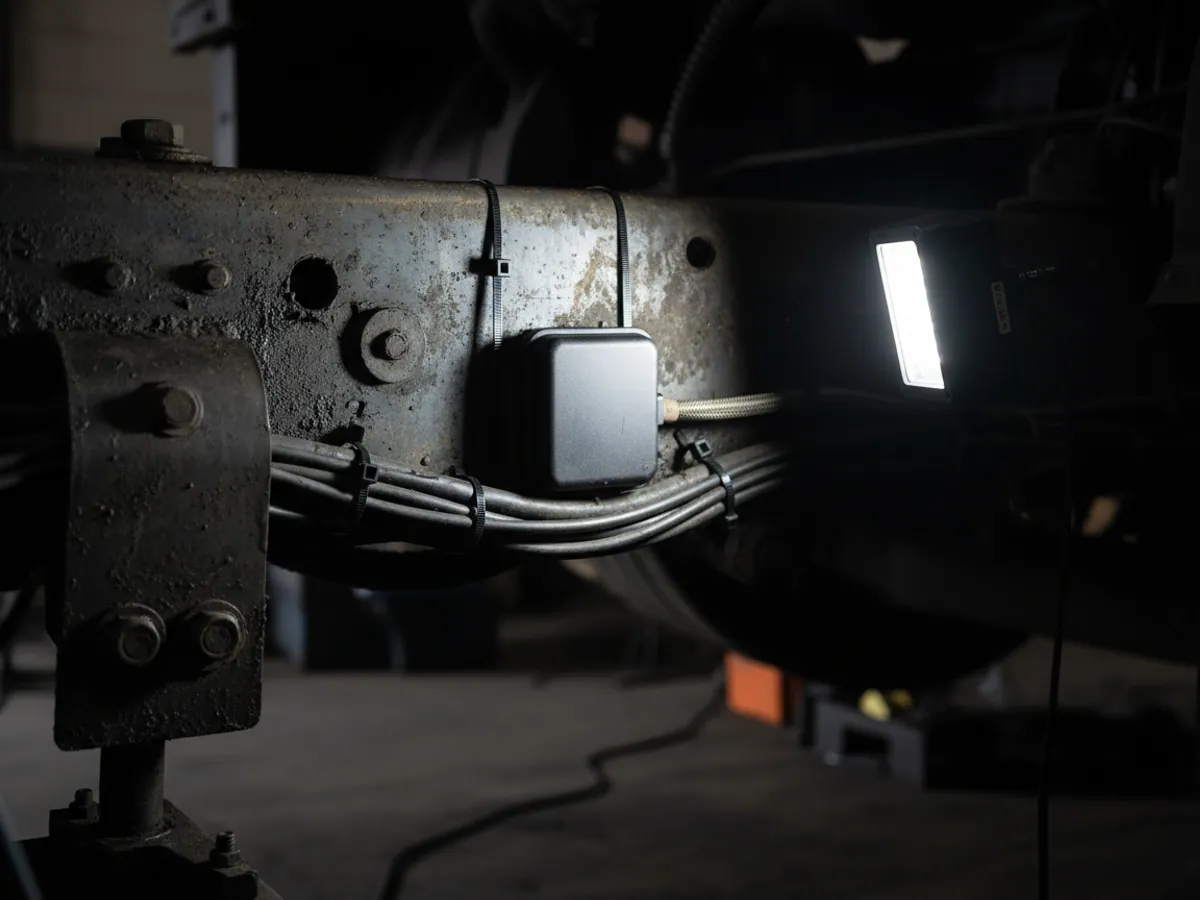
A cut in the power supply or opening of the tracker housing is recorded. The built-in battery gives the device time to send a last message.
What we fit to an armoured van
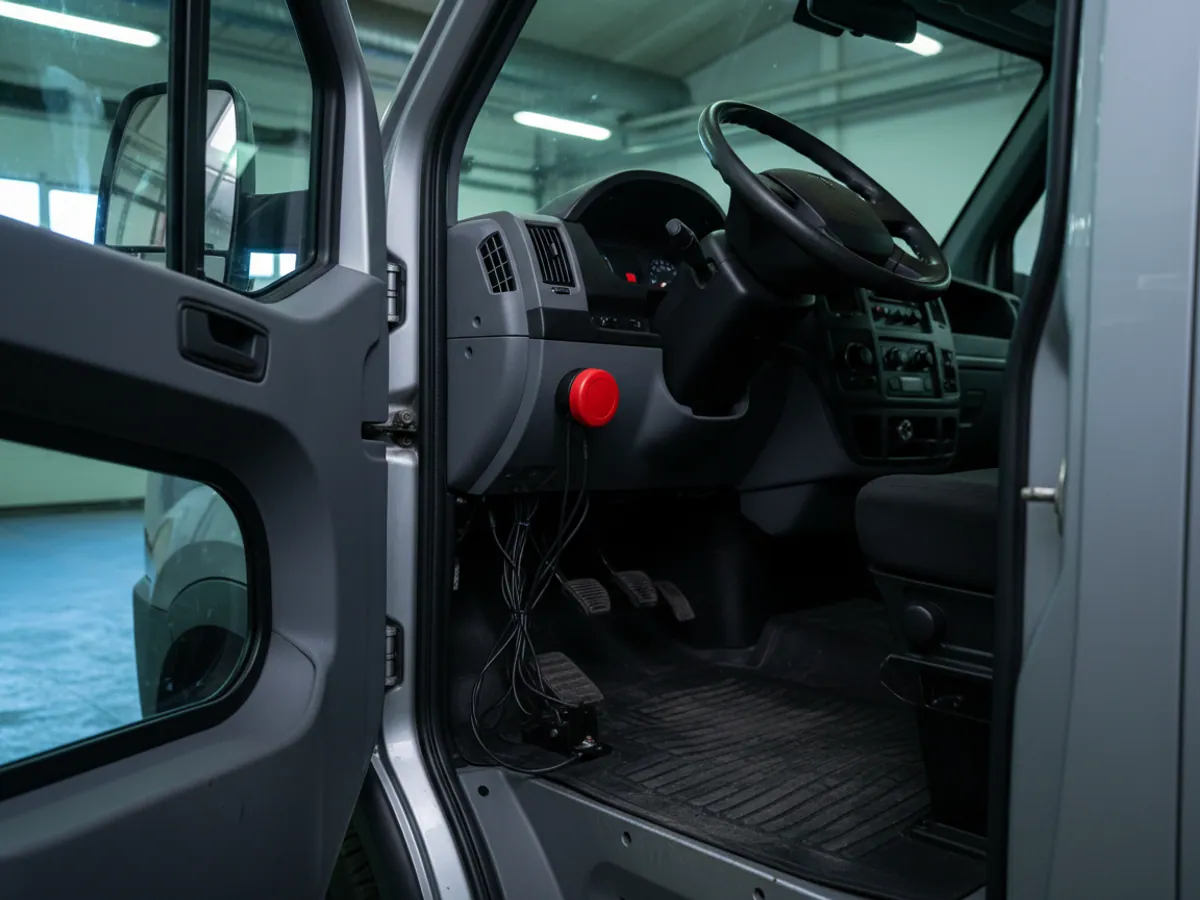
SOS buttons and pedals
Concealed buttons for the driver and in the cash compartment, and a pedal underfoot. Pressing them is invisible from outside, and the signal goes to the duty desk and to responsible staff as a push notification and an SMS. How alert scenarios are set up is described on the page about panic buttons and SOS.
During the pilot we always check that the button cannot be pressed accidentally by a knee or a bag. False alarms quickly train dispatchers not to react.
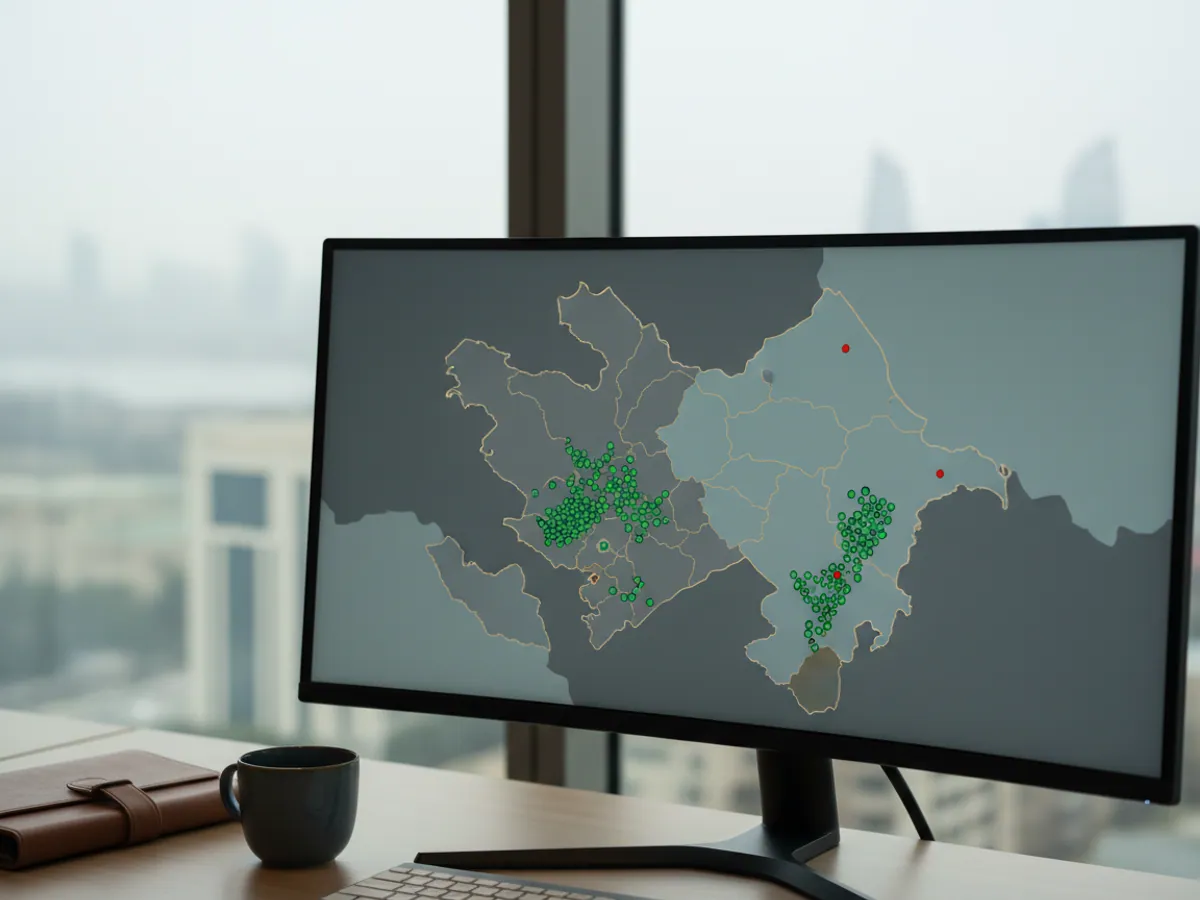
How long each ATM takes
Beyond security, cash in transit is logistics. The visit report shows how many minutes the van actually spent at each ATM, where it stood longest in traffic and which points the crew calls at in an awkward order.
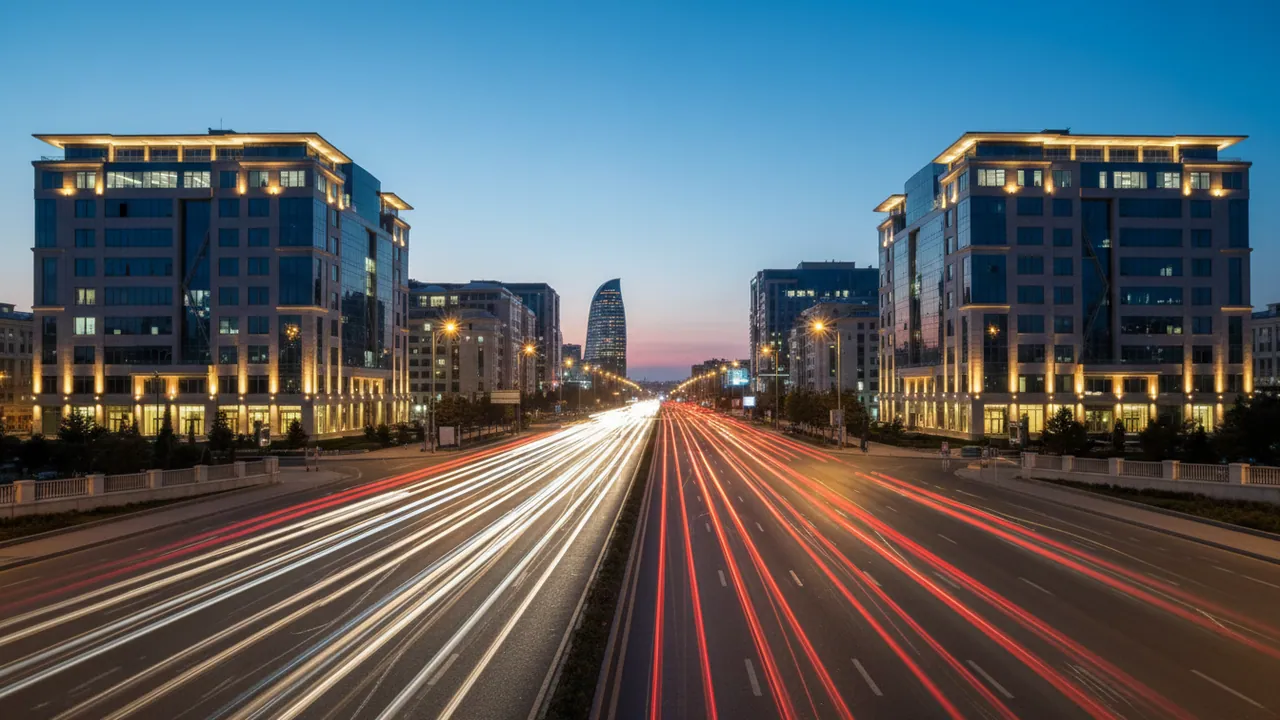
On the strength of that data routes are rebuilt so that mileage falls and the money spends less time on the road. Morning routes across Baku are particularly sensitive to the order of calls: one unnecessary turnaround on Heydar Aliyev Avenue costs 15 to 20 minutes.
The route planning tools are used to plan the round, and the actual deviations show up in the same report.

Branch and management vehicles
A bank also has an ordinary fleet: the head office pool, cars at the regional branches in Ganja, Sumgait and Sheki, and management vehicles. Here the tasks are different. You need to understand how much the vehicles actually run, whether they are used for private purposes in the evenings and at weekends, and who was at the wheel.
The driver presents a driver identification key before setting off, and every trip is tied to a specific person. For management vehicles we set up restricted access: routes are seen only by those who are meant to see them.
A report on how heavily the pool is used often shows that some vehicles go out less than once a week. That is a direct reason to reduce the fleet. Other solutions for financial organisations are gathered in the section on insurance and banking.

Roles, dual authorisation and the alert scenario
Access roles. In a bank's monitoring system everyone has their own role, and rights are set to match it:
- duty dispatcher — sees every cash-in-transit vehicle on the map and accepts alerts, but does not change settings;
- head of the cash-in-transit service — routes, visit and violation reports, without access to management vehicles;
- security department — the full event log and video, with the right to issue remote commands;
- administrator — users, rights, geofences; changes are written into the action log.
Dual authorisation. Critical actions, such as blocking engine starting, cancelling an alert or changing the route for the current day, are better carried out under a two-person rule: the dispatcher initiates and the shift supervisor confirms. Exactly how this is implemented, whether by setting rights, by a separate procedure in the control room or through the bank's own system over an API, is decided together with the security department. The rule is written into the procedures.
The cash-in-transit alert scenario in general terms:
- A button or pedal is pressed, and the dispatcher receives the alert with position, speed and direction.
- The dispatcher checks the crew using a code word. A wrong answer or no answer means the alert is confirmed.
- A confirmed alert is passed to the response team and to the responsible people on the internal list, after which the dispatcher follows the vehicle on the map.
- A false alarm is closed in the log with an explanation and a second member of staff's signature.
The timings at each step, the code words and the contacts are set by the bank. We configure the system to match that scenario and test it during the pilot.
Signing off the pilot on armoured vans
A pilot on two or three vehicles is best closed with a formal sign-off together with the control room. For example:
- every button and pedal has been tested, the alert reached all recipients and the delivery time was recorded;
- opening the cash compartment away from a service point produces an event, while opening it at an ATM does not;
- the behaviour of the tracker when coverage is lost and when power is cut has been checked;
- user roles are configured and critical actions go through dual authorisation as laid down in the procedures;
- the visit report for a week has been reconciled with the cash-in-transit log.
What we need from the bank: the requirements of the security and IT departments regarding data, the procedure for responding to an alert, the list of roles and staff, the typical routes, and access to the armoured vans for an inspection.
How a rollout at a bank proceeds
Agreement with security and IT
We go through which data leaves the vehicle, where it is stored, and who sees it with which rights. This stage is usually the longest, and it is best started straight away.
Inspecting the armoured vans
We look at the wiring, the locks and the places for buttons and cameras. An armoured body affects where antennas can go, so we draw up an installation plan for each model.
A pilot on two or three vehicles
We test the alert scenarios together with the control room, catch false triggers and tune the corridors of the real routes.
The response procedure
Who receives the alert, who rings the crew, after how many minutes it escalates. Without that document the system turns into a pretty map.
Support
For cash in transit the speed of repair matters: a faulty tracker takes a vehicle off the line. Call-out and replacement times are fixed in the service agreement.
What the security department gets
A response in the first minutes
The alert arrives with position, speed and direction. The response team knows where to go.
Procedures under control
Every stop and every door opening is recorded with its time and place. Violations are visible on the day they happen.
Resilience to jamming
The tracker records an attempted jamming and carries out the preset scenario on its own, without waiting for a connection to the server.
A body of evidence
The track, the event log and the video help in internal investigations and in negotiations with the insurer.
Frequently asked questions
What is used in this sector
What we do end to end
Wialon modules for this sector
How it is used in this industry
Case studies from “Insurance & Financial Companies”
Thinking of rolling out GPS monitoring in “Bank fleets”?
Send us an enquiry and we will price it up for your fleet and pick the hardware for this sector: insurance & financial companies.
- 1 We pin down the task
A specialist calls back and asks about the vehicles, how many there are and what you need to keep an eye on.
- 2 We put a solution together
We propose the hardware and the features, and set out the one-off and the monthly cost separately.
- 3 We agree the fitting
At your yard or at ours, on a schedule that keeps the vehicles working.
Request a call
A specialist will call back and match a solution to your fleet and your task.