
Door opening monitoring on vehicles
We fit door opening sensors to vans, refrigerated bodies, semi-trailers and containers, and set up notifications in Wialon for openings away from depots and with the ignition off. The sensor records the fact and the time of an opening, but not what was taken out; we choose the mounting arrangement to suit the type of door.
- 07:40 Doors opened inside the depot geofence
- 13:15 Unloading at a customer in Ganja
- 02:10 Left door leaf opened outside any geofence
- 02:11 Notification to the dispatcher on Telegram
Every body door you have decided to monitor sends an opening and closing event into Wialon with a time and a position. Notifications only arrive for openings away from depots, at night or with the ignition off, and the test result for each door leaf is written into the certificate.
Every opening of the body, with a time and a point on the map
A shortage at the consignee's warehouse is the most unwelcome call a logistics manager can get. Where did those three boxes go: at loading, at the overnight stop near Shamkir, or during a technical stop the driver forgot to mention? Without door opening monitoring there is no answer, only mutual accusations.
A sensor on the body door records every opening and closing, and the tracker ties the event to a time, a position and the state of the vehicle. Doors opened at the depot in Baku on schedule - that is loading. Doors opened in an empty belt of trees on the M-2 at two in the morning - that is a reason to ring the driver right now.
We fit wired reed switches to vans and refrigerated bodies and wireless sensors to semi-trailers and containers, and set up notifications in Wialon along with reports that make sense both to a security department and to a customer lodging a claim.
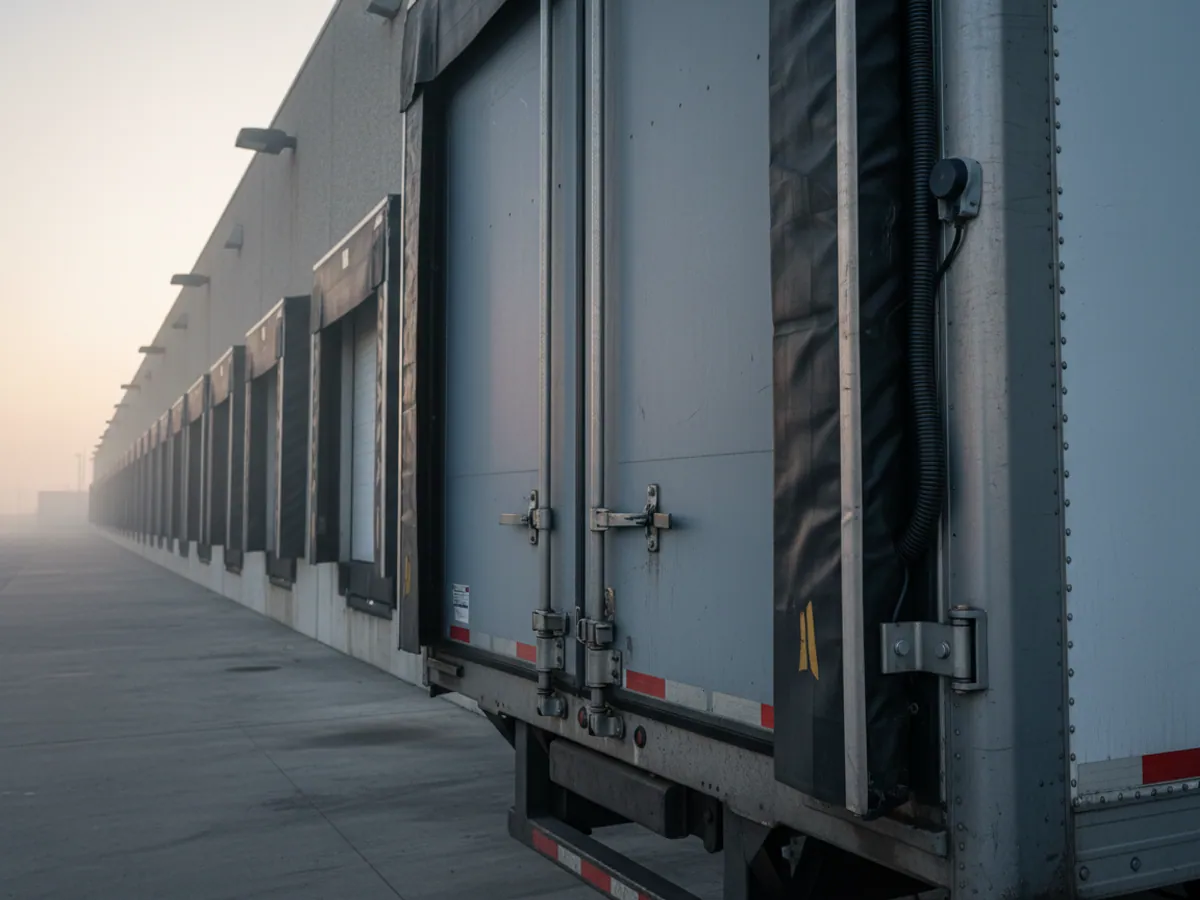
How the work goes, step by step
Doors and cable route
We look at how the doors are built, at the gaps and the seals, and choose a wired or wireless sensor.
Sensor inside the body
Mounted so it cannot be removed from outside. Cable in conduit through existing openings, sealed with mastic.
Geofences and notifications
Depots and delivery points become geofences. Notifications only for openings outside them and at night.
Every door leaf
We open each door, check the event in Wialon and send a test notification to the person responsible.
Door certificate
Which doors are equipped, which inputs they run to, the test results, and who receives notifications.
How a lorry is equipped
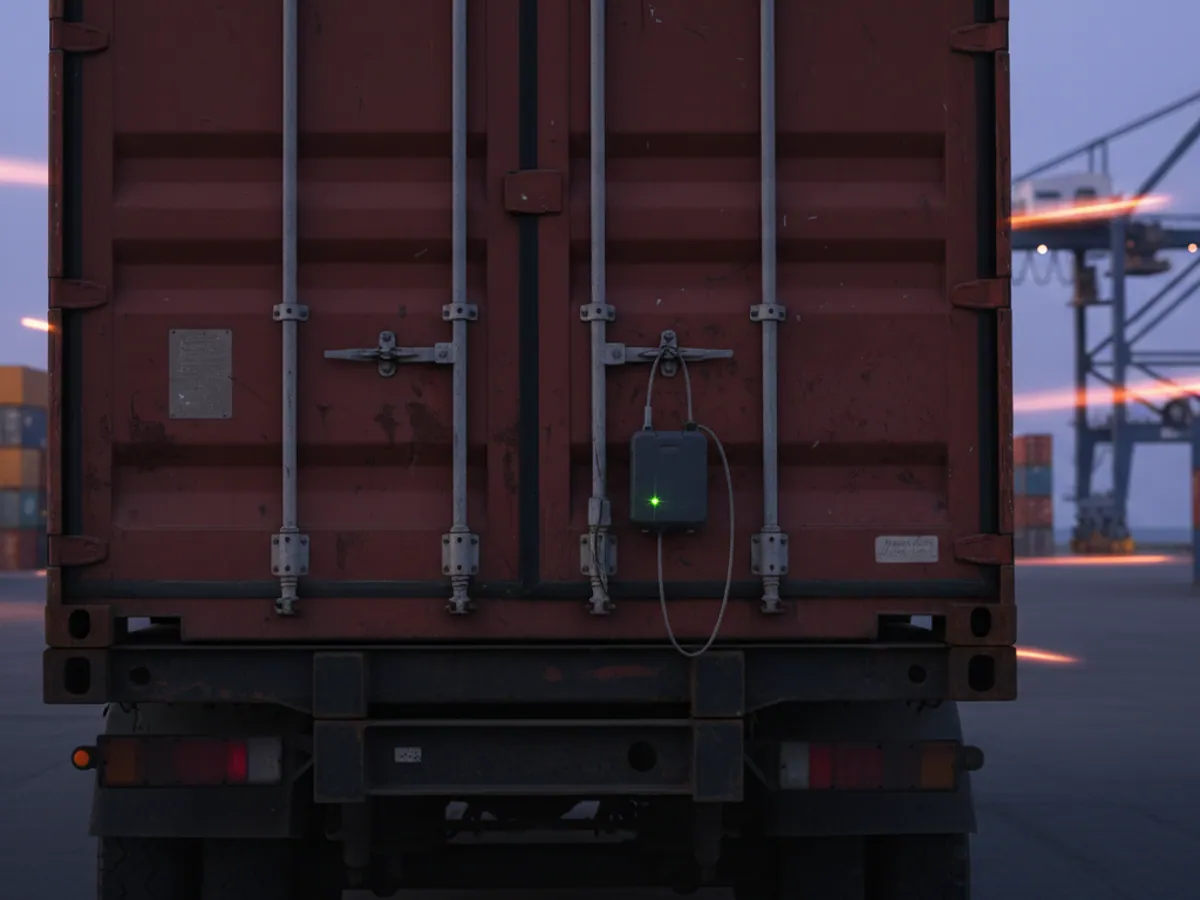
An illustrative example: tractor unit with semi-trailer 10-XX-123 at a yard near the port of Alat, two rear door leaves and a side door.
- Inspection of the doors, the gaps and the seals inspection
The trailer always runs with the same tractor unit, so we fit wired reed switches to every door.
- Reed switches on both leaves inside the body fitting
The cable runs in conduit to the tracker's digital inputs, and the openings are sealed.
- A false opening of the left leaf over rough ground contact bounce
We reduce the gap to the magnet and switch on a filter: an opening only counts if the door stays open for more than a couple of seconds.
- Depot geofences and notification recipients rules
Unloading at your own customers no longer sends notifications; night-time openings still do.
- Test with the ignition off acceptance
We disconnect the earth: the tracker reports the loss of power and keeps running on its battery. The certificate is signed.
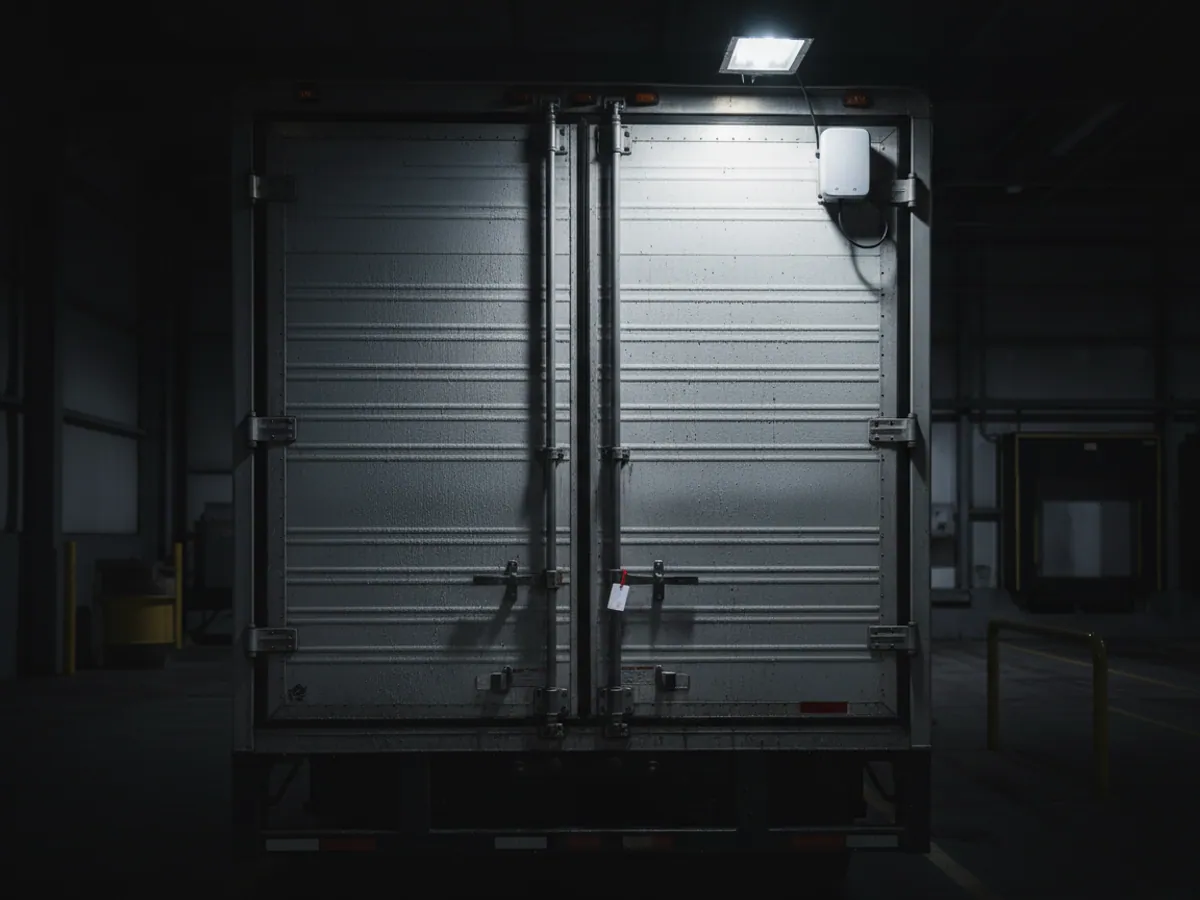
Wired reed switch or wireless sensor
A wired reed switch is the most reliable option for a van, an insulated body or a refrigerated body that always travels with the same vehicle. A magnet on the leaf, the reed switch on the frame, a cable to a digital input on the tracker. No batteries, nothing to replace, and it works for years.
A wireless sensor is needed when there is nowhere convenient to run a cable:
- a semi-trailer coupled to different tractor units;
- a container or a demountable body;
- doors where the wire would have to pass through moving joints.
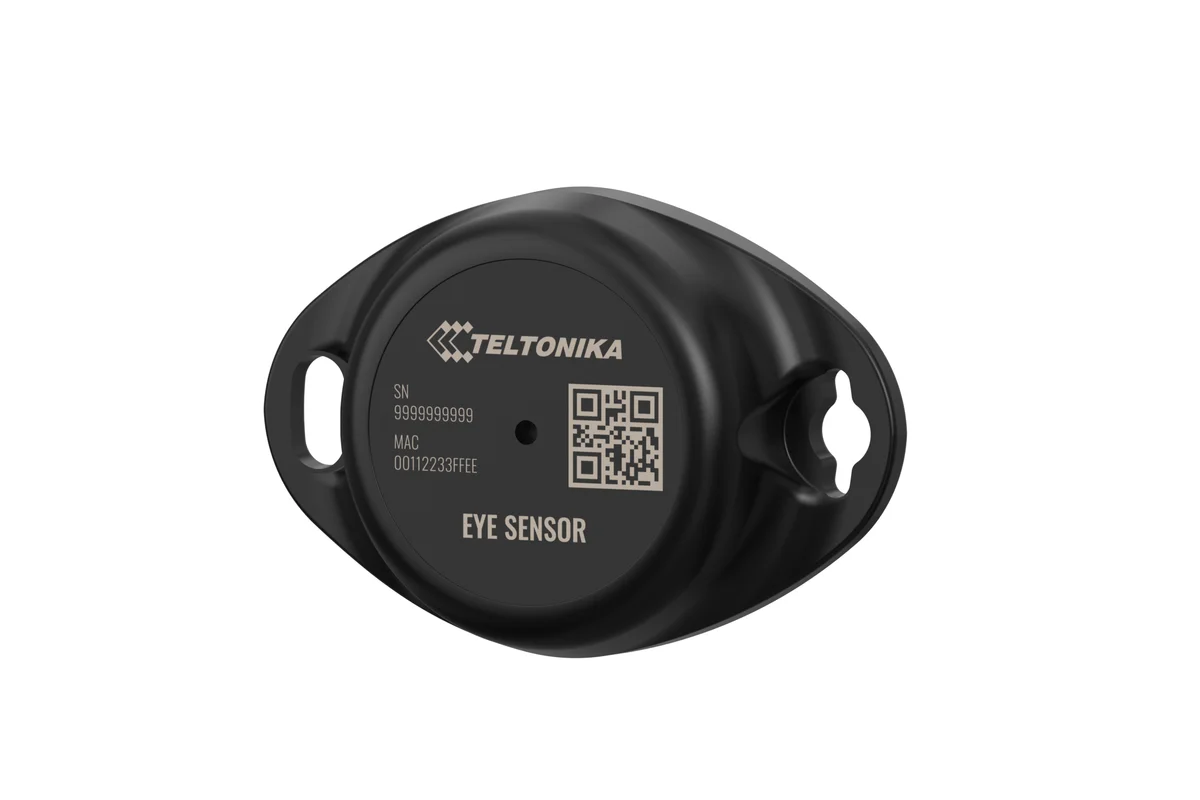
We use the Teltonika EYE Sensor with a magnetic contact: it sends the state of the door over Bluetooth to the tractor unit's tracker. The battery lasts several years, and its charge is visible in the system well in advance.
On the double doors of a lorry we fit a sensor to each leaf. Otherwise an open second leaf goes unnoticed, and pallets come out through it perfectly well.
What the door monitoring service includes
A complete job - from choosing the mounting point to the first test notification on the phone of the person responsible:
A GPS tracker with digital inputs
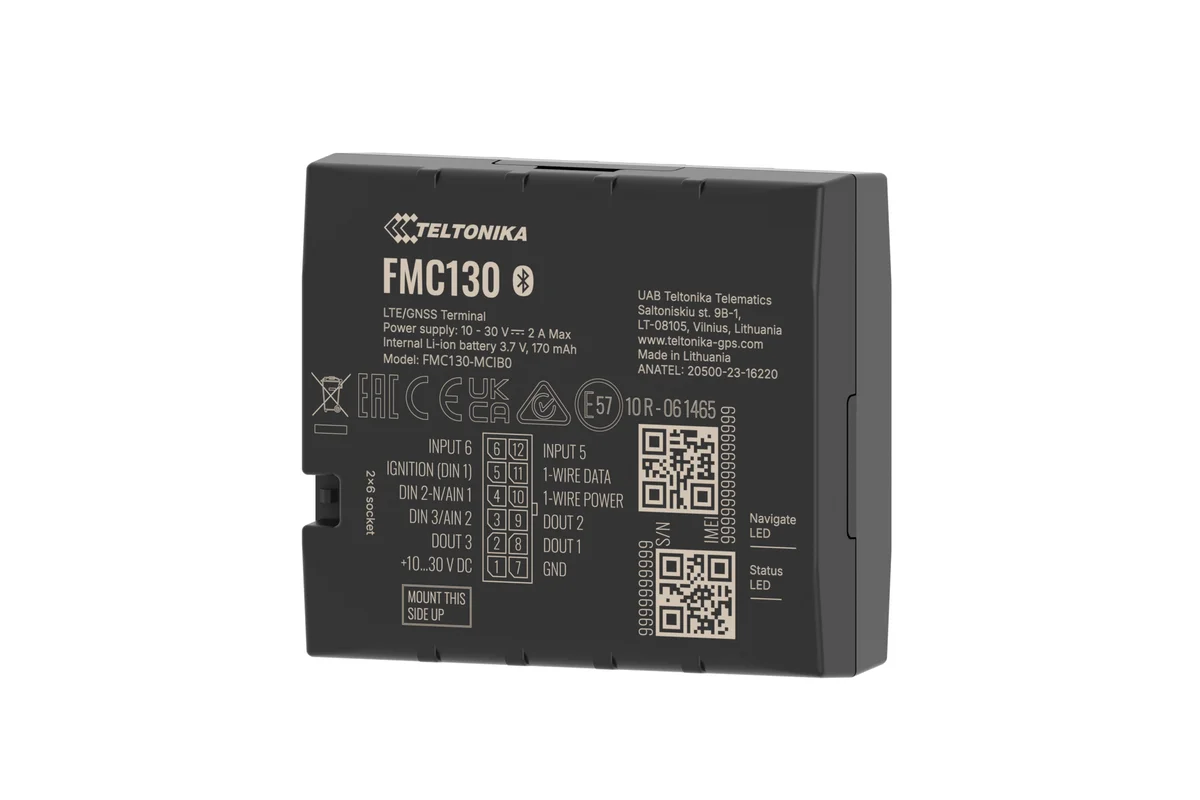
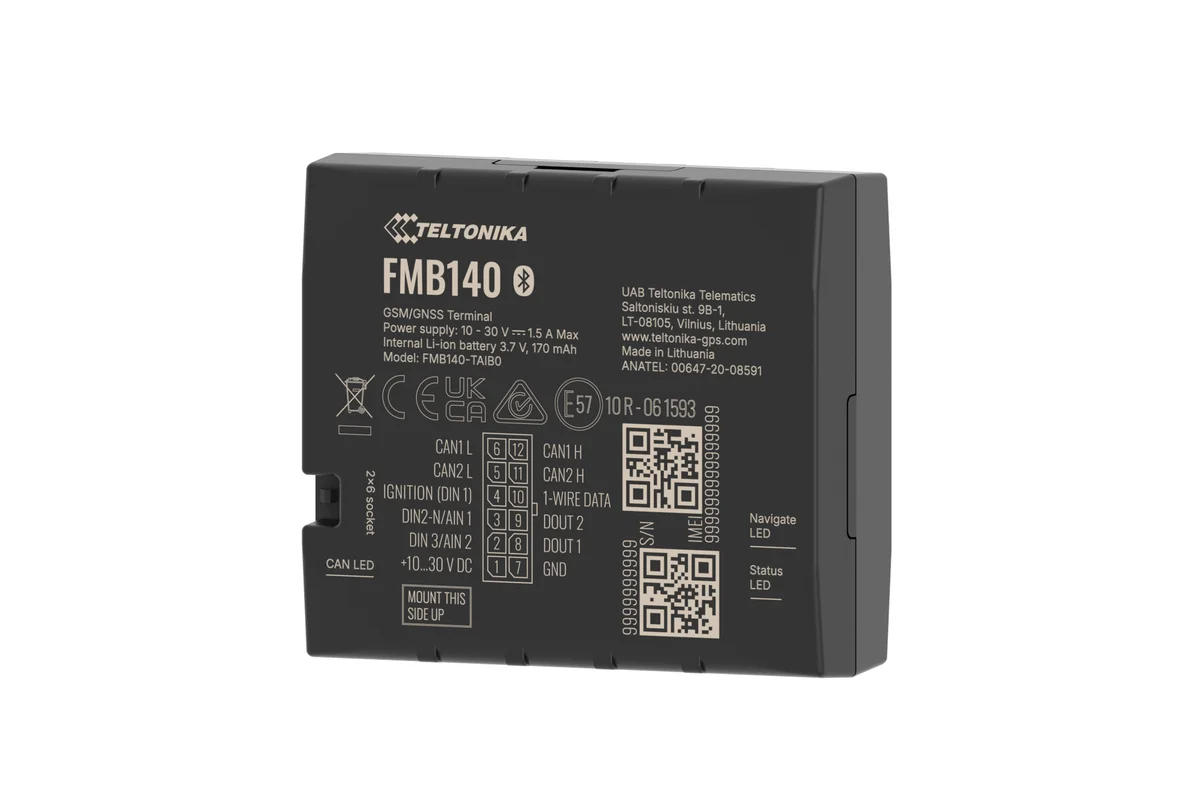
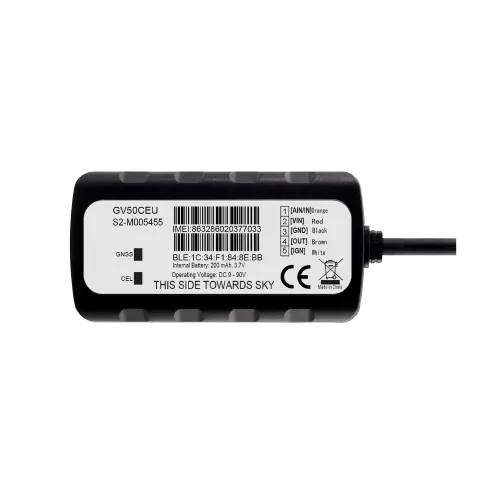
A Teltonika FMC130, FMB140 or Queclink GV50 with enough inputs for all the doors and a backup battery in case the power is cut.
Door sensors
Wired reed switches in a metal housing for bodies, and wireless magnetic sensors for trailers and containers.
Notification rules
Who to tell and when: an opening outside the depot geofences, an opening with the ignition off, doors left open longer than a set time.
Reports for investigations
A log of every opening with the address, the duration and the speed of the vehicle - easy to attach to a reply to a customer's claim.
What is not included
Repair and adjustment of doors, locks and hinges, fitting seals and electric locks, and responding to alerts: your own dispatcher or security department acts on the notification.
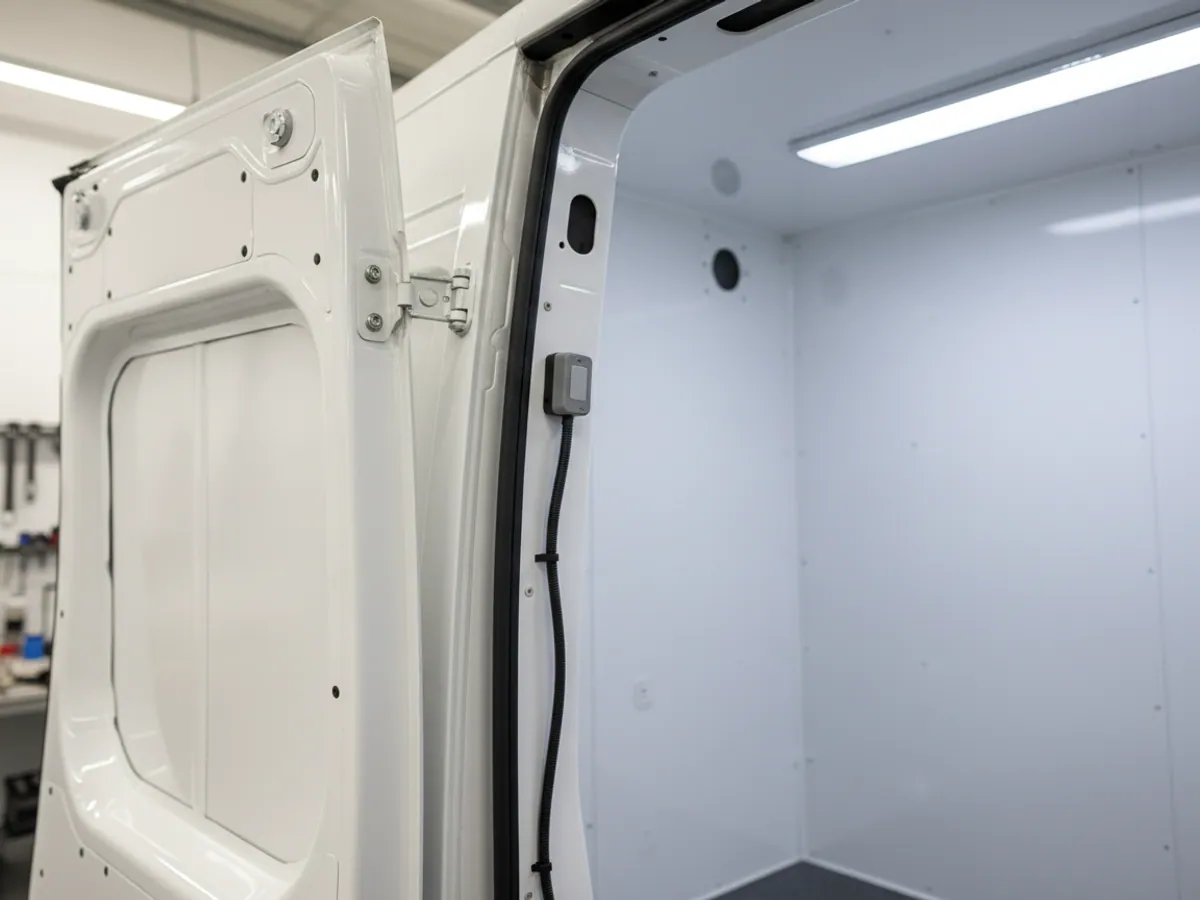
How we fit the sensors and how long it takes
Inspecting the body. We look at how the doors are built, at the gaps and the seals, and at where the cable will run. On a refrigerated body we route around the refrigeration unit and its wiring.
Fitting. The sensor goes inside the body or in a protected spot on the frame, so that it cannot be taken off from outside with a screwdriver. The cable runs in conduit, through the existing openings, sealed with mastic. A van with one door and a tracker takes 2-3 hours; a lorry with two door leaves and a side door takes up to half a day.
Testing. We open each leaf, confirm that the event has reached Wialon, and send a test notification to the person responsible.
What we need from you: the vehicle with an empty body, a list of depots and delivery points for the geofences, and the people who will receive the notifications. Without a list of points the system will honestly send a notification for every unloading, and within a week nobody will read them. So we set up the depot geofences straight away - more about them on the page geofences and checking visits to points.
Where the sensor goes on each type of door
Hinged rear doors
A sensor on each leaf, on the hinge or lock side, inside the body. Even if the leaves can only be opened one after the other, we fit two: that way it is visible when one has been opened just a crack.
Sliding side door
A reed switch on the runner at the fully closed position. The cable goes along the fixed part of the body so that it is not chafed through as the door travels.
Roller shutters and up-and-over doors
A sensor at the bottom of the opening, where the shutter meets the sill. On worn runners the shutter may not close fully, and we check for that before fitting.
Refrigerated body
A wired sensor, with the cable routed clear of the refrigeration unit. We do not drill the body insulation unnecessarily, and any openings are sealed.
Semi-trailer with swapped tractor units
A wireless sensor on the trailer door. The event only comes through if the tractor unit's tracker supports such sensors and the trailer is linked to it.
Containers and compartments
A wireless sensor inside, on the leaf. For tool compartments and the cabins of plant and heavy equipment, a wired one, if there is a tracker nearby with a free input.
Solutions tailored to your fleet
Monitoring lorries and international runs
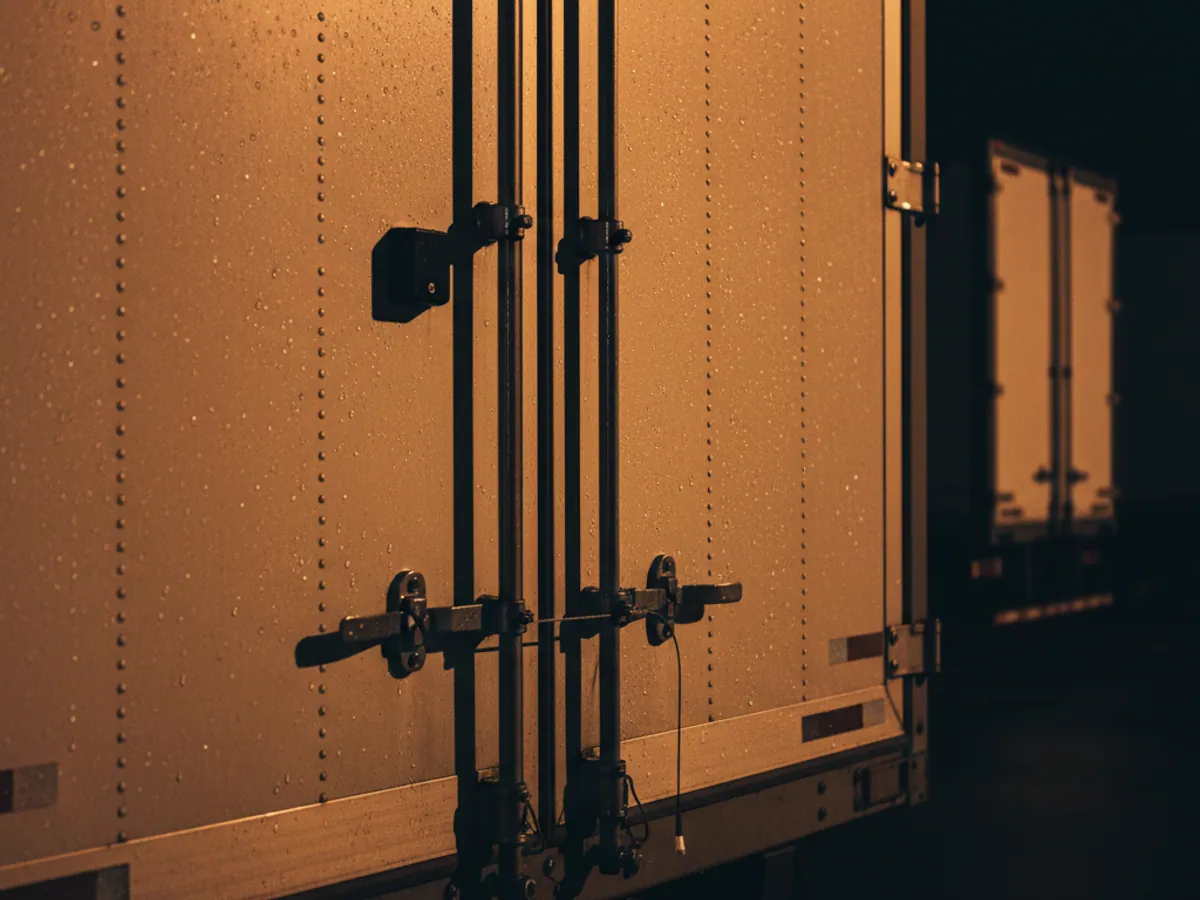

The usual mistakes that stop the monitoring working
We have seen plenty of systems installed just to tick a box. The problem is usually one of these:
The sensor on the outside of the body
A reed switch screwed on from outside comes off in a minute, and the magnet can be held back in place. The sensor belongs inside, or under a protective cover.
One leaf out of two
The right-hand leaf is monitored and the left one gets opened. A lorry needs a sensor on every door, including the side door.
A tracker with no backup battery
The earth is disconnected, the tracker goes quiet, and nobody sees the door open. A built-in battery and a power-loss notification are essential.
Notifications for everything
Hundreds of messages about scheduled unloadings teach people to ignore them. The rules should only fire on suspicious openings.
What you get
Fewer shortages
The driver knows that every opening is visible. In practice unauthorised unloadings become rarer, but the sensor only shows the fact of an opening: it does not replace counting the goods at the warehouse.
Arguments in a dispute
The doors were not opened between loading and the consignee's warehouse - that is a fact with a time and coordinates, not the driver's word.
A quick response
A notification about a suspicious opening arrives within a minute or two, while the vehicle is still there and the driver can be called.
Order at unloading
You can see how long unloading actually takes at each customer - useful when planning runs and when discussing waiting time.

What to pair the door sensor with
On its own the sensor says the door is open. Together with other data it tells the whole story. With temperature sensors you can see how each opening affected the load in a refrigerated body. With a video recorder, a clip from the body camera is saved at the moment of the opening, and there is nothing left to argue about.
All the cargo protection scenarios - from doors to seals and geofences - are gathered on the page cargo security. For distributors with a refrigerated fleet there is a separate page on cold chain logistics. And the wireless sensor we fit to trailers can be seen in the catalogue: Teltonika EYE Sensor.
How to accept the work and what the warranty covers
Accepting the installation is straightforward, and we advise doing it together with our engineer rather than taking anyone's word for it.
Check at handover:
- open each leaf in turn - the event should appear in Wialon within a minute;
- open a door with the ignition off - a notification should reach the person responsible;
- disconnect the vehicle's earth - the tracker must report the loss of external power and keep running on its battery;
- look at where the sensor is: it should not be visible and should not be removable from outside;
- check for contact bounce: rock a closed door and drive over a rough road - there should be no false openings in the log.
Afterwards we draw up a certificate: registration number, which doors are equipped and with what kind of sensor, which tracker inputs they run to, the test result for each leaf, the notification recipients and the list of depot geofences. Our engineer and your responsible person both sign it.
We give a warranty on the fitting: if a sensor stops triggering because of its mounting or its cable, we put it right free of charge. The sensors and trackers themselves are covered by the manufacturer's warranty.
What really needs attention over time is the doors. Worn hinges and locks on older vans change the gap between the magnet and the reed switch, and the sensor starts missing events. Once a year, at the ordinary body service, we check the gaps and the mountings. On wireless sensors we keep an eye on the battery: a low charge notification arrives in advance, and replacing it takes a few minutes.
Wired or wireless sensor
The choice depends on whether the body always travels with the same vehicle.
| Wired reed switch | Wireless EYE Sensor | |
|---|---|---|
| Works without batteries | Yes | No, a battery lasting several years |
| Suits swapped trailers | No, the cable runs to the tracker | Yes |
| Fits without running a cable | No | Yes |
| Vans and refrigerated bodies | Yes, the most reliable option | Yes, if there is nowhere to run a cable |
| What the tracker needs | A free digital input | Support for Bluetooth sensors |
Questions about “Door opening monitoring on vehicles”
Request a call
A specialist will call back and match a solution to your fleet and your task.