
In brief
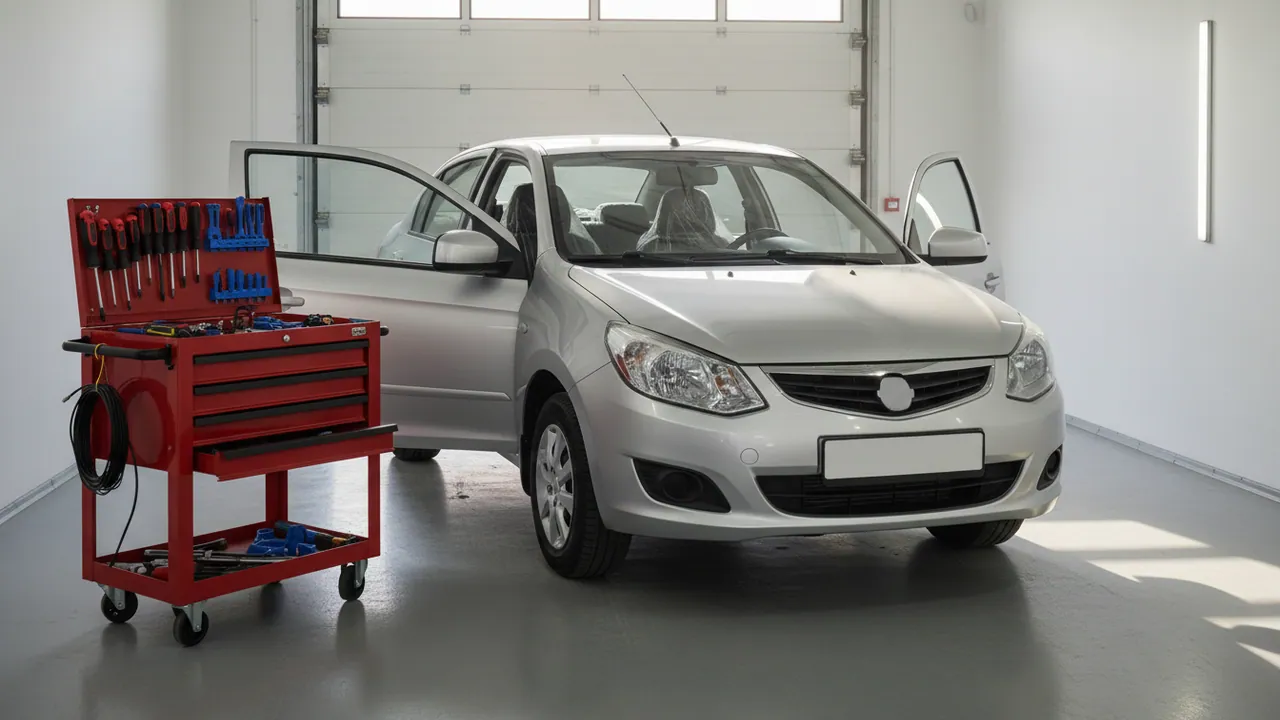
A passenger car takes 30–40 minutes, a lorry with CAN 1.5–2 hours, and a vehicle with a fuel level sensor and a tank calibration run 3–5 hours. The engineer works at your own base, does not cut into the factory wiring, and after a test drive hands over a certificate with the wiring diagram. Whether the vehicle warranty survives is the dealer's decision under the dealer's own rules, so on a new vehicle it is better to check the terms before the fitting.
What worries vehicle owners most before GPS monitoring is fitted is not the price but the intervention in the vehicle. "Will the warranty be void?", "Will half the interior be taken apart?", "How long will the vehicle stand idle?" — we hear these questions every day.
In this article we go step by step through how professional GPS tracker fitting works, from the request to handing over a working system. The time depends on the vehicle, and we do not cut into the factory wiring, so as not to give the dealer grounds for a warranty dispute.
Stage 1. The request and the choice of equipment
It all starts with a short conversation: what vehicles you have, how many units and what the monitoring has to do for you. The choice of terminal follows from that:
- Passenger cars and light commercial vehicles — a compact tracker of the Teltonika FMB920 class: coordinates, mileage, driving style, a built-in backup battery.
- Lorries, buses, heavy machinery — a professional terminal of the Teltonika FMB130 class with extended inputs: connection of fuel sensors, temperature sensors and driver identification.
- Vehicles with a digital bus — a CAN adapter is added, reading the on-board computer data: exact consumption, engine revolutions, engine hours, engine fault codes.
Choosing the equipment takes a day. You receive a specification: the tracker model, the set of sensors and the final cost — before any work starts.
Stage 2. The engineer's visit and the fitting: how long the vehicle stands idle
The equipment can be fitted at our workshop or on your premises — for fleets the engineer comes out to the base, so the vehicles do not drop out of the run schedule. Indicative times for one vehicle (the same as in the description of the fitting service):
- 30–40 minutes — a passenger car, basic connection;
- 1.5–2 hours — a lorry with a connection to the CAN bus;
- 3–5 hours — a vehicle with a fuel level sensor and a calibration run on the tank.
The time grows if the inspection turns up faulty factory wiring, the unusual electrics of heavy machinery or a tank of awkward shape. The engineer flags things like that before starting work.
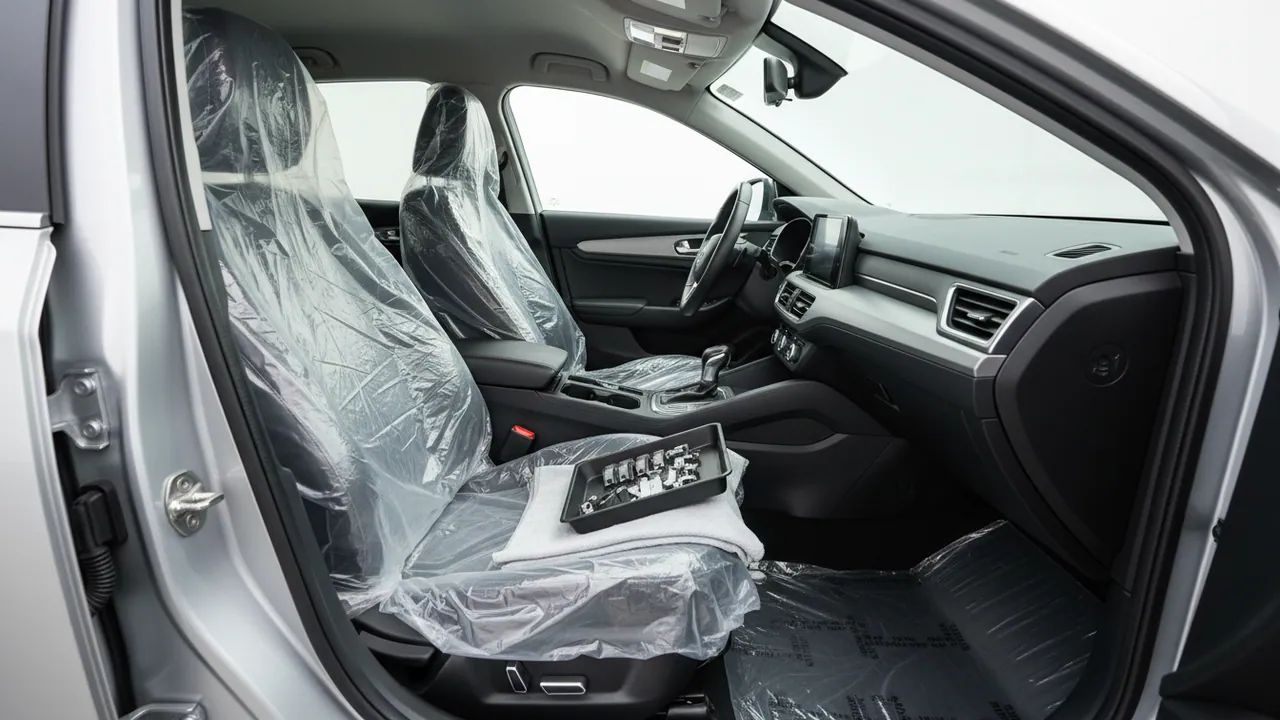
The engineer connects the terminal to the on-board electrics through a fuse, checks the quality of GNSS and GSM reception, and mounts the device so that it does not suffer from vibration and damp.
Stage 3. Concealed fitting
For rental fleets, taxis and leased vehicles it is critical that the driver does not find the tracker. We place the device deep behind the standard trim of the dashboard, wire it into the factory looms without twisted joints left in plain sight, and disguise it as a factory component. Fitting like this is noticeably harder to find than a tracker under the mat, but an experienced auto electrician stripping the whole dashboard will find it all the same — which is why concealment is backed up by tamper detection.
Tamper detection is configured at the customer's request. The tracker registers the loss of external power and switches to its internal battery; if there is a connection, the notification reaches Wialon, Telegram or SMS usually within a couple of minutes. If the tracker has lost the network (an underground car park, a jammer, a mountain stretch), the event is held in memory and arrives once the connection is restored. A separate rule can be set for "no data for longer than N minutes" — it firing points to a problem, but does not prove tampering: an ordinary area without coverage can be the cause too.
Stage 4. The dealer warranty: what depends on us and what on the dealer
The commonest fear is that "the official dealer will take the car off warranty". Let us be straight about it:
- The power connection is made through the standard circuits with a fuse, without cutting the factory wiring — this is a routine service operation.
- Data from the CAN bus we take with a contactless reader: the device is clamped over the insulation of the wires and reads the signal inductively, without touching the contacts. No trace of cutting into the bus is left behind.
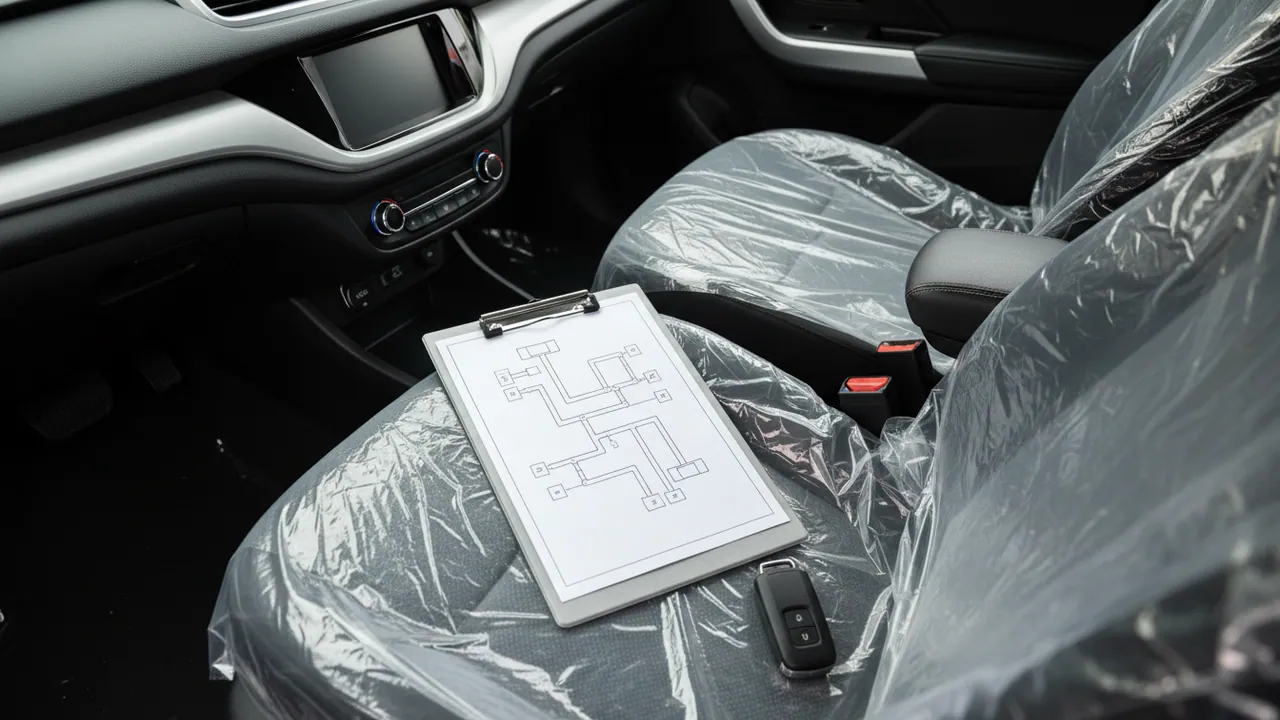
- When the work is finished you receive a completion certificate with the wiring diagram — a document for the dealer, should questions arise after all.
The decision on the warranty is the dealer's, under the dealer's own terms, and those differ from marque to marque. For a new vehicle the order is this: before the fitting, ask the dealer whether additional equipment may be installed and in what form they want it confirmed. If the dealer asks for a written description of the wiring, we prepare it in advance. If they insist the fitting is done only at their own service centre, it is better to know that before the engineer sets out.
Stage 5. Connecting the sensors and configuring Wialon
After the fitting, the engineer connects the sensors you ordered (fuel, temperature, driver identification) and calibrates them. Then an engineer configures the Wialon monitoring platform:
- creates the company account and an object for each vehicle;
- sets up the geofences: the base, warehouses, delivery points, prohibited areas;
- switches on the reports you need: mileage, fuel, engine hours, driving style;
- configures the notifications — into the app, by SMS or into Telegram.
Stage 6. Testing and training
The system is only handed over after a test drive: the engineer compares the track against the real route, checks that the ignition registers and that the sensor readings are correct. Then we run the training — we show the dispatcher or the owner how to read the reports, build tracks and respond to notifications. Usually 30–40 minutes is enough: the Wialon interface is quick to pick up.
What to have ready for the engineer's visit
- Access to the vehicle — the keys and somewhere it is possible to work for 1–1.5 hours (a canopy or a bay if it rains);
- A list of the vehicles — the make, model, year and registration number of each unit: that speeds up creating the objects in the system;
- A contact person — someone who will accept the work and go through the training;
- for a fuel level sensor — the ability to fill the tank completely on the day of the calibration run.
Timings for a fleet: 10 and 50 vehicles
A frequent question from fleet managers: "Are we really going to spend a month on this?" No. The work is planned so that the vehicles do not drop out of their runs:
- A fleet of up to 10 vehicles — 1–2 working days: the team fits the equipment in batches while the rest of the vehicles keep to their schedule.
- A fleet of 50 vehicles — 1–2 weeks on an agreed schedule: fitting usually happens in the evenings and at weekends, when the vehicles are back at base.
The platform is configured in parallel with the fitting, so the first vehicles appear on the map on the day they are installed. What all of this costs is set out in our breakdown of the price of GPS monitoring; how to choose the tracker itself is in the article GPS, GLONASS or GNSS.
An acceptance checklist: what to check before you sign the certificate
- the vehicle is visible in Wialon and the track of the test drive matches the real route;
- switching the ignition on and off changes the status in the app within about a minute;
- cutting the power sends a notification, and the tracker stays in contact on its battery;
- for a fuel level sensor — a calibration table exists, and the level in the report matches the refuelling;
- the certificate states the model, the serial number of the tracker and the point where the power is connected.
Limitations it is better to know about in advance
On vehicles without a CAN bus, or with a closed protocol, consumption cannot be calculated from CAN — for fuel you need a level sensor. On older vehicles with weak wiring the engineer may decline to connect until the fault is put right. In mountain districts without coverage the data arrives with a delay: the tracker accumulates it in memory and sends it once a network appears.
The warranty on the work
The fitting work carries a warranty — the term and the conditions are stated in the description of the fitting service and in the contract. If a fault is connected with the installation or the wiring, it is put right under that warranty; damage from tampering or from a road accident is not covered by it. The equipment carries the manufacturer's warranty. Questions about the platform, the reports and the settings are handled remotely by technical support, with no site visit.
Send us a list of your vehicles — we will select the equipment and agree a fitting schedule that keeps the vehicles on the road.
GPS.az — satellite vehicle monitoring in Azerbaijan.