
In brief
The cost is made up of a one-off part (tracker, fitting, sensors) and a monthly one (the subscription for the platform and for connectivity). The main multipliers are the type of vehicle, the number of machines and the set of sensors. We work out the exact figure after a short set of questions; below is what that figure consists of and how to check any quotation yourself.
"How much does GPS cost?" is the question we hear most often on the phone. And the most honest answer to it is this: the price depends on the task. Monitoring a single passenger car and controlling fuel across a fleet of 50 tipper lorries are solutions of a different class with a different budget.
In this article we set out what the cost of GPS monitoring in Azerbaijan is made of, what expense items exist, where the hidden charges of cheap solutions are buried and how to calculate the payback for your own fleet — without marketing promises and "prices from".
What the cost of GPS monitoring is made of
The final price of a solution always consists of four or five components. Let us go through each of them.
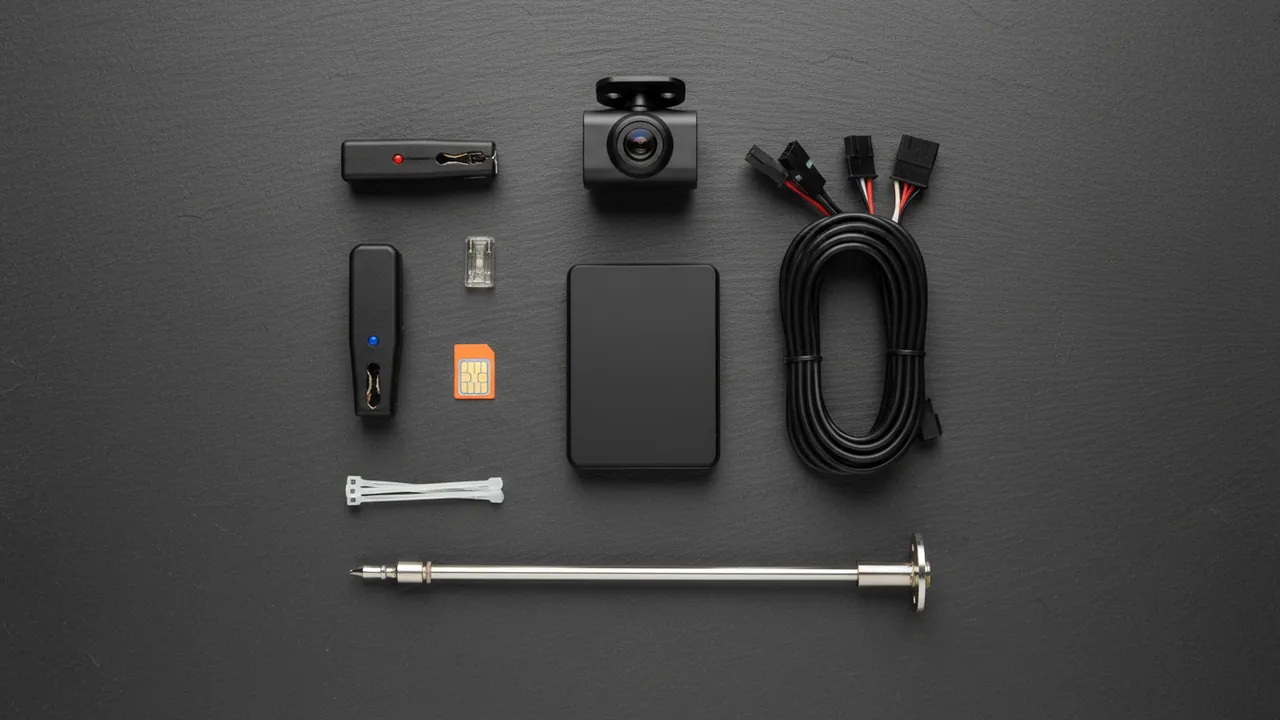
- The GPS tracker. The device itself, fitted into the vehicle. This is a one-off investment. The range is wide: basic terminals for passenger cars cost noticeably less than professional CAN trackers for lorries and heavy machinery. Current models and specifications are in our equipment catalogue.
- Fitting. Professional tracker installation with a connection to the on-board electrics, concealed placement and a jamming check. A one-off job; the price depends on the type of vehicle and on how complicated the connection is.
- SIM card and data. The tracker sends its data over the mobile network. Usually a SIM with a data allowance is already included in the subscription service — but this is a point worth confirming with any contractor.
- The subscription fee. A monthly payment for the Wialon monitoring platform, for history storage, reports, notifications and technical support. Charged per object.
- Additional sensors. Optional: a fuel level sensor, driver identification, temperature sensors, video terminals. Fitted only where they solve a specific problem.
It is worth being clear about this: one-off costs (equipment plus fitting) are paid once, while the subscription fee is an operating expense, and it is what determines the cost of ownership over a two- to three-year horizon.
Why we do not publish a "price list for everything"
The exact figure is always worked out for the task in hand, and here is why. The result depends on:
- the type of vehicle — passenger car, lorry, heavy machinery, generators;
- the number of objects — fleets from 10 vehicles upwards fall under different terms than a single installation;
- the set of sensors — "just coordinates" and "fuel control plus driver identification" differ several times over in budget;
- the method of connection — simple power from the on-board electrics, or reading data off the CAN bus;
- the reporting requirements — standard Wialon reports, or integration with 1C and your own ERP.
Any company that quotes you a final price before establishing these parameters is either building in a large "just in case" margin, or will make the difference up later through hidden charges.
A comparison by task: from a passenger car to a quarry tipper
Passenger and light commercial vehicles
The basic task: where the vehicle is, where it has been, how many kilometres it has covered, how the driver drives. A compact tracker wired into the on-board electrics is enough. This is the most affordable segment, both in equipment and in fitting.
Lorries and long-distance haulage
Here reading data off the CAN bus is added: exact fuel consumption from the on-board computer, engine revolutions, axle load, engine hours. The equipment costs more than the basic kit, but it is precisely what turns monitoring from "a dot on a map" into a tool for managing costs.
Heavy machinery and construction sites
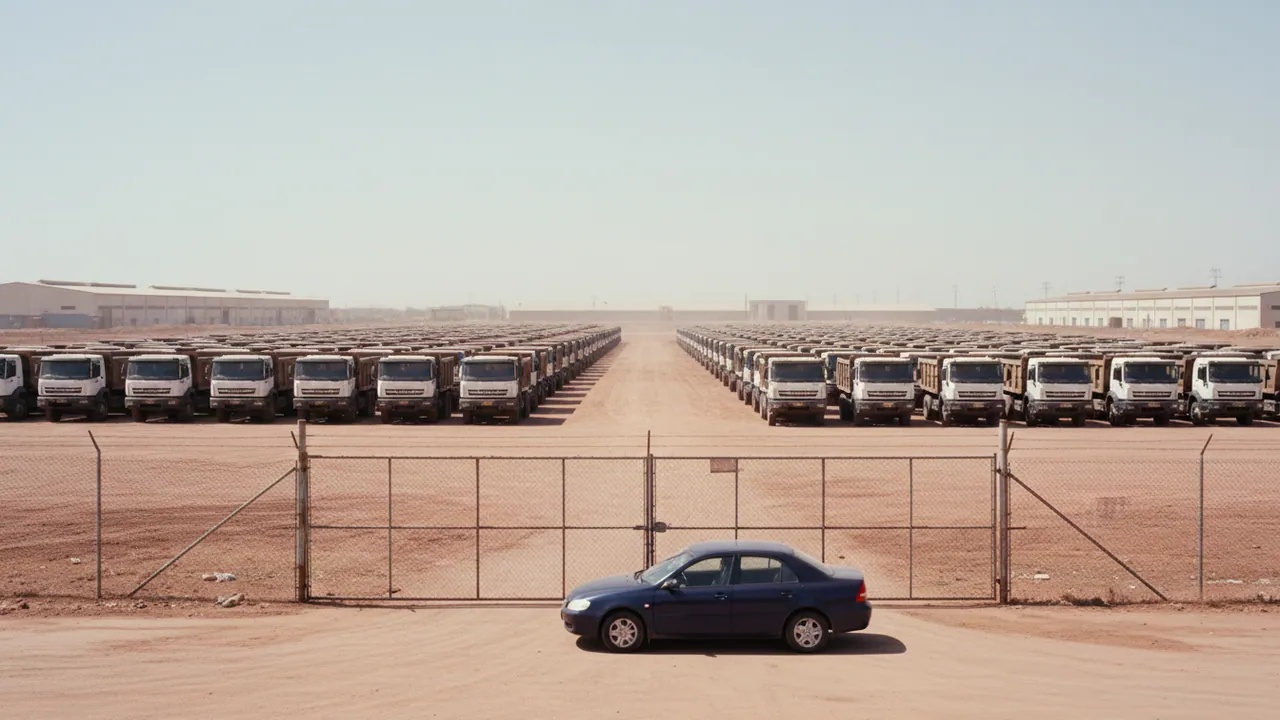
Excavators, bulldozers, cranes: the key metrics are engine hours, the work of attached equipment and idle time; how this is arranged on site is covered in the section on monitoring for construction. Protected housings and connections to unusual electrics are needed. The fitting is more complex and the equipment is industrial grade.
Fuel control (fuel level sensor)
A submersible fuel level sensor is an item of its own: the device itself, the calibration run on the tank and the setting up. In budget terms it is usually the most noticeable option after video. It pays for itself where the tanks are large and refuelling happens from your own bowser or on fuel cards: that is exactly where siphoning is hardest to catch from receipts. On a passenger car with a small tank a fuel level sensor is usually unnecessary.
Video monitoring
Cameras in the cab and around the vehicle, incident recording, driver fatigue monitoring. The top price segment — taken by passenger carriers, by distributors of high-value cargo and by fleets with a high accident rate.
The hidden costs of cheap solutions
There are always offers on the market that are "half the price". Let us look at what that "saving" is made of.
- Single-system trackers with no certification. They lose the signal in the dense development of Baku and draw "jumping" tracks — we cover why this happens separately. The data is there; trust in it is not.
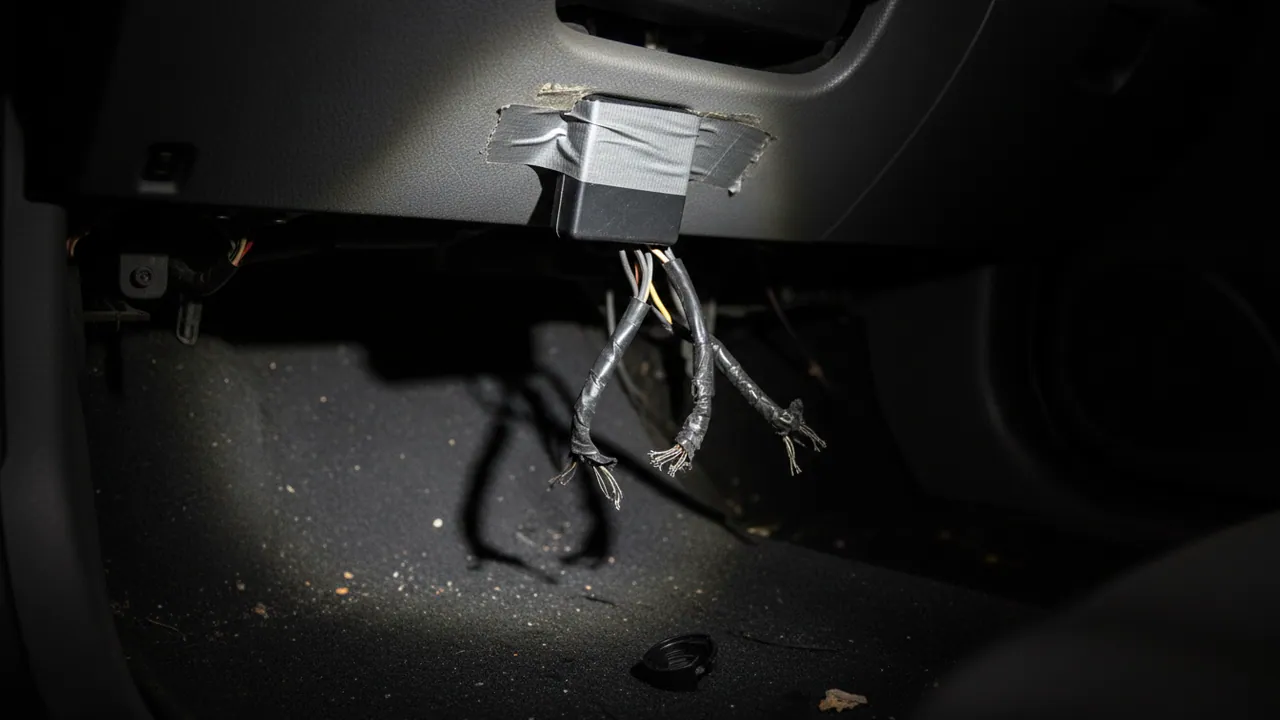
- A "taped under the dashboard" installation. The driver finds and disconnects the device in five minutes. Concealed fitting costs more because it takes longer: the device is harder to find, and an attempt to cut the power leaves an event in the history.
- A subscription that does not include data traffic. A month later it turns out that SIM cards, roaming and "extended reports" are paid for separately.
- No service behind it. The tracker fails and you wait weeks for an engineer to come out while the vehicle runs unmonitored.
- Replacing the equipment after a year. Cheap terminals do not survive heat, vibration and swings in on-board voltage. Buying the "economy option" twice costs more than buying a professional one once.
Payback: why we talk about 4–6 months
From our experience of rollouts in Azerbaijan, the typical payback period for a monitoring system is 4–6 months. But that figure comes with conditions, and it is only honest to say so:
- the fleet has real losses: fuel siphoning, unauthorised trips, inflated mileage — monitoring does not create savings out of thin air, it closes off leaks;
- the manager genuinely works with the reports rather than simply fitting the system and forgetting about it;
- basic procedures are in place: reviewing violations, watching for deviations from the route, reconciling refuelling.
The main sources of saving are fuel (usually 15–25% once fuel control is introduced), mileage and depreciation (cutting out trips outside the job), driver discipline and a lower accident rate. You can get a sense of the figures for your own fleet in our savings calculator — it works from the number of vehicles and the average consumption.
An indicative total cost of ownership (TCO) model over two to three years
Comparing offers by the price of the tracker is pointless. Compare the cost of ownership across the whole term. The model below is indicative: it contains none of our prices, only a formula into which you put the figures from any quotation.
| Item | How to calculate it | What to look for in the quotation |
|---|---|---|
| Equipment | price of the kit × number of vehicles | whether the tracker model is named, rather than just "a GPS tracker" |
| Fitting | price of the work by vehicle type × number of vehicles | whether the call-out, the tank calibration and the CAN connection are included |
| Subscription | tariff × number of vehicles × 24 or 36 months | whether the SIM, the data, history storage and support are included |
| Service | expected number of call-outs × price of a call-out | what the warranty on the fitting covers and what it does not |
| Total | the rows added up / (vehicles × months) | the cost of one vehicle per month across the whole term |
That last row is the honest comparison: an offer with a cheap tracker and an expensive subscription often turns out dearer after two years.