
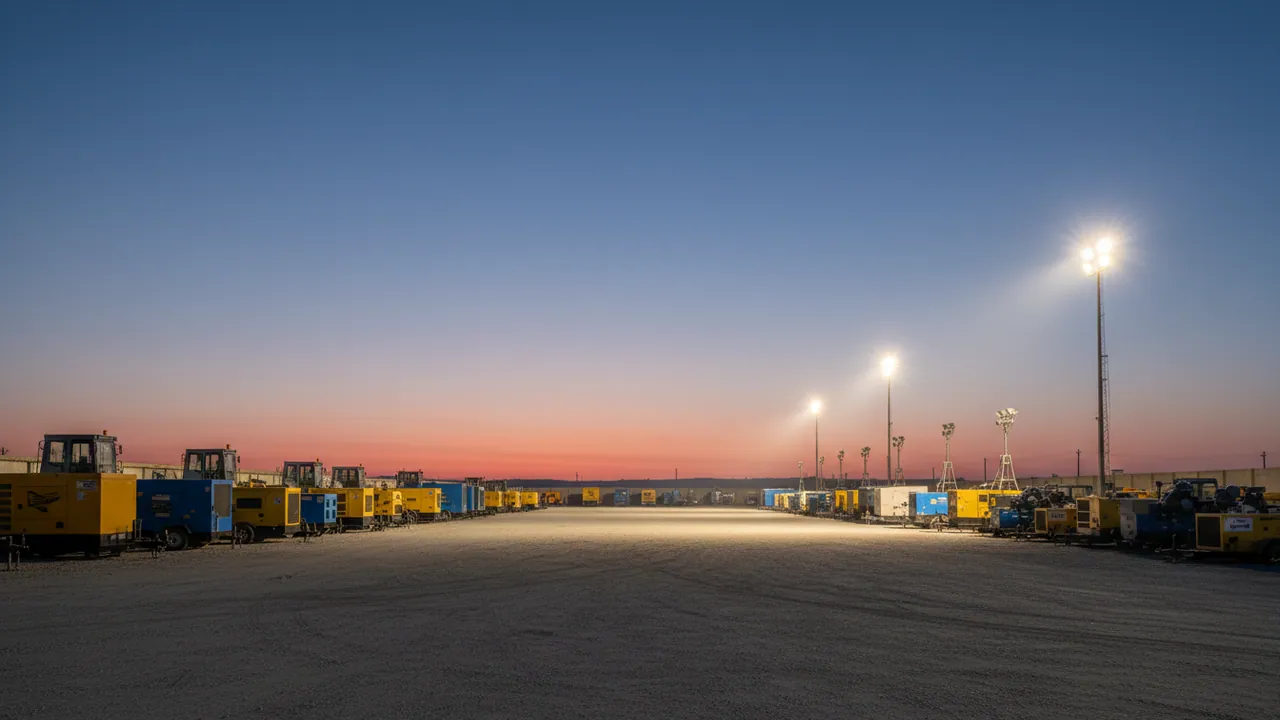
GPS tracking for hire equipment and small plant
For hire companies that let out diesel generators, compressors, plate compactors, water pumps, lighting towers and professional tools. Battery-powered trackers and Bluetooth tags show where the equipment is, how many hours it has run and whether it has come back to the depot.

Hired for the weekend, ran for a week
Small plant hire lives on short rentals: a generator for two days, a plate compactor for a shift, a compressor for a week of refurbishment. There are many customers, the deposits are small, and the equipment goes off to places where nobody can see it. A generator taken for a country house runs round the clock on the building site next door. Two days were paid for, seven days of service life were used up.
GPS tracking for hire equipment solves two problems: knowing where every item is, and counting how many hours it has actually run. For the larger units we use battery-powered trackers; for tools we use Bluetooth tags, which are read at the depot and in the delivery van.
Monitoring for the rental business as a whole is covered on the page about solutions for rental and leasing. If you hire out heavy machinery with an operator, see also the section on plant and heavy equipment hire.
Where hire companies lose money
Small units are easy to take away, hide and resell. The losses come from four sources:
Never returned
The customer disappears along with the generator, or pawns the breaker. The deposit covers a small share of the value.
Running beyond what was paid for
The compressor was hired for a day and worked on site for four. An invoice for one, wear and tear for four.
Overloading and missed servicing
A generator run without a break to cool down or change the oil. Rebuilding the piston assembly costs as much as several months of hire.
Disputed billing
It would not start, we never used it — when in fact it ran all day. Without data there is nothing to argue with.
A generator for a wedding in Zagatala
A 30 kW diesel generator is hired out for two days for a marquee wedding in the Zagatala district. The customer collects it on Friday morning and is due to return it on Sunday.
What the hire company sees in the system:
- on Friday the generator reached the village and is standing still — by the coordinates this is the house given in the contract;
- on Saturday it ran for 14 hours straight — normal for a celebration, but it is time to plan an oil change once it comes back;
- on Sunday morning the generator moved to the next village and has been running again since midday — by the look of it, it was lent to relatives for one more event.
The hire company rings the customer on Sunday evening and extends the hire by a day at the agreed rate, rather than finding out about it from the wear and tear a month later. Where the signal is poor in the mountainous part of the district the tracker will send its data late: it accumulates engine hours in memory and transmits them once there is a network.

Issuing a set, the last sighting and a return from the back of beyond
Hire has a logistics of its own: an item goes out not on its own but as part of a set, and often to places with no network. The process we usually set up:
- Issuing a set. A generator with a tracker, plus cables, extension leads and a distribution board with Bluetooth tags. The storeman scans the set as it goes out: the system sees the tags next to the tracker and records what left together. If the tag on the box of cables was not seen, that is noticed while still at the depot.
- Batteries. The charge level of the trackers and the tags is shown in the list of items. We set in advance the threshold at which an item is taken out of circulation for a battery change — so that the tracker does not go flat in the middle of a hire.
- Last sighting. For every item the system holds the time and place of the last sighting. For a tag this is the place where the depot or the delivery van last saw it, not the tool's current position.
- Areas with no network. In the mountains beyond Guba or in a remote village the tracker will not send coordinates until it gets a connection. It will record engine hours and events in memory, but in the meantime the manager sees only the last sighting before the network was lost.
- Return. The unit enters the depot geofence — the system marks it as returned, the storeman checks the set against the tags and reads off the engine hours for the invoice.
What the system does not do: it does not check the condition of the cables and it does not see that someone else's extension lead came back instead of yours. The inspection on return stays with the storeman.
A pilot at one depot: where to start and how to judge it
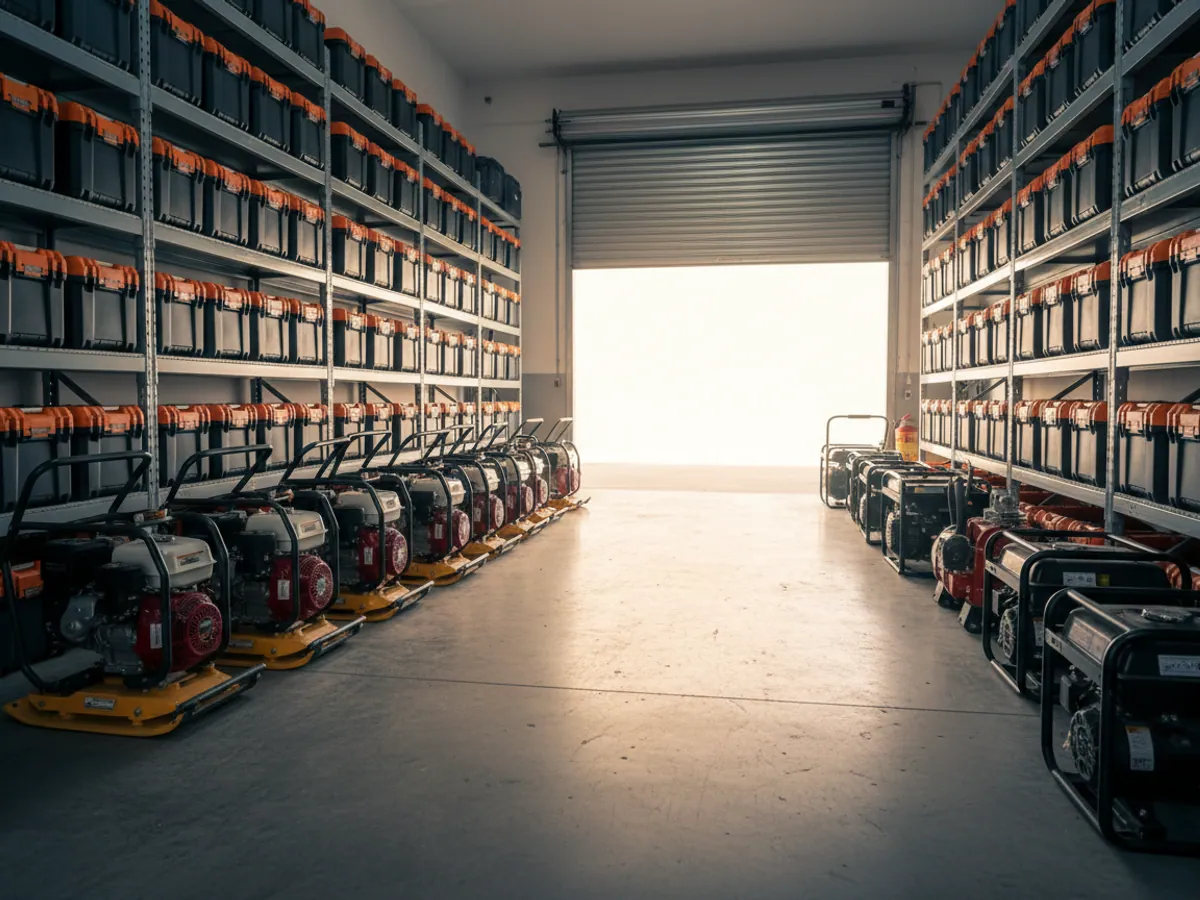
A pilot is convenient to run at one issuing point over one hire season: 10–15 units with trackers and a few tool sets with tags.
What we need from the hire company:
- a list of the pilot items with inventory numbers and engine type (diesel, petrol, electric start or pull start);
- the make-up of the standard sets that go out;
- the depot address and roughly where the customers are;
- the storeman and the manager who will own the "not returned on time" and "low battery" reports;
- the issue log for the pilot period — for cross-checking.
The working report for the pilot is a table by hire: inventory number, customer, dates out and back, engine hours for the hire and hours beyond the paid limit, exits from the address geofence, the set at issue and at return, battery charge.
The acceptance criteria are agreed in advance: engine hours in the system match the unit's own counter within the agreed margin; every issue and return appears in the report; every "not returned on time" case has been looked into by the manager.
Features for hire companies
A tracker without wiring
On generators, compressors, lighting towers and water pumps we fit a battery-powered tracker such as the Teltonika TAT100. An IP68 housing, magnetic mounting or screws. In a one-report-a-day mode the battery lasts a long time, but the actual life depends on the number of alerts, the signal and the temperature.
When movement begins the tracker wakes up and sends coordinates more often — so you can see that the unit is being taken somewhere. The TAT240 version also reports an attempt to prise the tracker off the body.
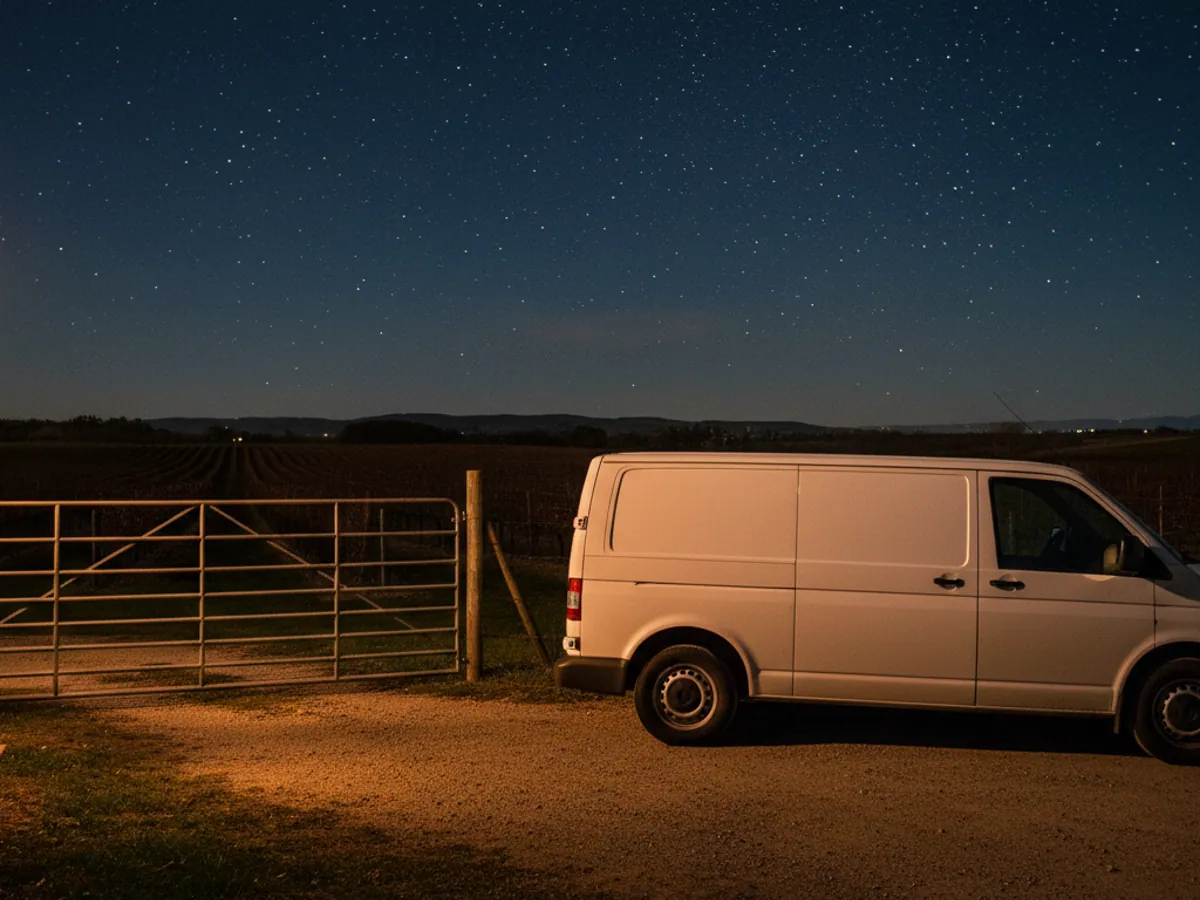
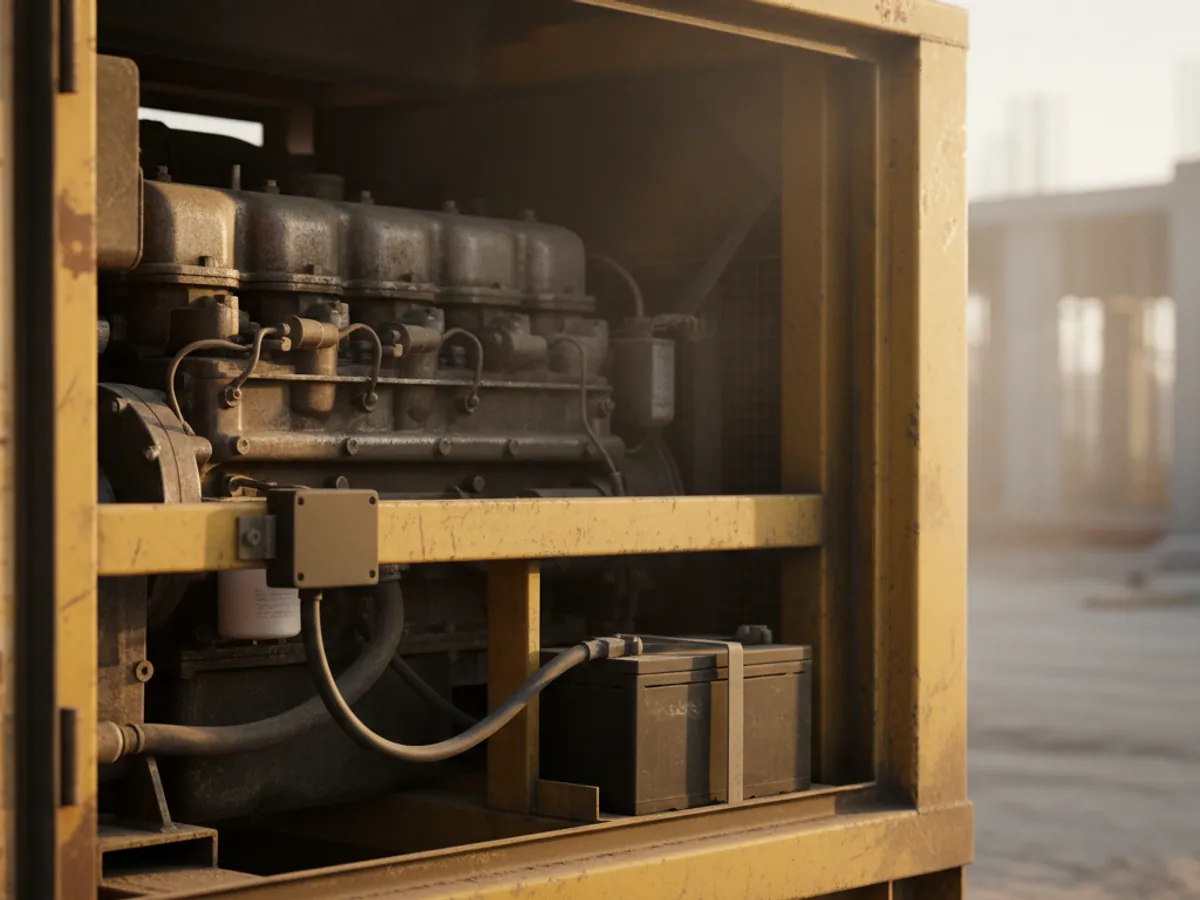


What we fit to which equipment
Diesel generators from 10 kW
A tracker wired to the battery and to the engine-running signal, with a backup battery for periods at rest. Engine hours from the engine-running signal; remote start immobilisation is possible on models with an electric starter.
Compressors and lighting towers
A battery-powered tracker with a vibration sensor, or a connection to the on-board battery where there is one.
Plate compactors, water pumps, petrol generators
A battery-powered tracker in a protected housing inside a concealed cavity in the frame. Engine hours from vibration.
Rotary hammers, breakers, angle grinders
Bluetooth tags read at the depot and in the delivery van. Control over issue and return without GPS.
Cases, scaffolding, formwork by the set
One tag per set or per box. Handy for stocktaking: what has come back to the depot and what is still with the customer.

Servicing by hours run
A hire generator runs more in one season than a privately owned one does in several years. If the oil is changed once a month, one unit will be running with its service overdue while another is serviced for nothing.
The system counts engine hours for each item and reminds the mechanic: generator No. 12 has done 250 hours since the last oil change, take it out of circulation for servicing when it comes back. The service record is kept in the item's file, and when you sell the equipment second-hand you can show the history rather than just talk about it.
The intervals are set according to the unit manufacturer's recommendations. Setting up reminders is covered in the section on maintenance.
How we get the tracking running at a hire company
Splitting up the fleet
We divide the equipment into three groups: expensive units with a tracker, mid-range ones with a battery beacon, tools with Bluetooth tags. That way the budget goes where the losses are greater.
Fitting at the depot
We fit the trackers and the tags in batches while the equipment is at the depot. Every item is linked to its inventory number.
Geofences and notifications
Depots and issuing points, permitted districts, notifications about movement outside a hire and about a lost connection.
Rules in the contract
The customer agrees to the monitoring and to being charged for engine hours beyond the limit. Without that clause the data is hard to turn into an invoice.

Mistakes we see at hire companies
A magnetic tracker on the outside of the housing. It is visible, and it comes off in a second. The tracker should sit inside, under a cover or in a cavity in the frame.
Reporting far too often. An every-5-minutes mode on a battery tracker, set for peace of mind, flattens the battery in a few months. For hire, one report a day plus movement alerts is usually enough.
GPS on every rotary hammer. Expensive and awkward: small tools get broken and dropped, and the trackers suffer along with them. Bluetooth tags cost less and last longer.
No return procedure. The tags are read, but nobody looks at the "not returned on time" list. The report has to be assigned to a particular manager.
What the hire company gets
A chance to recover what was stolen
The tracker shows where the unit was taken while it has not yet been stripped down and sold.
Payment for the work actually done
An invoice for running beyond the paid period, backed up by engine hours.
A history for every item
Hours run and servicing in a digital record — a higher price when selling second-hand.
A clear picture of fleet use
Which equipment is sitting idle at the depot and which is in short supply in season.
Frequently asked questions
What is used in this sector
What we do end to end
Wialon modules for this sector
How it is used in this industry
Case studies from “Rental & Leasing”


Thinking of rolling out GPS monitoring in “Equipment hire”?
Send us an enquiry and we will price it up for your fleet and pick the hardware for this sector: rental & leasing.
- 1 We pin down the task
A specialist calls back and asks about the vehicles, how many there are and what you need to keep an eye on.
- 2 We put a solution together
We propose the hardware and the features, and set out the one-off and the monthly cost separately.
- 3 We agree the fitting
At your yard or at ours, on a schedule that keeps the vehicles working.
Request a call
A specialist will call back and match a solution to your fleet and your task.