
Control of plant and heavy equipment in stone and sand quarries
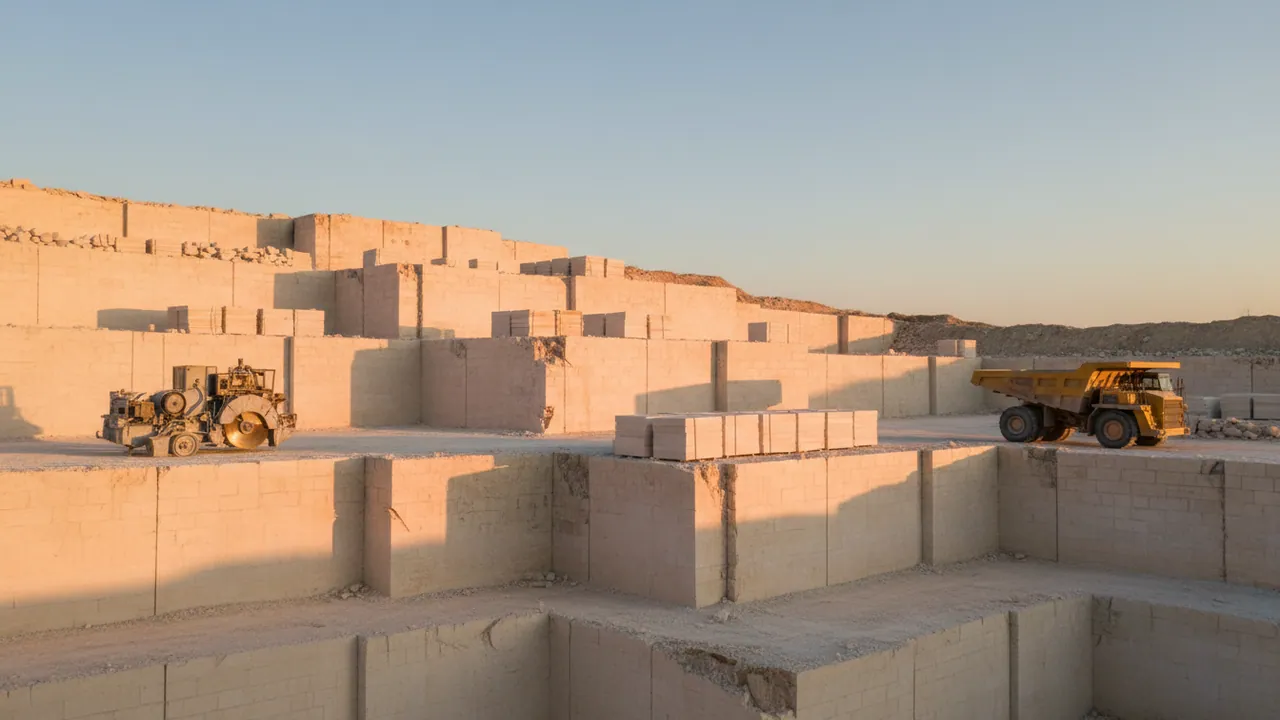
Telematics for Azerbaijan's aggregate quarries: limestone and cut stone blocks in the Garadagh district and around Guzdak, the sand workings of Absheron, crushed stone in Gobustan and the Shamakhi district, stone in Tovuz and Gazakh.
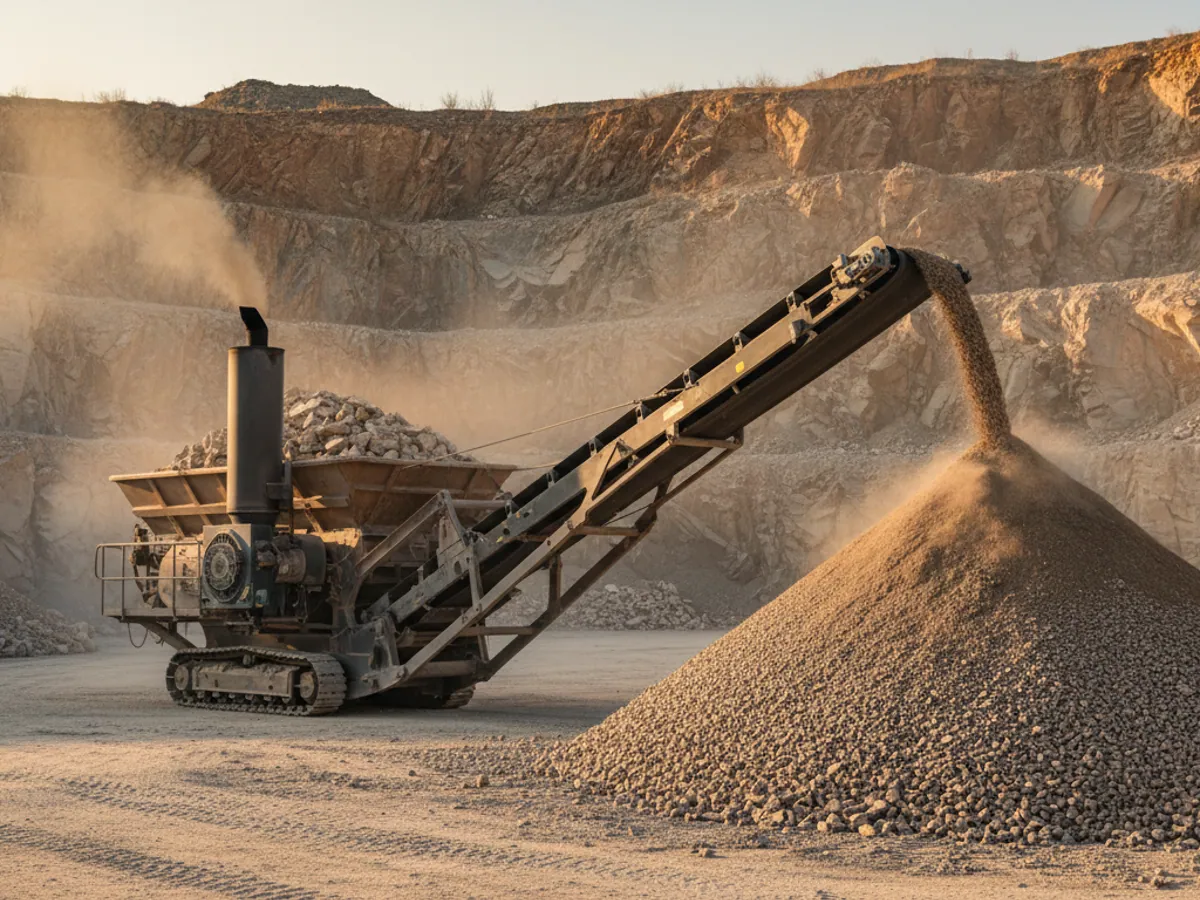
Counting tipper runs, real engine hours for excavators and loaders, the work of stone-cutting machines and mobile crushers. Every load of material that leaves through the gate must pass through the till.
Order in the dust and the noise
At a building-materials quarry, record keeping has always rested on people. The owner is far away, work runs from early morning until dark, there are dozens of machines, and the buyers are often small private builders paying cash.
Hence the questions almost every owner asks: did every run of the Howo or the KamAZ with cut stone go through the till, why does the Komatsu PC300 excavator stand with its engine running for hours a shift, where did the loader go in the evening. Without data, the answers stay verbal.
GPS monitoring does not catch people red-handed. It makes the work of the machines visible: how many runs each tipper made from the face to the crusher, how many hours the stone cutter actually cut for, how many buckets the loader shifted and where the machine went after the shift. Once the owner can see that, most of the schemes stop of their own accord.
Counting the face — crusher runs
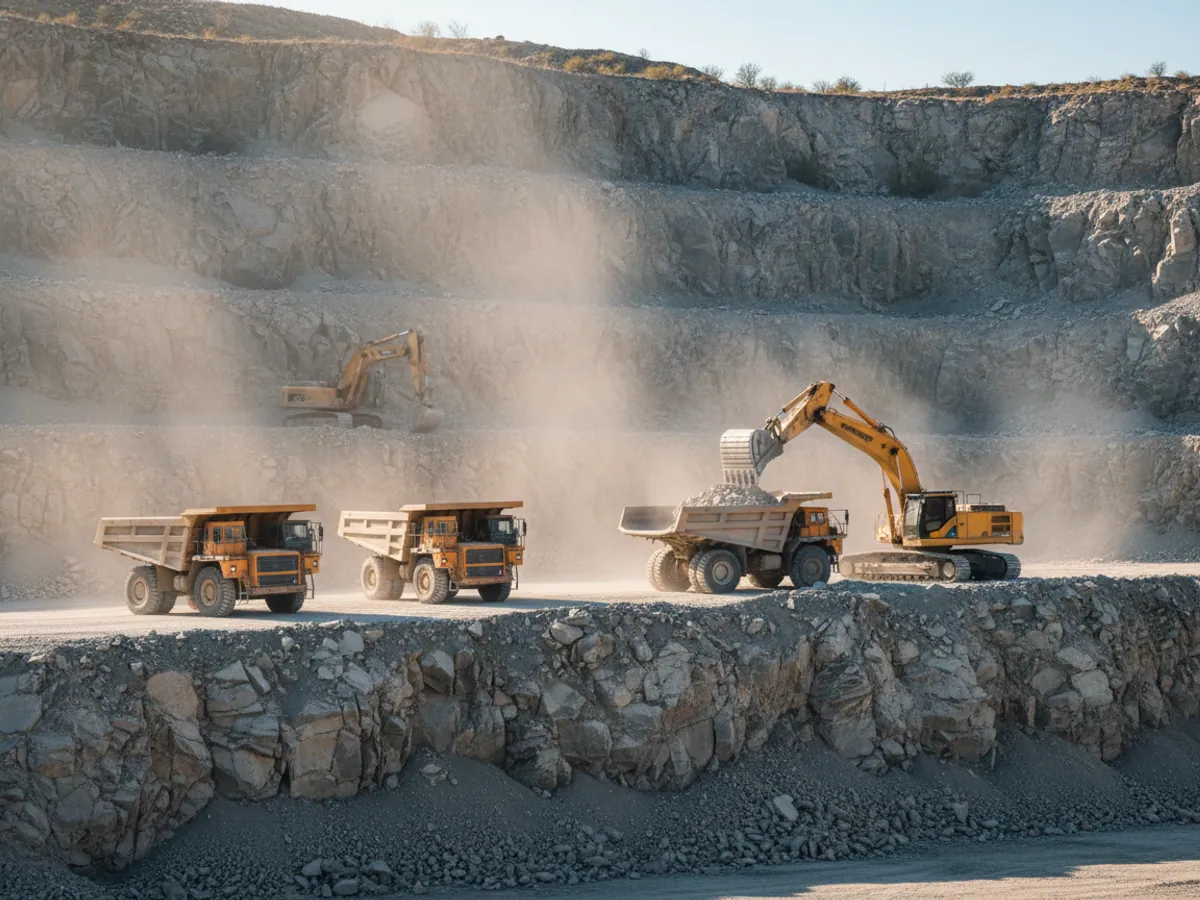
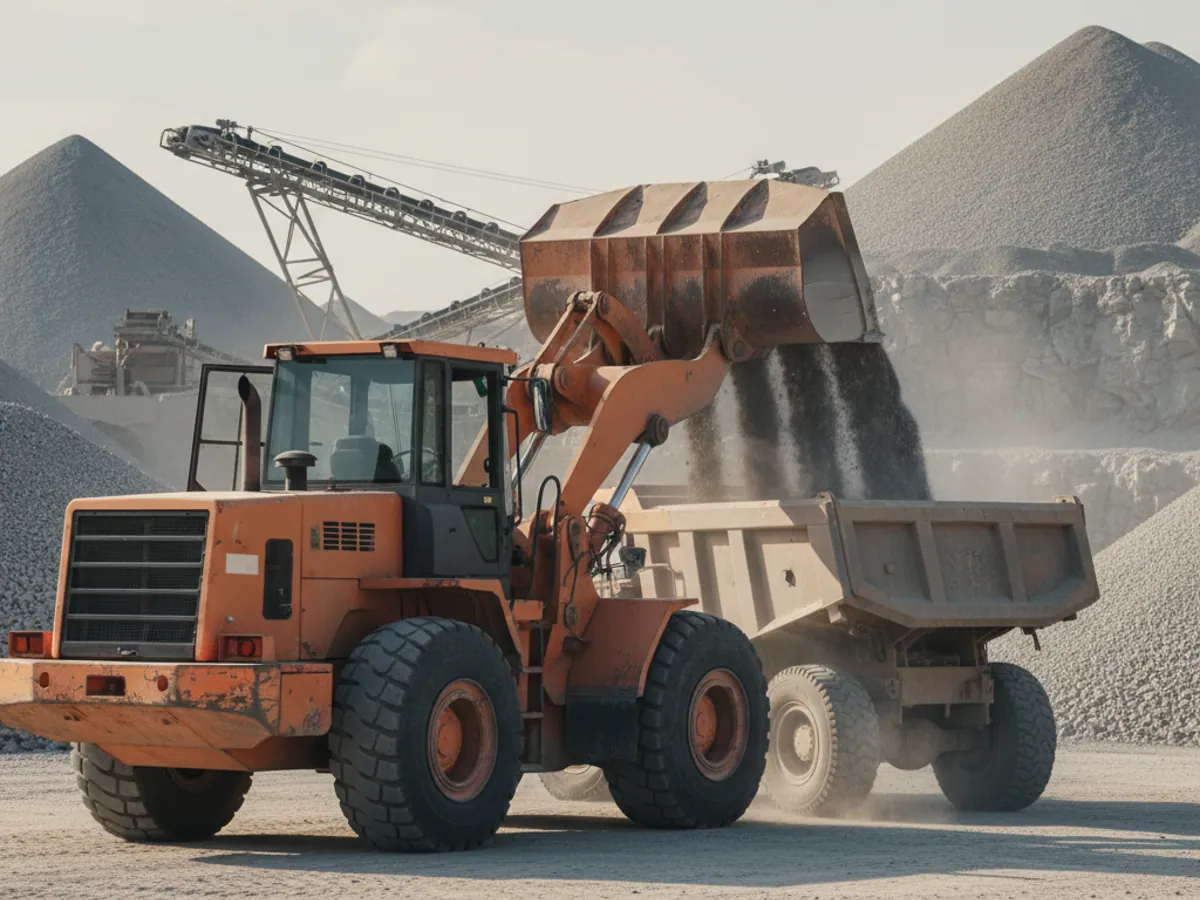
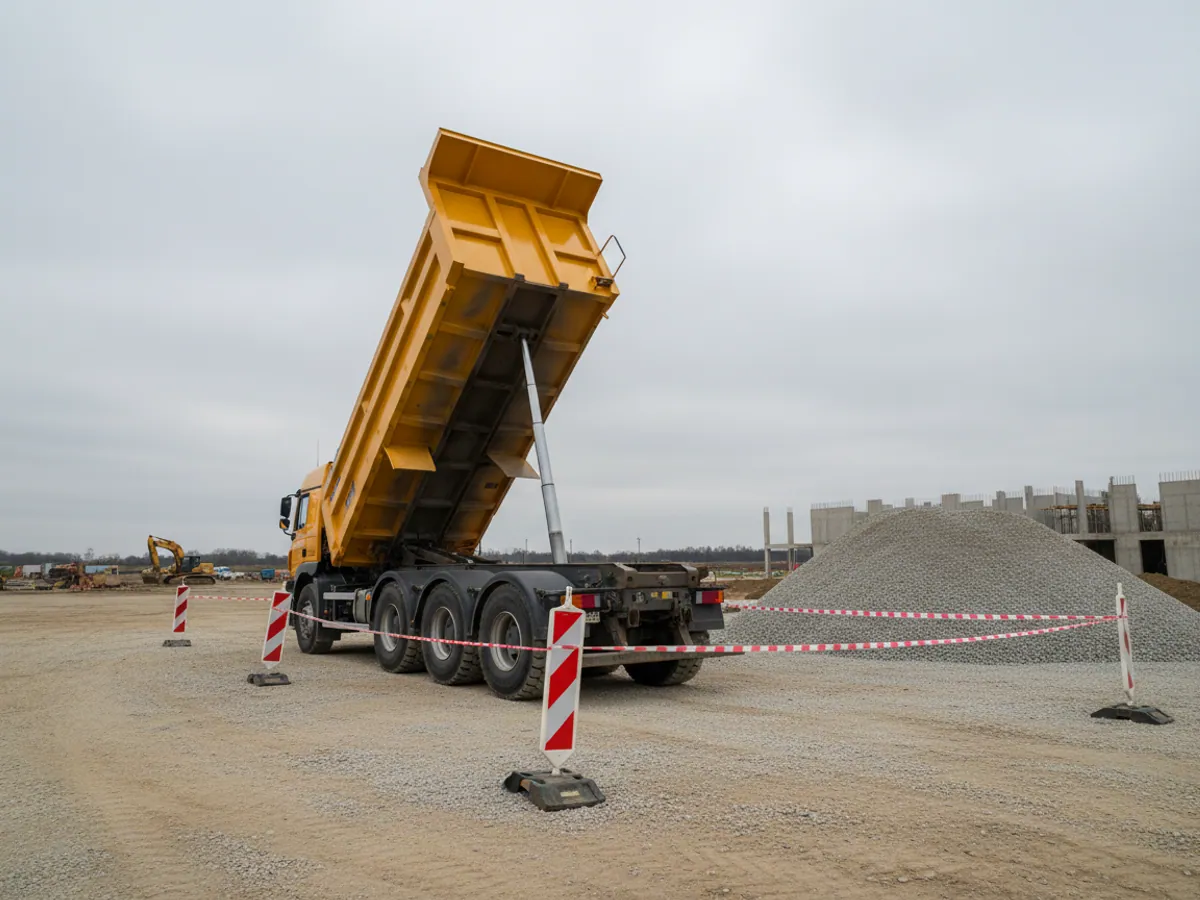
Inside the quarry the tippers go round in a loop: the face, the crusher's receiving hopper, the finished-product stockpile. We set up geofences for the loading and unloading points, and the platform counts full cycles by itself: entered the face, waited under the excavator, drove to the hopper, tipped.
If the tipper carries a body-lift sensor, a run only counts when the load is tipped in the correct geofence. Without the sensor the system counts a run from the zone entries, and that is usually enough for internal haulage where machines never leave the quarry.
This data makes piece-rate pay for drivers easy to calculate: the number of runs comes from the report, not from the tally clerk's notebook. If a machine has left the site or stopped on the verge on the road out to the highway, the manager gets a notification in the mobile app.
The dispatcher can see on the map how many machines are queueing at the excavator and how many at the crusher. A queue of four tippers at one face while the second excavator stands idle is a reason to move machines around right there and then.
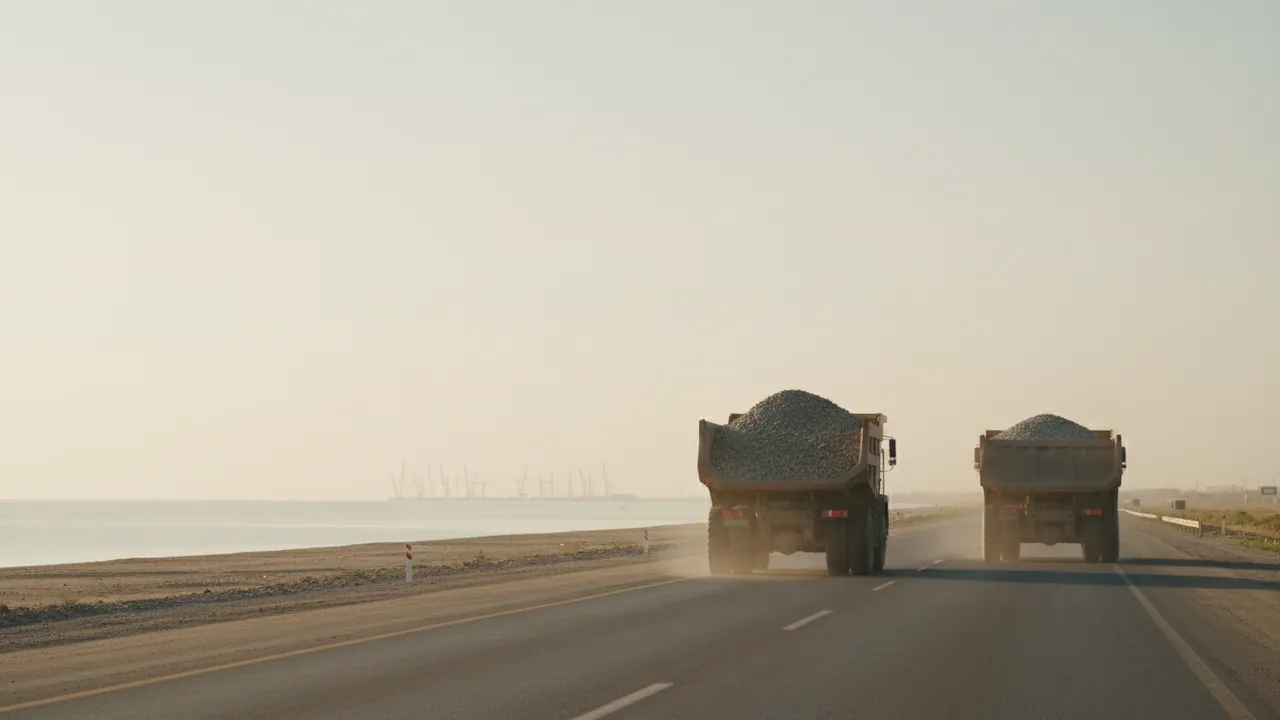
When the material travels further, to sites in Baku or to road projects, a different task begins — delivery control. We write about that on the aggregate haulage page, and a general overview of solutions for extraction is gathered in the GPS monitoring for the mining industry section.
Where material and fuel go missing at a quarry
With no weighbridge, no GPS and no reconciliation against the till, losses appear even without ill intent, and where there is ill intent they are hard to prove. The questions usually come up in three places:
Selling on the side
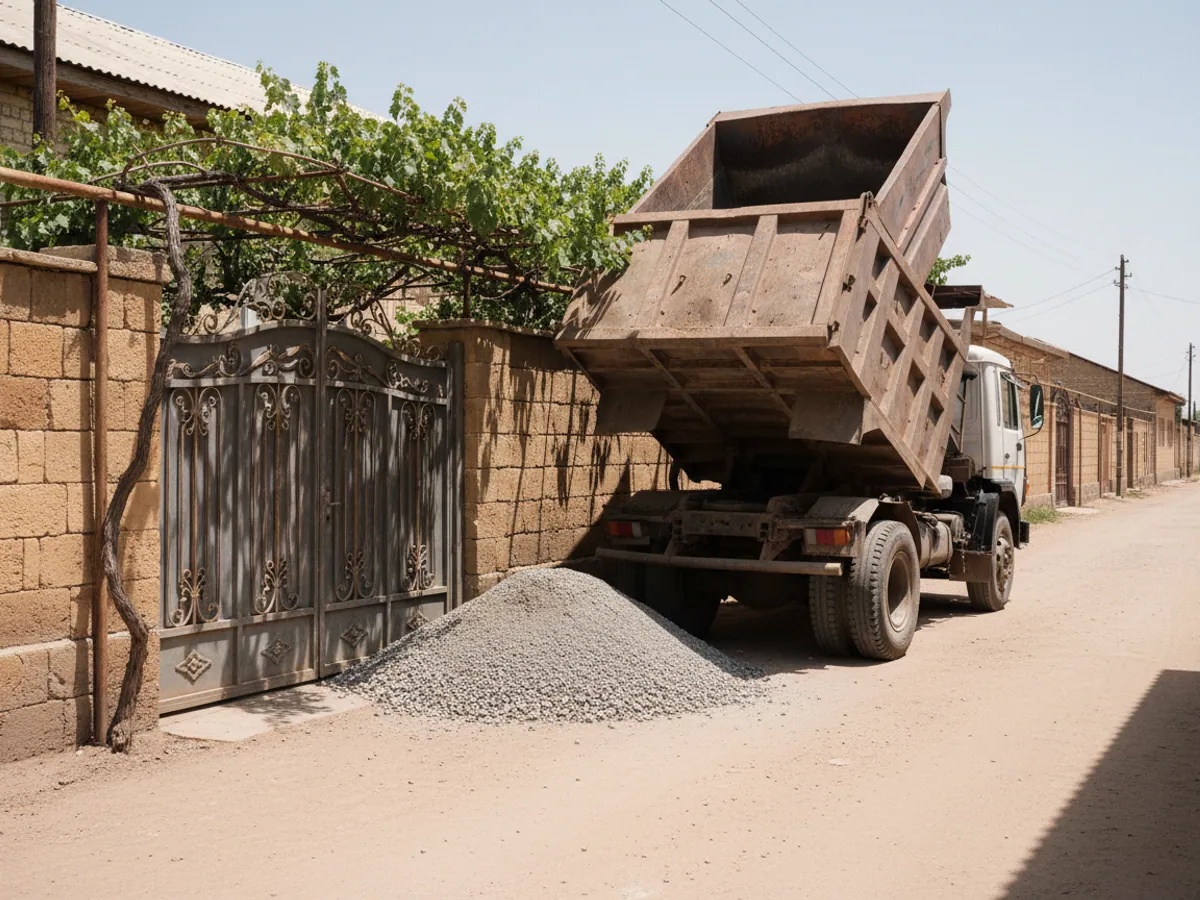
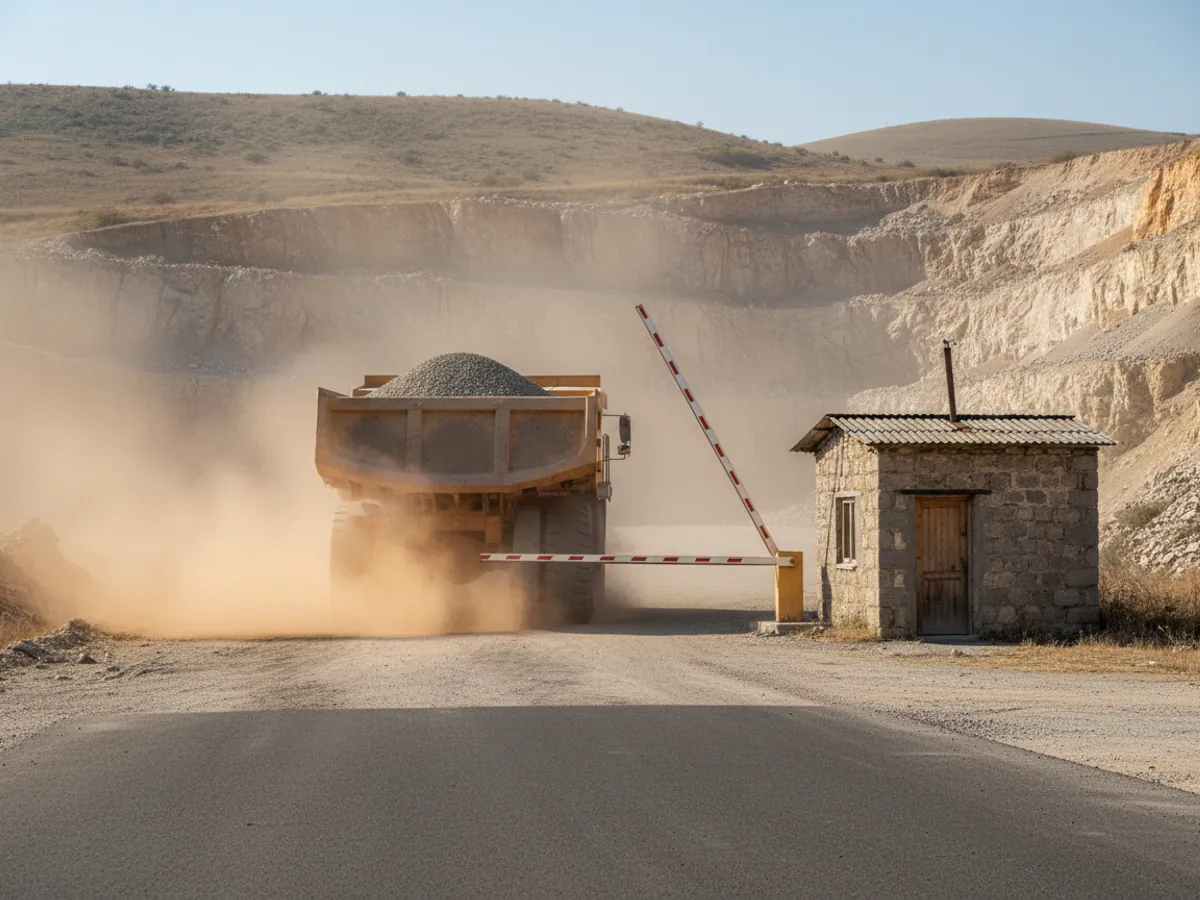
A load of cut stone or crushed stone goes to a private buyer for cash, bypassing the till. The quarry's books have no record of that run. In GPS data such runs show up as trips out through the gate with no delivery note, or as unloading outside any customer geofence.
Idling
An excavator or a loader stands running for hours to clock up engine hours on piece rates. The fuel burns for nothing, and the report calls it work. Load and engine speed sensors tell real work apart from standing with the engine on.
Work on the side
In the evening or at the weekend the loader or excavator goes off to moonlight in a nearby village. The wear, the fuel and the accident risk are paid for by the quarry's owner.
Tools for a quarry
Control of stone-cutting machines
On stone-cutting machines from Perfora, Fantini and their equivalents, which cut limestone in the quarries of Garadagh and Tovuz, we fit a sensor on the saw. The system separates the time actually spent cutting from the time when the engine runs but the saw is idle.
What the report shows:
- hours of cutting and of standing with the engine on over the shift;
- the distance covered with the saw engaged, that is, the length of the cuts;
- an indicative volume of stone in cubic metres from the length of the cuts and the depth of cut;
- fuel consumption per cubic metre where a level sensor is fitted.
Volume derived from cuts is a calculated figure, not a measurement. It is accurate enough for setting output norms; for accepting product it is better to count the finished blocks.
The quarry production cycle and commissioning of scales and sensors
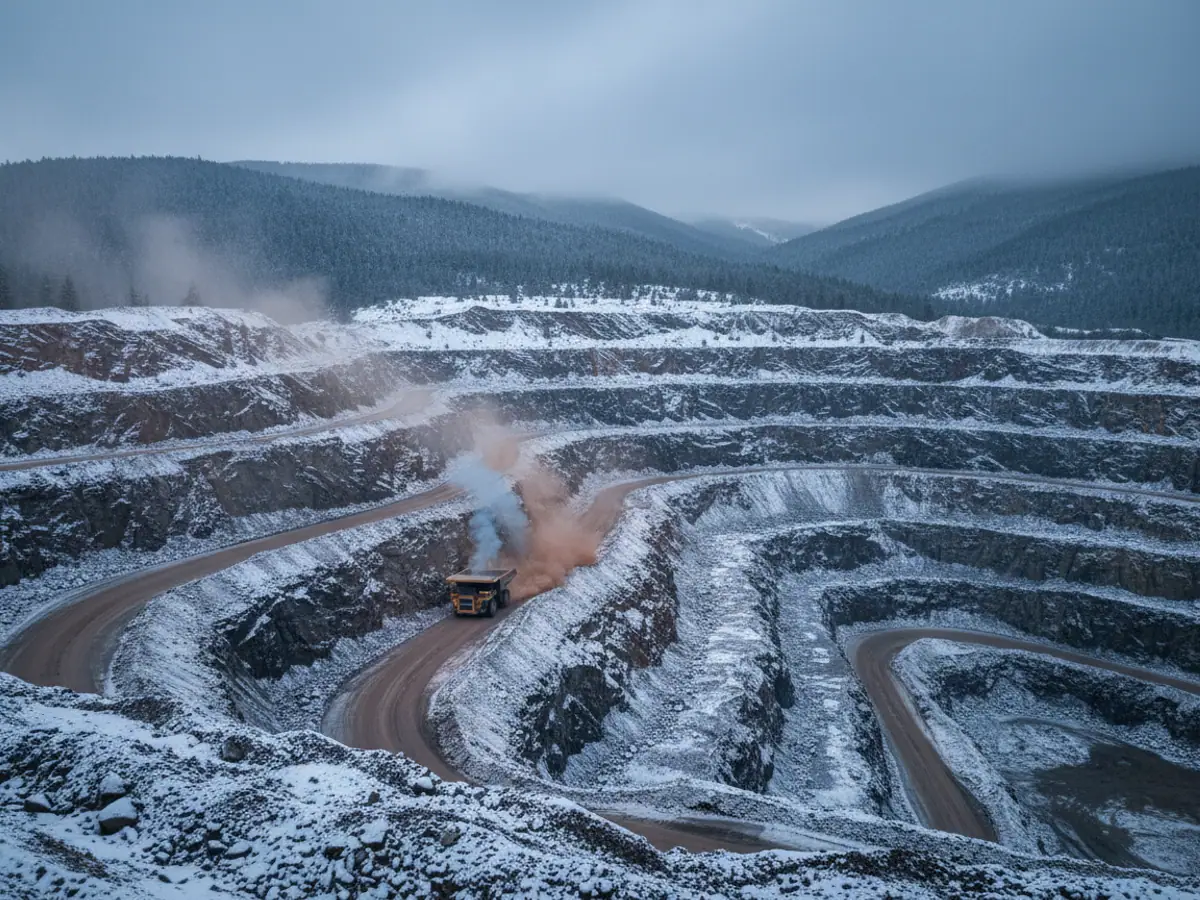
Machine monitoring pays off when it is tied to the production cycle rather than hanging off to one side. For a stone or sand quarry the cycle usually looks like this: stripping — extraction or cutting — haulage to the crusher — crushing and screening — finished-product stockpile — loading for the customer — weighbridge — out through the gate. Each stage has its own machines and its own source of figures.
- Extraction and cutting: engine hours for excavators, cutting hours for stone cutters.
- Haulage: face — crusher runs from geofences and the body-lift sensor.
- Processing: crusher engine hours and, where fitted, the belt weigher on the output.
- Despatch: the loader's on-board scales or the fixed weighbridge, and the exit from the site.
Before anyone trusts the reports, each source is checked. We call that commissioning the scales and sensors:
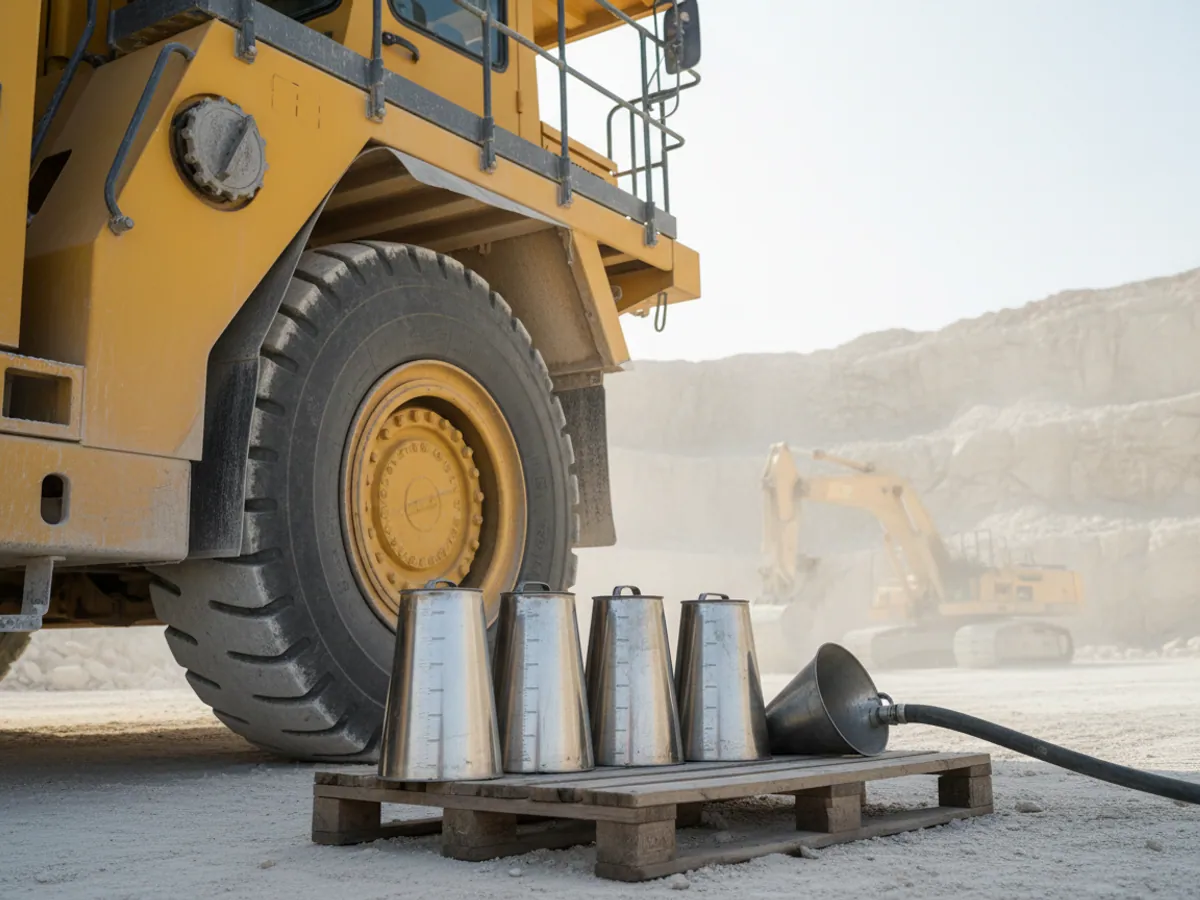
- fuel level sensors — a control fill of a known volume after calibration;
- the body-lift sensor — several control tips inside and outside the correct zone;
- the loader's on-board scales — a comparison against the weighbridge on several machines;
- geofences — a drive along the boundaries of the face and the crusher so that the road does not fall inside the zone.
Verification of scales as measuring instruments is not done by GPS.az but by an authorised body. What we check is that the data from the scales reaches the system correctly and matches what the display shows.
Equipment that survives quarry dust
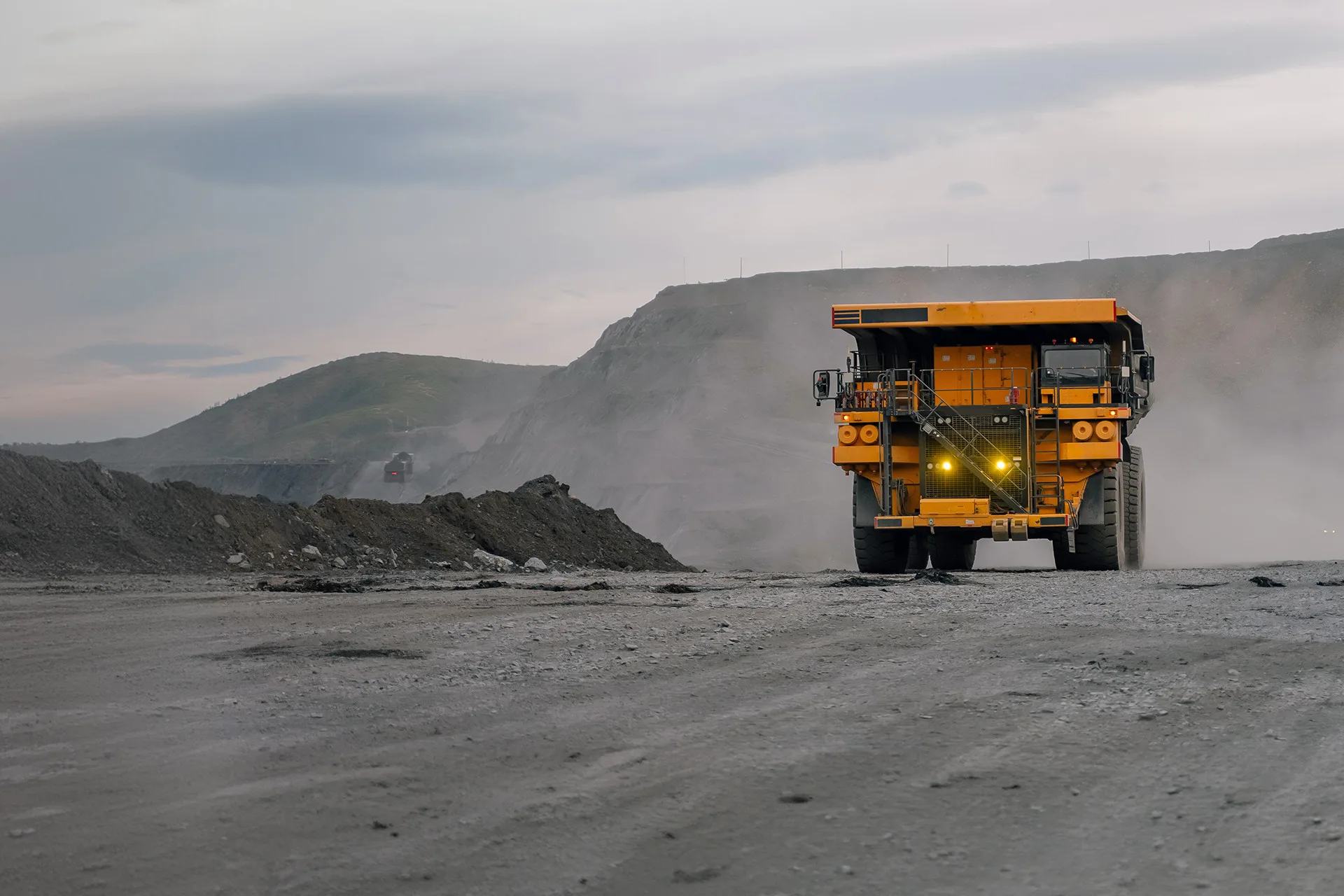
Stone dust in the quarries of Garadagh and Gobustan kills electronics if they are fitted carelessly. So we mount the tracker inside the cab, in an enclosed spot, not in the engine bay. Fuel sensors sit in the tank, their heads go under protective covers, and cables run in conduit alongside the factory loom.
To read data from the CAN bus we use contactless readers, so that the factory wiring of tippers and excavators does not have to be cut. Aerials are mounted where a bucket cannot catch them and a wash cannot tear them off.
In summer the cab gets very hot in the sun, so we choose a spot for the tracker away from direct rays through the glass. Equipment failures at quarries usually come not from dust but from a severed cable or a burnt-out contact, so during fitting we secure and insulate everything with room to spare. On-site servicing we take on ourselves under a mobile service contract.
Mistakes that eat up the benefit
The trackers are fitted and revenue has not gone up. It happens, and usually for one of these reasons:
Geofences drawn in a hurry
The face zone is too large and the road falls inside it. The system counts runs that never happened, the drivers notice, and they stop trusting the report.
GPS without sensors
A tracker on its own shows that an excavator's engine was running but cannot tell digging from idling. Plant and heavy equipment needs a load sensor or a sensor on the hydraulics.
Data never reconciled with the till
There is a report on the runs, there are delivery notes, and nobody compares them. Appoint someone to reconcile trips out against payments once a day.
Nobody acts on the notifications
A notification about a tipper leaving the site at 21:00 arrived, and in the morning nobody had opened it. Decide in advance who receives the alerts and what they do.
A pilot at a quarry: inputs and acceptance criteria
For a pilot, 3–4 tippers, one excavator and the loader on despatch are enough, over 2–4 weeks.
What we need from the quarry: a site plan with the faces, the crusher, the stockpiles, the weighbridge and the exit; till receipts and the weighbridge log for the pilot period; the rule by which runs are currently counted for piece-rate pay; someone who reconciles the report against the till once a day.
The pilot is accepted if: every sensor has passed its control check; the number of face — crusher runs matches the foreman's tally, with any discrepancies explained; every loaded tipper leaving the site has been matched to a delivery note or flagged for checking; consumption per engine hour on the excavator is counted from the sensor.
An example daily report: runs for each tipper, engine hours and idling for the excavators, fills and suspicious drops in level, and a list of trips out through the gate marked either note on file or none.
What changes at the quarry
Despatch through the till
When every trip out through the gate is visible, runs that bypass the till become noticeable. Reconciling runs against the till shows whether there are discrepancies and how large they are. Whether revenue changes as a result depends on what the data showed and how management responds to it.
Fuel savings
Level sensors and idling control let consumption norms be recalculated on actual figures. Drains show on the chart with an exact time.
Fair piece rates
Drivers are paid for the runs in the report rather than the tally clerk's notes. There are fewer arguments about how many runs were made.
A stockpile you can account for
A register of despatches by customer and the volume of material processed help reconcile finished-product stock without stopping the quarry.
Frequently asked questions
What is used in this sector
What we do end to end
Wialon modules for this sector
How it is used in this industry
Case studies from “Mining & Quarrying”
Video monitoring in a quarry: DSM and ADAS
Agriculture, construction and mining

Ore haulage control: load weight and satellite
Agriculture, construction and mining

Plant tracking with no jumps or gaps in the track
Agriculture, construction and mining
Thinking of rolling out GPS monitoring in “Quarries”?
Send us an enquiry and we will price it up for your fleet and pick the hardware for this sector: mining & quarrying.
- 1 We pin down the task
A specialist calls back and asks about the vehicles, how many there are and what you need to keep an eye on.
- 2 We put a solution together
We propose the hardware and the features, and set out the one-off and the monthly cost separately.
- 3 We agree the fitting
At your yard or at ours, on a schedule that keeps the vehicles working.
Request a call
A specialist will call back and match a solution to your fleet and your task.