
Ground support equipment (GSE) monitoring in Azerbaijan
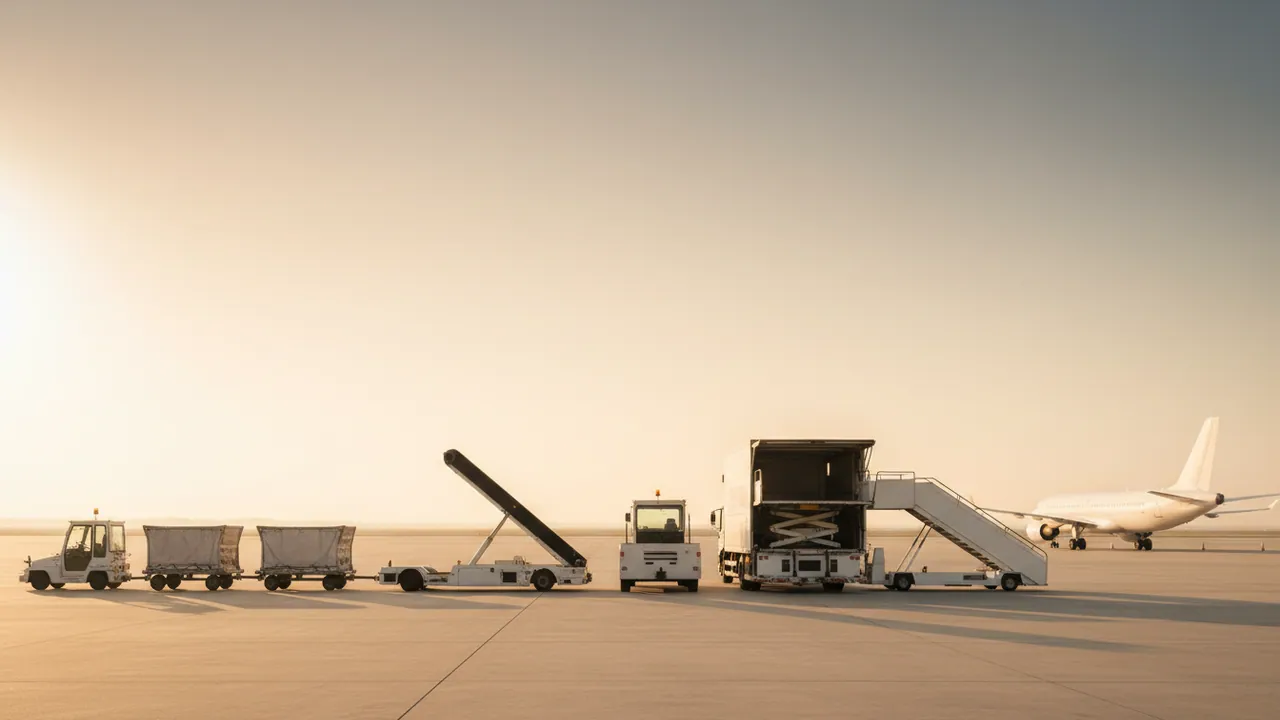
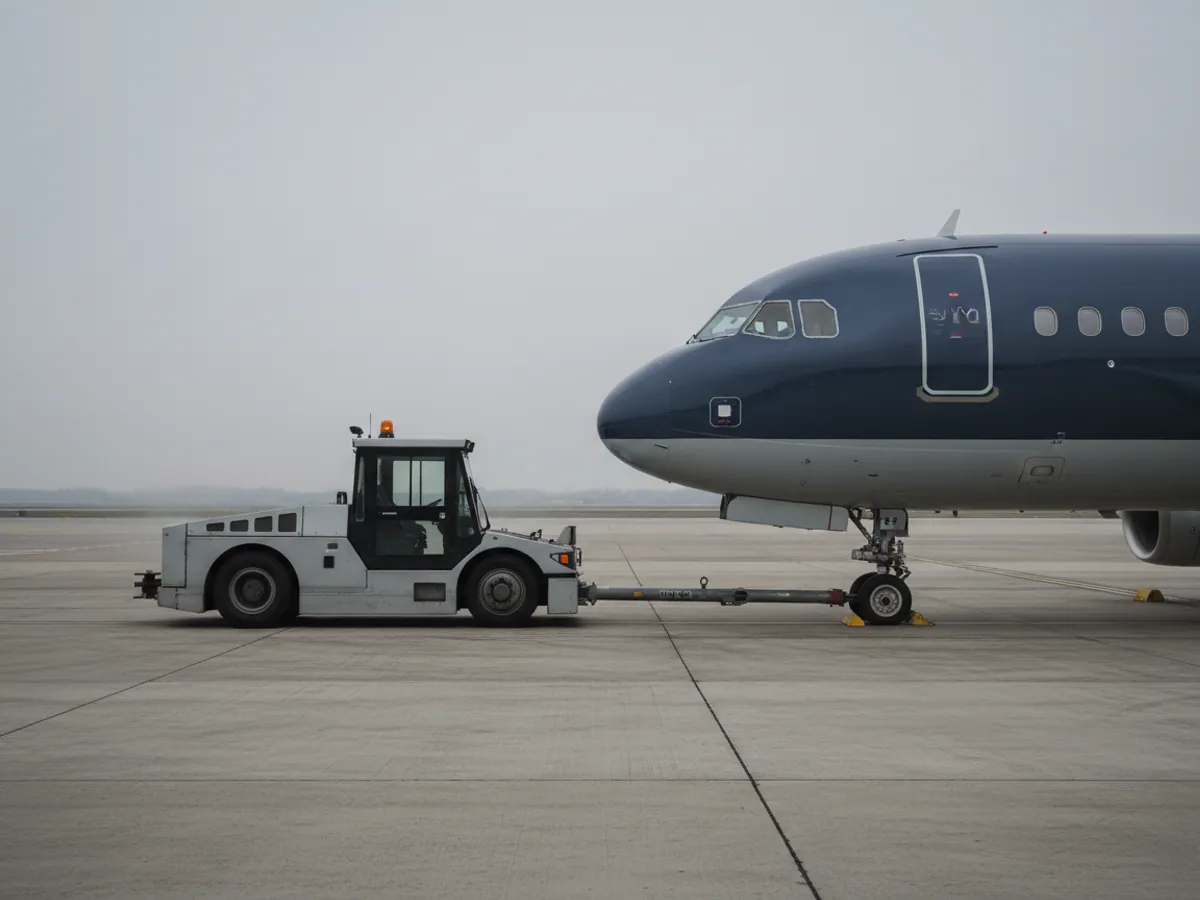
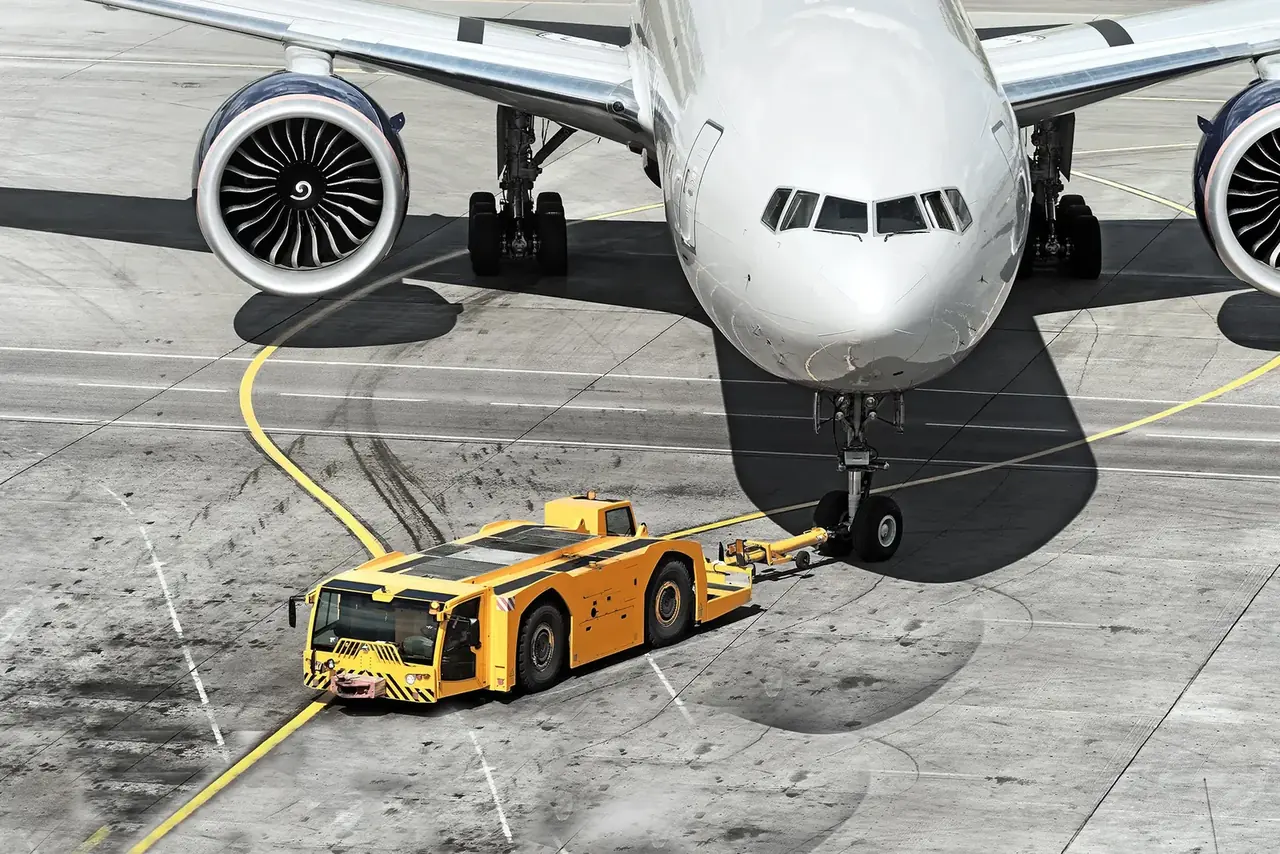
Monitoring of pushback tugs, refuellers, belt loaders, catering trucks, apron buses and passenger steps for airports and handling companies. The dispatcher sees where every unit is, who is at the wheel and how fast it is moving in the aircraft stand area.
Safety and discipline on the airfield
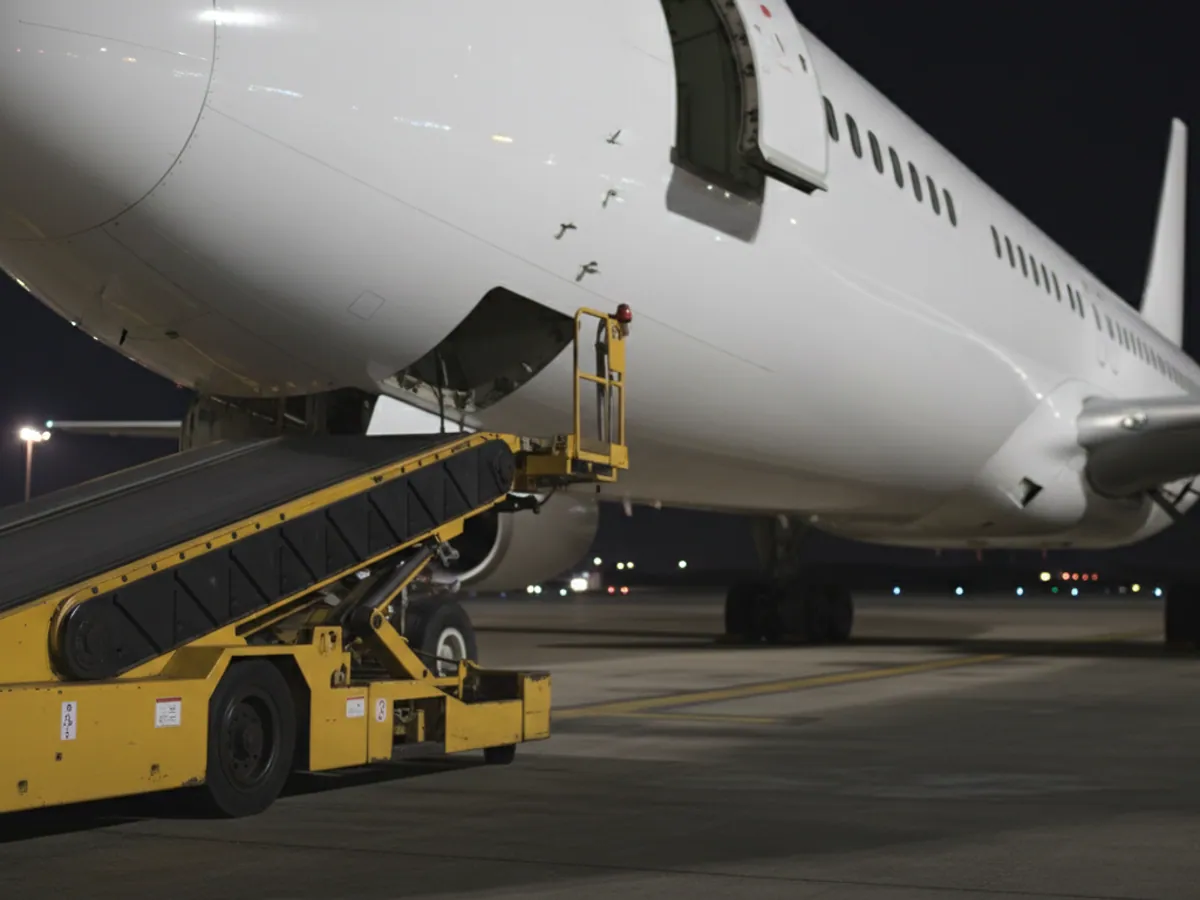
On the apron the price of a mistake is not what it is on the road. A belt loader that catches a door or the fuselage can take an aircraft out of service for several days. A pushback tug arriving 10 minutes late shifts the departure, and with it the slot and the following flights.
Yet apron equipment is often monitored less closely than lorries on the motorway. Speed is invisible, who got behind the wheel is unclear, and the engine hours a tug has done are written in a logbook by hand. GPS monitoring of ground equipment closes those gaps: speed-restricted zones, driver authorisations, and a record of the work done by each unit.
This is one of the specialised solutions from the section on vehicle monitoring for transport operators. Airfield equipment differs from an ordinary fleet: it covers little distance, works a great deal while standing still and lives by the airport's strict rules.
The morning departure wave through the dispatcher's eyes
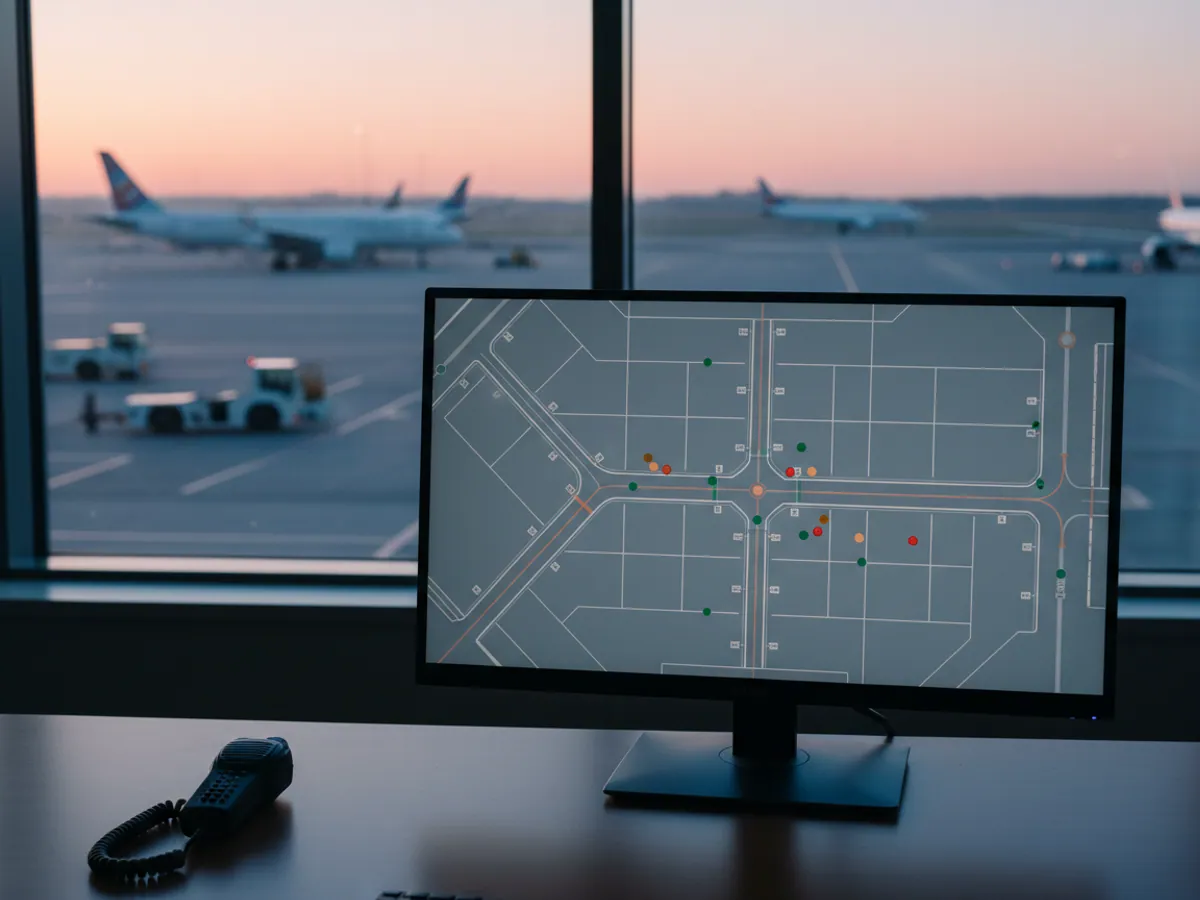
Take a typical morning at a large airport with a monitoring system. It is 6:30 and several aircraft are being prepared for departure at once. The handling dispatcher opens the apron map: it shows the aircraft stands, the service roads and 40 units of equipment colour-coded by status — free, in use, under repair.
A belt loader is needed for the flight on stand 12. The nearest free one is 300 metres away, by the hangar. The dispatcher assigns it, and a couple of minutes later the system records the loader entering the stand geofence. The time it arrived is logged automatically, without calls over the radio.
At 6:48 a notification comes in: an apron bus is doing 38 km/h on a service road where the limit is 25. The driver is known — he presented his card at the start of the shift. The conversation with him will happen after the departure wave, with the exact time and place of the breach to hand.
By the end of the shift the report shows which unit worked where, for how long and where it stood idle. A link to particular flights appears if the assignments are passed over from your planning system.
The risks of running airfield equipment without oversight
When we discuss projects with ground services, the first concern is usually not theft but safety and record-keeping.
Damage to an aircraft
A vehicle touching an aircraft is the most expensive incident on the apron. Without data on speed and path, the investigation rests solely on the driver's account.
Speed around the stands
Speed limits in the aircraft servicing area are broken most often in a hurry, when a flight is running late. Those are precisely the moments when the risk is highest.
Who was at the wheel
Equipment is often driven by somebody who is not authorised for that type of machine. The keys sit in a shared box and the logbook is filled in after the event.
Recording the work done
The handling company invoices the airline for its services. Without the exact time each unit worked on a flight, part of the work goes unpaid.
What the system offers airports
Apron geofences and speed limits
The airport map is divided into zones: aircraft stands, service roads, crossings with taxiways, equipment parking areas, closed sections. Each zone has its own speed limit and its own list of permitted equipment types.
The limits are set by your airport's rules. A breach becomes an event in the log and a notification to the dispatcher. How zones work and which events can be configured on them is described on the page about geofences.
A vehicle at the aircraft is not yet a job completed
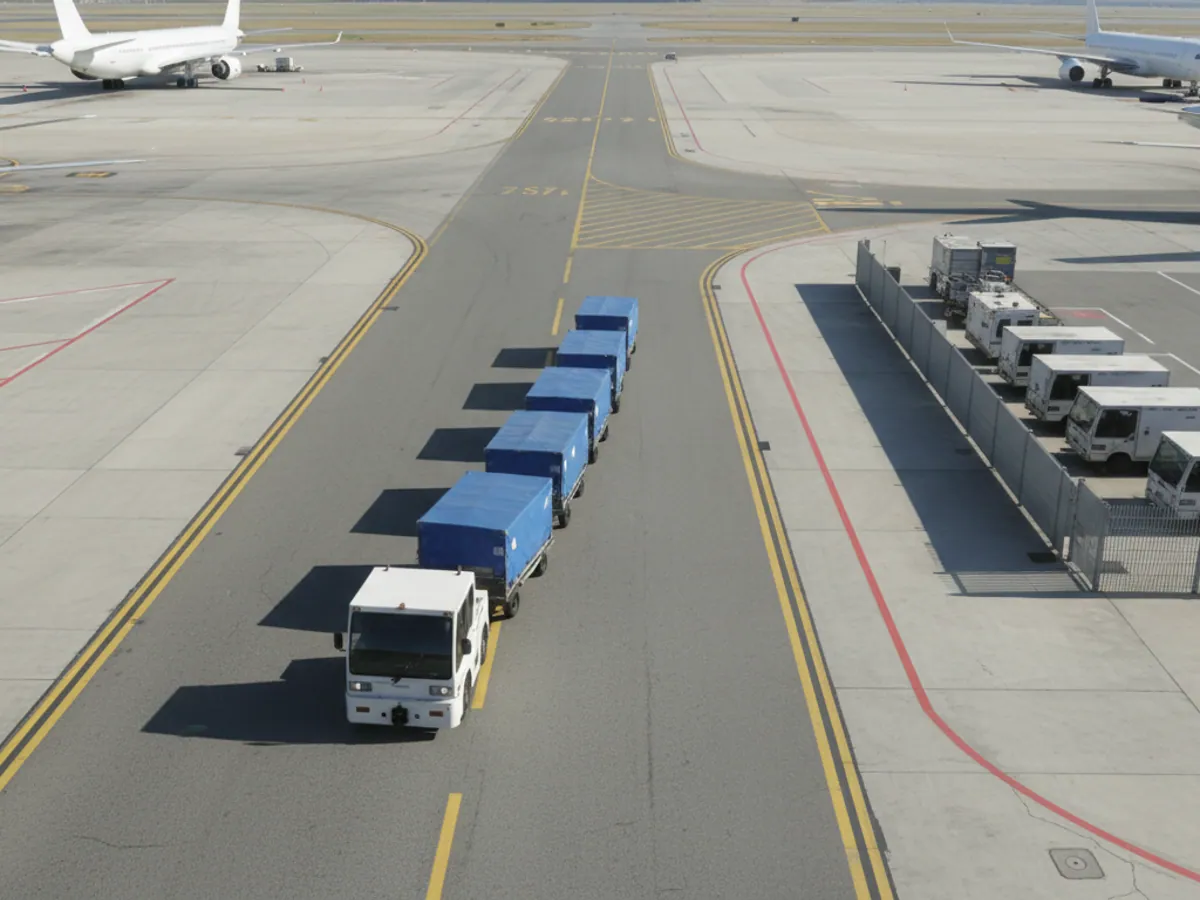
At the first meeting with a handling company we always separate two ideas. Equipment availability is what the tracker sees: the vehicle is serviceable, the engine is running, it is standing in the geofence of stand 12 and there is a driver with a card at the wheel. Completion of the flight's task is something only your resource planning system and the shift supervisor know: the loader was assigned to that particular flight, the baggage was loaded, the work was accepted.
The tracker answers the first question. On the second it gives indirect signs — entry into the stand area, the running time of the mechanism, departure — but it does not know the flight number unless it has been passed over from your system. So an equipment-by-flight report is built like this: the assignment (flight, stand, time) comes from planning, the fact that the vehicle was present and working in that geofence comes from Wialon, and the matching is done in the export or on your side.
What else has to be taken into account before the project:
- Apron access. The fitters need passes for the controlled area and an escort. The list of people and the work schedule are agreed with the aviation security department in advance; without that, going out onto the apron is impossible.
- Driver authorisations. The list of cards and the equipment types they are allowed on is kept by your HR department or apron control. The system only checks the card against the list — keeping the list current is on your side.
- Coverage. The apron usually has good Azercell, Bakcell and Nar coverage, but by the hangars and under the terminal canopies the signal can be weaker. The tracker accumulates points in memory and sends them later, so the track is not lost, but a notification may arrive with a delay.
- Geofences. We draw them from the apron layout provided by the technical department, not from a satellite map. After the pilot we correct the boundaries against the real tracks.
What we equip and with what at an airport
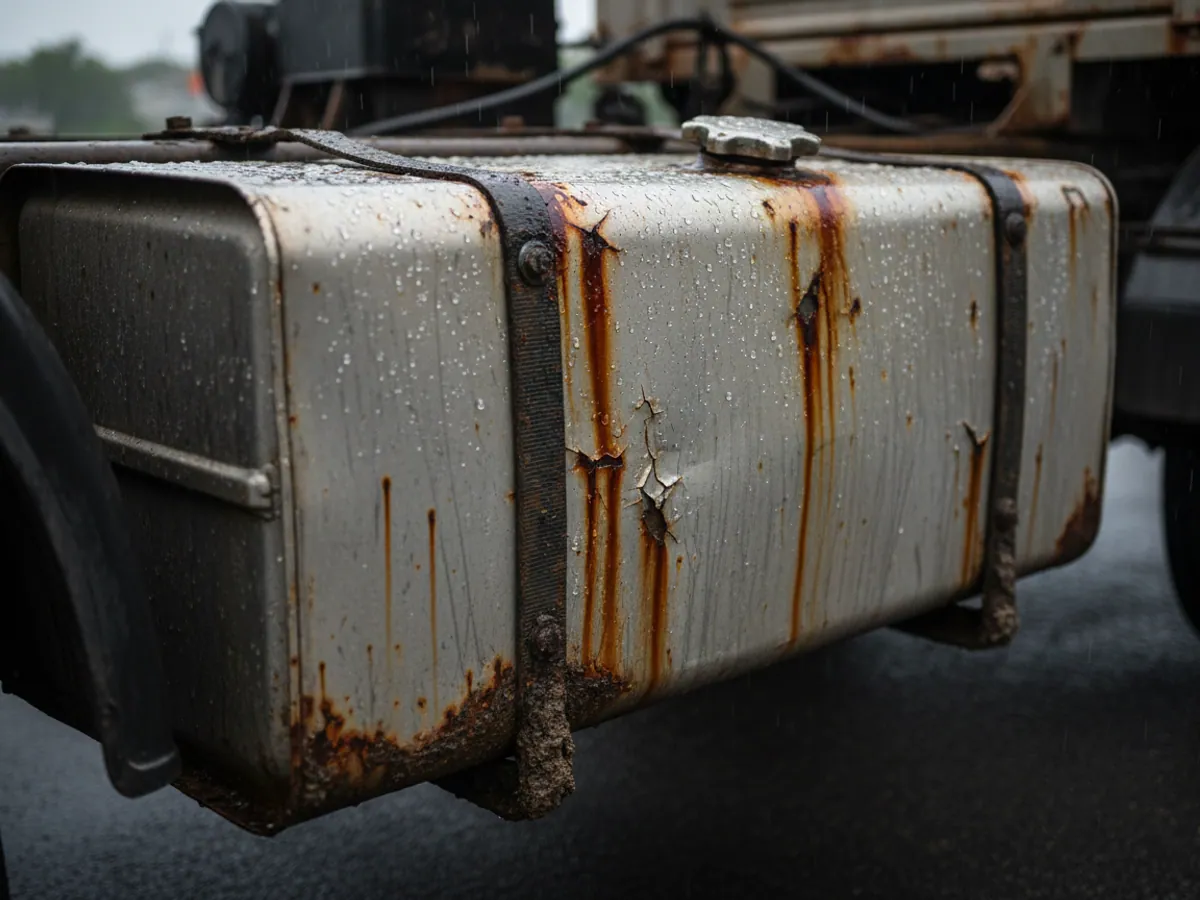
- Powered equipment — pushback tugs, refuellers, loaders, buses, passenger steps, catering trucks, de-icers. A tracker powered from the vehicle's electrics, with an accelerometer and inputs for sensors on the working mechanisms.
- Electric equipment — electric tugs and forklifts. Their on-board systems are sometimes 48 or 80 volts, so we connect the tracker through a converter. The battery charge can be seen if the vehicle reports it over CAN.
- Equipment without an engine — baggage dollies, container dollies, wheeled ground power units. On these we fit Teltonika EYE Beacon BLE tags. The tugs' trackers see the beacons nearby, and the system works out which dolly was moved by which tug and where it was left.
- Driver card readers on all equipment where authorisation is required.
We carry out the fitting to the airport's schedule, usually at night or in the windows between waves, with an escort in line with your rules on access to the controlled area.
Regional airports
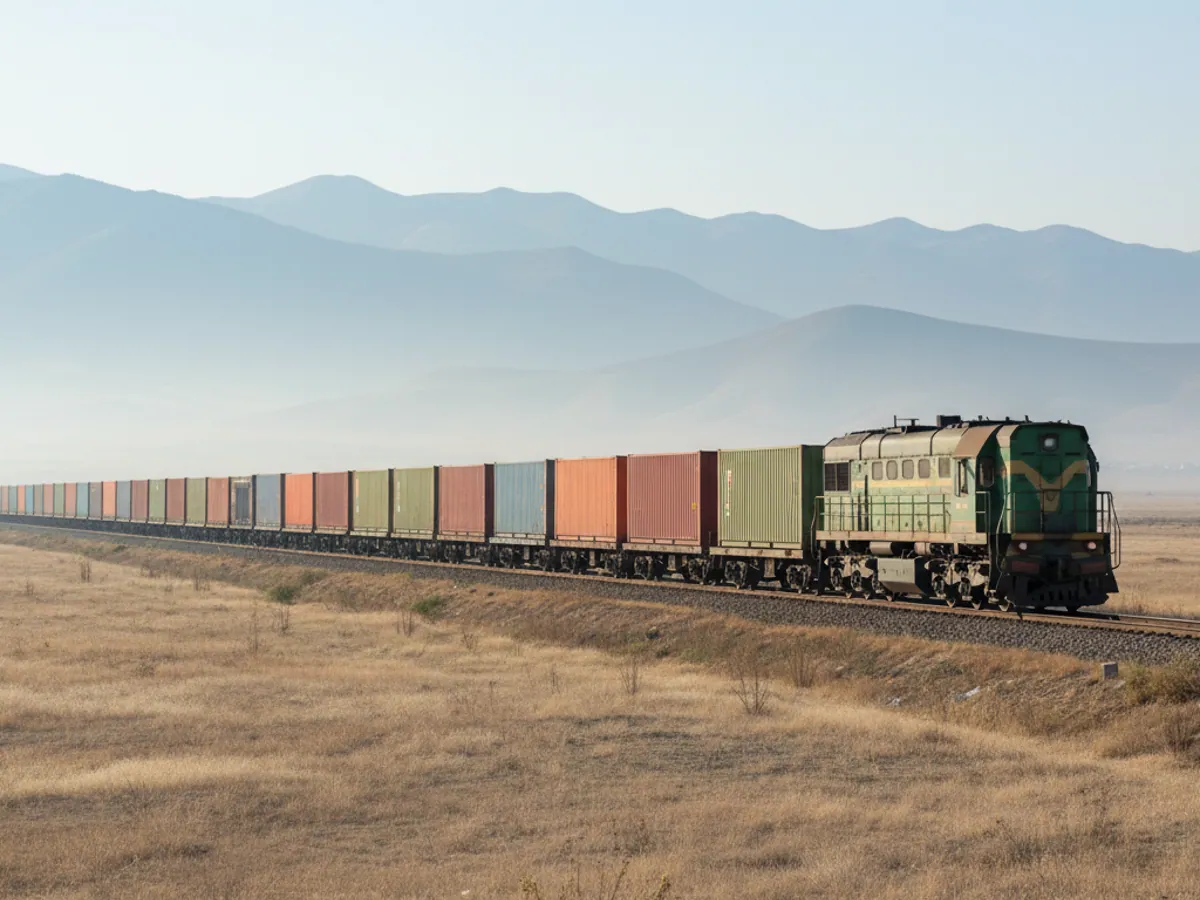
In Ganja, Nakhchivan, Lankaran, Gabala, Zagatala and the new airports of Karabakh and East Zangezur the ground fleet is smaller: sometimes 10–20 units in total. A dedicated dispatch room is more than they need.
For a small airport, trackers with engine hour counting, speed zones and a weekly report are usually enough. Head office sees the equipment at every airport in one account, while the local shift supervisor sees only his own.
The frequency of flights in the regions varies a great deal by season, in Gabala over the summer for instance. A report on equipment utilisation helps to work out which machines can be moved elsewhere or not kept on hire through the quiet season.
How a roll-out at an airport goes
Approvals
We discuss the project with the aviation security and technical departments: where the equipment will be fitted, how access for the fitters is arranged, what data is passed on and to whom.
The apron map
We mark out the stands, the service roads and the restricted zones from the airport's own layout. The speed limits come from your rules; we do not invent them.
A pilot on 10–15 units
We fit the equipment to different types of machine and spend two weeks checking the accuracy of the zones, the card readers and the load on the dispatcher. From you we need the apron layout, the speed rules, the list of driver authorisations and an export of equipment assignments to flights for the pilot period. The acceptance criteria are agreed in advance: for example, entry times into stand zones reconciled with the shift log on a sample of flights, and false speeding breaches around the stands looked into.
The whole fleet and training
We equip the remaining machines and train the dispatchers, shift supervisors and mechanics. We set up the reports for invoicing the airlines.
Common mistakes during a roll-out
Stand zones drawn too tight
GPS accuracy is a few metres. If a stand zone is drawn right up against the aircraft, there will be false breaches. We draw zones with some margin and check them against the track.
Cutting the engine on a breach
Stopping a vehicle in motion next to an aircraft is more dangerous than letting it finish its run. We only bar starting without authorisation, but not a running engine.
Forgetting the dollies
Baggage dollies and container dollies get lost all over the apron. Without beacons they are searched for by hand every shift.
Nobody responsible for responding
The notifications arrive, but nobody is obliged to act on them. A procedure is needed: who receives an event and what they do about it.
Frequently asked questions (FAQ)
What is used in this sector
What we do end to end
Wialon modules for this sector
How it is used in this industry
Case studies from “Fleets & Transportation Companies”

Thinking of rolling out GPS monitoring in “Airport ground handling”?
Send us an enquiry and we will price it up for your fleet and pick the hardware for this sector: fleets & transportation companies.
- 1 We pin down the task
A specialist calls back and asks about the vehicles, how many there are and what you need to keep an eye on.
- 2 We put a solution together
We propose the hardware and the features, and set out the one-off and the monthly cost separately.
- 3 We agree the fitting
At your yard or at ours, on a schedule that keeps the vehicles working.
Request a call
A specialist will call back and match a solution to your fleet and your task.