

Smart monitoring of refuse collection and street cleaning
For the companies that collect the waste and clean the streets themselves: waste operators, municipal contractors, managing agents of residential developments and grounds maintenance services in Baku, Sumgait, Ganja and the districts.
Less dead mileage and less fuel on the rounds, proof of every collection for the client, and a bill commercial customers can follow.

The view from the side that does the collecting
Smart monitoring of refuse collection and street cleaning is usually described from the client's point of view, checking up on a contractor. This page is for the contractor. For the company with 20-60 refuse vehicles, a municipal contract, dozens of commercial customers and a steady stream of complaints that the bin was not emptied.
For a company like that, monitoring is first of all economics: fuel, wear on the vehicles, the number of runs to the landfill, drivers' overtime. And it is also protection. When a resident rings the client, the contractor needs an answer faster than the client can write out a penalty.
If what you need is the view from the municipality and from environmental control, see the page waste collection monitoring for the client. All the municipal topics are collected in the section GPS monitoring for municipal services.
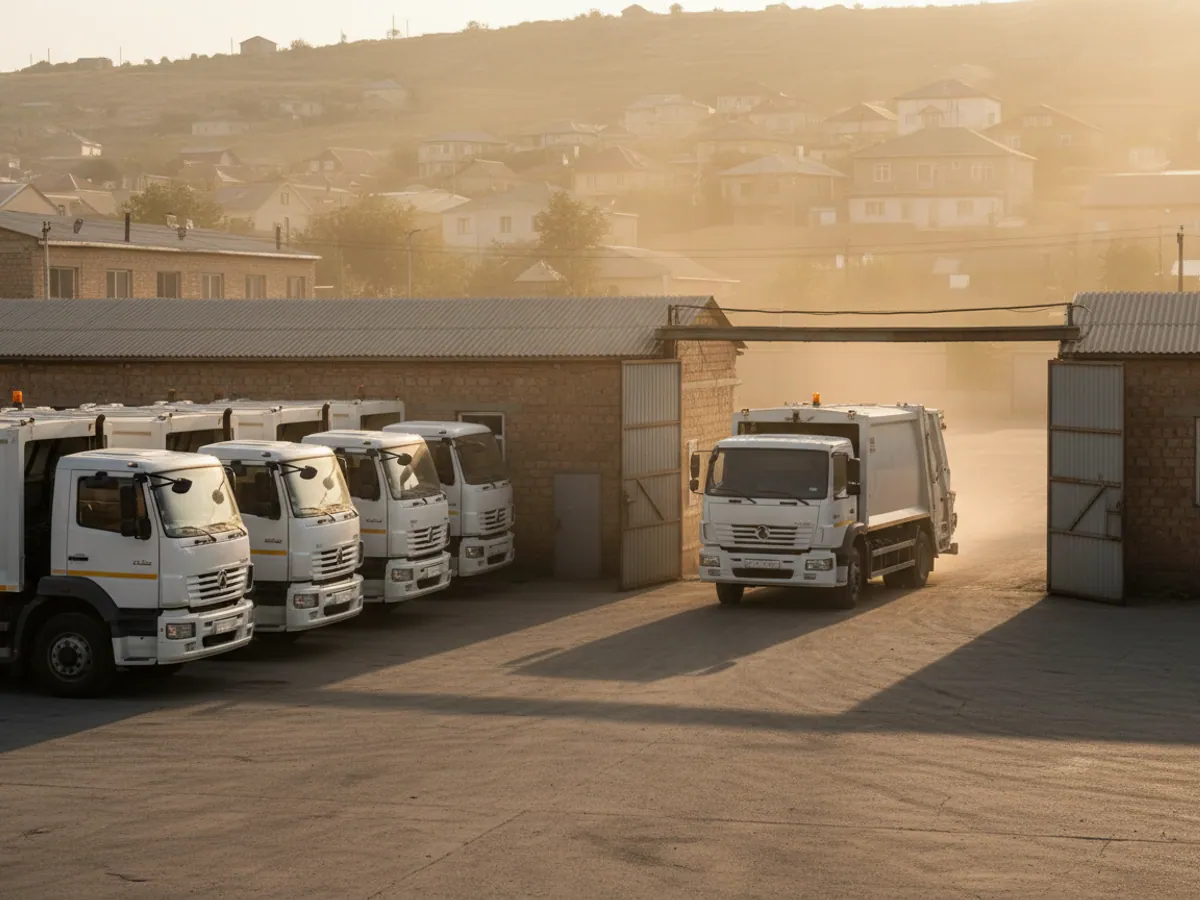
One refuse vehicle shift in figures
The shift starts at 6:00 at the depot in Binagadi district. The plan is 38 bin points in Yasamal and Nasimi, and two runs to the landfill at Balakhani.
By 9:30 the vehicle has served 22 points. On the map they are green and the rest are red. At three of them the lifting sensor operated; at one it did not — the vehicle stood for 40 seconds and drove off. The driver will explain later: the point was blocked by parked cars. He pressed the No access button, and that shows in the report.
At 11:10 comes the first run to the landfill. The distance from the last bin point is 19 km, although the route is shorter as the crow flies: the driver is going round the morning jam. At 14:30 comes the second run, and by 16:00 the vehicle is back at the depot.
At the end of the shift: 37 points out of 38, one with a reason recorded, two runs to the landfill, and fuel consumption per 100 km within the norm for that vehicle. If the client receives a complaint about the missed point tomorrow, the company has the record, the time and the reason.
Functions for refuse vehicles and street cleaning plant
Bin points
Every bin point is a spot on the map with a collection schedule. The colour on the map changes with the facts: green for collected, red for not yet, amber where the driver has given a reason for not collecting. A plan-against-actual report for each vehicle and each driver over a shift.
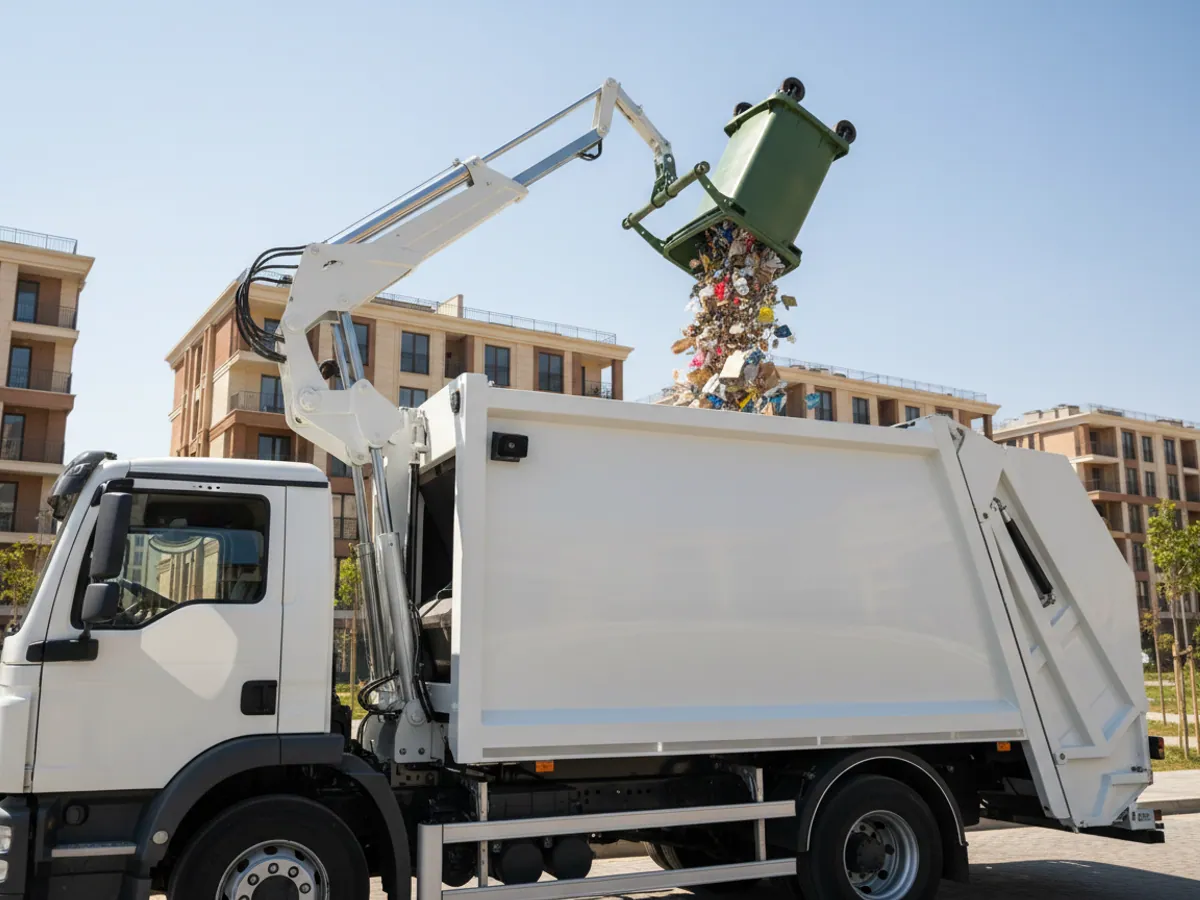
A collection counts when the sensor on the bin lifter or the compactor operates. A stop at a point with no such operation does not count as a collection.


A resident's complaint: from the call to a closed job
Complaints reach an operator by various routes: from the managing agent, from the municipality, sometimes directly from a resident. The monitoring system does not take complaints itself — the dispatcher handles them in a log, a CRM or a spreadsheet. What he does have for each complaint is the data to answer it on the merits.
- Checking. The dispatcher opens the bin point on the map: when the last visit was, whether the lifter operated, whether a No access note was made.
- Deciding. If the point was missed, he assigns a repeat collection to the nearest vehicle. If it was collected and the bin is full again, that is a question of the schedule, not of the driver.
- Arrival and work. Entry into the geofence of the point and operation of the lifter are recorded exactly as on a scheduled shift. Where needed, the driver photographs the point after loading.
- Reply and sign-off. The client receives the time of the repeat collection and the photograph. The job is closed by the client or the managing agent, not by the operator himself.
For reviewing a month it helps to keep a separate complaints report: reference number, bin point, time received, time of the last scheduled collection, decision taken, time of the repeat visit, operation of the lifter, photograph and closure status.
The boundary here is clear enough. The system will confirm that the vehicle was at the point and that the bins were lifted. It does not judge how clean the area around the point is or whether bulky waste has been left lying about — that shows only on a photograph or on an inspection.
Why the city stays dirty even when the vehicles are working
We see these problems in the first few weeks at almost every operator. All of them can be fixed, but first they have to be visible in figures:
Awkward courtyards get dropped
The narrow courtyards of the old city, bin points behind the barriers of residential developments. The driver skips them to finish the shift on time. Such points stay red on the map.
The round is out of date
The rounds were drawn up years ago. Since then new buildings have gone up and some bin points have been moved. The vehicles follow the old plan and cover unnecessary kilometres.
Idling and waiting
A refuse vehicle queues at the landfill for an hour with the engine running. Across a fleet of 30 that is hundreds of litres of diesel a week.
Tipping in the wrong place
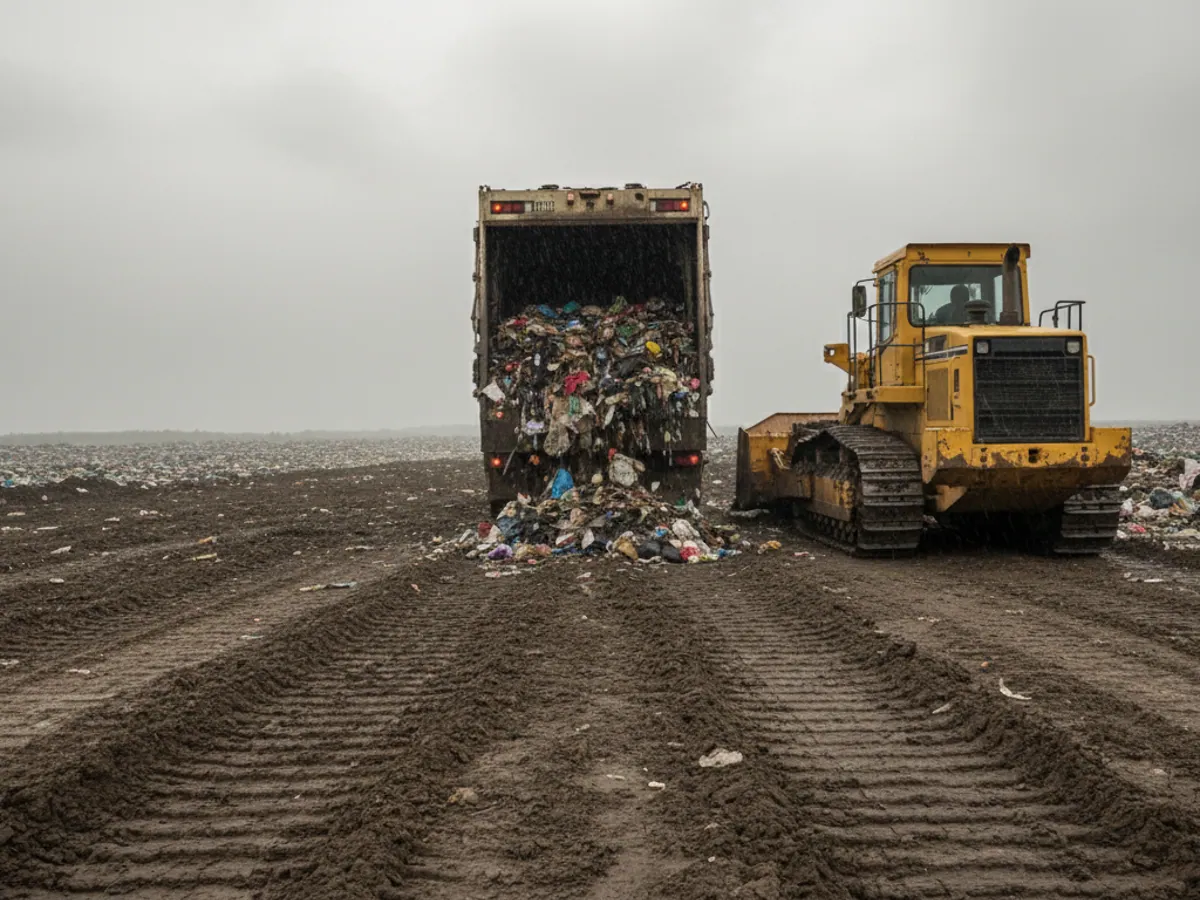
The odd driver dumps the load on waste ground rather than drive to the landfill. The fine lands on the company, not on the driver.
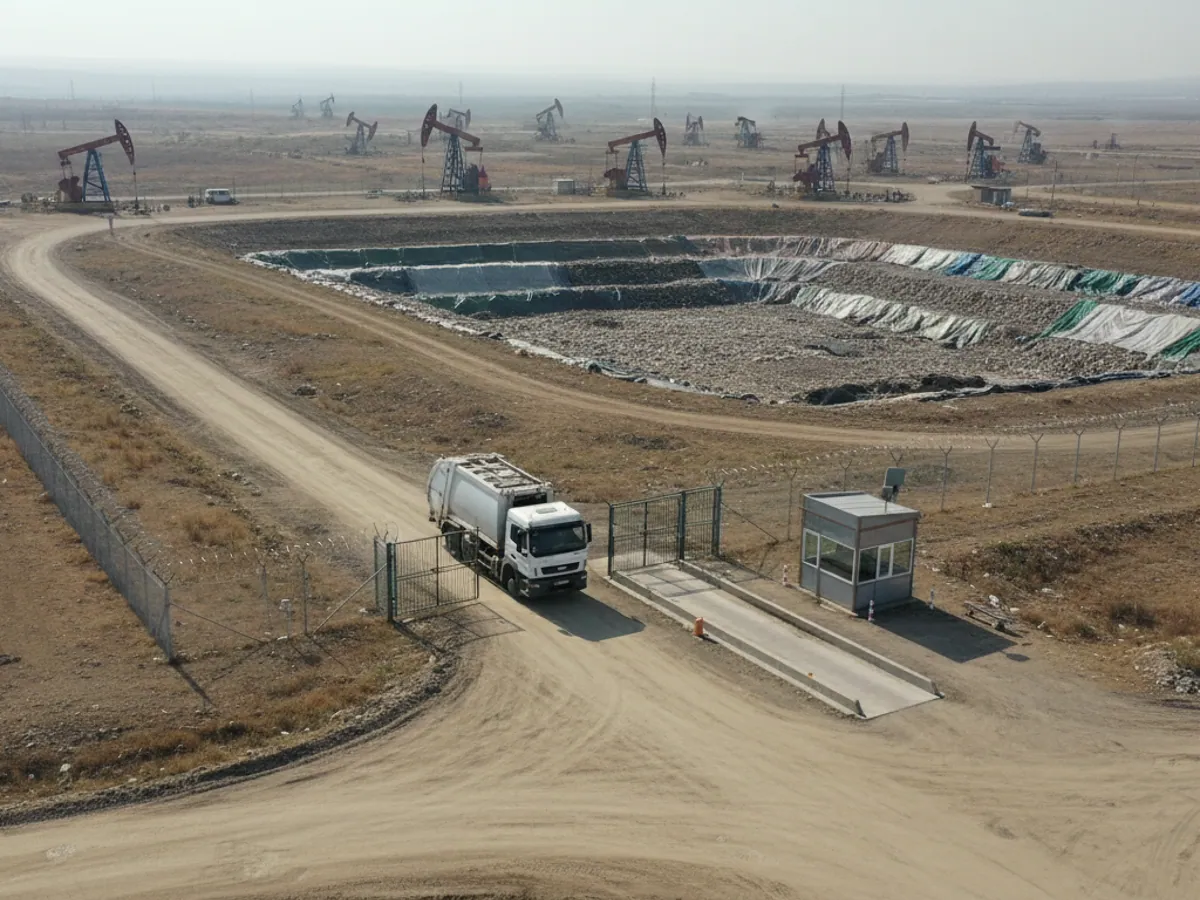
Equipment for a refuse vehicle
The standard set we fit to rear and side loading refuse vehicles:
- A Teltonika tracker reading the CAN bus — mileage, consumption, idling, engine fault codes.
- A sensor for the bin lifter operating, or for the compactor cycle.
- A body raising sensor on vehicles that tip to the side or the rear.
- A fuel level sensor, if the vehicles refuel from the company's own tank at the depot.
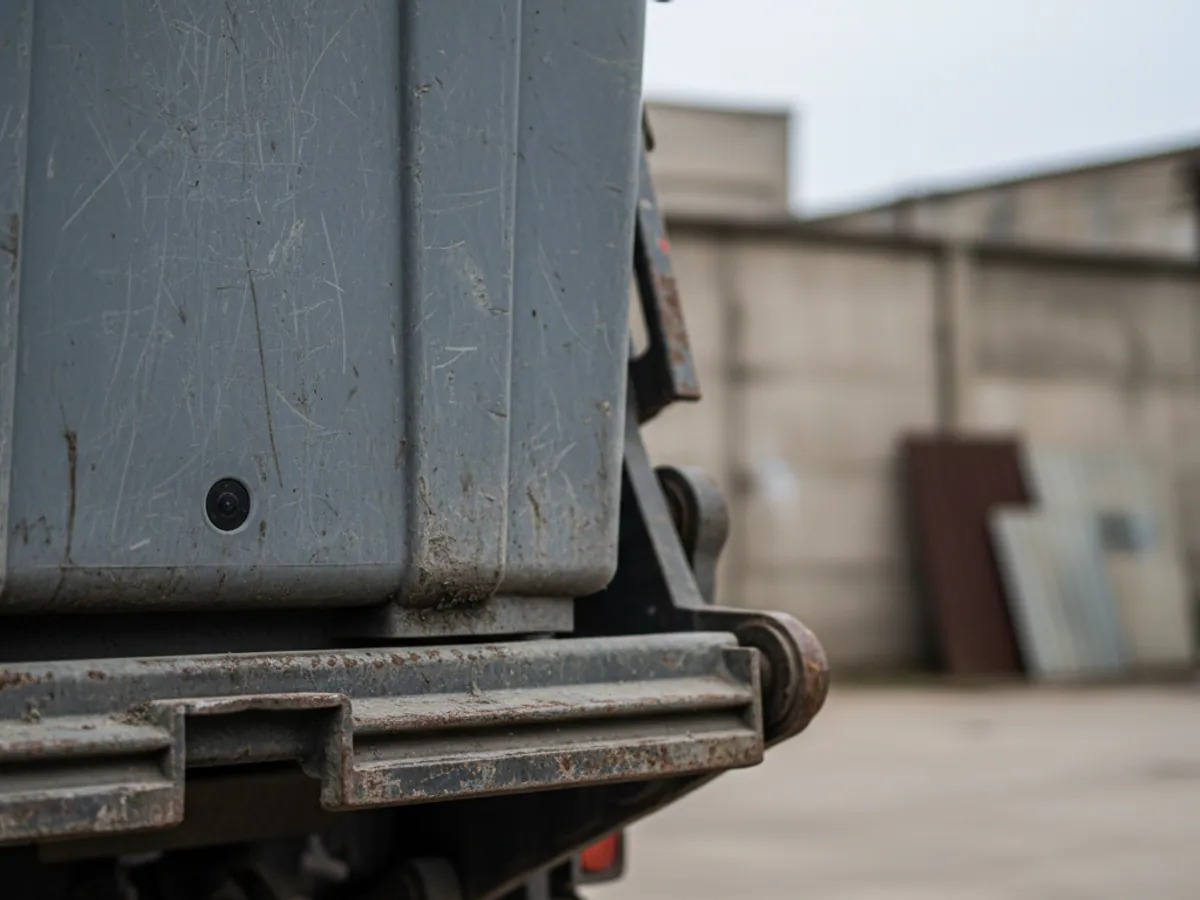
- Optionally, a camera on the tailgate for photographs of the point before and after loading.
For road sweepers and street washers, sensors for the brushes, the pump and the blade take the place of the lifter sensor.
Cameras and their fitting are described on the video monitoring installation page. A refuse vehicle with the full set takes us a working day, usually at a weekend or between shifts.

Where a waste operator genuinely saves
Fuel is the largest variable cost an operator has. So that is where we start the calculation.
Rebuilding the rounds. Once the bin points are on the map and the service time at each is known, the rounds can be redrawn. In our deployments the mileage usually falls by 10-15%. How the planning works is set out on the route planning page.
Idling. Queues at the landfill, waiting at bin points, warming up in the morning. An idling report with the drivers' names usually cuts it several times over in the first two months.
Drains and refuelling. Level sensors show where the diesel is going. The details are on the fuel control page.
Contract penalties. Some of the client's claims fall away once the operator has the time, the track and a photograph for every bin point.
How the launch goes at an operator
Putting the bin points on the map
We load the list of points by address together with the collection schedules. Where coordinates are missing, the drivers mark the points in the app during their first shifts.
A pilot round
We fit out 3-5 vehicles in one district. From you we need the list of that district's bin points with the schedule, the waybills, the landfill tickets and the complaints log for the same period. For two weeks we check how the lifter sensors behave and whether collections are being counted correctly. Acceptance criteria are agreed in advance: for example, that lifter events match the video or the driver's account, and that every complaint in the district has been worked through from the data.
The whole fleet and the cleaning plant
Fitting at 2-3 vehicles a day without interrupting collections. In parallel we train the dispatchers and the senior drivers.
Reports for the client
We set up the report in the format the municipality or the managing agent requires, with access to it by link.
Mistakes that stop you getting the benefit
Bin points with the wrong coordinates
The address in the contract and the actual place the bins stand often differ by a hundred metres. The collection then fails to count, and the dispatcher spends every morning sorting out false missed collections.
A lifter sensor nobody checked
A sensor fitted to the wrong part operates every time the arm moves. For the first week we check its events against the video or with the driver.
Drivers were not told
If a driver first hears about the system through a penalty, he will look for ways round it. If it was explained beforehand that the data also protects him when complaints come in, he works with it.
The client's report done by hand
Every week the dispatcher copies data into a spreadsheet. Sending the report automatically on a schedule saves hours and removes the errors.
Questions from waste collection operators
What is used in this sector
What we do end to end
Wialon modules for this sector
How it is used in this industry
Case studies from “Utilities & Emergency Services”
Thinking of rolling out GPS monitoring in “Housing and facility services”?
Send us an enquiry and we will price it up for your fleet and pick the hardware for this sector: utilities & emergency services.
- 1 We pin down the task
A specialist calls back and asks about the vehicles, how many there are and what you need to keep an eye on.
- 2 We put a solution together
We propose the hardware and the features, and set out the one-off and the monthly cost separately.
- 3 We agree the fitting
At your yard or at ours, on a schedule that keeps the vehicles working.
Request a call
A specialist will call back and match a solution to your fleet and your task.