
Refuse lorry monitoring with FMS data
A Teltonika scenario for waste haulers: a professional FMC650 or FMM650 tracker reads FMS data, axle load, grab status and the tachograph from a refuse lorry, so that the fleet keeps to schedule and the machines are not wrecked by careless use.
A Teltonika scenario for waste haulers: a professional FMC650 or FMM650 tracker reads FMS data, axle load, grab status and the tachograph from a refuse lorry, so that the fleet keeps to schedule and the machines are not wrecked by careless use. A refuse lorry is an expensive and temperamental machine. Every day it makes hundreds of stops, lifts tonnes of load and brakes more often than any taxi. One breakdown wrecks a whole route, and by the evening the company has complaints from residents and claims from its client. A tracker here is needed not just for a dot on the map but to see how the machine is being used and how much it is carrying.
What this scenario solves
In many countries regular waste collection is still not in place.
In South Africa, for instance, about 35% of households use informal or communal dumps.
Where collection does exist, everything rests on the machines being serviceable.
A refuse lorry breaks down, a route is lost, and getting the schedule back within a day or two is not easy.
In many countries regular waste collection is still not in place. In South Africa, for instance, about 35% of households use informal or communal dumps. Where collection does exist, everything rests on the machines being serviceable. A refuse lorry breaks down, a route is lost, and getting the schedule back within a day or two is not easy.
It is often the driver who ruins the machine. Driving with the grab lowered is forbidden, but on short hops between bays it is done anyway to save a minute. The hydraulics and the chassis pay for it later in repairs.
The second trouble is missed servicing. A machine working two shifts clocks up engine hours faster than anyone gets round to looking in the service log.
Delays and missed collections are visible to people at once. Waste left standing an extra day in the heat means complaints, fines and a damaged relationship with the municipality or the property manager who pays under the contract.
What Teltonika offers
For this job Teltonika uses trackers from its professional range: the FMC650 with LTE Cat 1 and the FMM650 with LTE Cat M1, both falling back to 2G. They read the lorry's onboard data over FMS, work with additional sensors and with a tachograph, and monitor the attached equipment through digital inputs. The example uses the FMC650.
Installation and setup
Fitting the device and configuring it for the fleet scenario at hand.
Data transfer
The device collects data and sends it to the monitoring platform; how often depends on the model and its settings.
Analysis and control
The person in charge gets reports and alerts and looks into what stands out.
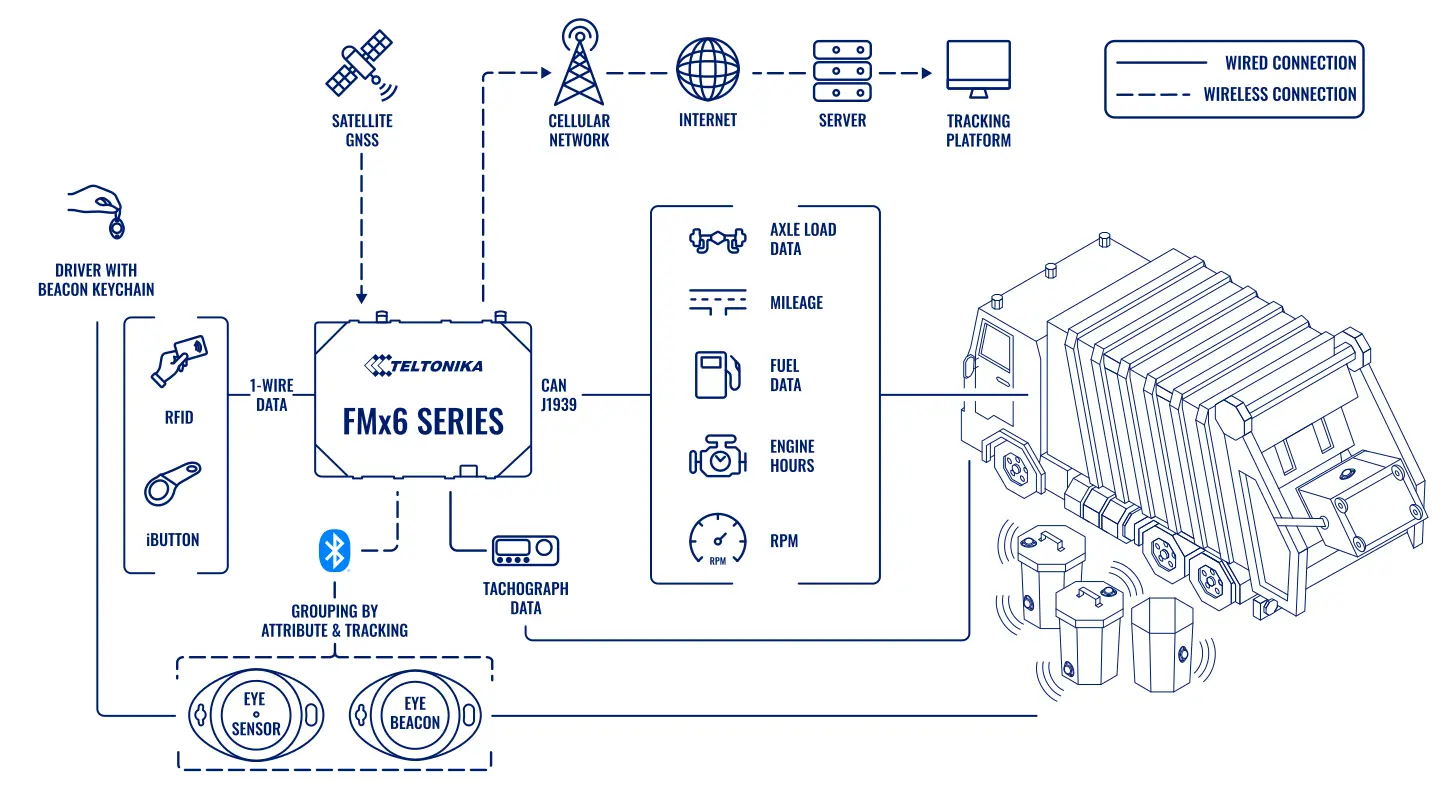
FMS is the standard by which lorries from most European manufacturers report data over the SAE J1939 protocol: axle loads, engine revs, engine hours, consumption and other parameters. On some vehicles fuel level and consumption are easier to read through a separate SAE J1708 port, and the 650 series trackers have that too. For jobs FMS does not cover, third-party sensors are connected to the tracker over RS232 and RS485, or custom CAN sensors are used.
How much the vehicle is carrying. Rear axle load over J1939 shows how the body is filling up. From it you can see how much waste a vehicle has collected and which parts of the route produce the most. If one vehicle is already full by mid-shift while another returns to the landfill half empty, the routes are worth rebuilding. In the same way the tracker knows whether the lorry's body is empty or loaded.
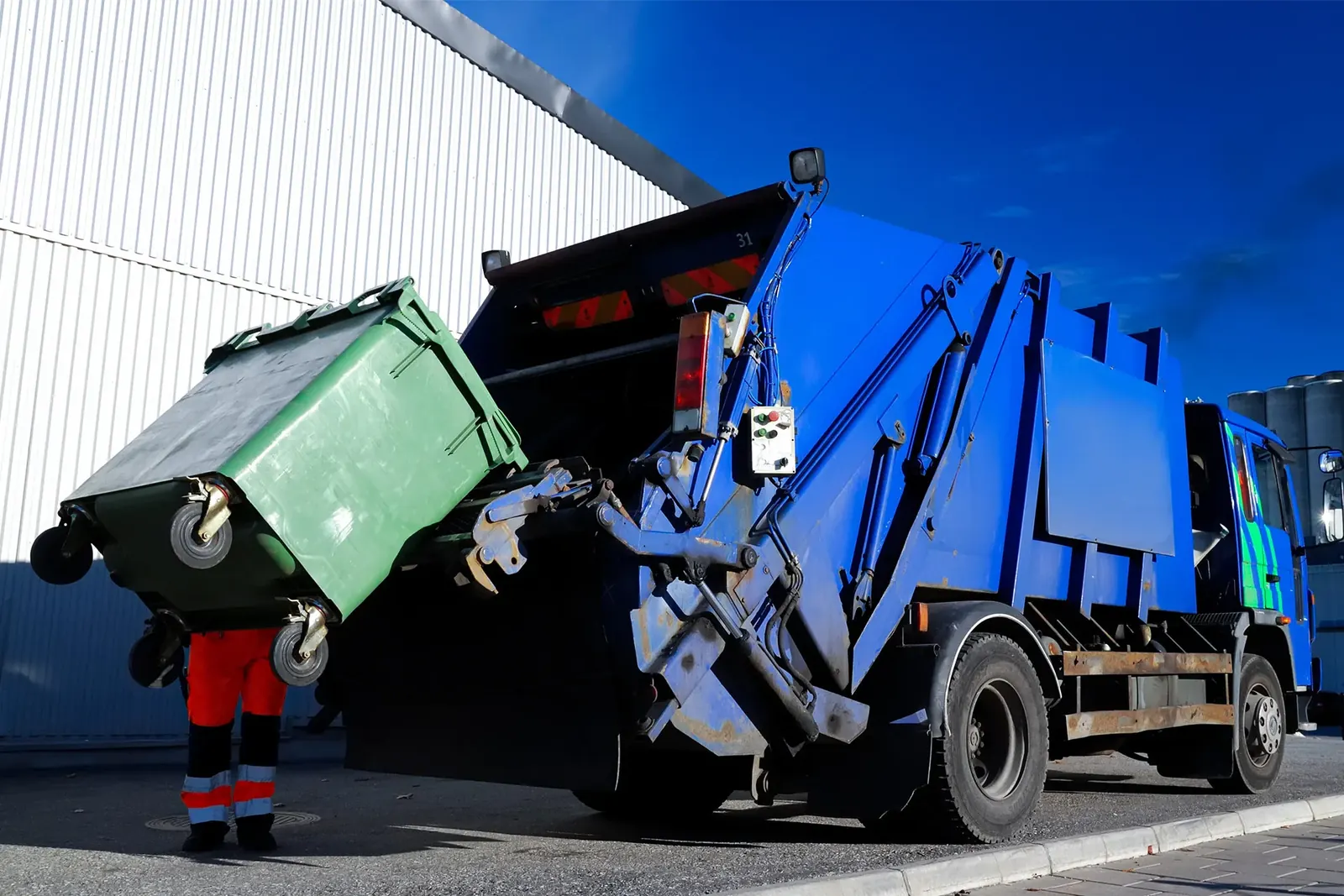
How the machines are being used. The tracker sees engine revs, speeding, sharp turns and heavy braking. It reads the grab position through digital inputs: raised, lowered and working, or lowered and idle while the vehicle is moving. Driving with the grab lowered immediately becomes an event with a time, a place and a driver. Once drivers know it is visible, the habit disappears, and with it go the extra fuel consumption and the early wear on brakes, chassis and hydraulics.
Who is at the wheel. The driver is identified in one of two ways: by a wireless EYE Beacon, or over the 1-Wire bus with an RFID card or iButton key. The same identification doubles as an immobiliser: without a card the vehicle will not start. And in the reports every event — violations, mileage, engine hours, tipping — is tied to a specific person rather than only to a vehicle number.
The containers. EYE Beacon beacons and EYE Sensor devices also go on the bins themselves. The FMC650 acts as a Bluetooth gateway: it sees a beacon when the vehicle pulls up, records the container being moved, lifted and emptied, and sends the events to the server. That is a scenario of its own, and it is convenient to combine with monitoring the vehicle.
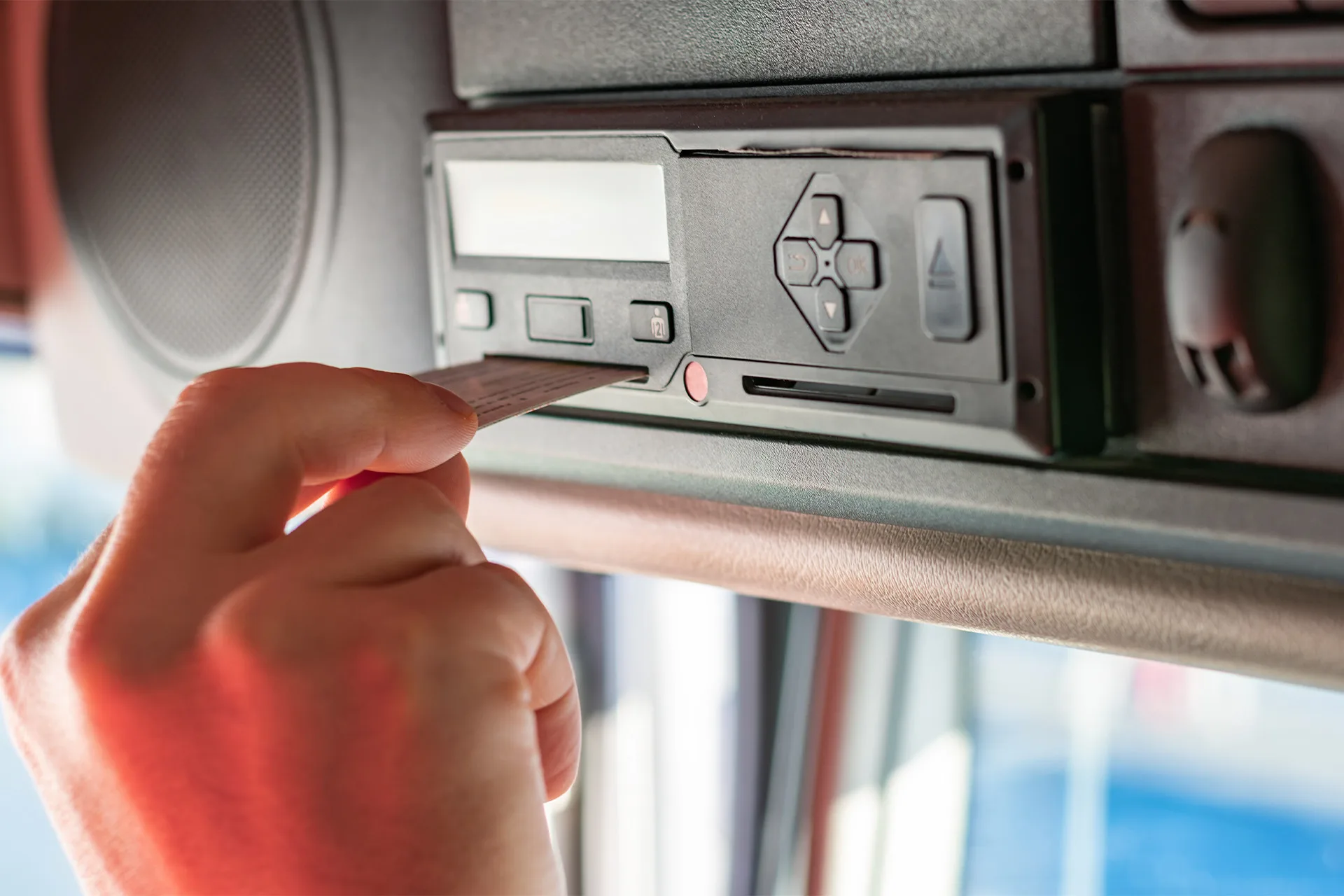
The tachograph. PROFESSIONAL trackers connect to a digital tachograph and can download DDD files remotely as well as transmit drivers' hours data in real time. The connection can be made in the classic way, behind the tachograph, or through the front panel with a TACHO cable, which is quicker to fit. The data is shown by the WEB TACHO application, and breaches of drivers' hours are visible before an inspection finds them.
What the dispatcher's day looks like. In the morning all the vehicles are out, and for each of them the system shows the driver from his card. By 11 o'clock one vehicle has reached an axle load close to the maximum, so the dispatcher sends it to tip ahead of plan and hands its last few bays to the vehicle next to it. In the afternoon an event arrives: vehicle No. 7 travelled 800 metres with the grab lowered. In the evening the system reminds them that vehicle No. 3 is due for service on engine hours, and it is booked in for tomorrow before it stops on a route. The whole history stays in the system for review.
What counts as a completed operation. A bay is credited as served when a grab cycle has taken place inside its geofence, not when the vehicle merely drove past. The data comes from different sources: axle load and engine revs from FMS, grab position from a digital input, the driver from a card or beacon. The report for the client normally contains a list of bays with the time they were served, the bays missed with the reason, and a summary of runs to the landfill.
What you get
Routes built to the real volume of waste
Axle load shows where vehicles fill up faster, and routes are rebuilt without needless mileage.
The whole picture across the fleet
The location, load and use of every vehicle help in planning shifts and machines.
Drivers treat the machines better
Driving with the grab lowered, harsh manoeuvres and speeding are all visible with the driver's name.
Servicing by engine hours rather than by memory
The notifications arrive on time, and breakdowns on a route become rarer.
Less spent on fuel and repairs
Careful driving and sensible routes reduce wear and consumption.
Drivers' hours under control
Downloading the tachograph remotely helps avoid fines.
Why this solution
The FMC650 and FMM650 are the best-equipped Teltonika vehicle trackers, designed for heavy machinery. One device carries FMS, J1708, RS232, RS485, Bluetooth, 1-Wire, digital inputs and tachograph support. For a refuse lorry, where onboard data, attached equipment and the driver all have to be read at once, that means one tracker instead of a stack of several boxes.
The choice between the models is simple. The FMC650 works on LTE Cat 1 and suits most urban and intercity work. The FMM650 with LTE Cat M1 is chosen where the network supports that standard and where power consumption and indoor coverage matter. Both fall back to 2G when they need to.
What to check before fitting. Not every vehicle provides FMS data: on older refuse lorries and on some manufacturers' chassis there is no FMS bus, so axle load has to come from sensors and fuel from a fuel level sensor. The grab signal has to be taken to a digital input correctly, or false events will appear in the reports. These questions are settled when the vehicle is surveyed before installation.
Axle load is a guide, not a weighbridge. It shows the pattern of filling well and helps compare vehicles and sectors, but settling with a landfill by the tonne needs certified scales. That is worth explaining honestly to the client, so nobody expects the tracker to replace the weighbridge.
Rollout is better started with a survey of the fleet: which vehicles provide FMS, which have a digital tachograph, how the grab signal is brought out. The result is two or three standard kits instead of a bespoke installation on every vehicle, and fitting the whole fleet goes faster.
How this works in Azerbaijan. Refuse lorries are run by cleansing services and contractors in Baku, Sumgait, Ganja and Mingachevir, by landfill operators, and by companies that remove industrial waste from oil and gas plants in Absheron. In summer at +40 °C waste cannot be left at a bay for an extra day, so a missed route is felt immediately here. Our fleets are mixed: new European chassis that do have FMS work alongside older vehicles without it, and on those we fit an Escort fuel level sensor over RS485 plus sensors on the attached equipment. A tachograph matters for vehicles that carry waste to distant landfills along the M-1 and M-2 roads. GPS.az chooses the tracker model for each vehicle, connects FMS, the grab and driver identification, and configures reports in Wialon on load, misuse of the machines, servicing by engine hours and route completion.
Related case studies
Related rollouts and equipment

Questions about the “Refuse lorry monitoring with FMS data” scenario
Request a call
A specialist will call back and match a solution to your fleet and your task.