
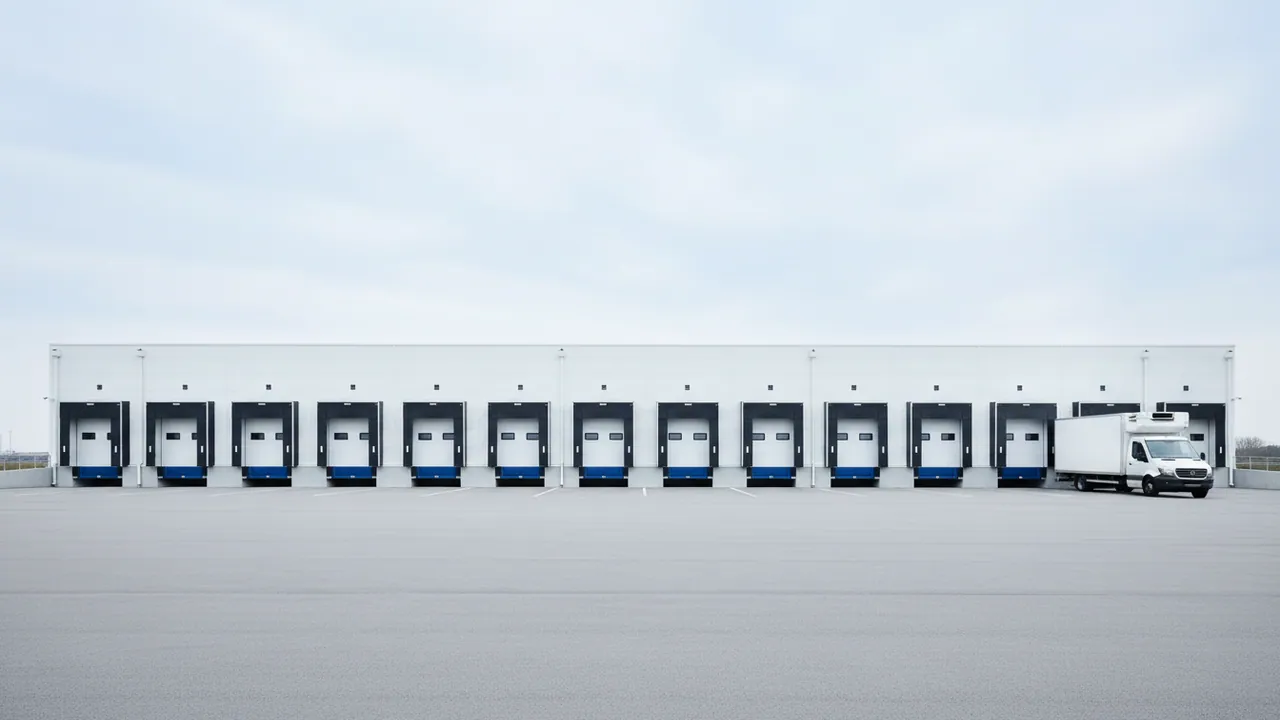
GPS monitoring for medicine and pharmaceutical transport (GDP)
For pharmaceutical distributors, pharmacy chains and hospital suppliers. The temperature in every zone of the body, door openings, the route and the stops — in a single record of the run that can be shown to a manufacturer's auditor and attached to a claim.
What the auditor actually asks
The GDP (Good Distribution Practice) requirements for transport come down to something simple: you have to prove that the medicine stayed within the stated temperature range for the whole journey, and if it did not, that you found out about it and took a decision. Usually this is +2…+8 °C for the cold chain group and +15…+25 °C for products stored at room temperature.
GPS monitoring for medicine transport provides that evidence: a continuous record of temperature tied to time and place, a log of door openings and of alerts. The monitoring system on its own does not make you GDP compliant — compliance rests on your quality system, your procedures and your trained people. We are responsible for the data being complete and reliable.
How pharmaceutical logistics fits into the wider picture of trade and distribution is described on the page about solutions for retail.
The main risk in summer is not the cold chain group
Cold chain goods travel in refrigerated units and everybody keeps an eye on them. We see more problems with room-temperature products: tablets, syrups and ointments that are meant to travel at +15…+25 °C.
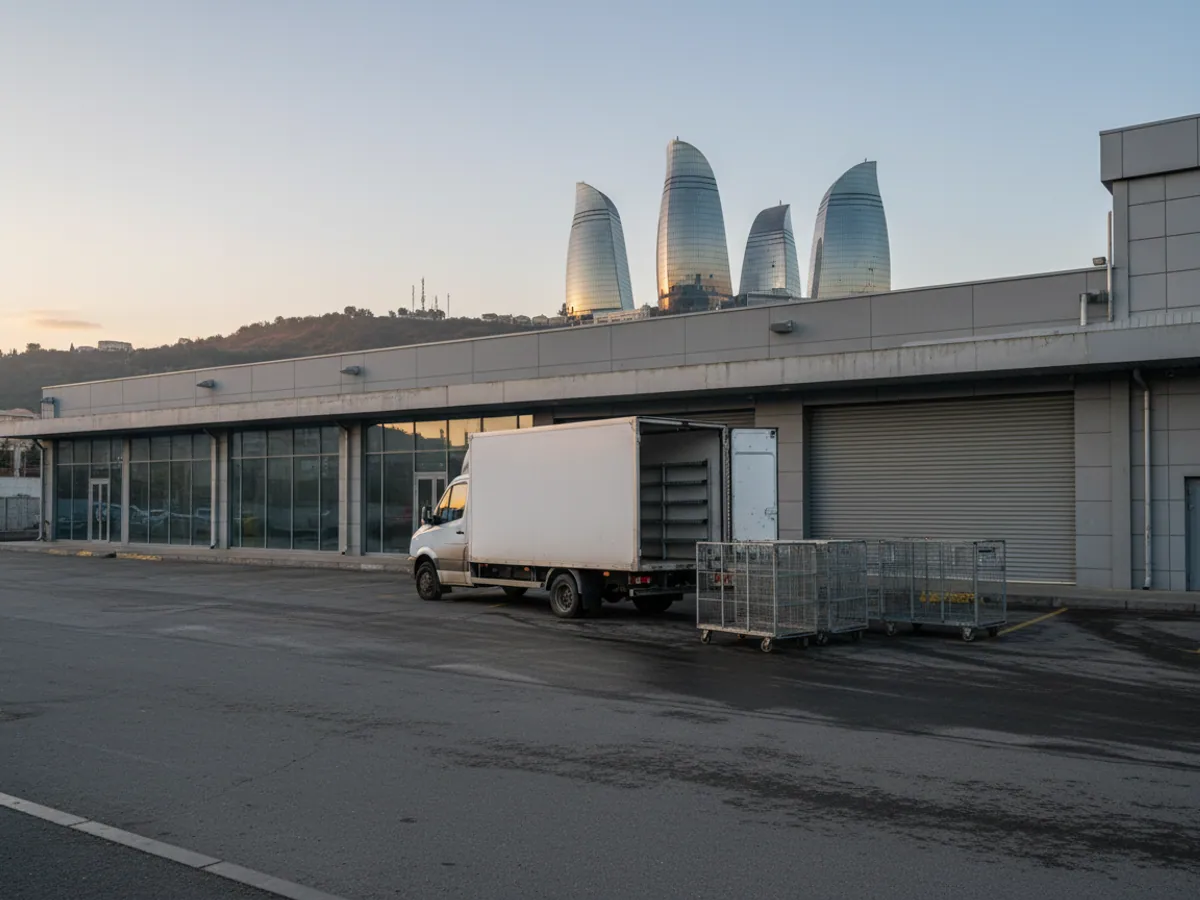
They are often carried in an ordinary insulated van with no active cooling. In July a van like that, left standing in the sun for an hour outside a pharmacy in Sumgait, warms up inside to +35 °C and above. Nobody sees this because there is no sensor — after all, these are not vaccines.
To an auditor it makes no difference: the range is printed on the packaging, and breaching it is equally bad, whether for a vaccine or for a syrup. So the first thing we suggest to a pharmaceutical distributor is to fit temperature sensors in every vehicle, including the dry ones, and not only in the refrigerated units. For the room-temperature group in the summer months it often turns out that an air-conditioned body is needed.
Risks in pharmaceutical logistics
Each of these cases ends either in a batch being destroyed or in an awkward conversation with the manufacturer:
A temperature excursion with no record
The temperature went out of range for 20 minutes, but the logger was not writing or the data was lost. There is nothing to prove that the product is still fit for use.
Theft during delivery
Medicines are compact and expensive. A box is easy to carry off during a stop along the way, and the shortfall is discovered at the pharmacy.
A dispute with a pharmacy or a hospital
The consignee claims the goods arrived warm or incomplete. Without a record of the run the distributor's position is weak.
A loss of power
The driver switched the engine off in a car park, the unit shut down and the wired logger went with it. An hour-long gap in the data.

Batch, temperature, deviation: who does what on a run
In pharmaceutical logistics it is not enough to know that it was +5 °C in the body. The auditor asks a different question: which batches travelled in this vehicle, what happened to them and who took the decision if the regime was breached.
The batch. Serial numbers and consignees live in your accounting system. Monitoring knows the vehicle, the run and the delivery points. The batch-to-run link runs through the run or consignment note number: it is passed to Wialon when the route is created, or matched up when the report is exported. The GPS system itself does not keep batch records.
The report for the run. For every delivery it holds the run and vehicle number, the consignee, the time of arrival and of door opening, the minimum, the maximum and a graph for each sensor, and every episode outside the corridor with its duration. The quality department matches it against the serials that travelled on the run.
Calibration. The sensor verification schedule is kept by whoever is responsible for equipment in your quality system. We give reminders about the dates and we replace sensors, but the calibration document is issued by a laboratory, not by the monitoring system.
Going out of range. The sequence of actions is approved by your quality department; the system only delivers the signal. A typical chain:
- an alert to the driver and the logistician, the driver checks the doors and that the unit is running;
- the temperature has not returned to the corridor — a call to the person responsible for quality, and a decision: carry on with the run, turn back or transfer the load;
- the serials from the run are blocked in the accounting system until the authorised person decides;
- the deviation log records who received the alert and what was done, and the entry number is placed next to the run number.
How control over a run works
Temperature at several points in the body
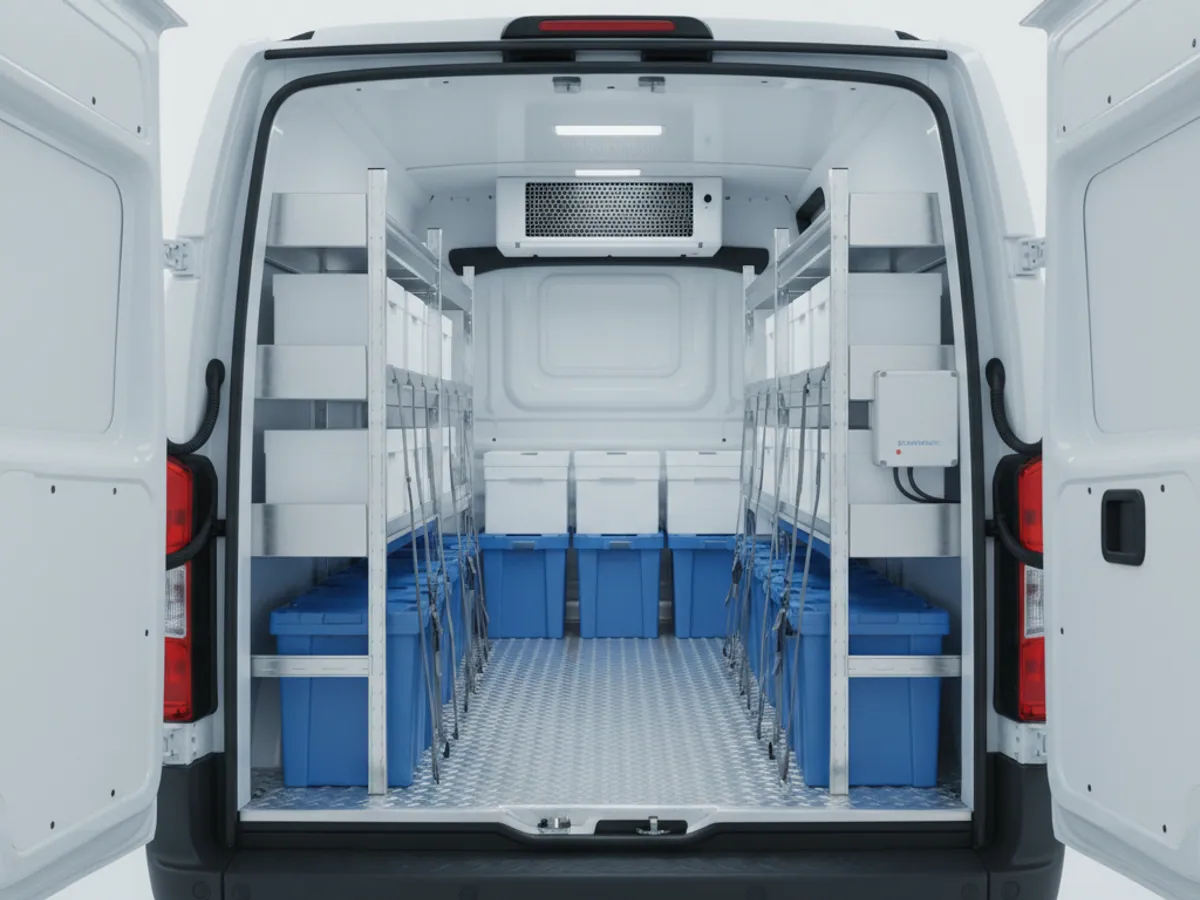
A single sensor by the evaporator shows the air temperature at the cooling unit, not at the goods. For pharmaceuticals we fit several wireless sensors: by the evaporator, in the middle, by the rear doors and near the floor. The points are chosen on the basis of a mapping exercise.
Wireless sensors such as the Teltonika EYE Sensor run on their own battery and keep measuring even when the vehicle's power is switched off. For particular groups of products we add humidity monitoring.



A run to Ganja in July
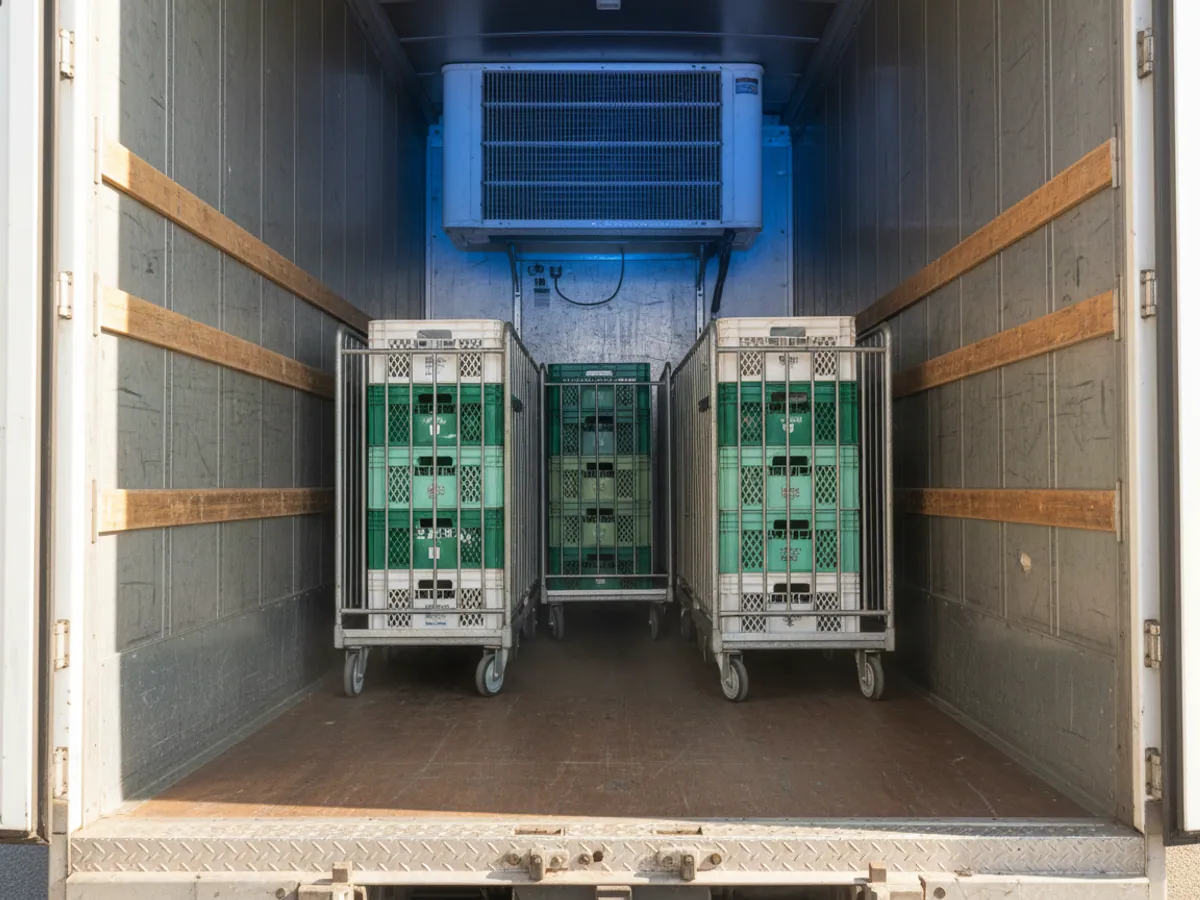
A refrigerated vehicle leaves the depot in Baku at 6:00 with vaccines and insulin for pharmacies and a clinic in Ganja. The corridor is +2…+8 °C. On the M-2 it is already +34 °C outside.
At 10:15 near Yevlakh the sensor by the doors reads +8.6 °C while the sensor by the evaporator reads +5 °C. Seven minutes later an alert goes to the logistician: the unit is running but cannot keep up. The logistician rings the driver, who stopped for lunch an hour ago and opened the doors to get his bag out of the body. The doors were closed and 20 minutes later the temperature was back inside the corridor.
In the report for the run this appears as a 27-minute excursion at the doors with a maximum of +9.1 °C, while at the evaporator everything was normal. The decision about the fate of the load is taken by your authorised person, on the basis of the manufacturer's stability data for the product. Without the record this run would either have been written off in full or nobody would ever have known.
Stages of connecting a pharmaceutical fleet
Going through the requirements
We look at your procedures, the ranges for each group of products and what exactly the auditors asked about last time. The number of sensors and the format of the reports depend on that.
Mapping the body
We place temporary sensors throughout the volume of the body and collect data on real runs, in summer and in winter. The export goes to your quality department, which draws up the mapping protocol itself.
Permanent fitting
We fit the tracker, the permanent temperature sensors at the points chosen by the mapping, and a door sensor. Running the door wiring is covered by the door opening sensor installation service.
Setting up alerts and reports
Corridors by product group, alert delays, the list of recipients, a run report template in your own format.
Training and checking
We teach logisticians and drivers how to respond to alerts, run trial journeys and check that the report contains everything an auditor needs.
Acceptance of the pilot runs
A pilot usually runs on two or three vehicles on one route, one of which is a dry van. From you we need the ranges by product group, the list of alert recipients and the report format that your quality department will accept. The criteria are agreed in advance: there are no gaps in the record during stops, every alert has been looked into and reflected in the deviation log, and the quality department accepts the run report without reworking it by hand.
Mistakes that surface during an audit
The sensor sits by the evaporator. It almost always reads normal, even when it is already warm by the doors. The auditor asks where the mapping results are and why the monitoring point was chosen there.
No data for the stop. The wired logger was powered from the vehicle and switched off with the ignition. Wireless sensors with their own battery close that gap.
Nobody looks into the alerts. The notifications arrive, but there is no record of who received them and what was done. For GDP, the response to a deviation matters as much as the record itself.
Calibration was done at some point. A sensor has to have a calibration document, and its validity has to be tracked. It is better to find out which document your auditor needs before buying the equipment rather than afterwards.
What the distributor gets
Evidence for every run
Temperature, doors and route in a single record that can be exported for any day.
Fewer batches destroyed
The alert arrives while the situation can still be put right, rather than at goods-in at the pharmacy.
A strong position in a dispute
A claim that it arrived warm is checked against the graph in minutes.
Control over security
Door openings away from the pharmacy and stops off the route are visible straight away.
Frequently asked questions
What is used in this sector
What we do end to end
Wialon modules for this sector
How it is used in this industry
Case studies from “Retail & Trading Networks”

Thinking of rolling out GPS monitoring in “Pharmacy chains”?
Send us an enquiry and we will price it up for your fleet and pick the hardware for this sector: retail & trading networks.
- 1 We pin down the task
A specialist calls back and asks about the vehicles, how many there are and what you need to keep an eye on.
- 2 We put a solution together
We propose the hardware and the features, and set out the one-off and the monthly cost separately.
- 3 We agree the fitting
At your yard or at ours, on a schedule that keeps the vehicles working.
Request a call
A specialist will call back and match a solution to your fleet and your task.