
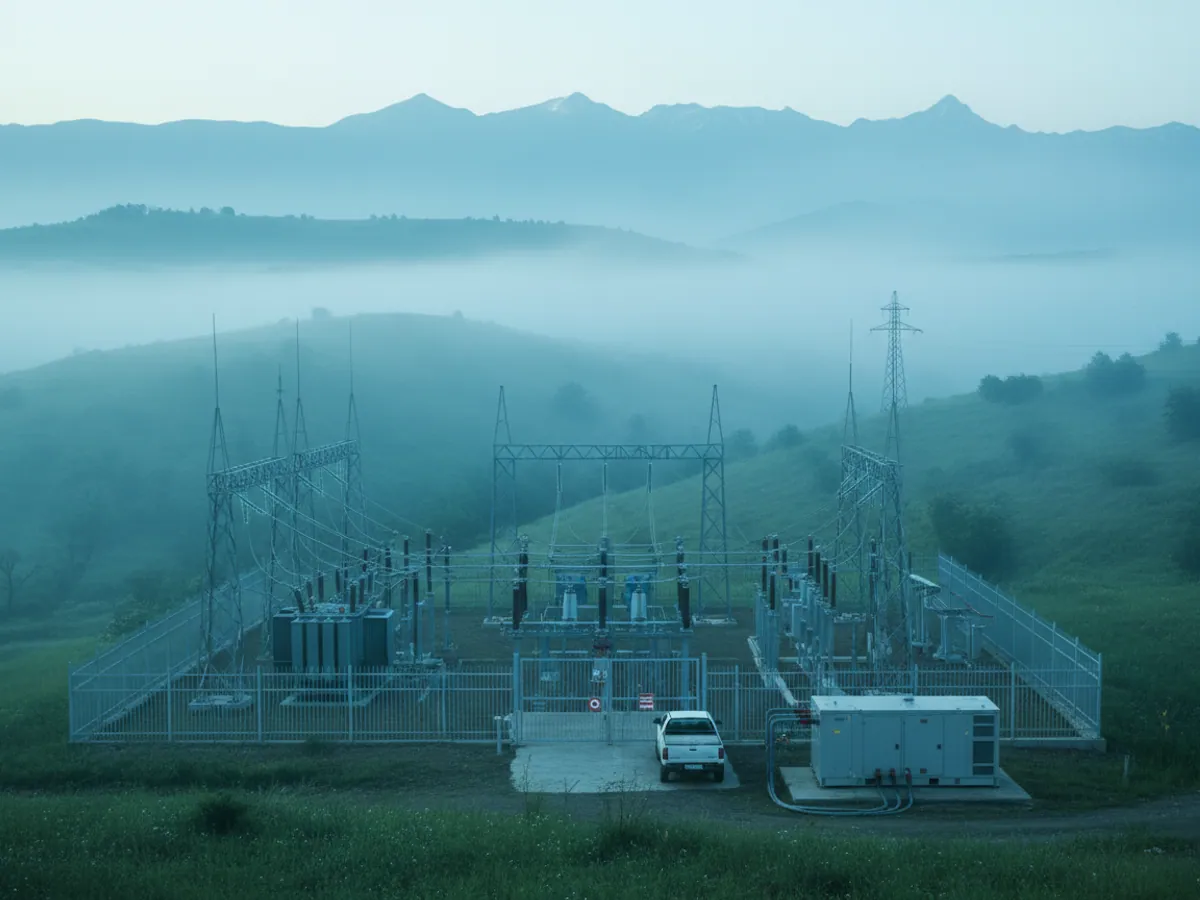
Monitoring for solar and wind power plants
Telematics for the companies that build and maintain solar and wind farms in Azerbaijan: main contractors, service companies and plant operators. We keep track of cranes and equipment on site, abnormal loads, service vehicles, and the security of cable and equipment across sites that run to hundreds of hectares.
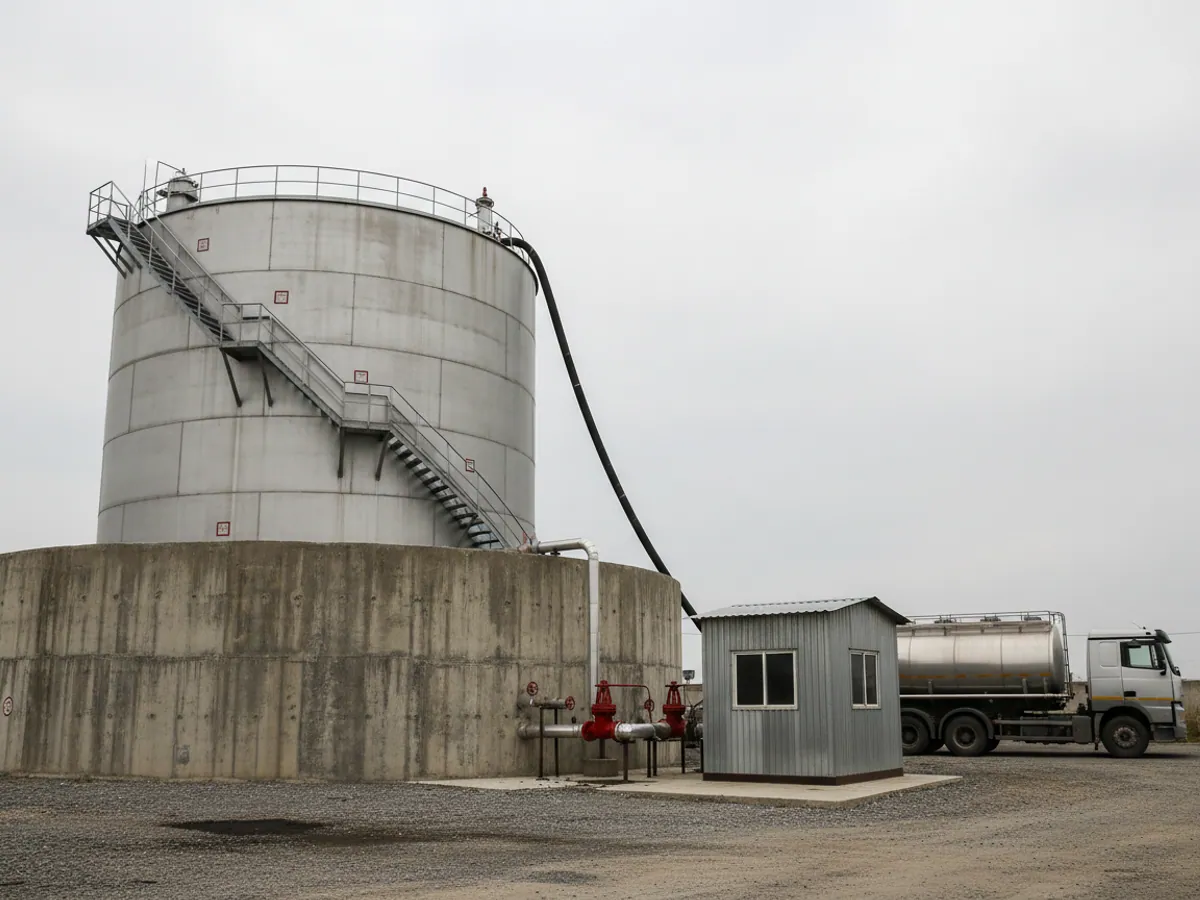
A plant has two periods in its life, and both need control
A solar plant in the Garadagh district, wind projects on the coast between Khizi and Absheron, sites in the green energy zone of Karabakh and East Zangezur, solar projects in Nakhchivan. Every one of them is built over a year and a half or two, and then operated for decades. The tasks in those two periods are entirely different.
On a construction site what matters is plant and logistics. Hundreds of runs with modules and structures, cranes on erection work, generators, fuel, several contractors on one site. After commissioning, what comes to the fore is security, panel washing, grass cutting, service engineer call-outs and the safety of people working at height on their own.
We choose equipment to suit each stage and do not push anything that will only be needed a year later. Other parts of the energy sector are described on the page about telematics for the energy sector.
The construction stage
Cranes erecting wind turbines
The nacelle and the blades are put up with large crawler and mobile cranes, which are expensive to hire and even more expensive to leave standing. A tracker on the crane shows engine hours, standing time and movements between foundations.
Lifting at height is limited by wind speed, and on Absheron the strong northerly khazri can blow for several days at a stretch. If the site has a weather station with a digital output, its data can be brought into the same system, and the crane downtime report will then show whether work stopped because of the wind or for some other reason. That is an argument in disputes with the company hiring out the plant.
The cable disappears at night
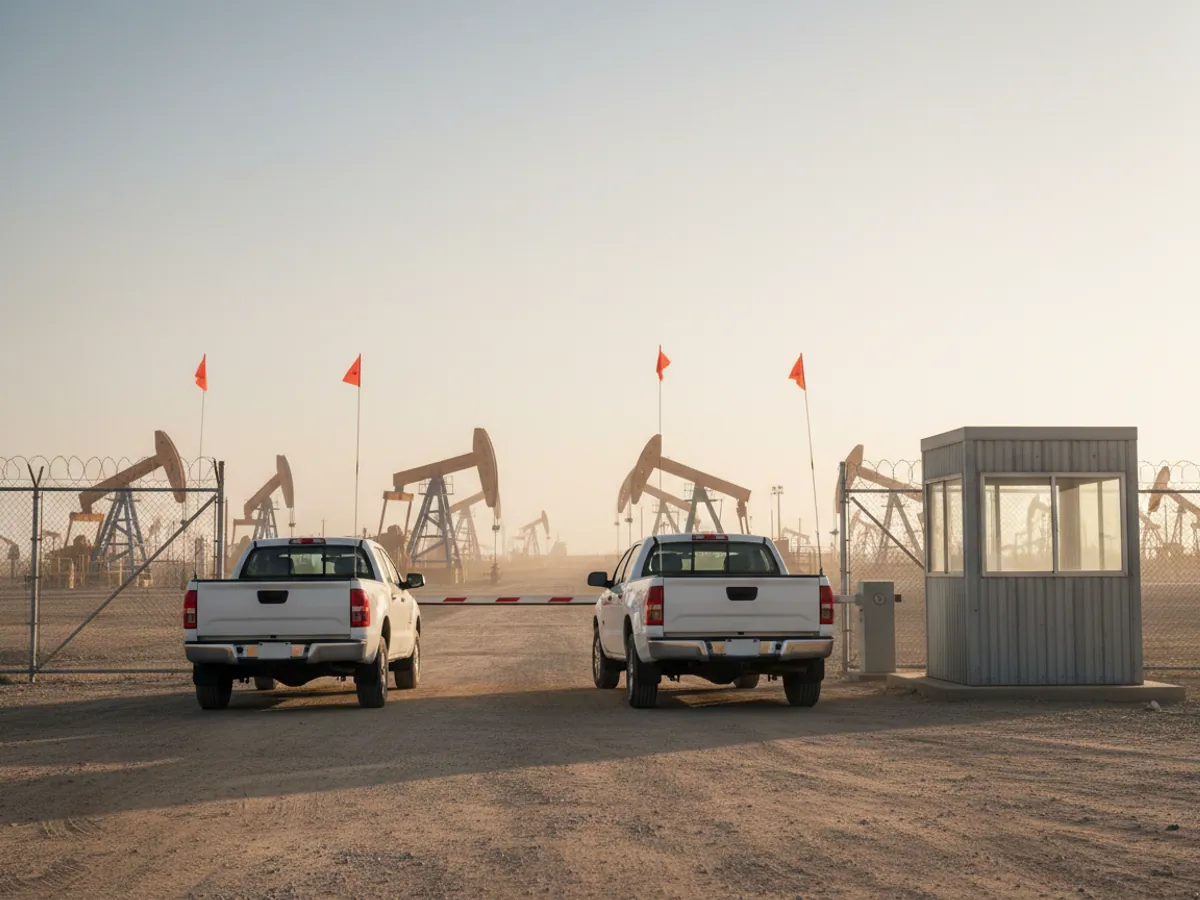
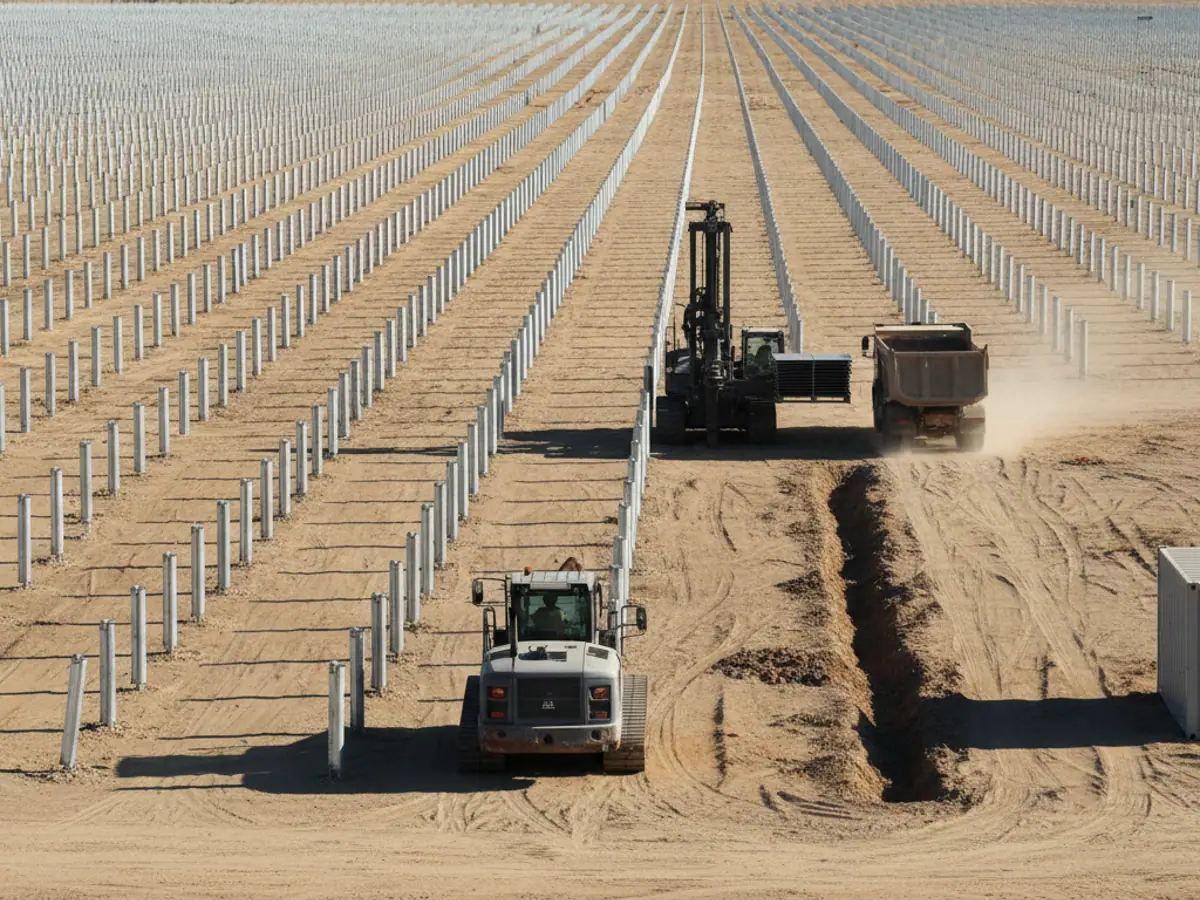
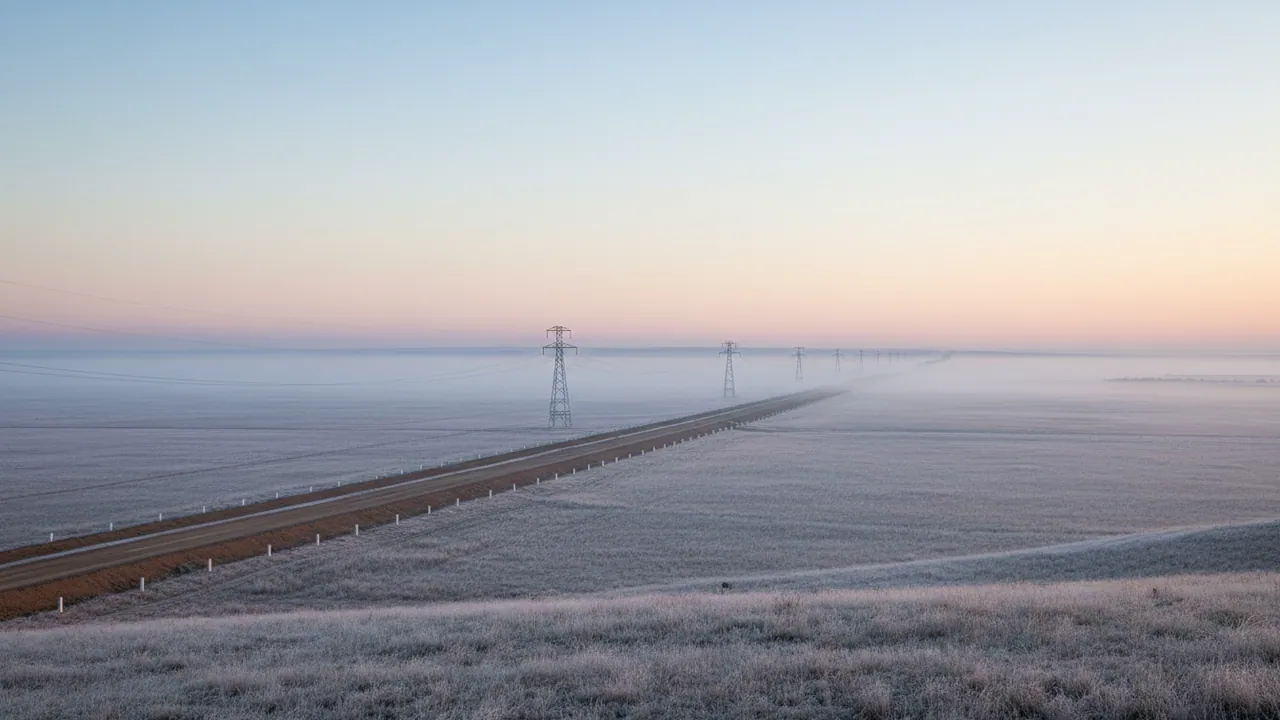
Copper cable and inverters are the main target for theft at solar plants during construction and for the first months after commissioning. The area is large, the fencing is not finished everywhere, and security simply cannot be in every place at once.
We tag cable drums, containers of inverters and expensive tools with self-contained battery trackers. The device sleeps while the item is still and wakes when it moves. If a drum starts moving at night or leaves the site boundary, security receives an alert with coordinates. Self-contained devices are described on the page about the Teltonika TAT100.
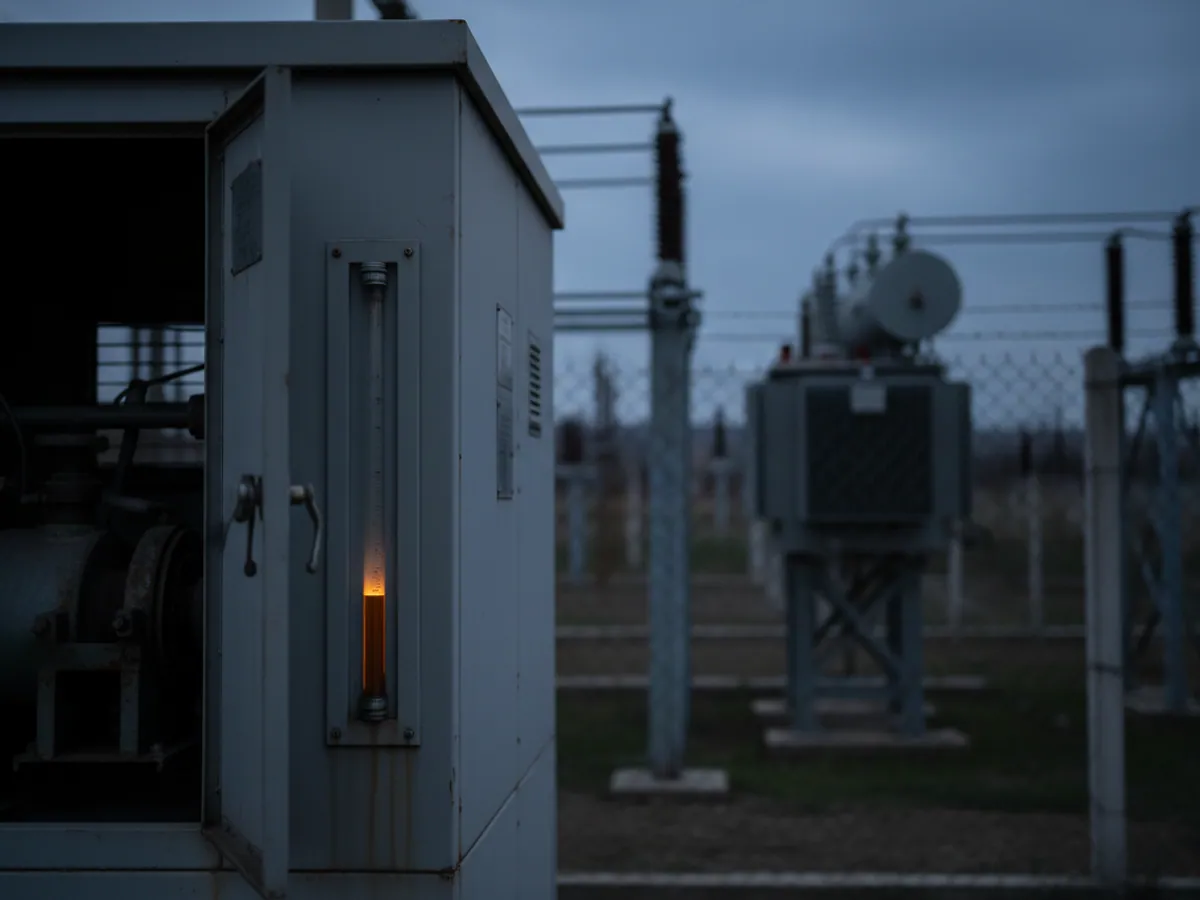
For equipment already installed we fit tamper and vibration sensors on cabinets and transformer units. To be honest about it: this does not replace guards and perimeter CCTV. It gives security an earlier signal and shows exactly where to run.
What keeps a plant from running at full output
After commissioning, lost output is rarely down to the panels and turbines themselves. More often the problem is the people and the logistics around them:
Dirty panels
Absheron dust and salt deposits cut output. If the washing crew skipped rows, the only sign is a drop in the output of that section.
Slow service turnout
An inverter has tripped, and the service vehicle is at the far end of the plant at the time, or in town altogether.
Working at height alone
A technician has climbed into the nacelle and contact with him is lost. How long do you wait before raising the alarm?
Theft
Cable, batteries from storage systems, tools from the service containers.
Panel washing: proof that a row was washed
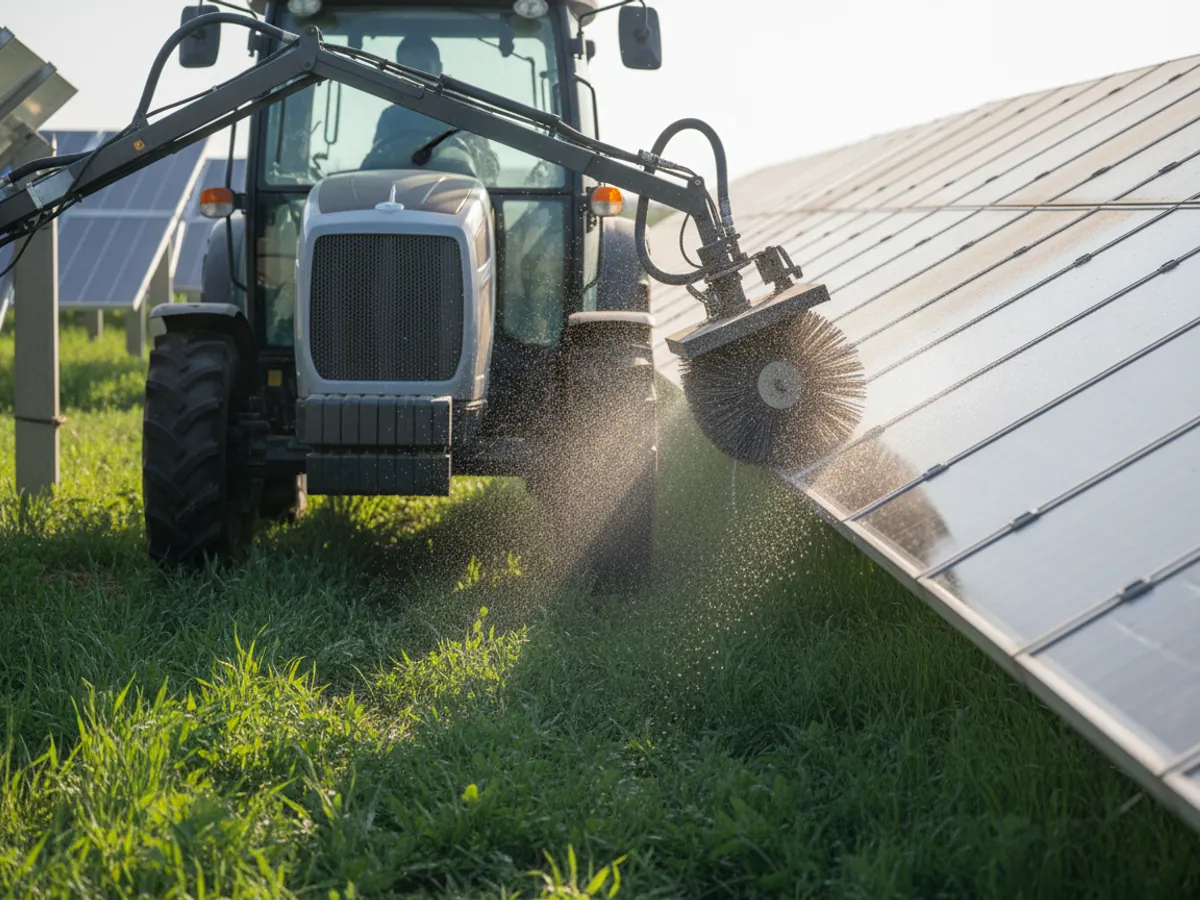
Washing is often subcontracted and paid for by the row washed. Checking that all the rows really were washed is hard without telematics.
On the washing vehicle we fit a tracker that records points frequently and a sensor on the pump. The rows of the plant are drawn on the map as narrow geofences. Wialon counts a row itself if the vehicle covered it at working speed with the pump running. At the end of the shift you have a report: 38 rows out of 40 covered, two rows in section 7 skipped. The contractor's invoice is checked against that report.
Grass cutting between the rows is monitored in the same way. In spring on Absheron the grass grows quickly and shades the lower edge of the modules, and dry summer grass near the inverters also brings a fire risk. A tracker on the mowing tractor and a sensor on the attachment show which sections have been cut.
If washing robots are used that move along the rows by themselves, the task is similar but the device fitted is different. That is discussed case by case for the particular robot model: some have telemetry of their own that can be collected through an API, while for others a separate beacon has to be fitted.
Safety of technicians at height
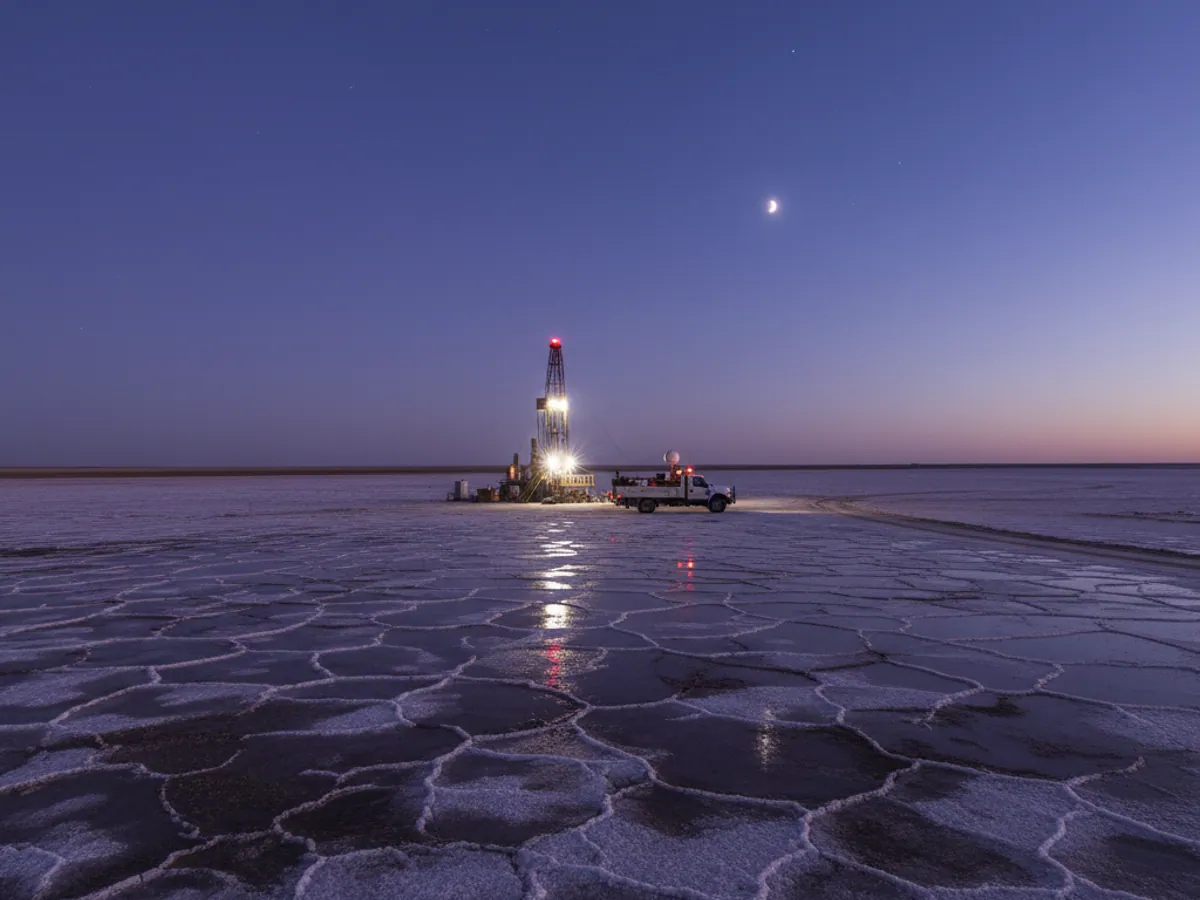
Maintaining a wind turbine is work at height, often in pairs and sometimes alone. A personal tracker with an SOS button and a fall sensor is worn on the clothing. If the person falls or does not move for a long time, the device raises an alert and the shift supervisor receives the coordinates.
For lone working we set up a timer: the technician checks in when climbing, and if he does not check in again within the set time, the system raises the alarm. The devices and settings are described in the section on panic buttons and SOS.
One limitation: GPS does not work inside a steel tower, and the coordinate will be the last one received outside. For a wind turbine that is enough, because what matters is knowing which turbine the person is at.
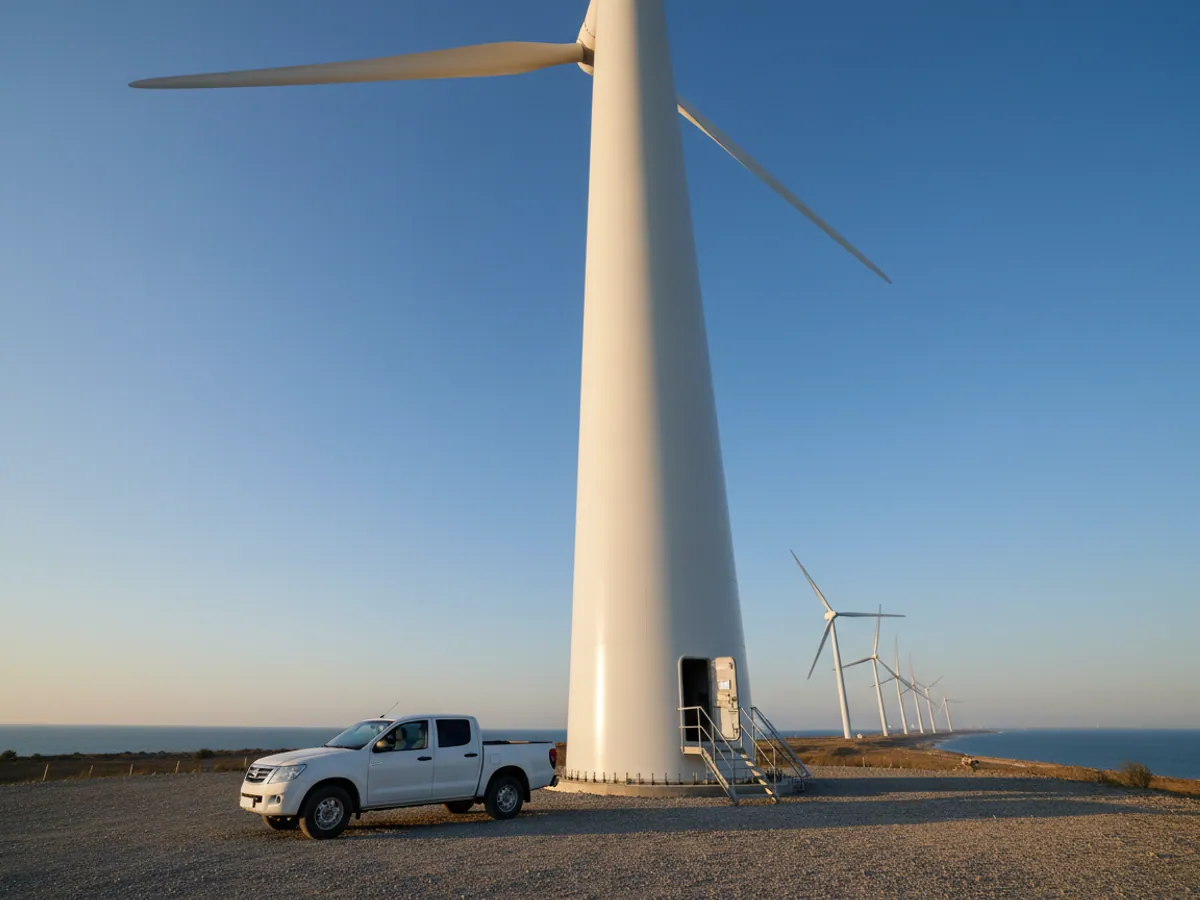
A service call-out: work order, route, people, and what GPS does not know about a turbine
At a plant in operation the main process is the service call-out. We tie it into a single chain:
- Work order. A fault signal arrives from the plant SCADA or from an operator. The dispatcher creates a work order with the number of the turbine or inverter.
- Route. The nearest available service vehicle gets the job and is guided across the site along the permitted roadways. Arrival at the turbine is recorded by geofence.
- People. Technicians record their climb and descent on the personal tracker, and the lone working timer runs. If there is no check-in in time, the shift supervisor gets an alert.
- Closing. The technician closes the work order, and the time on site and on the road goes into the report.
An important boundary. GPS monitoring does not diagnose a turbine or an inverter. Vibration, bearing temperature, output and equipment faults are seen by the plant SCADA and by the manufacturer's condition monitoring systems. We show where the vehicles and people are and how long the journey and the work took. The cause of the fault and the decision on repair are determined by engineers from the data in their own systems.
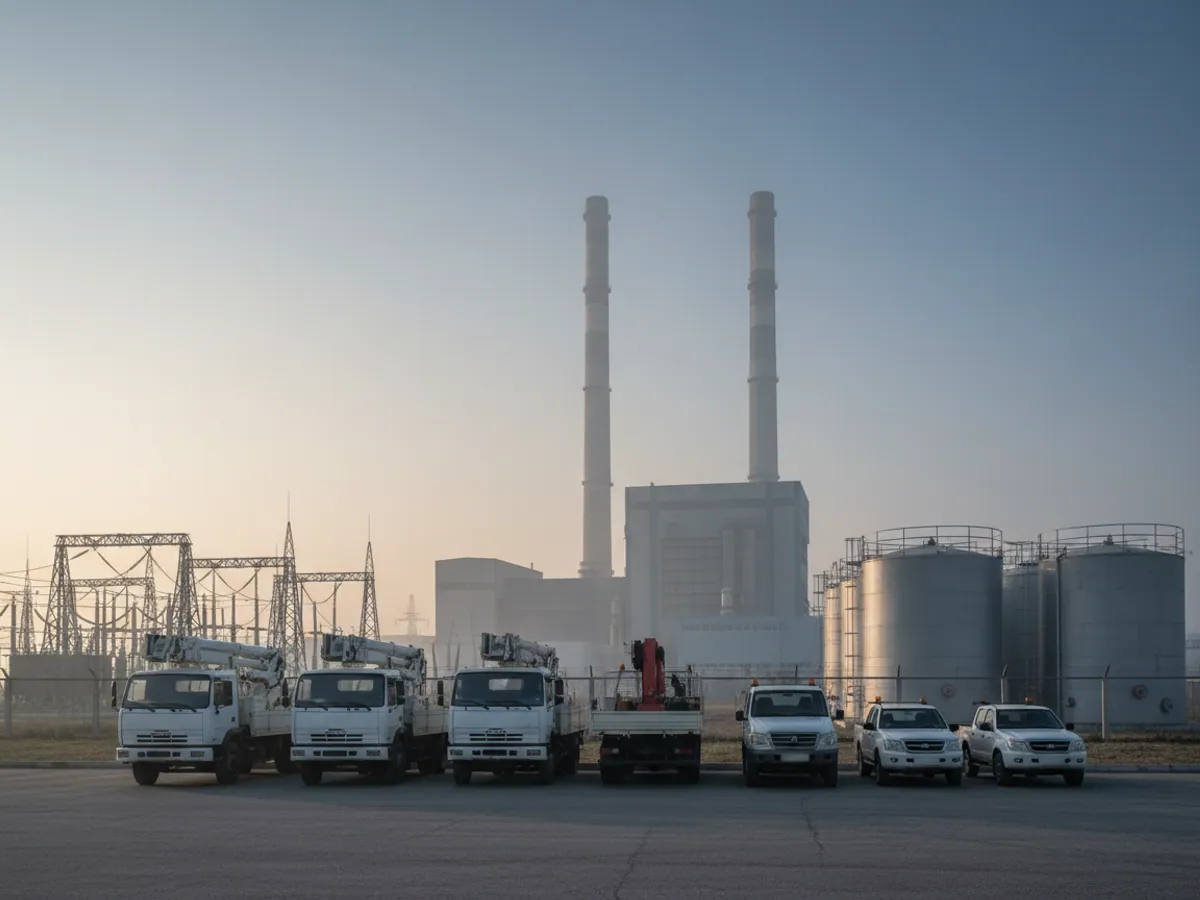
The pilot: what is needed and how to sign it off
At a plant under construction a pilot works well on the cranes and plant of one contractor plus beacons on cable drums. At a working plant it works on service vehicles, the washing rig and the personal trackers of one shift. Allow a month or more.
What we need from the operator: the plant layout with sections, rows and turbines, the site access procedure, the procedure for working at height, a list of contractors and their plant, and a contact in the control room.
Acceptance criteria, for example: the washing report reconciled with the contractor's invoice for the same period; a test movement of a drum at night reaching security; the lone working timer and SOS checked on a real turbine; the time from work order to arrival calculated for every call-out.
How we roll out at a renewables site
We separate construction from operation
During construction the equipment goes onto contractors' plant and is often removed once the work is finished. In operation it goes onto the operator's permanent fleet. We cost the two arrangements separately.
We check coverage on site
Some sites in Karabakh and on Absheron are a long way from any mast. We measure the operators' coverage, choose the SIM and add external antennas where needed.
We map the plant
We draw the site boundaries, sections, rows, inverters and turbines onto the map. How useful the reports are depends on this mapping.
We connect the contractors
Each contractor gets access only to their own vehicles. The operator sees everyone.
What this gives the plant operator
Less downtime
The service vehicle nearest the failed equipment is visible on the map. Response time becomes measurable.
Control over contractors
Washing, mowing, security and repairs are confirmed by tracks and reports, not only by signed records.
Protecting equipment
Cable, inverters and tools with beacons report any movement at night.
Savings on fuel
Consumption by generators and plant on site fitted with fuel level sensors is visible by unit and by day, and can be reconciled with what was issued.
Questions about monitoring at renewables sites
What is used in this sector
What we do end to end
Wialon modules for this sector
How it is used in this industry
Case studies from “Oil, Gas & Energy”

Protecting lone workers with the GH5200 tracker
Assets and workforce

Keeping track of equipment in explosive atmospheres
Assets and workforce
Satellite communication for lorries out of network
Logistics and delivery
Thinking of rolling out GPS monitoring in “Renewable energy”?
Send us an enquiry and we will price it up for your fleet and pick the hardware for this sector: oil, gas & energy.
- 1 We pin down the task
A specialist calls back and asks about the vehicles, how many there are and what you need to keep an eye on.
- 2 We put a solution together
We propose the hardware and the features, and set out the one-off and the monthly cost separately.
- 3 We agree the fitting
At your yard or at ours, on a schedule that keeps the vehicles working.
Request a call
A specialist will call back and match a solution to your fleet and your task.