

IVMS and GPS monitoring for the oil and gas sector
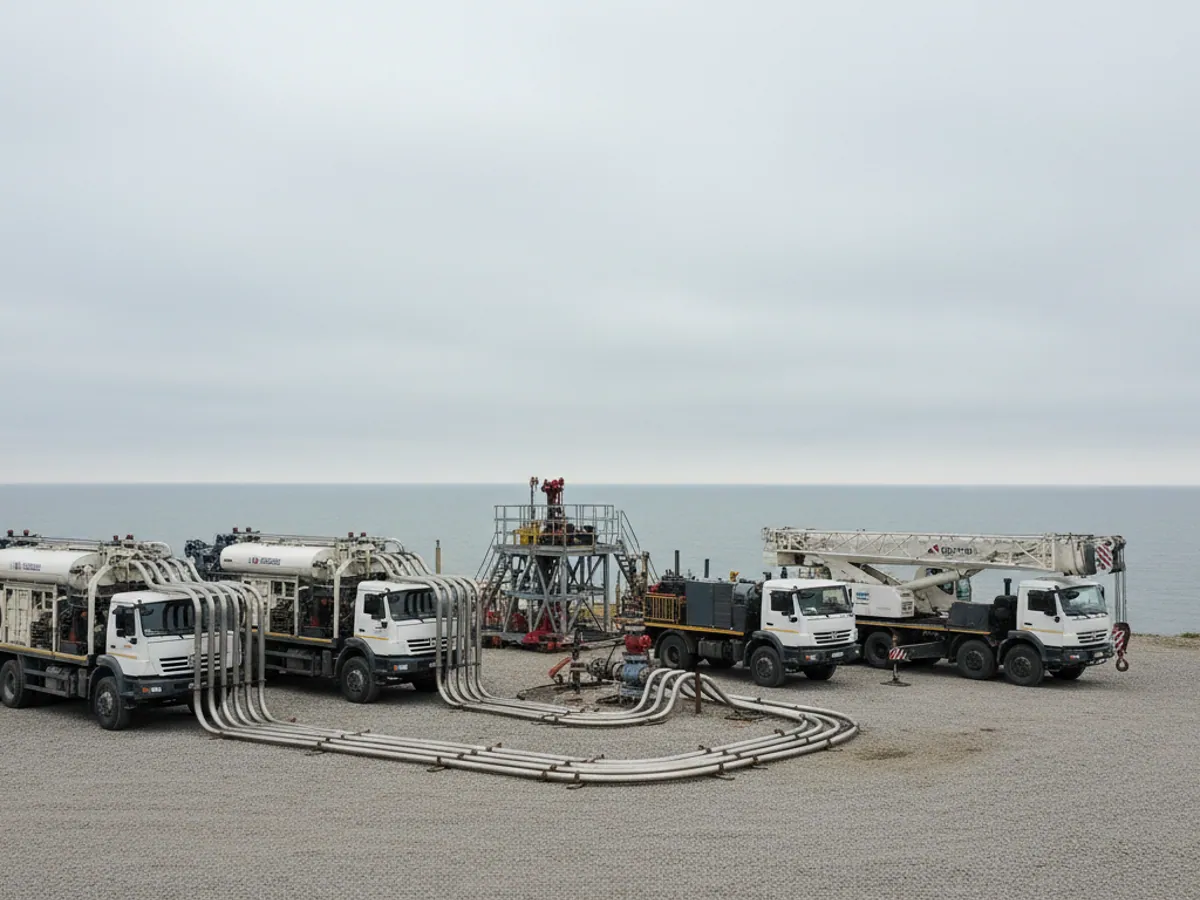
IVMS for service contractors, drilling companies and hauliers working the Absheron fields, in the Salyan and Neftchala districts, and carrying people and cargo to the onshore terminals. We fit trackers, driver identification, buzzers and seatbelt sensors, and we set up the reports in the form the client's HSE department expects.
We deal separately with the issues that usually leave vehicles stuck at the gate: explosion-protected sensors for Ex areas, working without coverage on remote sites, and feeding data into the field operator's own system.

Why a vehicle without IVMS will not be let onto the field
On oil contracts, transport is treated as one of the main sources of risk. Industry statistics have long shown that people on the fields are injured more often in road accidents on access and field roads than in work at the wellhead. That is why field operators and main contractors write transport requirements into their agreements with service companies: IVMS in every vehicle, driver identification, speed limits and regular reporting.
In practice we keep seeing the same picture. A contractor wins a tender, and a month before mobilisation it turns out that half the pickups and crew buses are not equipped at all, or carry consumer-grade trackers with no buzzer and no seatbelt input. The vehicles fail the entry check and the crew sits at base.
IVMS solves two problems at once. The first is formal: you show the inspector a report where every speeding event and every driver is visible. The second is practical: the driver hears a tone in the cab at the moment of the violation and in time stops racing along the dirt road between well clusters. A general overview of solutions for oil and gas, power plants and networks is gathered on the page about GPS monitoring in the energy sector.

What the client's HSE inspector looks at
Requirements differ between operators in their details, but for most of them the basis is the same and rests on the IOGP recommendations for land transport safety. The inspector usually does not ask whether you have GPS, but asks about specific things.
- Who was at the wheel on each trip. That calls for a personal card or driver key; without one the trip counts as anonymous.
- How many speeding events, harsh braking events and harsh accelerations per 100 km there were for each driver.
- Whether the driver was belted up and driving with dipped headlights on.
- Whether there were trips at prohibited times, for example at night on field roads without authorisation.
- How many hours the driver spent at the wheel without a break.
Wialon brings all of this together into a RAG report: green drivers with nothing against them, amber ones with isolated violations, and red ones who are candidates for a review and refresher training. We adjust the report template to the client's own form, so that the contractor's HSE manager does not have to move the figures into Excel by hand every week. Driving style scoring is covered in detail in the section on driving style control.
What costs a contractor the most
From conversations with HSE managers and transport supervisors at oilfield service companies, four problems come up most often:
Vehicles turned away
A vehicle without IVMS or with a faulty seatbelt sensor fails the check at the gate. A crew standing idle because of one pickup costs more than the equipment itself.
Accidents on field roads
Dirt roads between well clusters, dust, heavy vehicles coming the other way. An overturned crew bus means an investigation, a stop to the work and the risk of losing the contract.
Diesel siphoned off
Diesel goes from drilling rigs, generators and cementing units by the barrel. Without fuel level sensors this only becomes visible as overconsumption at the end of the month.
Slow response to an incident
A driver has an accident on a remote section, there is no coverage, and the dispatcher hears about it an hour later. On a field that is far too long.
What IVMS in a vehicle consists of
Identification and driving scores
The driver presents a personal key or card to the reader before setting off. Without identification the buzzer sounds, and depending on the configuration engine starting can be blocked. That way every trip is tied to a specific person, and the rating is calculated for people rather than for vehicles.
Through its accelerometer the tracker records harsh acceleration, braking and cornering. We set the thresholds to suit the type of vehicle: they are different for a loaded vacuum tanker and for a light pickup, otherwise the report fills up with false violations.
The readers and keys we fit are described on the page about driver identification.



One crew bus run as the system sees it
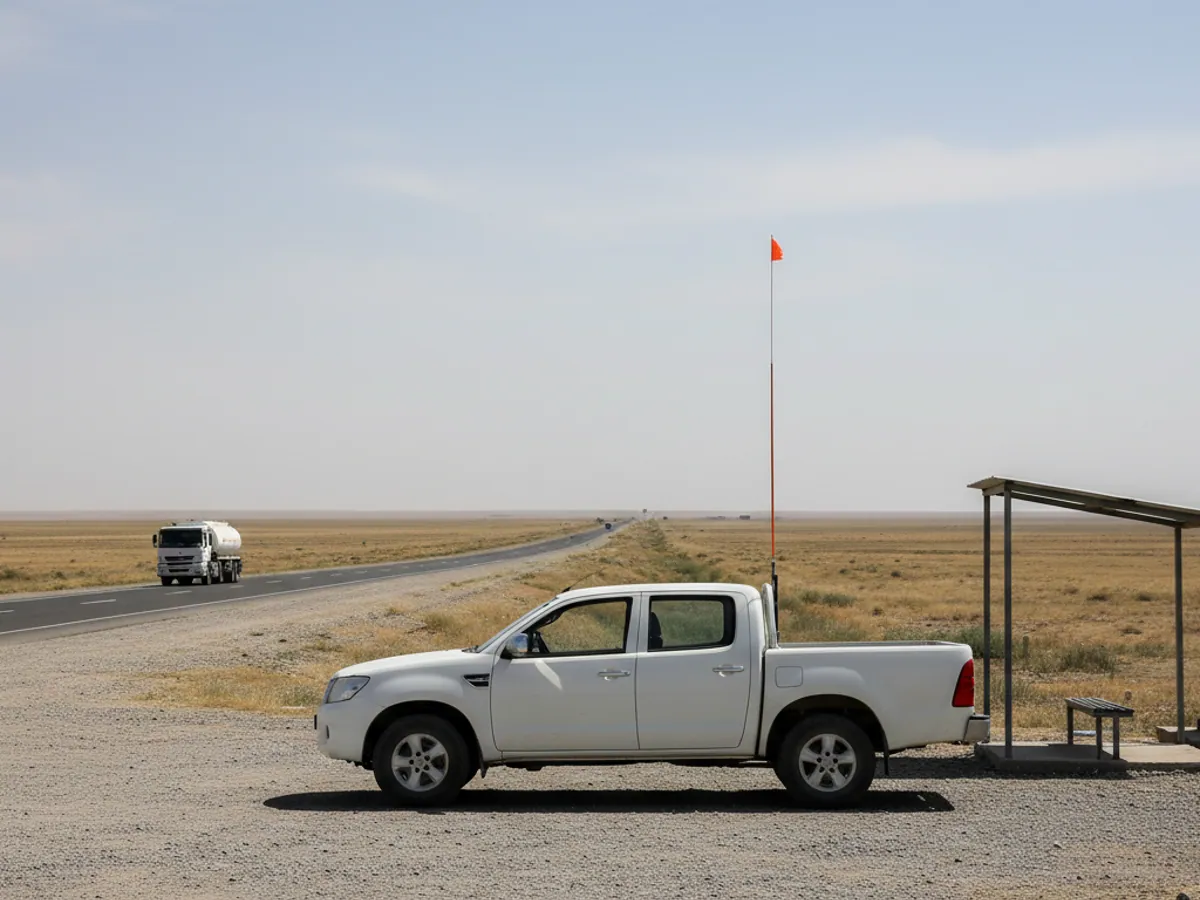
Morning: the bus leaves base in Baku and takes a shift to a field in the Neftchala district. The driver presents the key, the system marks the start of the trip and checks the departure time against the permitted window.
On the M-3 trunk road he works up to 104 km/h, where the limit for a crew bus is 90. The buzzer sounds at 85, the driver does not ease off, and the event goes into the report. After turning onto the field road the geofence limit drops to 40 km/h, and here the driver does hold his speed.
After 2 hours 10 minutes without a stop the dispatcher receives a notification that continuous driving time has been exceeded. He rings the driver, who pulls in at a checkpoint.
On Friday the HSE manager opens the weekly report: this driver has one speeding event and one hours violation, which puts him in the amber zone. A short review, an entry in the briefing log. Had the bus been in an accident, the impact sensor would have sent an alert with coordinates, and the driver's SOS button would have worked even without a phone call. How such signals are set up is described in the section on the panic button and SOS.
Explosion protection: what may go into an Ex area and what may not
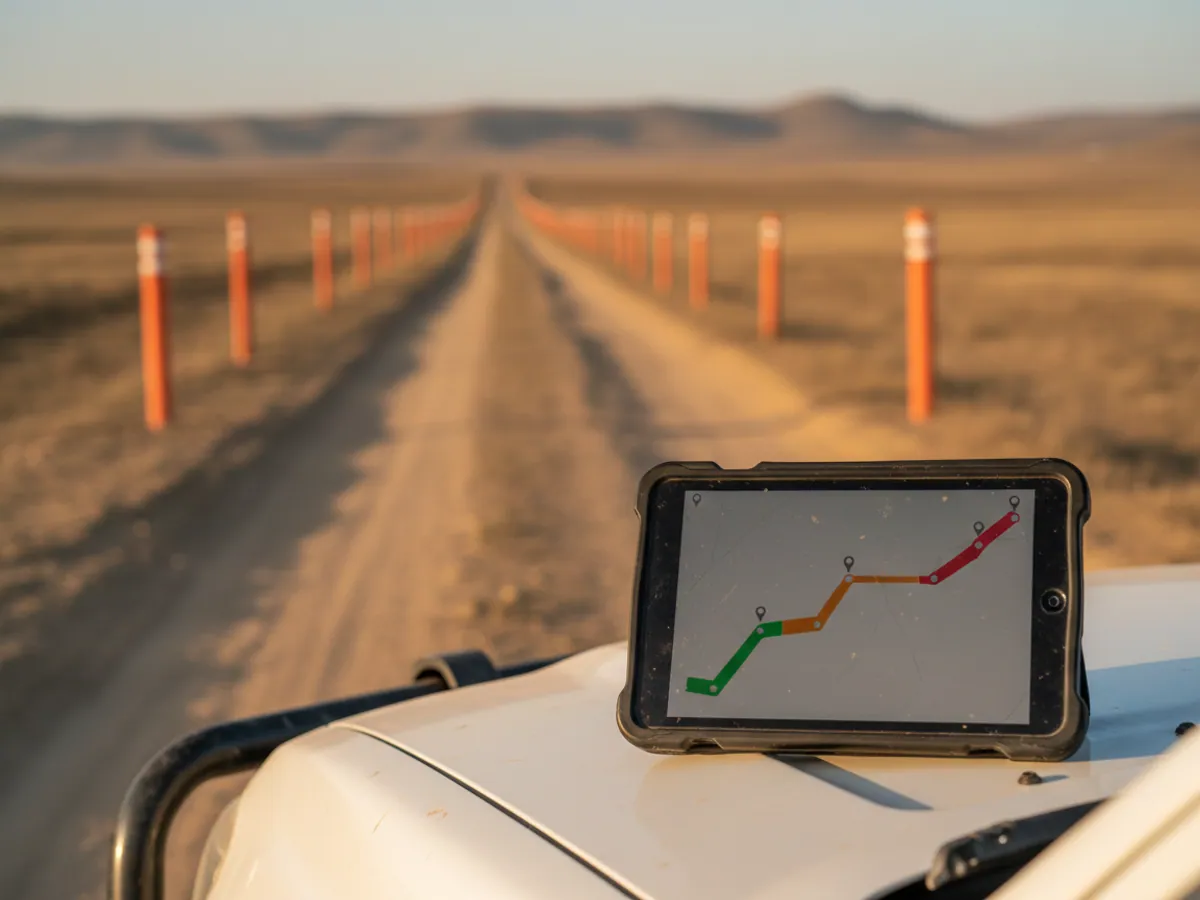
There is a lot of confusion here, so we will put it plainly. An ordinary GPS tracker, including an industrial Teltonika, does not carry an explosion-protected rating. Its place is in the cab or in a compartment that is not part of the hazardous area.
Into an area where an explosive atmosphere is possible we take only sensors with the appropriate certification. For the fuel tanks of petrol tankers, road tankers and equipment working at the wellhead we use explosion-protected fuel level sensors, with the model chosen per project to suit the zone classification, and an intrinsically safe barrier between the sensor and the tracker. For vehicles that never enter a hazardous area an ordinary capacitive fuel level sensor is enough, for example the Escort TD-600.
Before fitting we ask the client for the area classification at the site and the equipment requirements. If the zone classification rules out every sensor available, we say so before the work starts, rather than after a refusal at the check.
The requirements matrix: how to prove the configuration complies
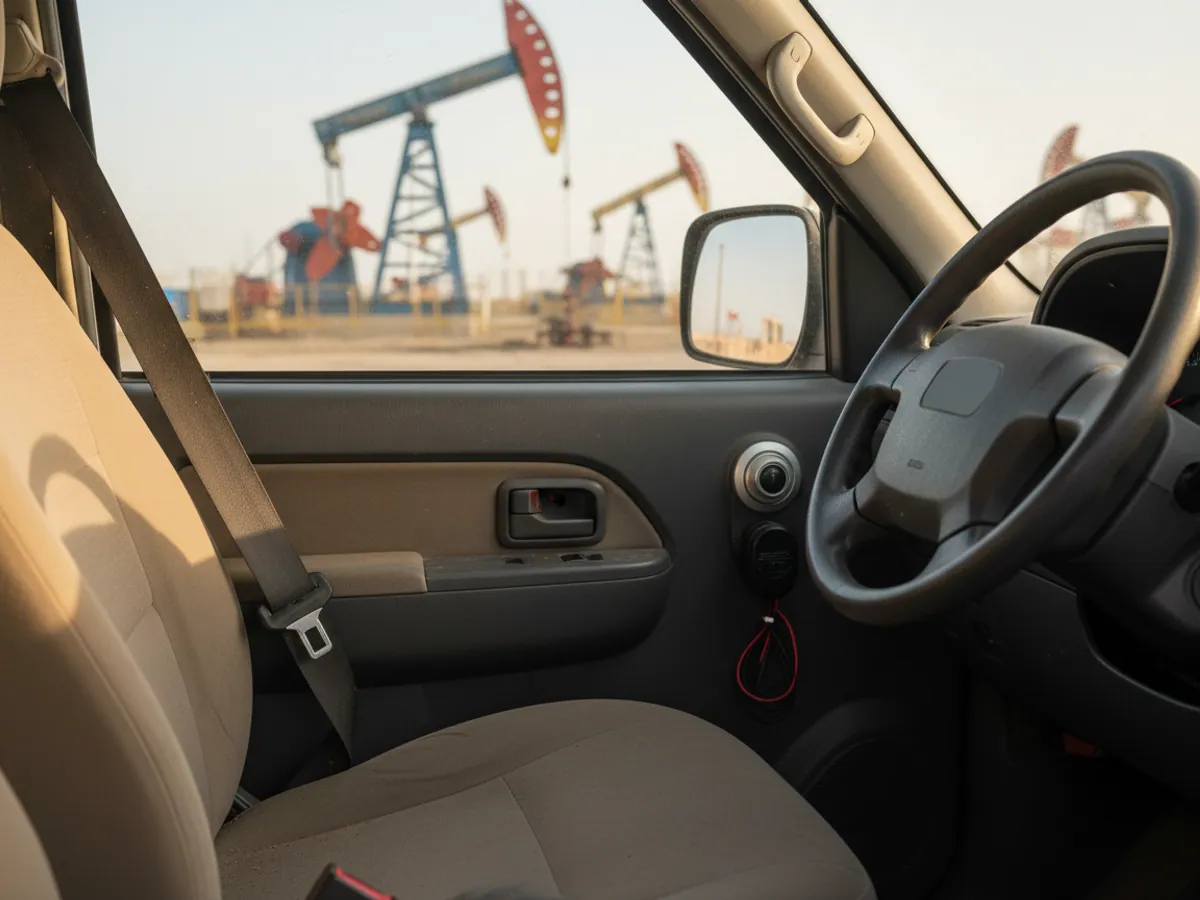
The phrase we have IVMS fitted does not convince an inspector. What convinces is a table where each of the client's requirements is linked to a specific sensor, setting and report. We put it together at the start of the project together with the contractor's HSE manager.
A row of the matrix looks like this:
- Requirement — word for word from the client's transport annex or HSE plan, with the clause number.
- How it is met — seatbelt sensor on the driver's buckle, key reader, buzzer, geofence with a limit, tracker configuration.
- Where it is visible — the name of the report and the column in which the requirement is checked.
- How it was verified — a test drive without the belt, without the key, with a speeding event; the date of the check and a photograph of the installation.
- Status — met, partly met (with an explanation), or not met by this configuration.
That last status matters too. If a requirement can only be closed with different equipment or an organisational measure, that is visible in advance rather than at the entry check. The contractor attaches the matrix to the document pack for the client; the decision to admit the vehicles is the client's.
Signing off the pilot before mobilisation
It makes sense to close a pilot on 2 or 3 vehicles with a formal sign-off before equipping the whole fleet. We suggest agreeing the criteria in writing:
- a test check has been carried out for every row of the requirements matrix and the result recorded;
- accelerometer thresholds are set so that a week's report shows isolated events rather than hundreds per vehicle;
- test SOS and impact events reached the dispatcher and the delivery time was recorded, including from an area without GSM if a satellite channel is fitted there;
- the HSE manager has received the RAG report in the client's form and confirmed that the form is suitable;
- where required, a test retransmission into the client's system has been accepted by their side.
What we need from the contractor: the transport annex to the contract, the HSE plan, the area classification for the sites, a list of vehicles and drivers, and a contact in the client's HSE team to agree the report form.
How a rollout goes at a service contractor
1. Going through the client's requirements
We take the transport annex to the contract and the HSE plan. We write out which sensors, reports and reporting frequency the field operator requires. Often there are clauses the contractor did not know about.
2. A pilot on 2 or 3 vehicles
We fit a set to a pickup, a crew bus and a lorry. For a week we collect data and tune the accelerometer thresholds so the report shows real violations rather than every bump.
3. Fitting the whole fleet
We work at your base, usually 3 to 5 vehicles a day per team. We photograph every installation and check every input: belt, lights, key, buzzer.
4. Driver training
A short briefing: how to present the key, what the buzzer means, how to press SOS. If a driver does not understand what he is being penalised for, IVMS produces nothing but irritation.
5. Reports and data transfer
We set up a weekly RAG report by email to HSE and, if the client requires it, retransmission of the data into their monitoring system.
Mistakes that make IVMS fail an audit
A shared key for the shift
Drivers pass one key between them or leave it in the reader. The per-person report becomes meaningless, and an inspector spots that quickly.
A disconnected buzzer
The buzzer is irritating and gets cut off within a week. We monitor the buzzer circuit, so disconnecting it itself becomes an event in the report.
Wrong thresholds
Factory accelerometer settings produce hundreds of false harsh braking events on a dirt road. Everyone's report is red, and people stop reading it.
No reviews
Data is collected, but nobody talks to the drivers. After 2 or 3 months the figures return to where they started.
A tracker without power
The battery master switch is turned off when parked to save the battery, the tracker runs on its backup cell and then goes quiet. This calls for the right wiring and monitoring of the external supply.

Data for the client and for your own ERP
Large operators often run their own platform for monitoring contractor transport and ask for data to be sent there directly. Wialon can forward the stream from your trackers to a third-party server over standard protocols, while you keep full access to your own system. How this works is explained on the page about data retransmission.
Inside the company the same data is needed by the finance department and by the chief engineer's team: mileage for writing off fuel, engine hours for servicing, driver timesheets. Through the Wialon API the reports reach 1C, SAP or your own accounting system without manual entry.
In-cab video is a separate step. A camera that recognises driver fatigue and distraction makes sense on crew buses and long runs. There is more in the section on AI video monitoring.
What changes after 2 or 3 months
Fewer violations
In our rollouts the number of speeding events per 100 km usually falls several times over after the first reviews with drivers. The exact figure depends on how regularly you hold those reviews.
Reports ready for the audit
The RAG report and the trip history for each driver are produced automatically in the form the client asks for.
Fuel control
Fuel level sensors on generators and equipment show every drain with its time and coordinates. Overconsumption is visible down to the particular unit and day.
Fast response
An impact, a rollover or an SOS reaches the dispatcher with coordinates even if the driver cannot call. Within coverage it takes seconds; without coverage it goes over the satellite channel, if one is fitted, or once a network appears.
Common questions from oilfield service companies
What is used in this sector
What we do end to end
Wialon modules for this sector
How it is used in this industry
Case studies from “Oil, Gas & Energy”

Keeping track of equipment in explosive atmospheres
Assets and workforce

Protecting lone workers with the GH5200 tracker
Assets and workforce

Vehicle monitoring where there is no cellular coverage
Logistics and delivery
Thinking of rolling out GPS monitoring in “Oil producers”?
Send us an enquiry and we will price it up for your fleet and pick the hardware for this sector: oil, gas & energy.
- 1 We pin down the task
A specialist calls back and asks about the vehicles, how many there are and what you need to keep an eye on.
- 2 We put a solution together
We propose the hardware and the features, and set out the one-off and the monthly cost separately.
- 3 We agree the fitting
At your yard or at ours, on a schedule that keeps the vehicles working.
Request a call
A specialist will call back and match a solution to your fleet and your task.