GPS.AZ
Construction & Infrastructure
Sector · Construction & Infrastructure

Monitoring plant on industrial and remote sites

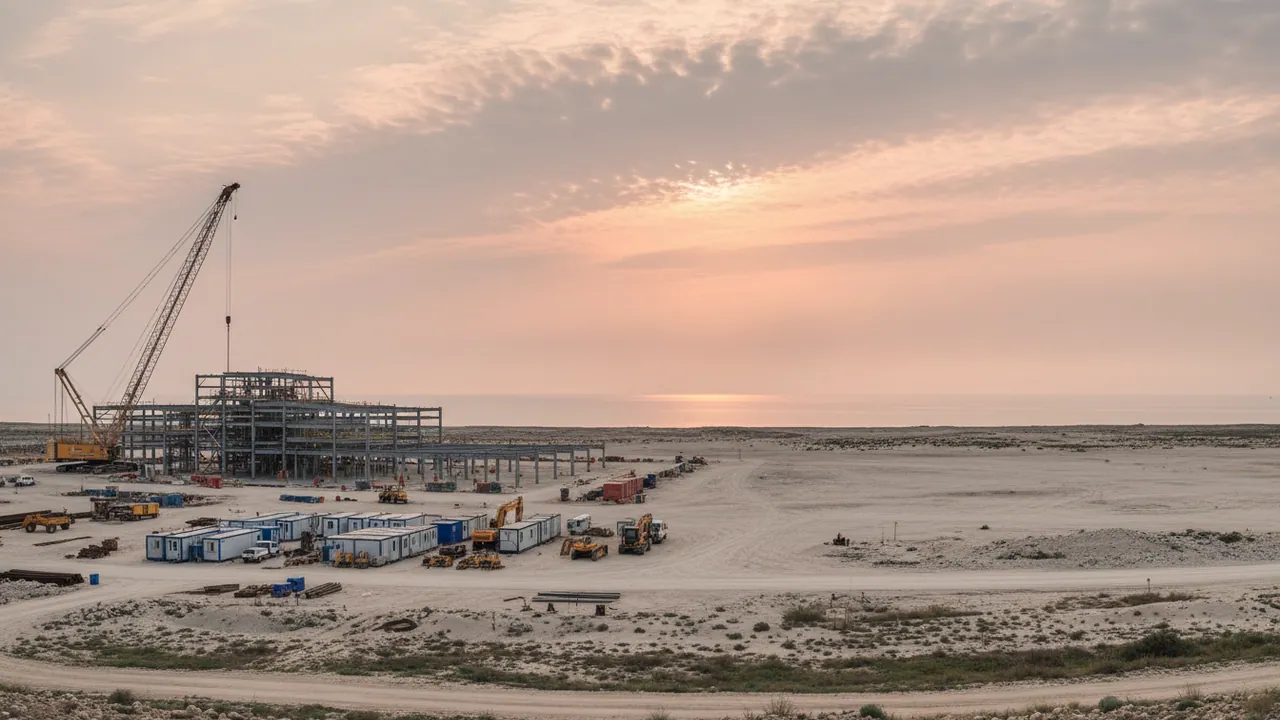
For main contractors building plants, terminals, substations and oil and gas infrastructure: in the Sumgait Chemical Industrial Park, in the Alat Free Economic Zone, in the industrial parks of Karabakh and on sites far from any town. Machines work on a rota, coverage is not available everywhere, and several contractors are on site at once.

Discuss a pilot for this sector process
5
Sectors
8 regions
Coverage in AZ
40 000+
Assets under monitoring
Since 2008
On the market
A large site, many contractors, little coverage
Context

A large site, many contractors, little coverage

Industrial construction differs from housing in the scale and the mix of plant. Crawler cranes of 100 tonnes and more, bulldozers and excavators on earthworks, pipelayers, piling rigs, fuel bowsers, crew buses and diesel generators on the temporary power supply. Part of the fleet is your own, part is hired and part belongs to subcontractors.

The client, often an international company or a large state operator, requires reporting on plant and safety in its own format. Meanwhile the project manager wants to understand something simple: what he is paying for and why the programme is slipping.

We set monitoring up so that it works in these conditions: with weak coverage, on machines of various makes and years, and with access separated between contractors. General solutions for the construction industry are on the telematics for construction page.

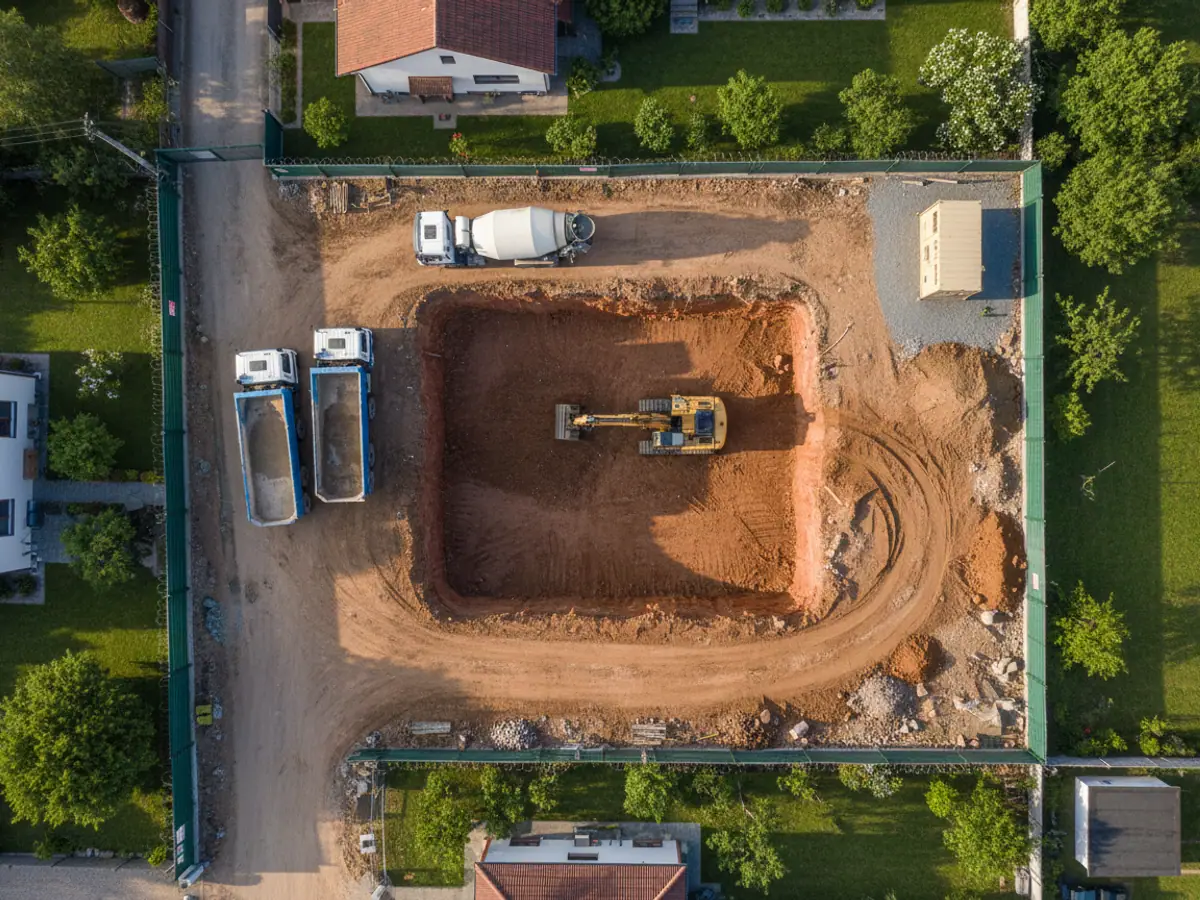
An overhead view of an excavation with an excavator, tippers at the ramp and hoarding around the perimeter

Working where the network drops out

On many sites there is Azercell, Bakcell or Nar coverage, but it is weak: down in the excavation, behind an embankment or in the far corner of the site the signal disappears. The tracker does not stop during this. It writes points and events to memory, tens of thousands of records, and sends them to the server as soon as it catches the network. In the reports the track looks complete; the data simply arrived late.

Where there is no signal at all, two things help. The first is an external aerial on the cab roof: often that alone is enough to make the connection steady. The second is a satellite channel for critical events. We fit that only to machines where a delay of several hours is unacceptable, crew buses for instance, because satellite traffic costs noticeably more.

Before any fitting starts we drive round the site and measure the signal from all three operators. That is half a day's work which saves months of argument about tracks with holes in them.

The risks of a remote site

The further the site is from the office, the more decisions are taken on the spot without oversight. The same problems recur from project to project:

Fuel by the drum

A night shift, a fuel bowser, a dozen bulldozers and tippers. Without fuel level sensors nobody can say how much diesel left the perimeter.

Machines run into the ground

Scheduled servicing is skipped because there is no time for it just now. The crane's engine fails at the height of the erection work.

Work on the side

A bulldozer levels a plot for a neighbouring farmer or takes somebody a load of soil at the weekend.

Arguments about idle time

The subcontractor invoices for idle hours caused, he says, by the main contractor. There is nothing to confirm or refute it with.

Features for industrial construction projects

Starting only with a card

The operator presents a personal card or key, and only then can the engine be started. On a large site this solves two things at once: nobody without authorisation ends up at the controls of a crane, and every hour worked is tied to a particular operator for the timesheet and for pay.

Start prevention and remote relay control are described on the remote engine immobilisation page.

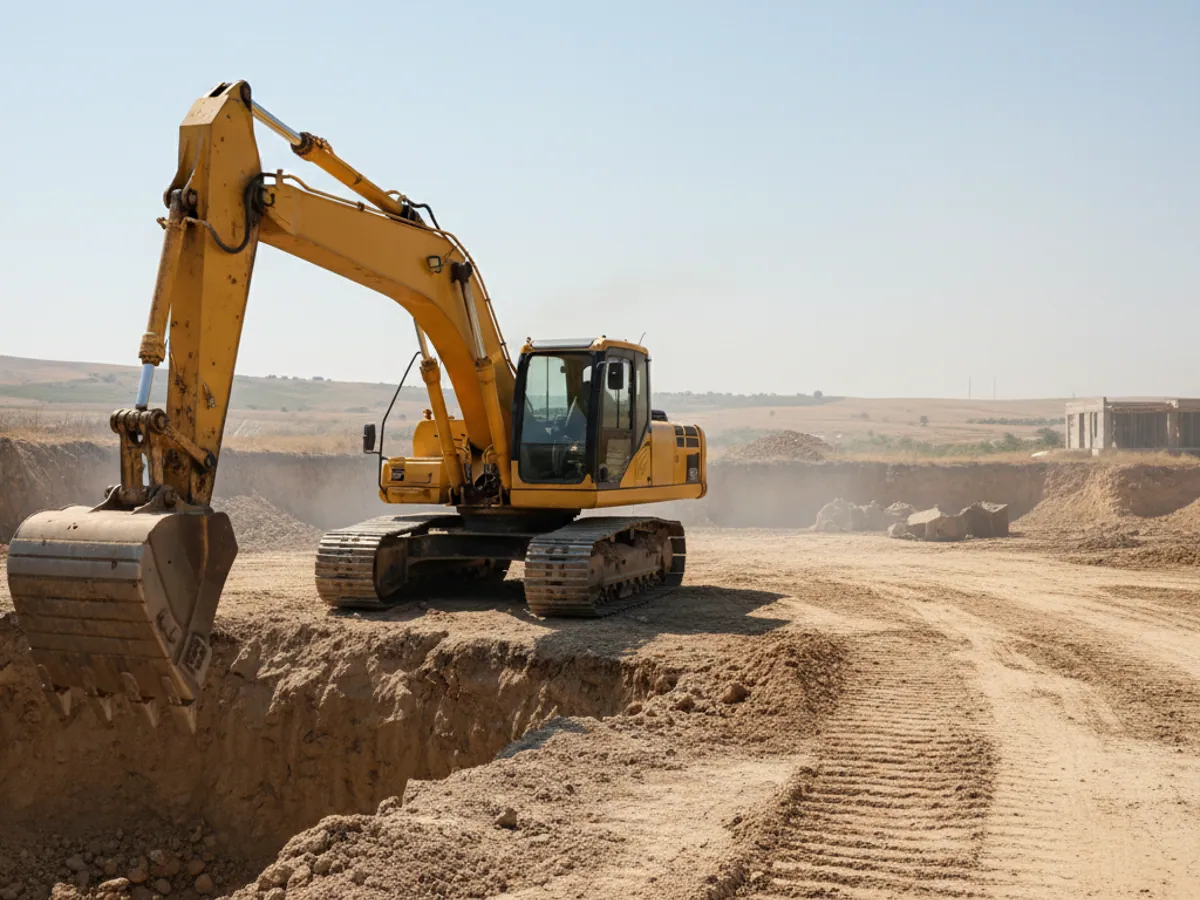
An excavator with its bucket down, engine running, standing at an empty loading bay
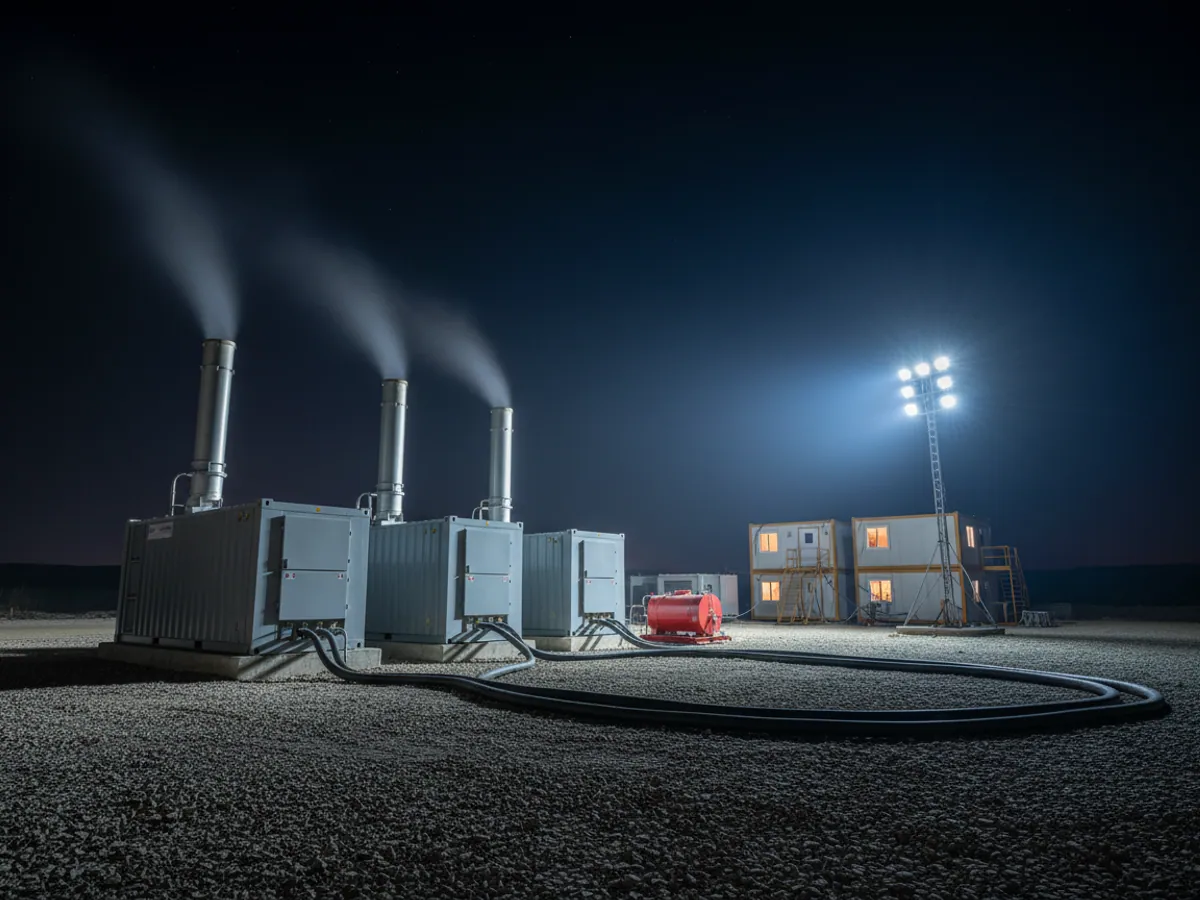
Three containerised diesel generators powering a lit site accommodation camp at night

Diesel generators: the least transparent line in the budget

Until the site is connected to the grid, the power comes from generators: for the site accommodation, the lighting, the welding, the pumps. They are filled from the same bowser as the plant, and the consumption is written off as actual.

We fit a fuel level sensor in the tank and a running sensor on every generator. Within a month it becomes clear how many litres per engine hour each unit uses under real load. A generator running round the clock at 20% of its capacity is reason to rethink the power supply arrangement. A sharp drop in level at night with the generator switched off is reason for a different conversation.

If the generators stand far from the plant and from coverage, their data is sent in the same way as the plant's: accumulated and transmitted when the network appears.

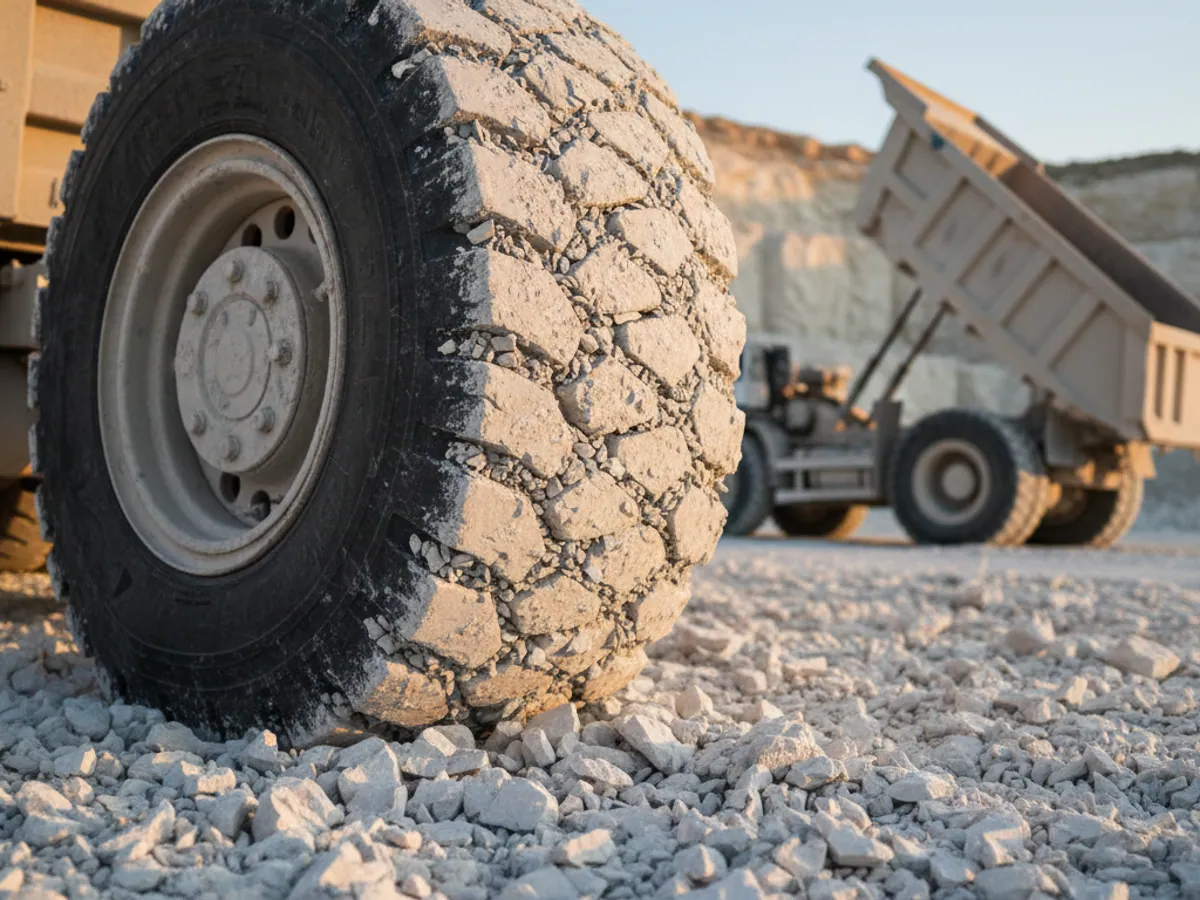
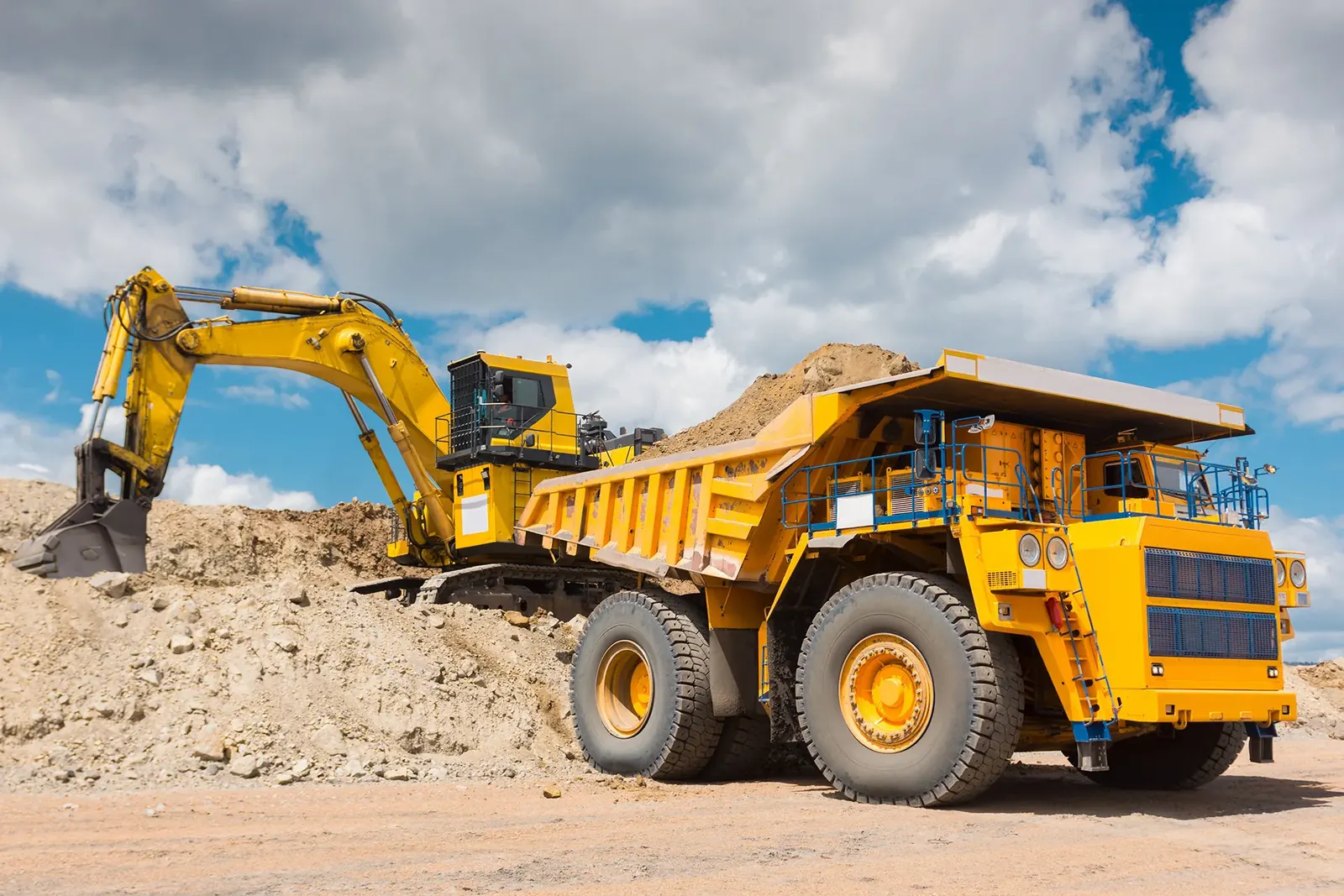
A close-up of a tipper tyre on sharp crushed stone in a quarry

Several contractors in one system

On an industrial project the main contractor usually wants to see all the plant on site, including the subcontractors' machines. The subcontractor, on the other hand, does not want to reveal his whole fleet, only what is working on this project.

In Wialon this is handled through access rights. Each contractor sees his own machines. The main contractor sees every machine within the project geofence. The client receives consolidated reports without access to the detail. It is just as convenient to pass data into the client's own system where that is required.

The utilisation report shows how much plant was actually working and how much was standing. For the project manager that is an argument in the discussion about whether another unit needs to be hired. There is more in the fleet utilisation section.

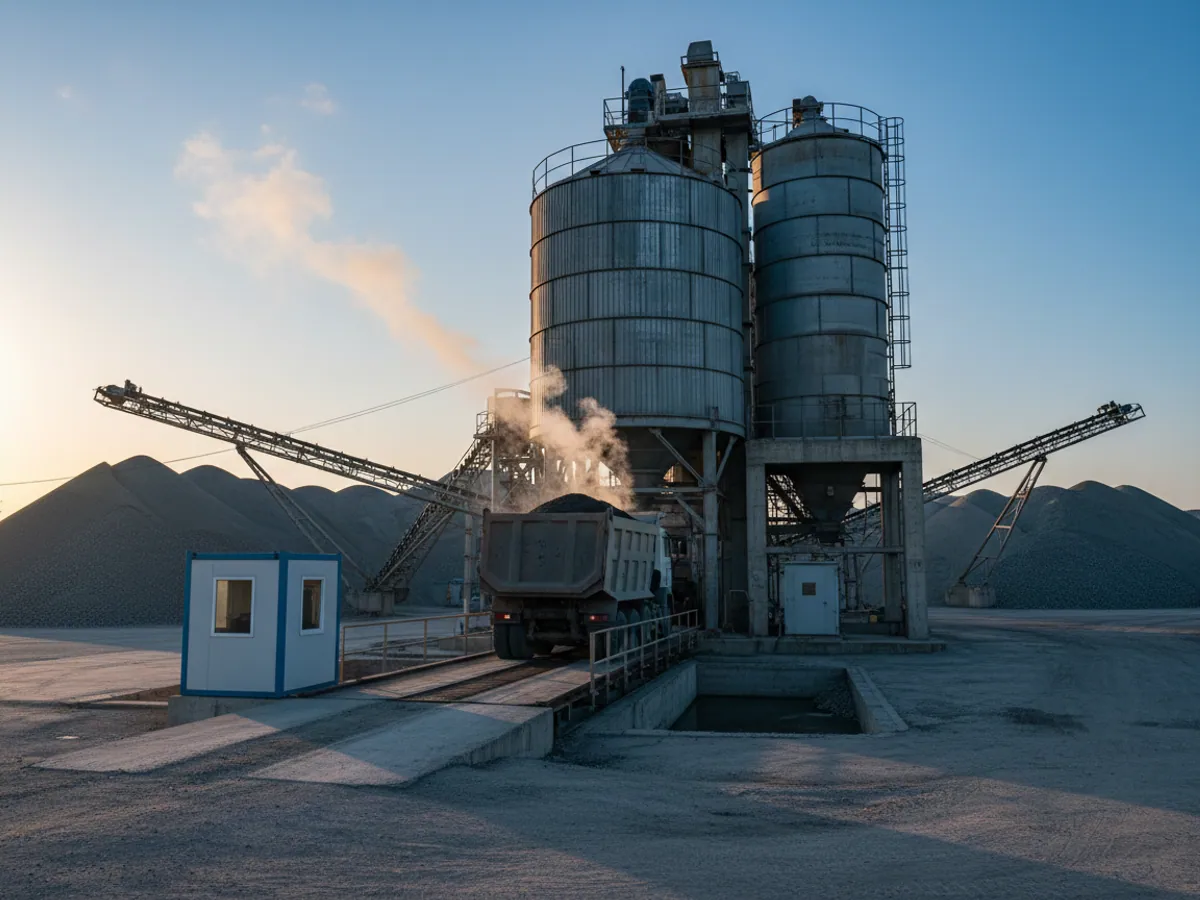
A tipper on the weighbridge platform beneath the silos of an asphalt plant in the early morning

Site access, fitting windows and other people's plant: what to settle before the start

On an industrial site how quickly monitoring goes live depends less on the equipment than on organisational matters. Those are best closed off before the contract.

  • Site access. Passes for the fitters, an induction briefing, protective equipment, permission to work on the machines' electrical systems. The list of requirements comes from the safety department of the main contractor or the client. We build the time needed to arrange all this into the programme.
  • Fitting windows. On an industrial project plant is not released during working hours. We agree windows: the change of shift, a scheduled service, a day off. For heavily used cranes there is a separate schedule, otherwise the fitting drags on for weeks.
  • Coverage. A survey of operator signal across the site before fitting. From the results we decide where the tracker's memory and deferred transmission will suffice, where an external aerial is needed and where a satellite channel for critical events is warranted.
  • Data from subcontracted plant. For each subcontractor we settle on one option: our tracker for the duration of the work, a relay from their tracker or guest access to their system. This is worth writing into the subcontract, otherwise their plant will simply remain invisible.
A pilot on site: what is needed and how to accept it

A pilot on site: what is needed and how to accept it

A pilot is conveniently run on 8 to 15 units: your own heavy plant, a couple of generators, a fuel bowser and one subcontractor's machines. The duration is a month or more.

What is needed from the main contractor: a site layout with the zones, a list of plant with makes and years, the client's reporting requirements, a contact in the safety department for site access, and the timesheets and fuel issue records for the pilot period.

Acceptance criteria, for example: data from the far parts of the site reaches the report, even if late; engine hours and work under load have been reconciled with the timesheet; fuel issued from the bowser has been reconciled with the increase in the machines' tanks; the subcontractor's plant is visible in the system to the agreed extent; the client has received a sample report in their own format.

The order of work on an industrial site

Site survey

Signal measurement, a list of plant with makes and years of manufacture, the client's reporting requirements. At this stage it becomes clear where CAN is needed and where separate sensors are.

Choosing the equipment

For heavy plant we usually fit an industrial tracker with several CAN interfaces and RS-485, such as the Teltonika FMC650. For generators and lighter machines, simpler models.

Fitting without stopping work

We work on the machines at the change of shift or during a service. One team equips 3 to 6 machines a day depending on the set of sensors.

Reports to suit the project

Plant timesheet, fuel, engine hours, idle time, breaches. We set up distribution to the project manager, the mechanic and HSE.

Demobilisation

Once the project finishes, the equipment is removed and moved to the next site, while the history stays in the system.

What the main contractor gets

Less fuel

Drains from machines and generators are visible by time and place. On our remote site projects this is usually the quickest saving to appear.

Arguments in a dispute

Idle time, hours worked and trips are backed by tracks and sensor data rather than by the two sides' word alone.

Plant kept running

Servicing by running time and fault notifications reduce the number of breakdowns at the busiest point of the work.

Safety of people

Card-based authorisation to operate plant, SOS and speed monitoring on crew transport.

Questions from contractors on industrial projects

Yes. Data from the CAN bus is taken with a contactless reader that clips onto the wire over the insulation and does not interfere with the machine's electronics. Power is taken in a way that does not touch the assemblies covered by the warranty. If there is any doubt about a particular machine, it is better to check with the dealer beforehand, and we will provide a description of the connection method.
Cables are run in flexible metal conduit, the connectors are sealed and the tracker is mounted out of sight inside the cab. Any attempt to disconnect the power or open the unit is recorded as an event.
Yes. The equipment can be fitted for the length of the project and then removed and moved to other machines. The project data stays in the archive.
If their trackers work with Wialon or provide data over a standard protocol, their machines can be brought into your system through a relay. If not, it is simpler to write the fitting of our tracker into the contract for the time they work on your site.
Yes, with a caveat about coverage. On a number of sites the mobile operators' signal is weak. The tracker accumulates data and delivers it when the network appears, and for critical events we fit a satellite channel. We measure the coverage on site before fitting.
We fit a tracker and a dispensing meter to the bowser, and fuel level sensors in the machines' tanks. The system matches each issue against the rise in level in that particular machine's tank at the same time and place. If the bowser issued 200 litres and 150 went into the tank, that shows up on every refuelling.
Usually a plant timesheet, engine hours for the site, speeding and transport safety breaches. We adapt the format to the client's requirements, and the reports are emailed out on a schedule.
Yes, on an industrial site we work to the main contractor's or the client's rules: passes, induction briefing, protective equipment, permission to work on the machines' electrical systems. The list of requirements comes from your safety department, and we build the time to arrange it into the fitting programme. The work is done by our own engineers, not by subcontractors.
Request

Thinking of rolling out GPS monitoring in “Industrial construction”?

Send us an enquiry and we will price it up for your fleet and pick the hardware for this sector: construction & infrastructure.

  1. 1
    We pin down the task

    A specialist calls back and asks about the vehicles, how many there are and what you need to keep an eye on.

  2. 2
    We put a solution together

    We propose the hardware and the features, and set out the one-off and the monthly cost separately.

  3. 3
    We agree the fitting

    At your yard or at ours, on a schedule that keeps the vehicles working.

Request a call

A specialist will call back and match a solution to your fleet and your task.