

GPS monitoring of construction plant and vehicles
For developers, main contractors and subcontractors building housing and commercial property in Baku, Sumgait, Ganja and the new districts of the rebuilt towns of Karabakh. We monitor excavators, cranes, concrete mixers, tippers hauling spoil and generators on site.
We answer the questions a foreman usually chases up by telephone: how long the hired excavator actually worked, where the spoil from the excavation went and why the generator got through as much fuel in a week as it used to in a month.
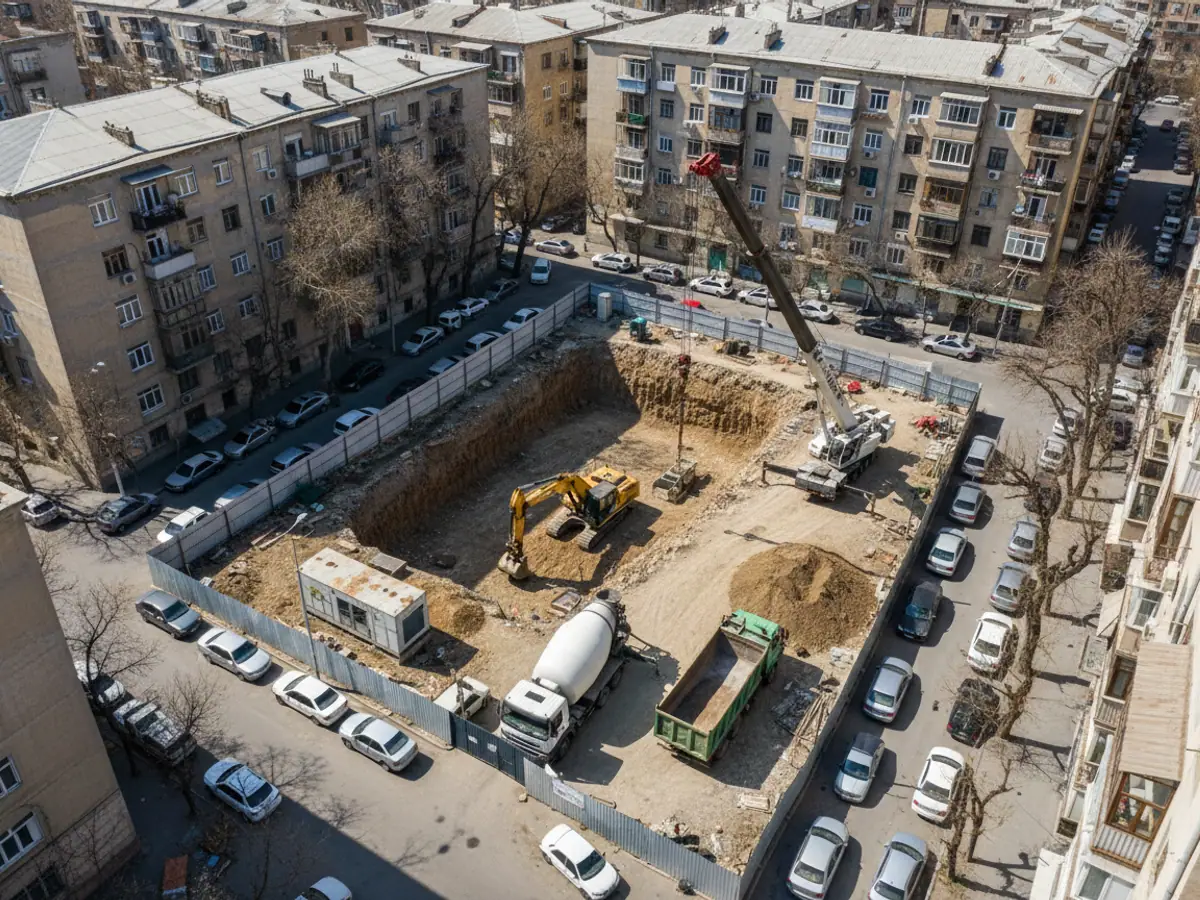
Building in the city means plant you cannot see from the office
On a residential development in the Yasamal or Khatai district, the main contractor's own plant, hired machines and subcontractors with their own fleets all work at once. An excavator in the pit, two or three mobile cranes, mixers from the batching plant, tippers hauling spoil away at night, a diesel generator until the permanent supply is connected. The foreman physically cannot watch it all, and the costings are based on hours and trips.
Hence the standard losses: hours paid for while the excavator stood with its engine running, spoil taken not to the tip but to a private plot next door, a mixer supposedly held up in traffic for two hours. Individually these are trifles; over the time it takes to build one block they add up to a noticeable sum.
GPS monitoring gives the foreman and the owner a single source of facts. Arguing with an operator or a subcontractor is easier with a report in front of you. An overview of all the construction solutions is gathered on the GPS monitoring in construction page.
Where the money goes on a city site
When we carry out an initial audit on a construction site, we find much the same list of losses every time:
Hours paid for with no work done
The hired excavator stands with its engine running while there is no tipper. The hours tick by and the bucket does not move.
Spoil in the wrong place
Tippers do one or two more trips a night than they need to, or dump the spoil closer than the permitted tip, and the difference in mileage is paid for.
Fuel off the site
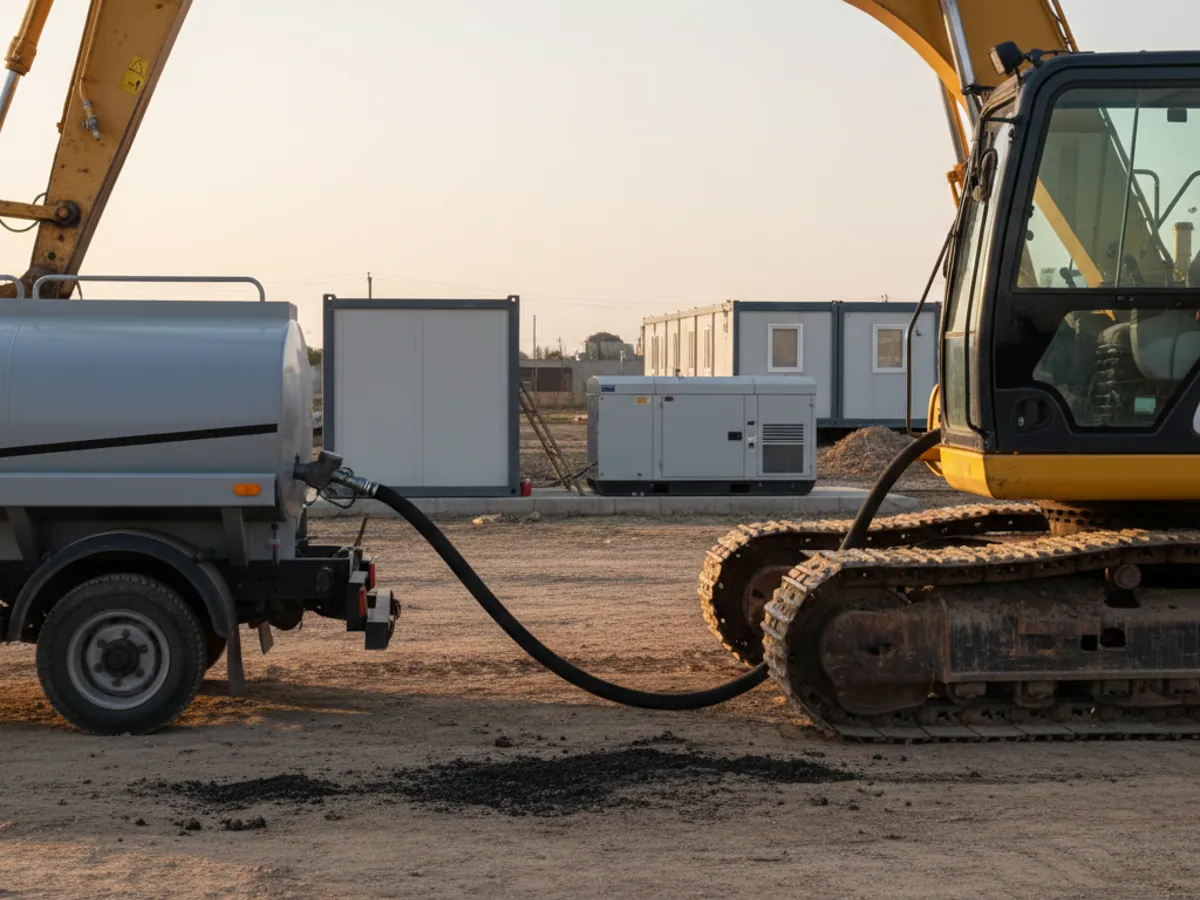
Diesel leaves the generators and excavators by the jerrycan. On a site with a dozen machines that is a noticeable sum every month.
Tools and equipment
Plate compactors, small generators and breakers move to neighbouring sites and do not come back.
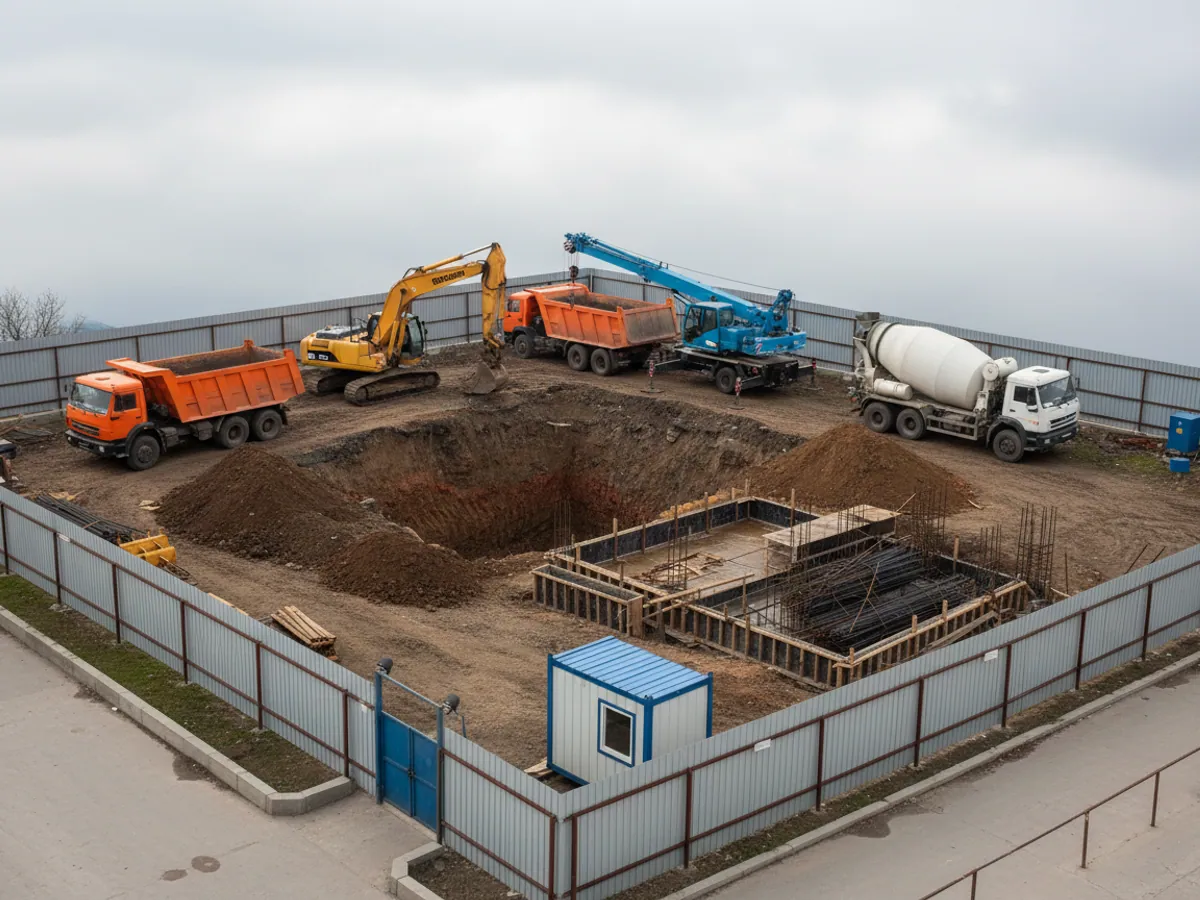
An excavation in Yasamal: one night of hauling spoil
An excavation for a 16-storey block, with the spoil hauled away at night when it is easier for lorries to get across the city. Six of the subcontractor's tippers are at work, paid per trip to the tip.
In the morning the foreman opens the report. There is a loading geofence at the excavation and an unloading geofence at the tip. Four vehicles did 9 trips each: load, drive, unload at the tip, return. Two vehicles did 11 each, but three of those end with the body being raised on waste ground 5 km from the site. The body tipping sensor shows that and the track shows where.
The subcontractor is paid for 42 trips to the tip, not 48. The conversation takes 10 minutes: the foreman has the track and the time of each unload in front of him. Body tipping sensors are described on the fitting tilt angle sensors page.
What we monitor on site
The bucket working, not the engine
Engine hours do not tell you whether the excavator was working. We fit a pressure sensor in the hydraulic system or a sensor on the working mechanism, and Wialon divides the time into three parts: engine off, idling and working under load.
On a sound excavator on a busy excavation the proportion of idling is usually 20 to 30%. If it is 50% or more, the machine is waiting for tippers or the operator is keeping the engine running for the air conditioning. There is more in the engine hour recording section.

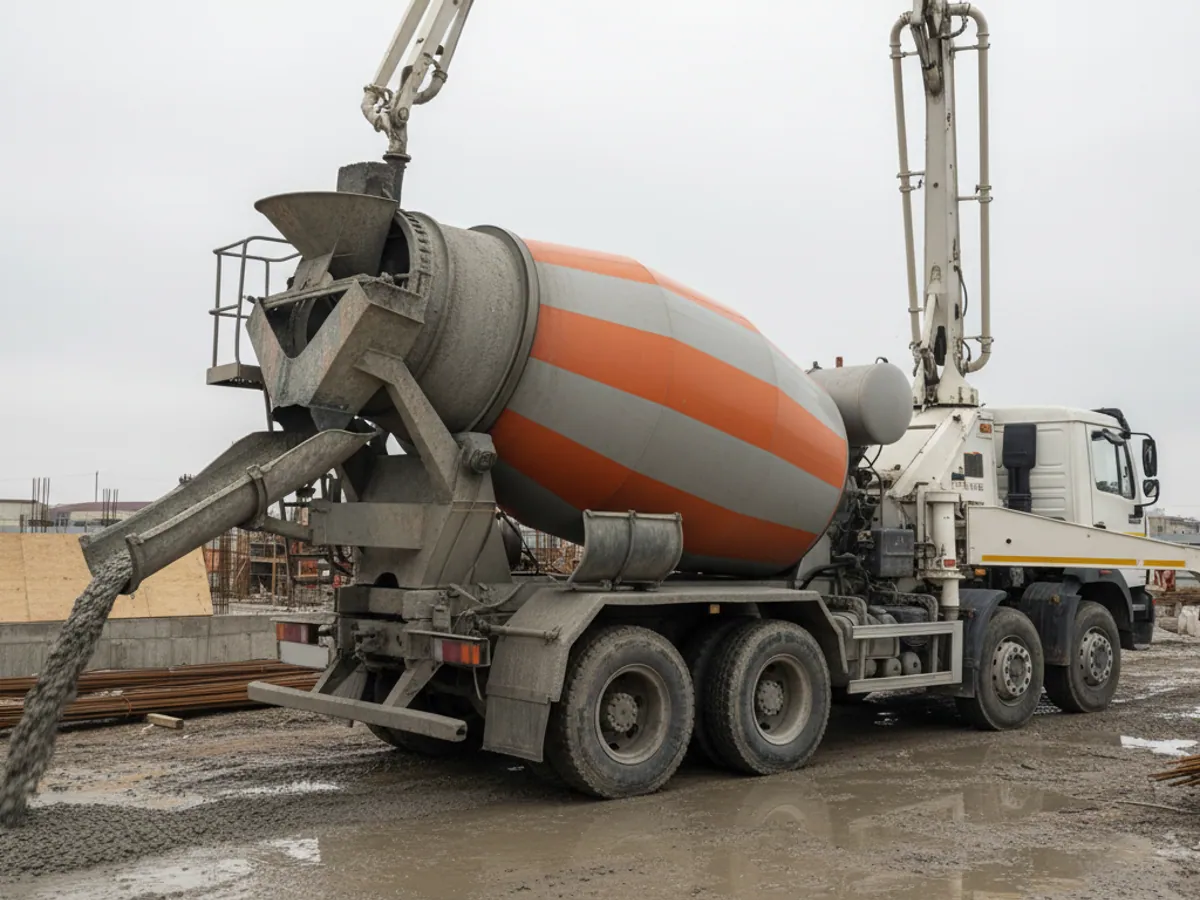
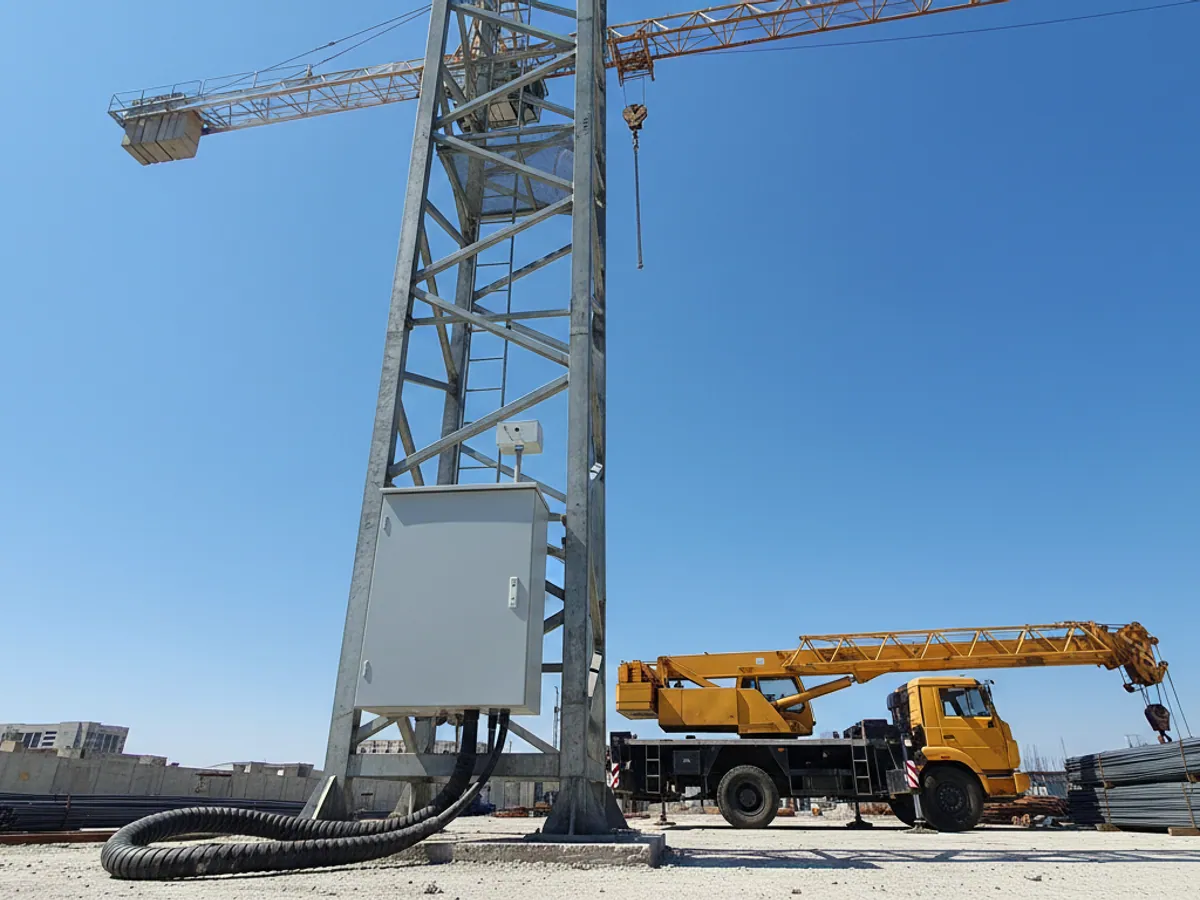

A mixer trip: from the plant to the signature on the note
A developer most often buys concrete and aggregates from outside suppliers and gives the spoil haulage to a subcontractor. That means half the trips on the site are made by other people's vehicles. Here is what a trip that can be checked looks like.
- Despatch. The mixer leaves the batching plant geofence. The despatch time is on the supplier's note and the departure time is in the track.
- The journey. The track shows the route and the stops. Time in transit is compared with what the mix allows, as stated by the supplier or the technologist.
- Arrival. Entry into the site geofence. If the mixer waited in a queue to discharge, that shows separately from the time in transit.
- Discharge. The drum rotation sensor shows the discharge; on a tipper it is the body tipping sensor. The event is tied to a position: on site or not.
- Confirmation. The site manager signs the note. Monitoring does not replace that signature or the acceptance of the concrete on quality, but it gives the site manager grounds not to sign for a trip that according to the data was not discharged on site.
The essential condition is access to data from the supplier's vehicles. If the supplier has their own monitoring, we ask for guest access or a data relay; if not, a clause about a tracker is worth writing into the supply contract. Without that, only your own vehicles can be monitored.
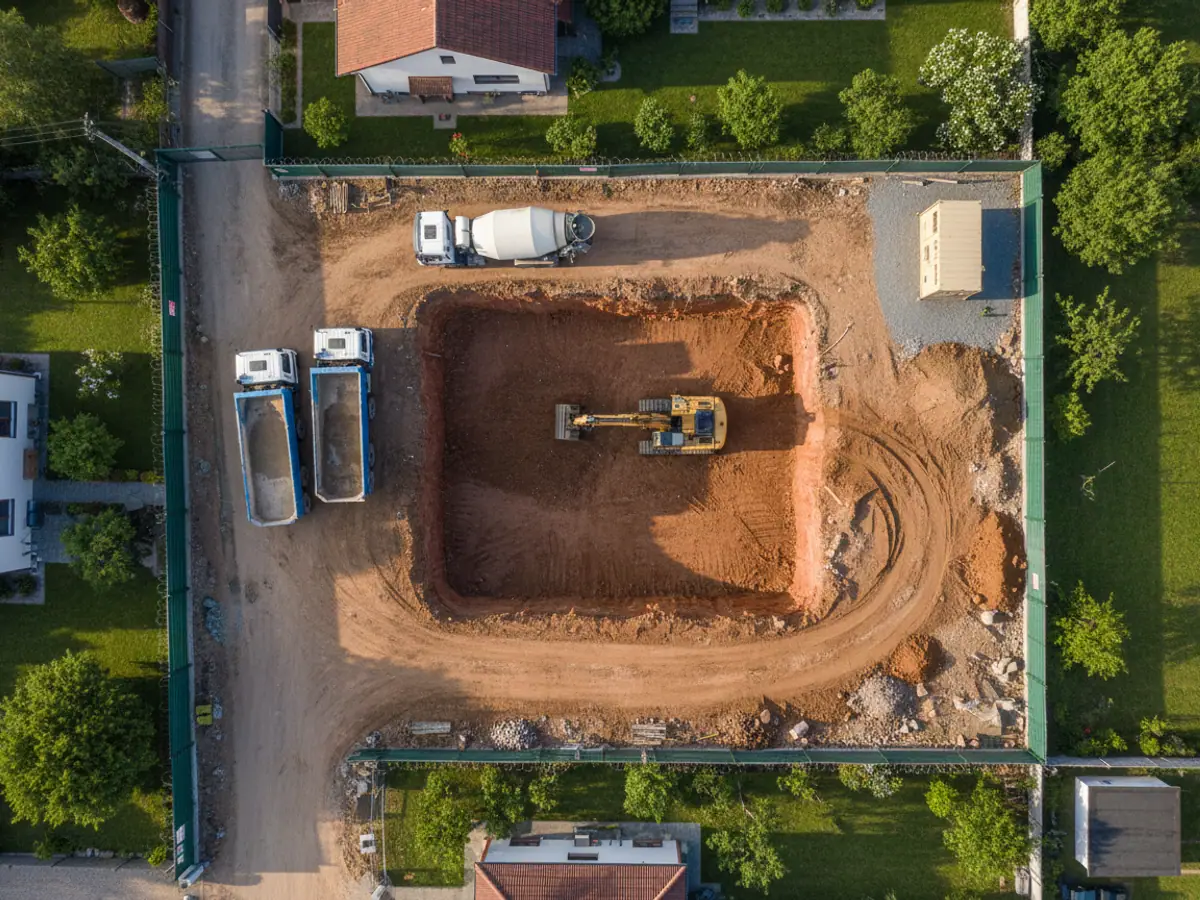
A pilot on one site: what is needed and how to accept it
A pilot is conveniently run on one project at the excavation or concrete frame stage: an excavator, several tippers hauling spoil, the supplier's mixers and a generator. The duration is three weeks or more.
What is needed from the developer: the boundaries of the site and the tip for the geofences, a list of owned and hired plant, an agreement with the subcontractor and the concrete supplier about access to data, and the trip logs and delivery notes for the pilot period.
Acceptance criteria, for example: tipper trips in the system match the log or the discrepancies are explained; every unload away from the site and the tip has been reviewed; the hours of the hired excavator have been reconciled with the hire company's invoice; generator consumption from the fuel level sensor has been reconciled with the fuel issued.

Small tools and equipment
Generators of 5 to 10 kW, plate compactors, welding sets, laser levels. You cannot fit a full tracker to them, and they go missing more often than excavators do.
To equipment like this we attach small Bluetooth beacons. The tracker in the foreman's vehicle or a fixed gateway in the site cabin sees the beacons nearby. When a plate compactor leaves the site in somebody else's pickup, its beacon stops appearing on the site, and that becomes an event. The devices are described on the Teltonika EYE Beacon page.
An honest limitation: a beacon shows that an item is near a particular tracker or gateway, not its exact position at any given moment. For keeping track of stock between sites that is enough.
How to work out the effect before fitting anything
Hired plant
Compare billed hire hours with engine hours and the contract: are waiting, relocation and idling included? Check any gap against shift records and acceptance documents; only a confirmed discrepancy is grounds for negotiation.
Fuel
Estimate fuel use separately for loaded work, idling and travel. Reconcile actual refuelling, tank balance and sensor readings; then price only confirmed litres lost before comparing the result with the cost of a fuel sensor.
Tipper trips
If you pay per trip, even one extra trip per vehicle per night with a fleet of five tippers gives well over a hundred extra trips in a month.
Idle time caused by logistics
An hour when the excavator waits for a tipper and the crew waits for a mixer does not appear under any cost heading, but it stretches the programme. The idle time report shows where the bottleneck is.
Common mistakes developers make
Trackers only on your own plant
The main losses are often in the subcontractors' machines. Write the fitting of a tracker, or access to their monitoring, into the contract.
A geofence covering the whole district
A site geofence that is too large will not catch an unload just beyond the fence. The site should be outlined along the line of the hoarding.
A fuel level sensor without calibration
A sensor fitted without calibrating the tank gives you an approximation. For an argument about drains that is not enough.
Nobody opens the reports
You need one person who reconciles the report against the invoices once a week. Without that the system only accumulates data.
What the developer gets
Invoices reconciled against fact
Hire hours and subcontractors' trips are reconciled against the reports rather than taken on trust.
Less fuel
Drains from machines and generators are visible by time and place. Overconsumption stops being the norm.
The rhythm of the build
It becomes clear where one machine is waiting for another, and that can be put right in the programme.
Protection against theft
A machine leaving the site at night without permission raises an alert and, if required, prevents the engine from being started.
Questions from developers and foremen
What is used in this sector
What we do end to end
Wialon modules for this sector
How it is used in this industry
Case studies from “Construction & Infrastructure”

Hard hat and PPE monitoring with the GH5200 tracker
Assets and workforce

Keeping track of site tools with BLE beacons
Agriculture, construction and mining

Plant tracking with no jumps or gaps in the track
Agriculture, construction and mining
Thinking of rolling out GPS monitoring in “Civil construction”?
Send us an enquiry and we will price it up for your fleet and pick the hardware for this sector: construction & infrastructure.
- 1 We pin down the task
A specialist calls back and asks about the vehicles, how many there are and what you need to keep an eye on.
- 2 We put a solution together
We propose the hardware and the features, and set out the one-off and the monthly cost separately.
- 3 We agree the fitting
At your yard or at ours, on a schedule that keeps the vehicles working.
Request a call
A specialist will call back and match a solution to your fleet and your task.