
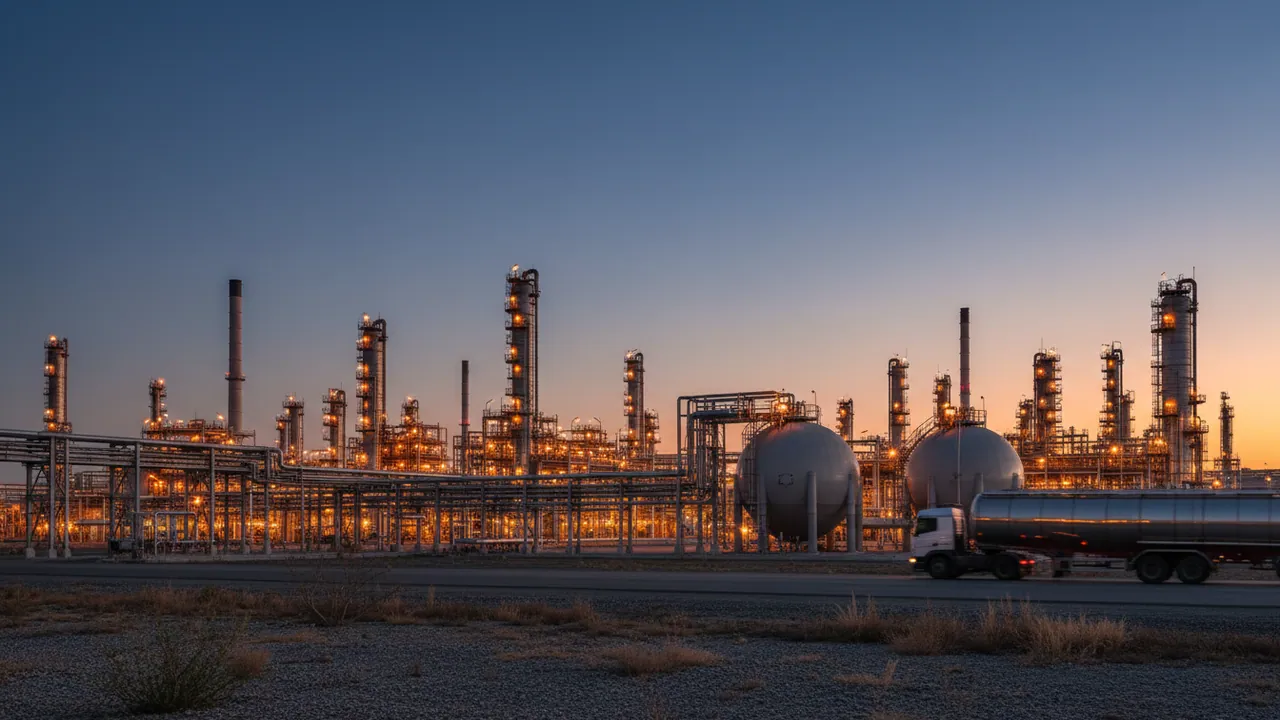
Monitoring the carriage of dangerous goods and chemicals
Control of road tankers, tank containers and flatbed vehicles carrying chemicals, fertilisers and polymers — from the plants of Sumgait to customers in the regions and for export through Georgia and the port of Alat.
The route inside a permitted corridor, speed on descents, stops only at agreed places, valves and hatches opening — with a notification to the person responsible for the shipment at the moment of the breach.
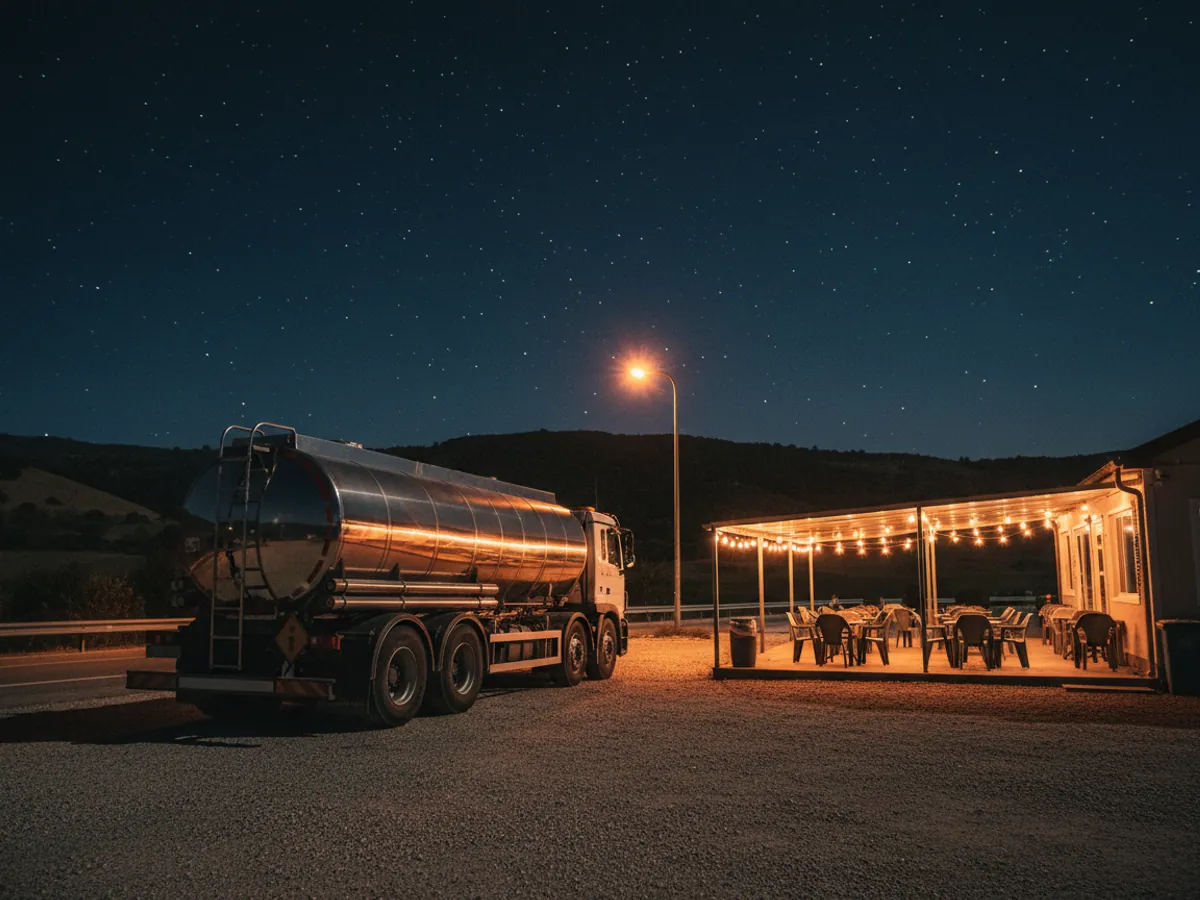
A tanker of acid has no business parked outside a roadside cafe
Monitoring the carriage of dangerous goods and chemicals answers a problem that no safety briefing can close: the driver is alone with the load for hundreds of kilometres. He can take a short cut through a village, stop for the night somewhere he should not, or let a tanker with a high centre of gravity build up speed on a descent.
Chemical and polymer plants in Sumgait, fertiliser works and suppliers of reagents to oil and gas service companies across Absheron send their output along the M-1, M-2 and M-4. Some of it goes for export — through Georgia or by ferry from Alat. Control by ringing the driver does not work on runs like these.
We fit equipment to the tractor units and the tankers and set up the permitted corridors and alerts in Wialon. Solutions for the other manufacturing areas are on the GPS monitoring for industry page.
What goes wrong in carrying chemicals
These are the situations we hear about most often from the people responsible for moving dangerous goods:
Rolling over on a descent
A partly filled tanker of liquid surges on the bends. Speeding on the hairpins on the road to Shamakhi or over the passes leads straight to an accident.
Product drained en route
Urea, solvents, diesel additives — all easy to sell. A few hundred litres disappear at a stop, and the shortfall is written off as a filling tolerance.
A route through built-up areas
The driver cuts through residential districts or enters the city at hours when that is forbidden. In an accident the consequences are many times worse.
Driver fatigue
Long runs with a load that demands constant attention. Microsleep on the M-2 at night is dangerous for any lorry, and doubly so with chemicals.
How a run with dangerous goods is monitored
The permitted corridor
The route for a run is set as a corridor a few hundred metres wide along the agreed road. The vehicle leaving the corridor means a notification to the dispatcher and the responsible person within a minute. We separately map the permitted parking and refuelling places.
- No-go zones: city centres, schools, water protection areas
- Speed limits by section — lower on descents than on the flat
- A stop longer than the set time outside a permitted place — an alert
How such zones are set up is described on the geofences and route control page.
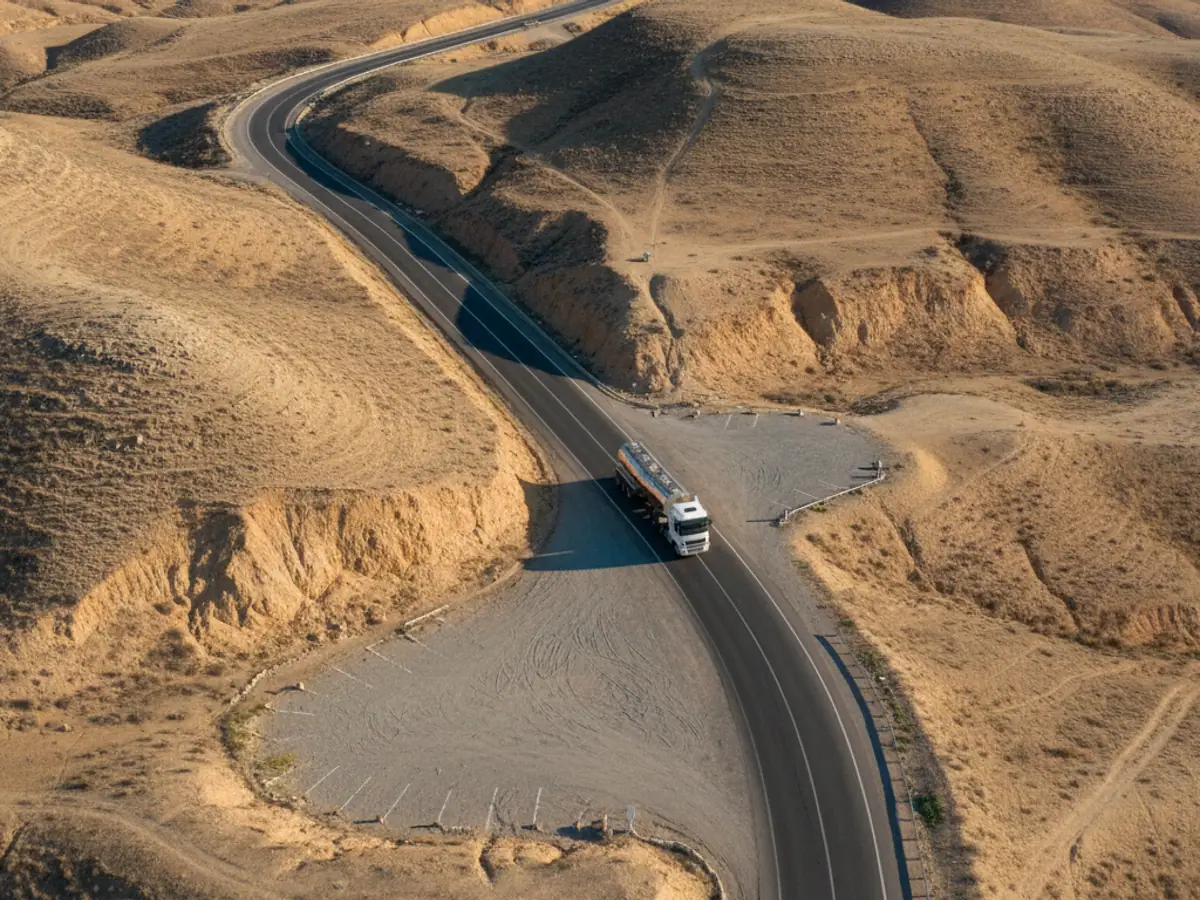
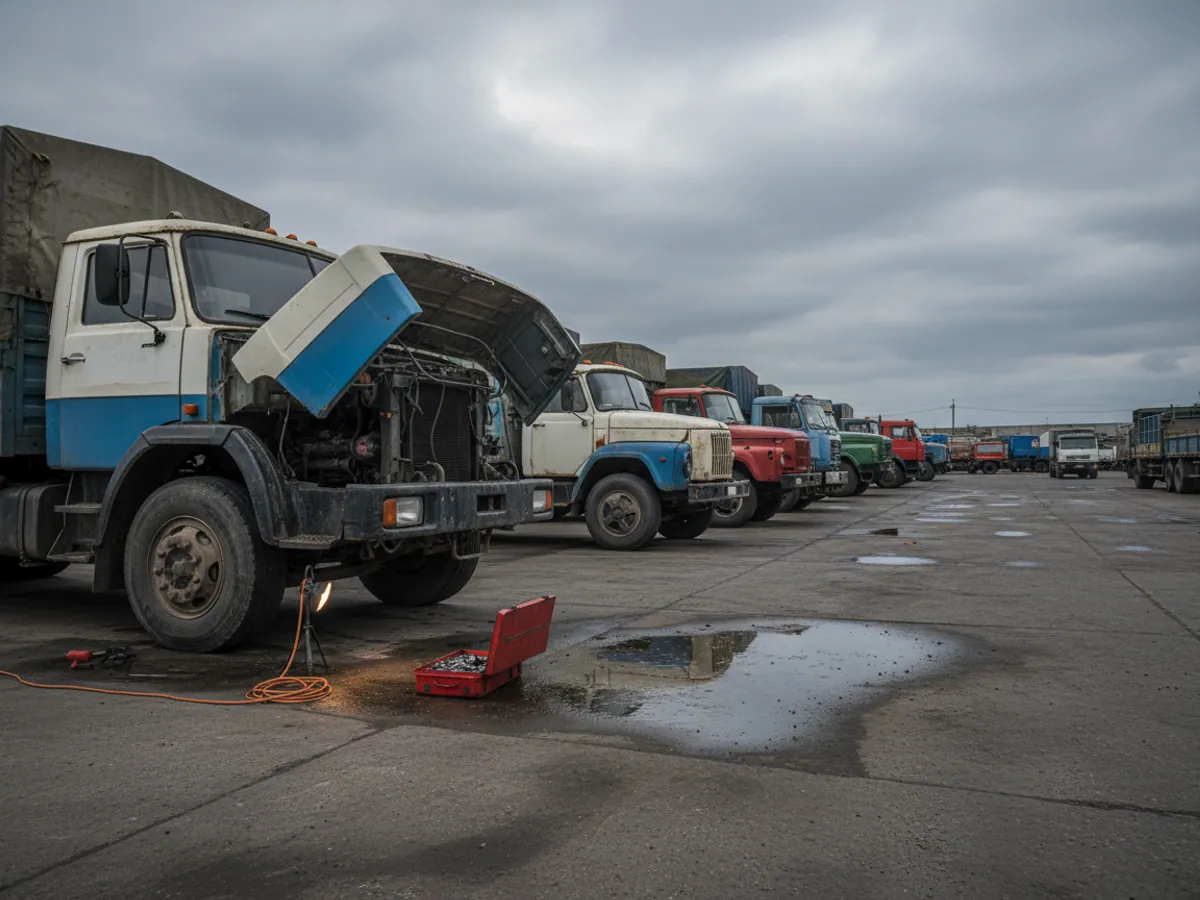
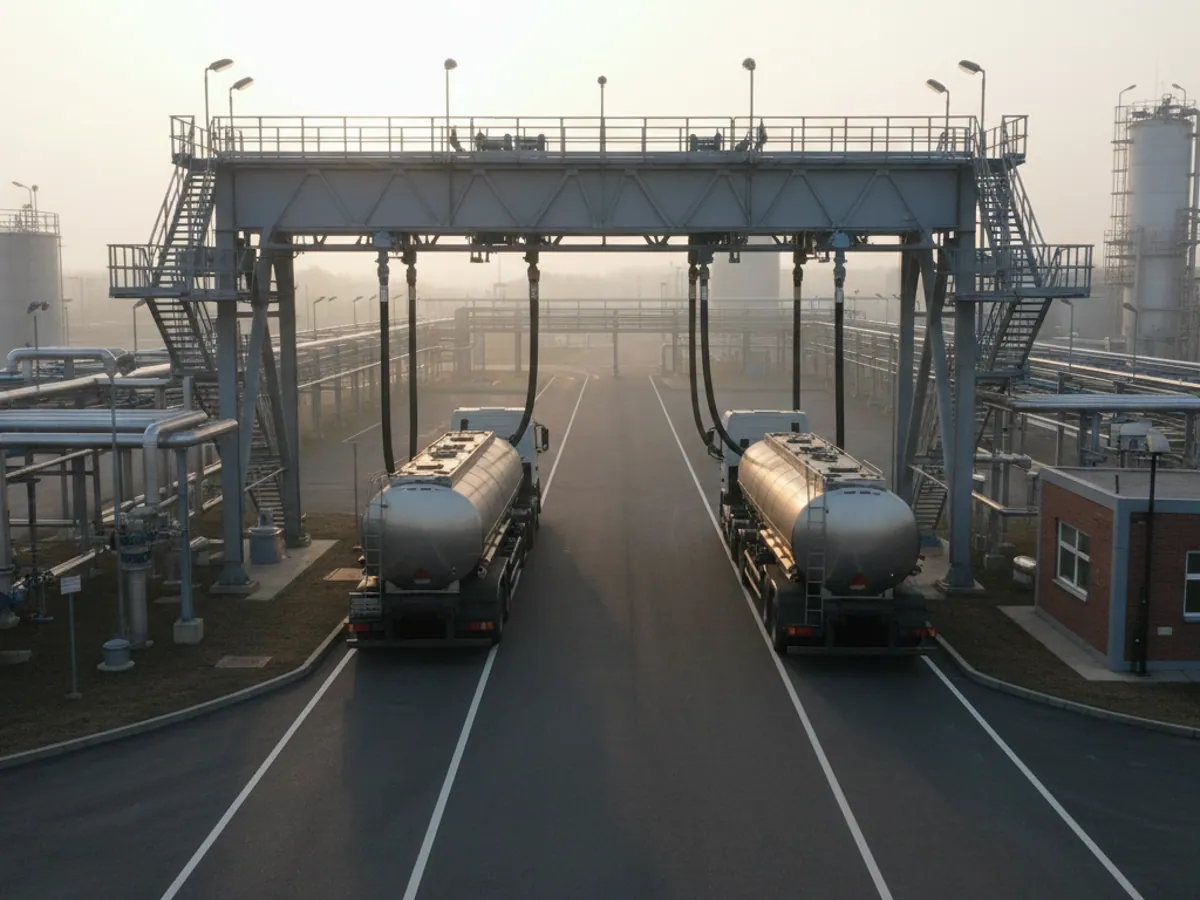
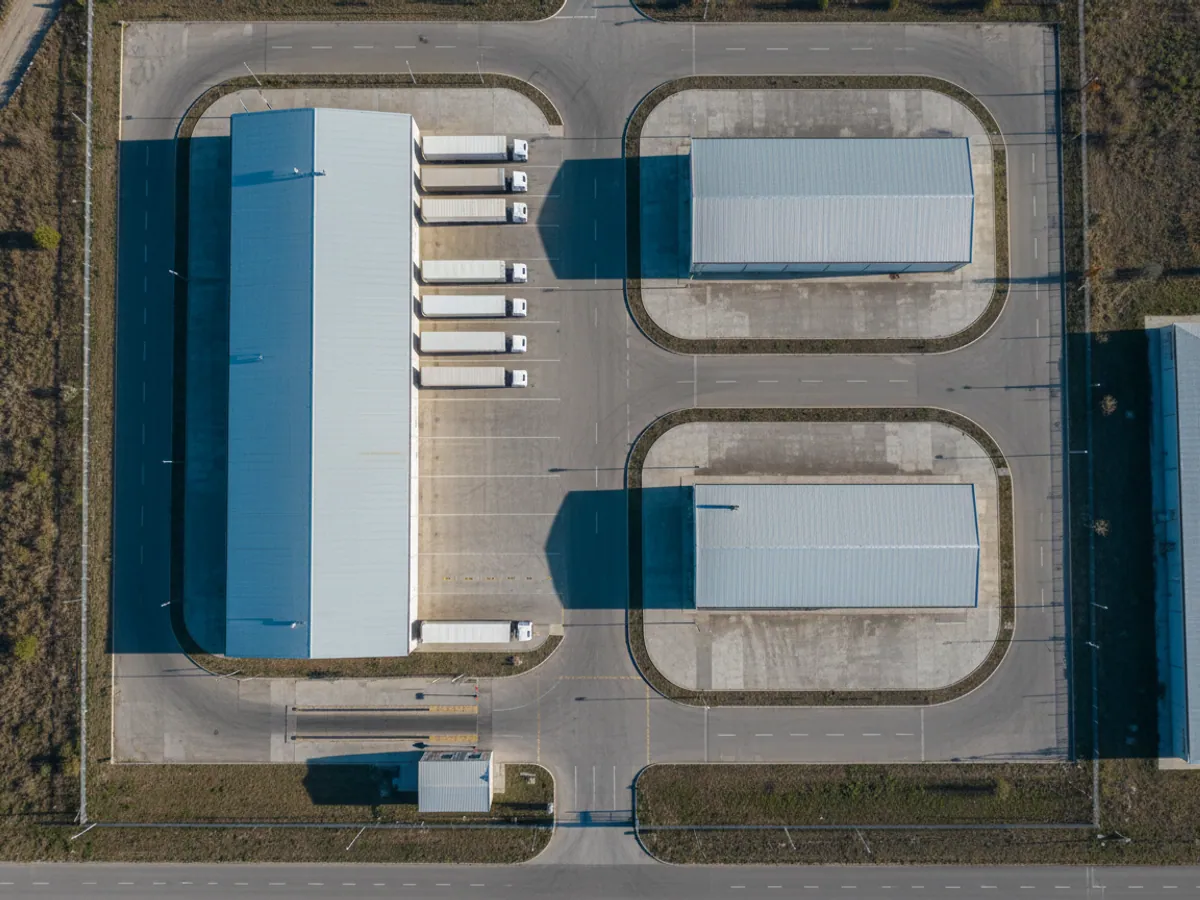
One Sumgait — Ganja run through the dispatcher's eyes
A road tanker with product leaves the works at 6:10. Loading is finished, the hatches are closed and the sensors confirm it. The route runs along the M-2, bypassing town centres.
At 9:25 near Kurdamir the vehicle leaves the road and travels 800 metres towards a village. A minute later a corridor departure alert appears on the dispatcher's screen. He rings the driver: he has turned off to a tyre shop he knows, because a tyre has gone down. The dispatcher approves the stopping point and records the reason in the system.
At 13:40 the vehicle arrives. The report shows: one agreed stop, no hatch openings en route, and the maximum speed on the descent within the limit.
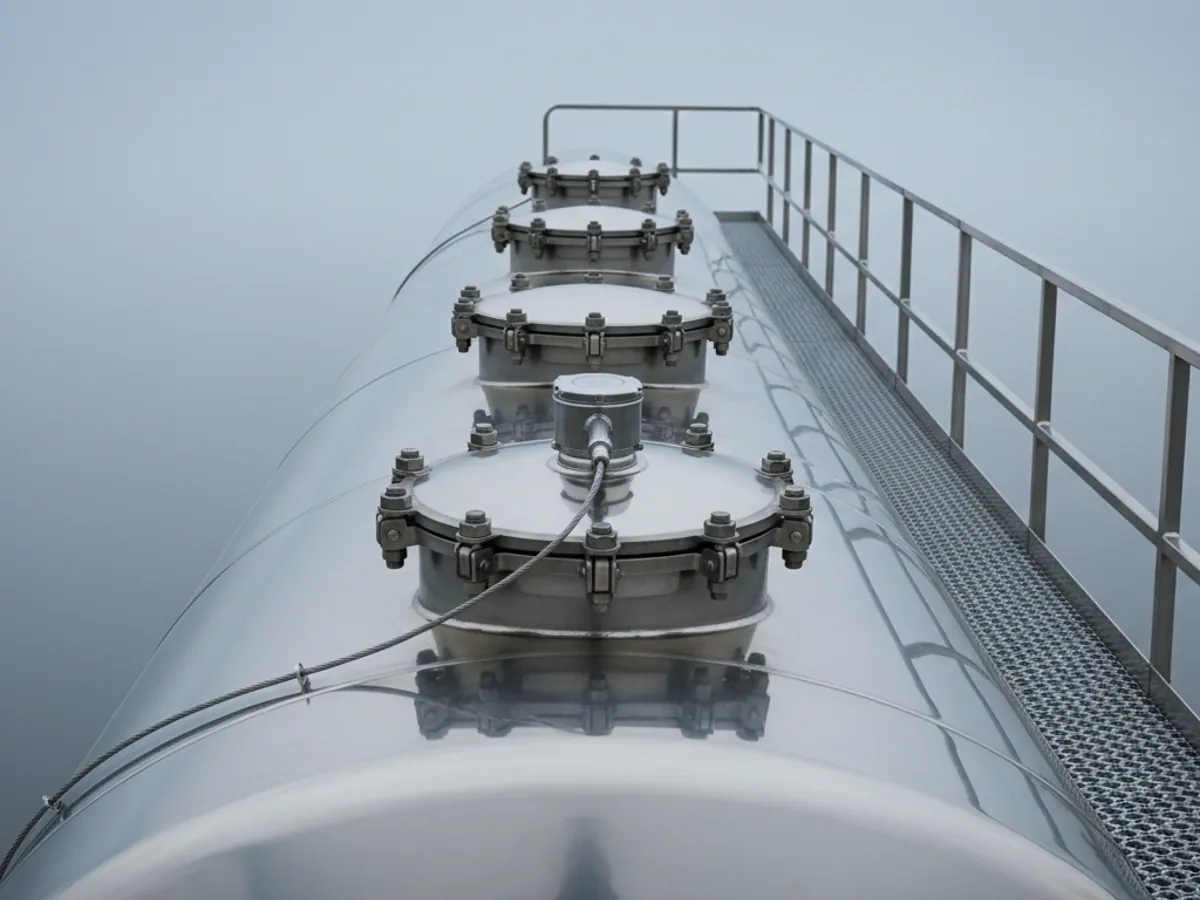
Had a hatch been opened at that stop by the tyre shop, the report would look different and the alert would also have gone to the head of security. We set such events up as a separate alert level.
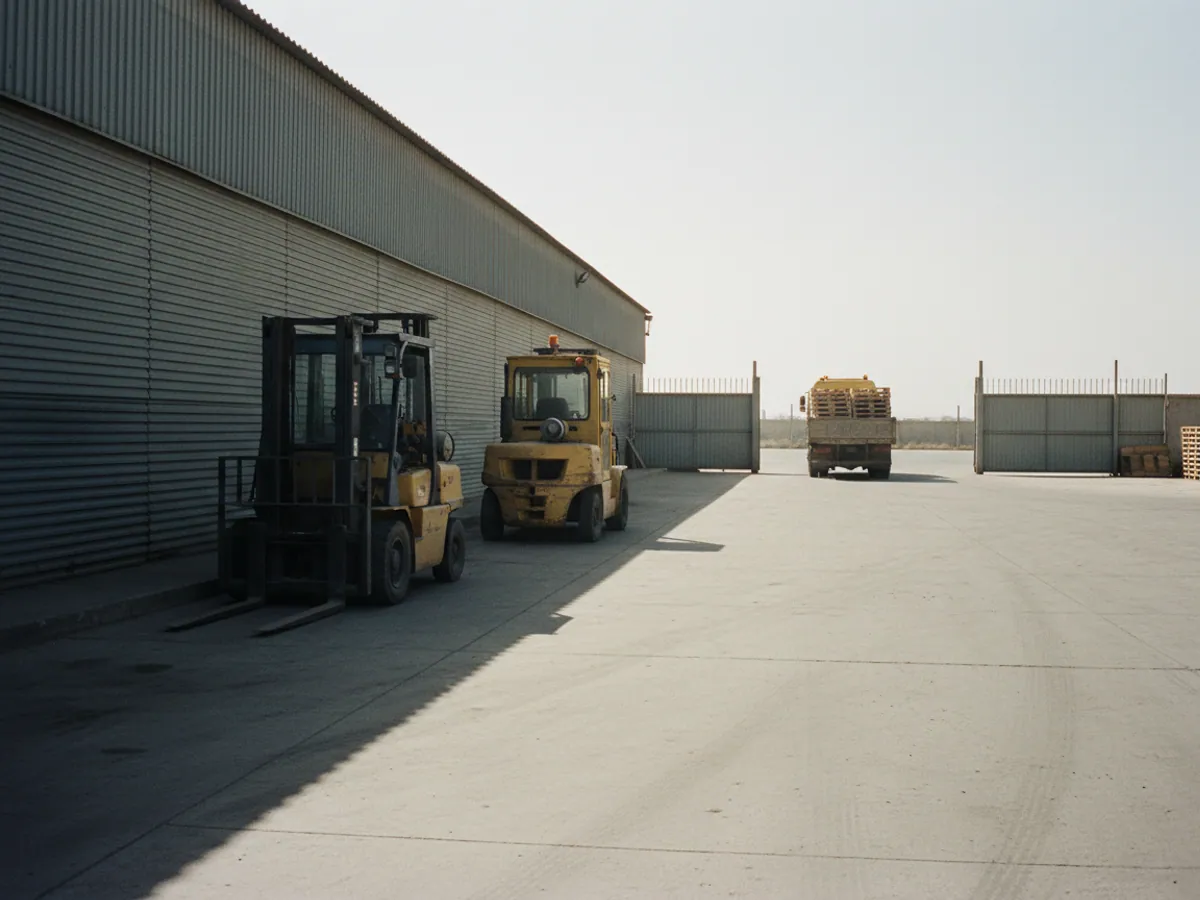
The equipment, and what must not be done with it
On the tractor unit we fit a Teltonika FMC650 or FMC130 tracker reading the CAN bus: speed, revs, consumption, engine faults. On the tanker or semi-trailer, a separate tracker or wireless sensors, if the trailer is swapped between tractor units.
Two things we always check during the survey:
- The power wiring. Vehicles equipped for carrying dangerous goods have a battery master switch, and the requirements for electrical equipment are stricter. We connect the tracker so that the wiring matches the vehicle's approval — we settle this together with your mechanic and your ADR specialist.
- Explosive atmosphere zones. An ordinary tracker in the tractor unit's cab sits outside the hazardous zone. If equipment has to be tracked on the loading apron itself, we use devices certified for explosive atmospheres — the ATEX version of the Teltonika EYE BLE tags, for instance. Each particular model has its own certificate, and we provide a copy before fitting.
Tank containers on the sea and rail legs are tracked with self-contained Teltonika TAT100 trackers, which run on a battery with no connection to the vehicle.
How the rollout works
Going through the routes
We put together the list of regular destinations, loading points and permitted stopping places. Out of that come the corridors and no-go zones on the map.
Surveying the vehicles
We look at the wiring, whether there is CAN, the design of the hatches and valves, and where a camera can go. For vehicles approved for dangerous goods, the power wiring is looked at separately.
Fitting
A tractor unit with a camera and CAN takes a working day. Sensors on the tanker, a few hours more. We work on your site so the vehicle does not fall behind its schedule.
Alert levels
We grade events by seriousness: leaving the corridor, speeding, a hatch opened outside a zone. Each level has its own recipient.
Reviewing the first month
After a month we go through the statistics with you, remove the false alerts and refine the corridors. Without this step dispatchers soon stop reacting to notifications.
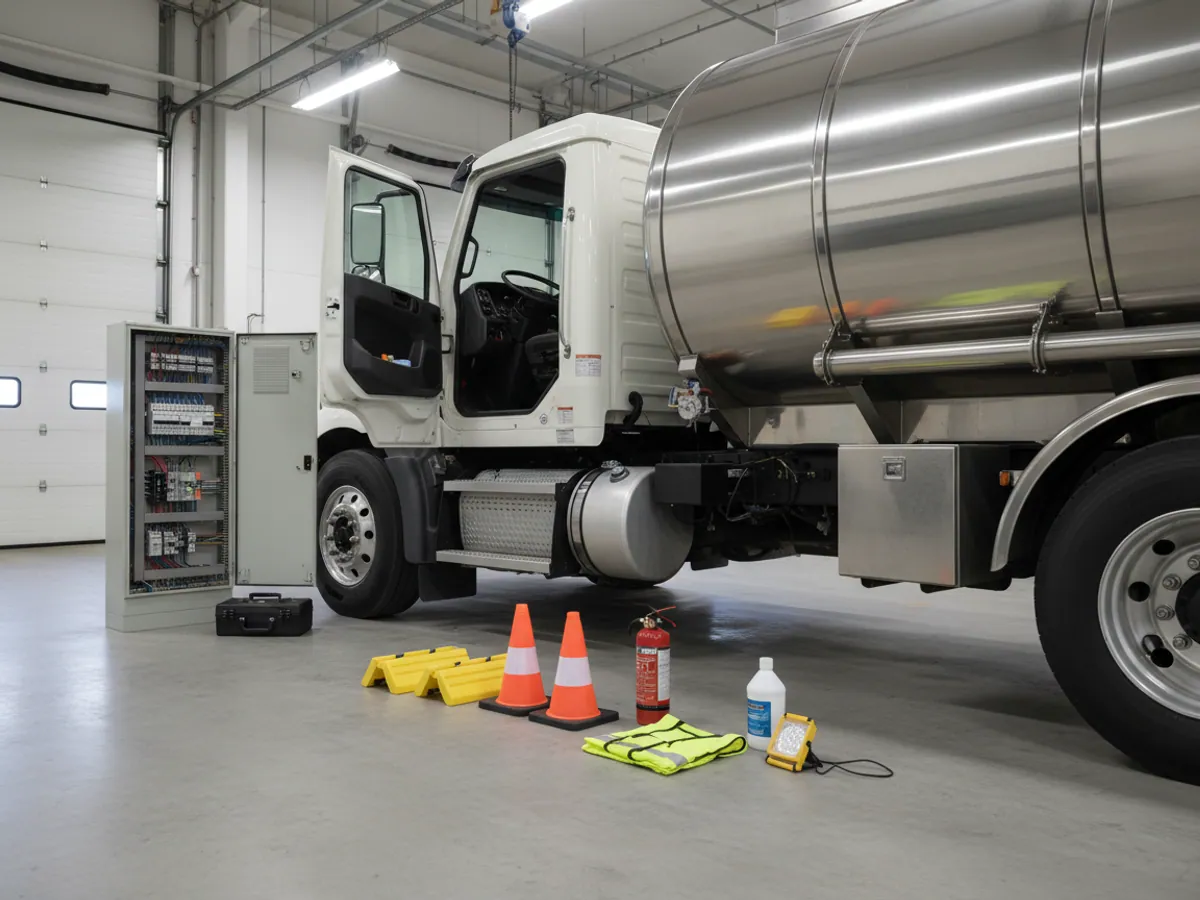
Approvals checked before fitting, and what telematics does not replace
For every load and every device the question of approval is settled separately. We cannot say in advance that our tracker suits any chemical, because that depends on the class of the load, the design of the vehicle and where the device is fitted.
- The vehicle. If a vehicle is approved for carrying dangerous goods, connecting a tracker and sensors must not breach the requirements for its electrical equipment. We agree the wiring with your ADR specialist before fitting.
- The device. Fitting inside an explosive atmosphere zone requires a version with the appropriate certification. If a model does not have one, it is fitted only outside the hazardous zone, in the cab for instance.
- Sensors on the vessel. Hatch and valve sensors are fitted without drilling the tanker shell, unless that has been agreed with the manufacturer. The compatibility of the materials with the product is checked by your technologist.
And the main limitation: telematics does not replace a process safety management system. It does not do away with the driver briefing, the check of the tanker before loading, the emergency card or the spill response plan. The tracker shows where the vehicle is and what is happening to it, and reports a deviation quickly. The decision and the actions remain with people and with the plant's own procedures.
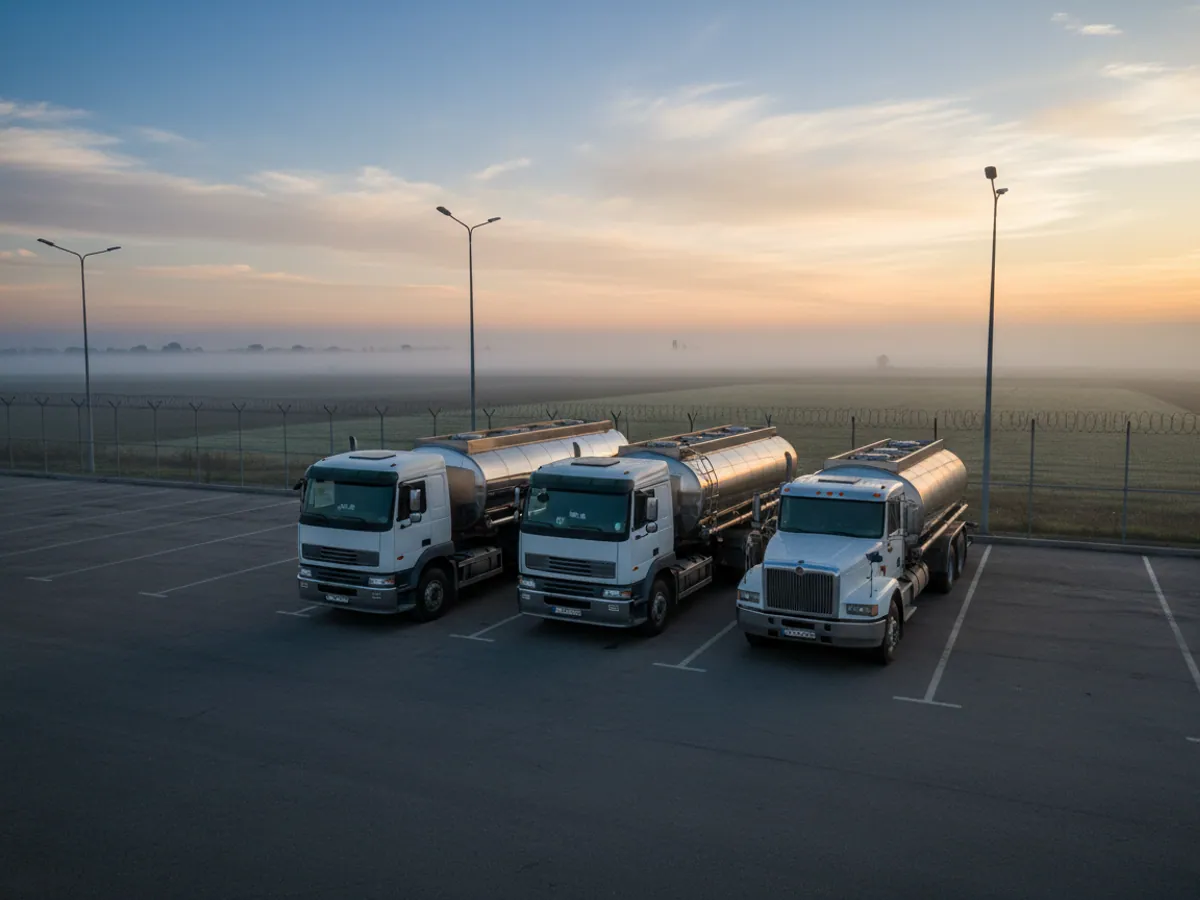
A pilot on one route: input data and sign-off
The easiest way to start is with one regular route, Sumgait — Ganja for example, and 3–5 vehicles, including at least one contractor's vehicle if hired hauliers carry your output.
What we need from the plant:
- the agreed routes and permitted stopping places;
- a list of the loads on the pilot vehicles and the requirements attached to them;
- contacts for each alert level: dispatcher, transport supervisor, security;
- the mechanic and the ADR specialist taking part in the survey and the fitting.
Sign-off criteria: every run has a complete track and any gaps in coverage are explained; alerts for departure from the corridor, stopping outside permitted places and hatch openings reach the right people and are investigated; false triggers have been reduced by tuning; and the wiring arrangement has been approved by your specialist.
An example of a report for a run: the route against the agreed corridor, every stop with its duration and place, hatch and valve events, speeding, driving time without a break, and periods without coverage.
What the plant gets
Evidence after an incident
Speed, route, stopping times and hatch openings for any run. In an inspection or an insurance claim these are facts rather than written explanations.
Fewer shortfalls
When any hatch opening outside the loading zone is immediately visible, what gets written off as a filling tolerance shrinks noticeably.
Easier with contractors
If approved hired hauliers carry your output, their trackers can be connected to your system so that you see the same alerts.
Control on export runs
Runs to Georgia, Turkey and beyond travel on roaming. On stretches without coverage the tracker writes the data to memory and sends it on later, so the dispatcher sees some events late.
Questions about carrying dangerous goods
What is used in this sector
What we do end to end
Wialon modules for this sector
How it is used in this industry
Case studies from “Manufacturing Plants”

Thinking of rolling out GPS monitoring in “Chemicals and materials”?
Send us an enquiry and we will price it up for your fleet and pick the hardware for this sector: manufacturing plants.
- 1 We pin down the task
A specialist calls back and asks about the vehicles, how many there are and what you need to keep an eye on.
- 2 We put a solution together
We propose the hardware and the features, and set out the one-off and the monthly cost separately.
- 3 We agree the fitting
At your yard or at ours, on a schedule that keeps the vehicles working.
Request a call
A specialist will call back and match a solution to your fleet and your task.