
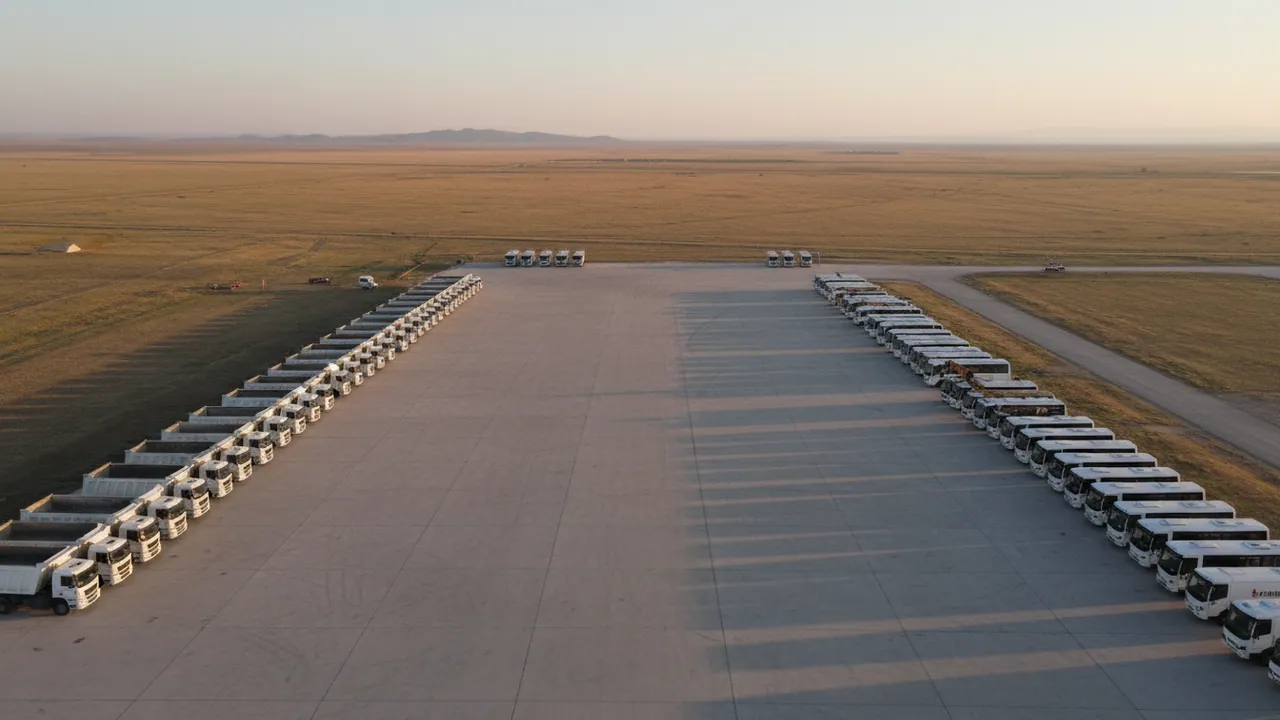
A corporate monitoring system for state companies and holdings
A single monitoring system for vehicles and heavy equipment, built for state-owned companies and holdings with branches across the country. One standard of equipment and reporting for every subsidiary, integration with ERP, fuel and engine hour control on remote sites.
Head office sees how the machines actually work in each region, not summaries compiled locally.
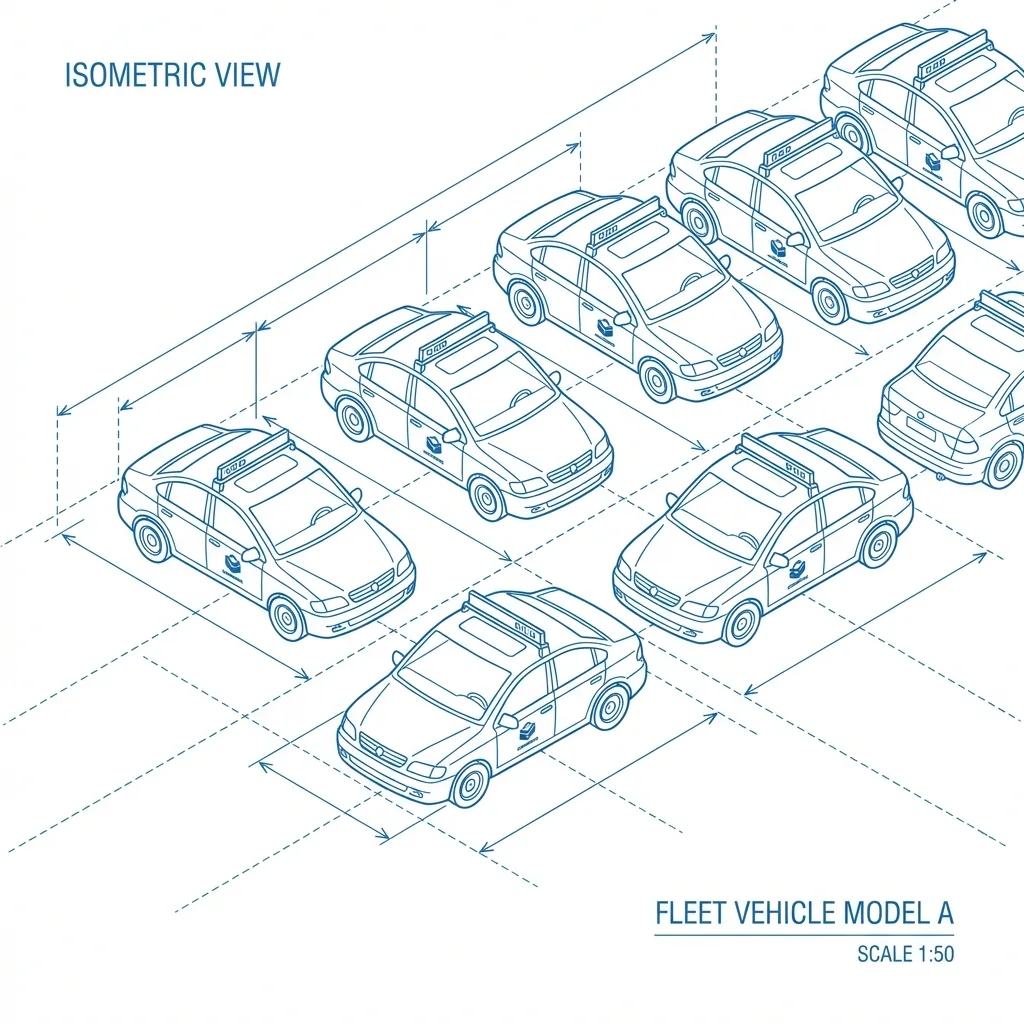
Managing strategic assets
At a large company with state participation the machines are scattered from Absheron to Nakhchivan: lorries, crew buses, cranes, excavators, generators, company cars. Often each branch has its own history: in one place the trackers were fitted long ago and by a different supplier, in another the records live in Excel, and in a third there are no records at all.
In that situation head office receives reports rather than data. The fuel summary is often put together by hand at branch level, engine hours are copied into a spreadsheet off the dashboard, and each branch counts by its own method. They can be compared, but only once the calculation rules are shared and the data starts coming from sensors rather than spreadsheets. That is the first job of a corporate system, and it calls for agreements inside the holding, not just equipment.
A corporate monitoring system solves that problem above all. One platform, one set of calculation rules, one access structure. The branch works with its own machines, head office sees everything and compares units on identical figures.
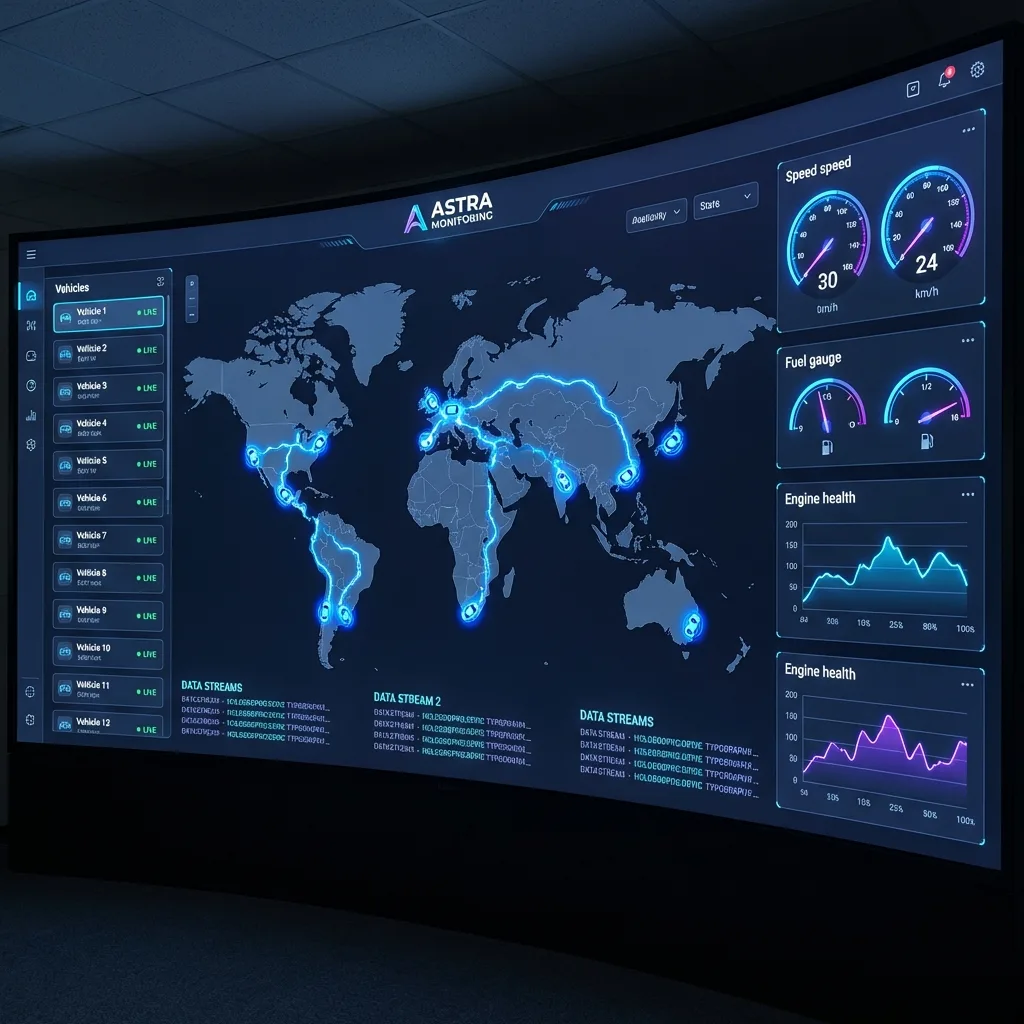
One standard instead of ten systems
The first question we work through at a holding is what is already fitted to the machines. Throwing out working trackers from other makers is not compulsory. If a device sends the data that is needed, we connect it to the shared platform. If it does not, we replace it at the next scheduled service and carry the history across through data migration between platforms.
The second question is common rules. What counts as idling, what fuel consumption is normal for a tipper at a quarry and for the same tipper on the highway, what speed is acceptable for a crew bus. These rules are set once at head office and applied in every branch.
The third is the access structure. The depot manager in Mingachevir sees his own vehicles, the branch director sees the whole branch, the logistics directorate sees the whole company. Changes to rights are made by the holding's administrator, not by each branch on its own.
The systemic problems of large fleets
We see these problems at large companies whatever their form of ownership. Scale only makes each of them worse:
Fuel goes in small amounts
Not one big theft, but tens of litres from each machine every week. Across a fleet of hundreds that adds up to a serious line in the budget.
Buying instead of reallocating
One branch asks for a new crane while the branch next door has had the same crane standing unused for six months. Without a shared picture nobody notices.
Writing off card purchases unchecked
Fuel is written off against card transactions, and nobody checks how much actually went into the tank. A paper check will not reveal the discrepancy; comparing the cards against level sensor data will, and the branch's own staff take it from there.
Different figures in different departments
Accounts, logistics and security each count mileage their own way. The meeting is spent arguing over whose data is right.
Safety of crew transport
Buses carrying people on the road to Siyazan or out to the sites near Sangachal run with no check on speed or on the driver's time behind the wheel.
Enterprise-grade solutions
Integration with 1C and SAP
Mileage, engine hours, fuel consumption and events are passed into the accounting system automatically. Accounts write off fuel and lubricants on sensor data, the chief engineer's department plans servicing on real running time, and procurement sees how heavily the machines are actually used.
How this works technically is covered in the integration with 1C and SAP section.
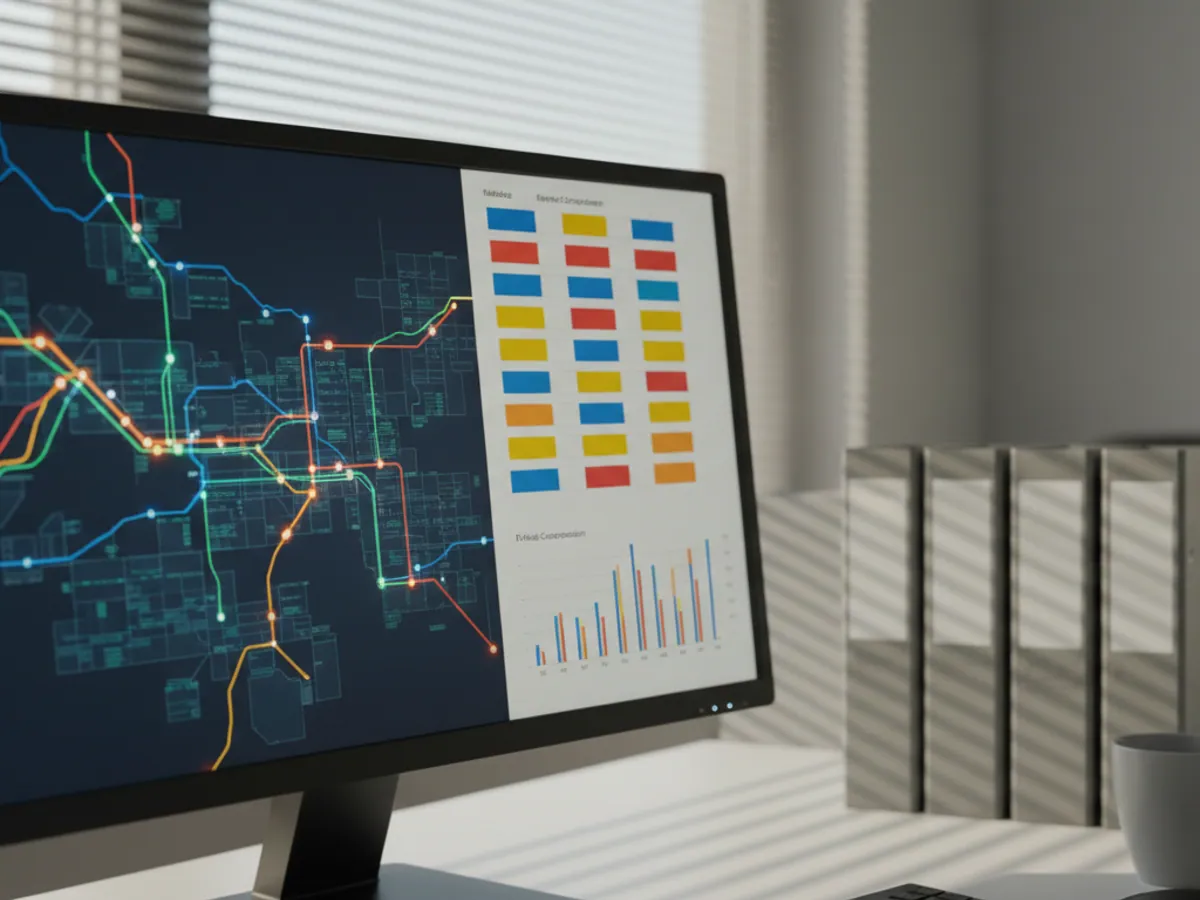


Remote sites and reconstruction projects
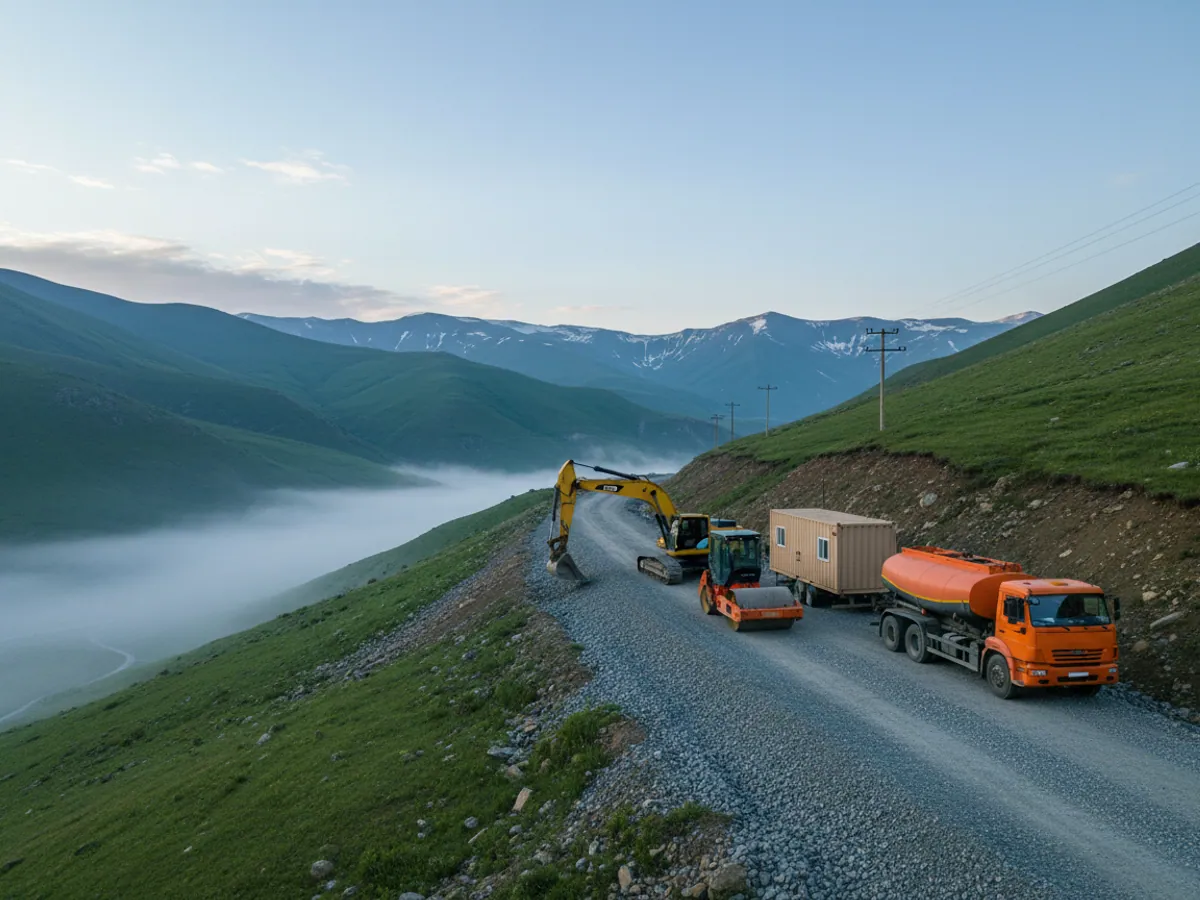
Many state companies work on sites in Karabakh and East Zangezur: roads, power networks, water mains, housing. The machines work far from any base, fuel is brought in by tanker, and the project manager is on site once a week.
On sites like those, monitoring answers three questions. How many hours each excavator and roller actually worked. How much fuel was delivered and how much was burnt according to the sensors. How many runs with material the tippers made from the quarry to the site.
Mobile coverage in mountain districts is patchy, so the trackers accumulate data in memory and send it as soon as the network appears. For fixed generators and tanks we use standalone devices and level sensors. Solutions for contractors are described in the monitoring of road and infrastructure projects section.
Branch isolation, data architecture and acceptance
In a holding, monitoring quickly runs up not against the trackers but against organisational questions. They are best settled in the specification before the rollout.
- Branch isolation. Each subsidiary works in its own account or group: it sees its own machines, its own reports, its own users. Head office sees everything, but changes to a branch's settings are made by that branch's administrator, or centrally by agreement. That way one branch cannot accidentally change another's consumption norm.
- Data architecture. The scheme of trackers — platform — reports — feeds into ERP and BI is drawn up together with the IT department. It marks where the data is held, for how long, what goes into the accounting system and who owns each integration. Where the server sits is the company's decision; we set out which options are technically possible.
- A single reference list. The codes for branches, sites, machine types and norms must match between monitoring and ERP. Without that, the consolidated report will need manual reconciliation.
The acceptance criteria for the pilot branch can be written like this: every machine on the branch's register is sending data; consumption from the sensors has been matched against card refuelling, with discrepancies worked through; rights have been checked with test users at different levels; the export into the accounting system goes through without manual correction.
The supplier qualification pack usually includes a description of the solution, a list of equipment with the manufacturers' documents, a description of the platform, the fitting procedure, and warranty and support terms. The exact contents are set by the company's procurement procedure; we prepare our part to your list.
Rollout stages in a holding
Survey
An inventory of machines by branch, what is already fitted, what data each department needs. The output is a map of the fleet and a list of tasks.
A pilot in one branch
We choose a unit with typical machines and clear problems. Over two or three months we get a baseline for comparison and settle the rules.
The specification
We fix the equipment standard, the calculation rules, the access structure and the integrations. This is the document every branch will be connected against.
Rollout
Branches are connected to a schedule. Crews work in several regions in parallel so the project does not stretch over years.
Training
Administrators at head office, dispatchers and engineers on the ground. Each role has its own programme.
Ongoing support
Technical support and mobile servicing under a contract with agreed response times.
How to assess the effect before procurement
At a large company a purchase decision needs justification. We suggest measuring the effect on the pilot rather than on promises.
- Fuel. Compare fuel and lubricants written off over the three months before the pilot with the three months with level sensors on the same machines.
- Utilisation. The engine hours report will show how many machines work less than half a shift. That is an argument against new purchases.
- Repairs. Servicing on real running time and monitoring of engine overheating reduce the number of unplanned breakdowns. The effect is not immediate, usually after six months.
We price the equipment and the service against your fleet. Other solutions for government bodies are gathered on the GPS monitoring for the public sector page.
What the company gets
Lower operating costs
Fuel is written off on sensor data, idling and unnecessary empty runs show up in the reports, and machines are moved between branches.
A single standard
Every subsidiary works to the same rules. Branches are compared on identical figures.
Transparency for partners
Verifiable data on how the machines work is useful in dealings with international partners, auditors and lenders.
Fewer discrepancies in the books
When card refuelling and engine hours are checked against sensors, discrepancies show up against a particular machine and date. People still have to work through them, but now on facts.
Frequently asked questions
What is used in this sector
What we do end to end
Wialon modules for this sector
How it is used in this industry
Case studies from “Government & Quasi-Government”



Thinking of rolling out GPS monitoring in “State-owned companies”?
Send us an enquiry and we will price it up for your fleet and pick the hardware for this sector: government & quasi-government.
- 1 We pin down the task
A specialist calls back and asks about the vehicles, how many there are and what you need to keep an eye on.
- 2 We put a solution together
We propose the hardware and the features, and set out the one-off and the monthly cost separately.
- 3 We agree the fitting
At your yard or at ours, on a schedule that keeps the vehicles working.
Request a call
A specialist will call back and match a solution to your fleet and your task.