
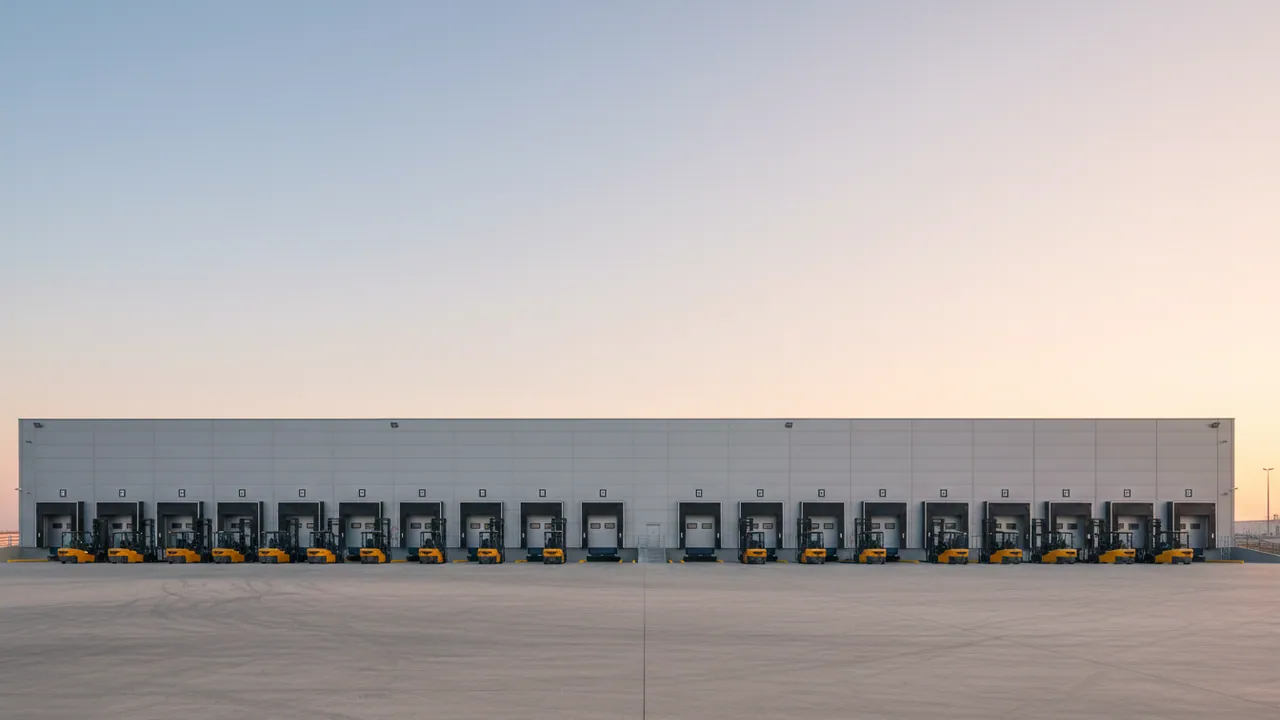
Monitoring system for warehouse equipment and forklifts
Monitoring of forklift trucks, stackers and reach trucks in warehouses and distribution centres: engine hours and utilisation for every machine, impacts and collisions, and operator authorisation by personal card. Suitable for the warehouses of retail chains and distributors in Baku and across Absheron, logistics complexes near the port of Alat, and the warehouses of industrial plants in Sumgait.
Locating equipment inside a building requires separate infrastructure: BLE tags or another form of indoor mapping. What accuracy is achievable in your warehouse is shown by a site survey, not by a catalogue. Recording of work, impacts and authorisation works without it too.
What happens to forklifts while nobody is counting them
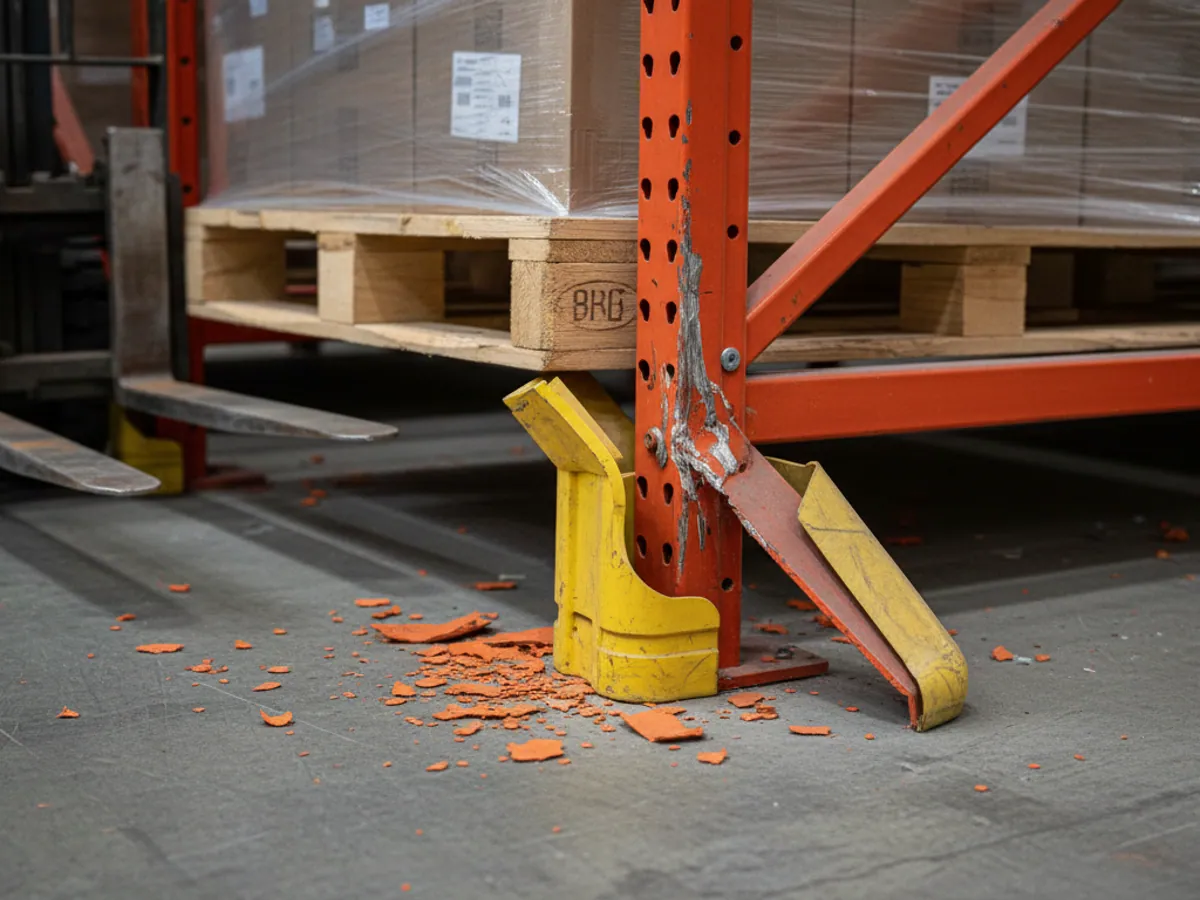
A distribution centre has dozens of machines and a lot of people working in narrow aisles between racking. A forklift hitting a racking upright, a pallet dropped from height, a machine straying into a pedestrian zone — such events are often discovered only from their consequences, when finding out who was responsible is difficult.
The second problem is fleet utilisation. The warehouse manager knows how many machines he has, but rarely knows how many of them actually work during a shift. The decision to buy or hire a few more forklifts is taken on gut feeling before the season.
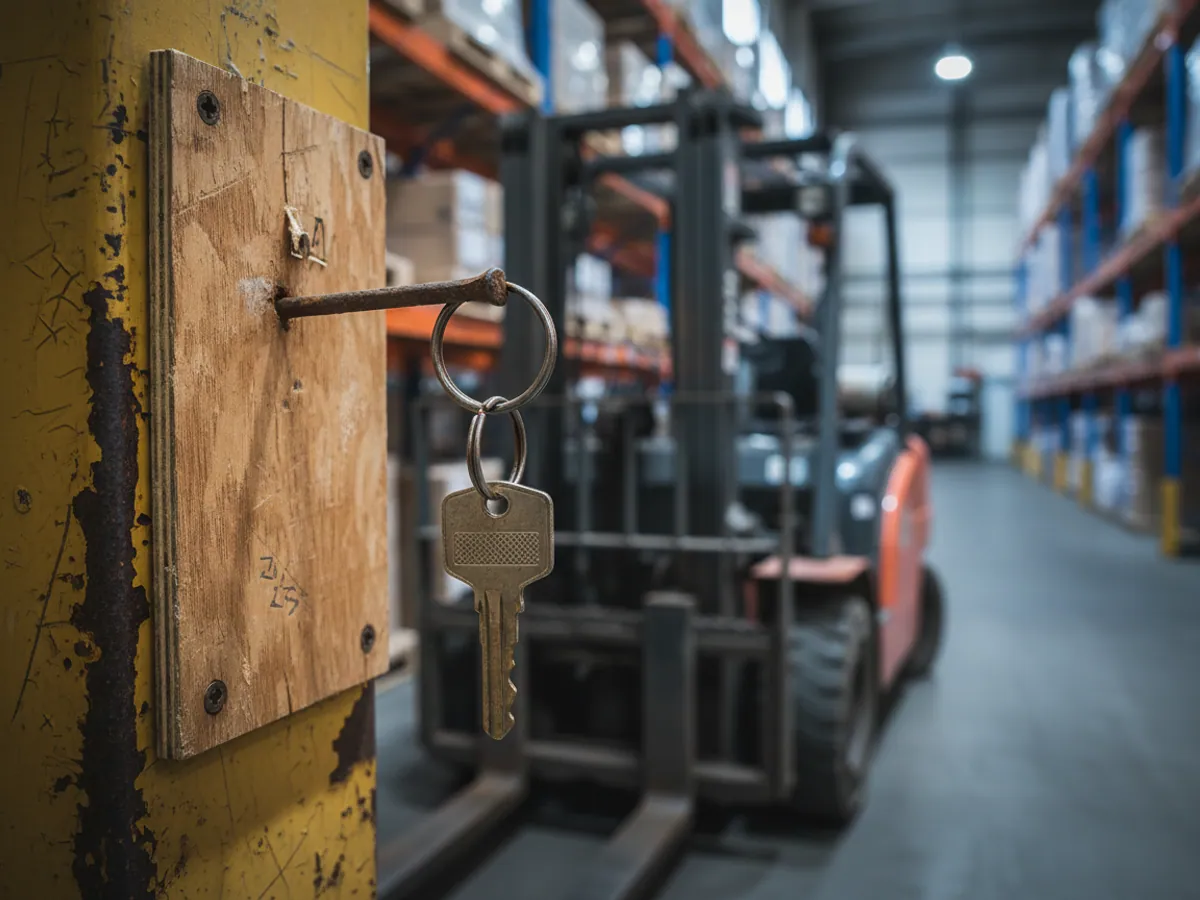
The third is authorisation. If a forklift starts with a key hanging on a nail, anyone can drive it, including a member of staff with no licence.
Telematics on warehouse equipment gives you data on all three questions: who was working, how much the machine really did, and where the impacts happened. How much this changes your accident rate and the size of your fleet depends on how the warehouse uses that data, which is why we suggest starting with a pilot.
How to establish a forklift's position inside a warehouse
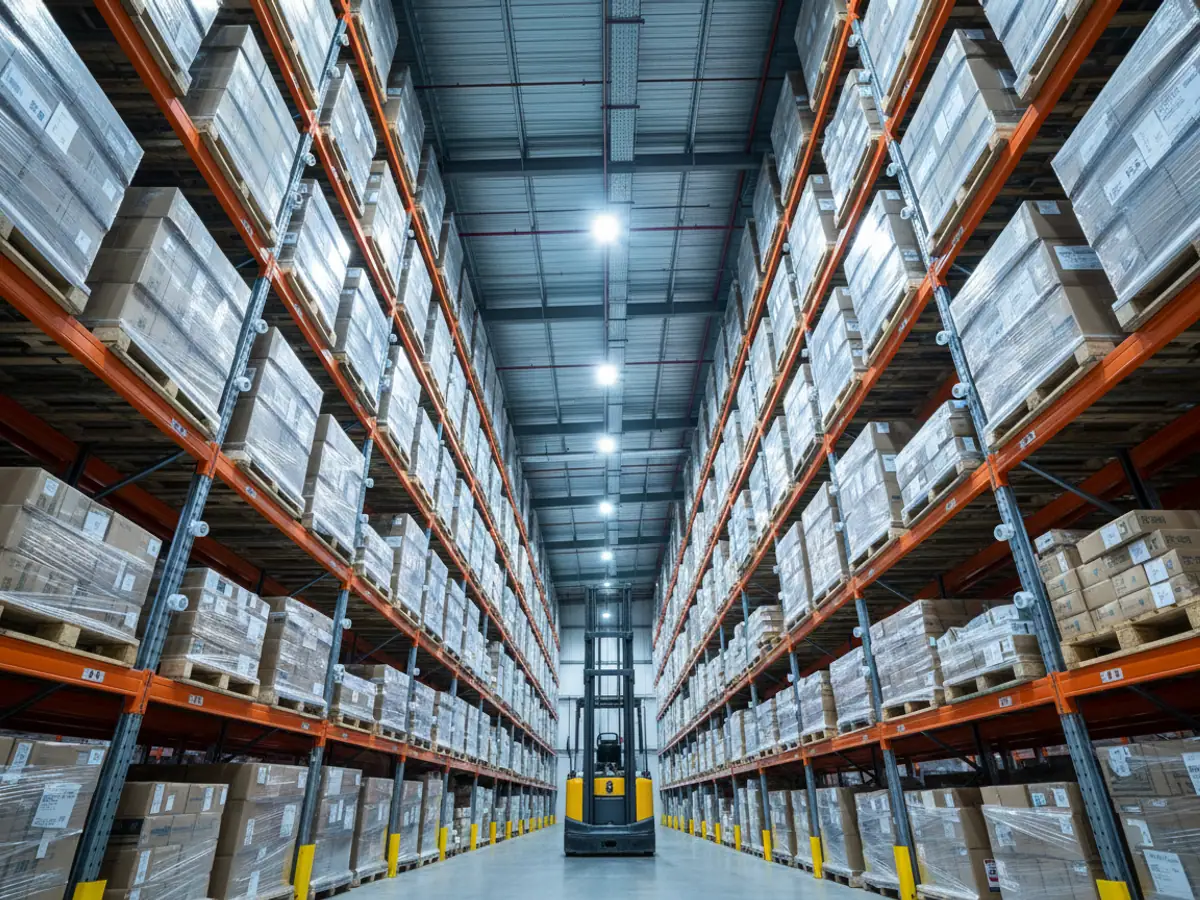
Satellite GPS barely works under a warehouse's metal roof. For positions inside a building, BLE tags (beacons) are used: they are hung around the warehouse, and the tracker on the forklift determines which tags it is near. For particular tasks UWB is used, which is a separate and more expensive class of system.
The accuracy of BLE positioning depends on the density of the tags, the height and fill of the racking, the metal and the reflections. In practice it is more a matter of which aisle or zone than a point to within a metre. How many tags are needed and what accuracy will result is determined by a radio survey of your warehouse: we measure the signal in the aisles with the racking loaded as it normally is.
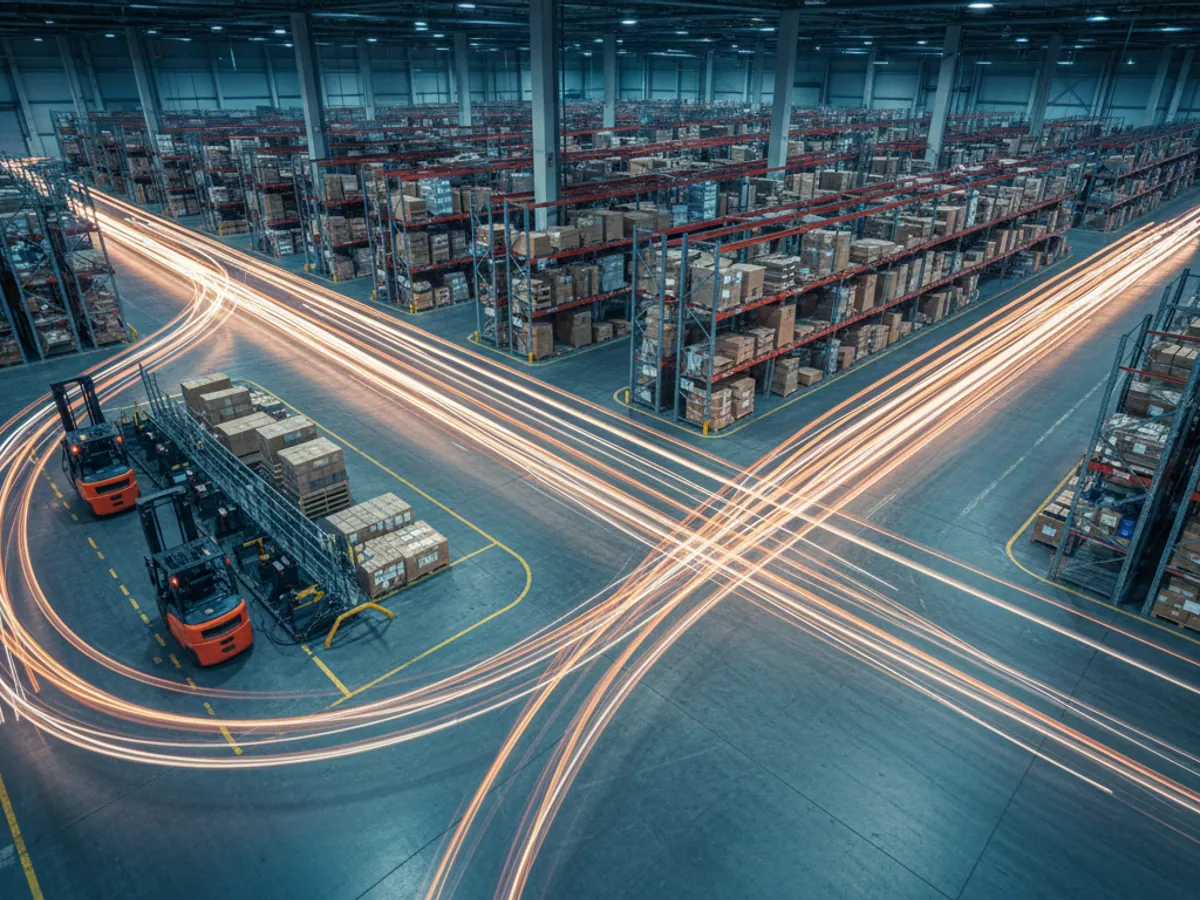
With that data you can build movement maps for the equipment, find congested aisles and waiting time at the gates, and mark out no-go zones, for example the area where hazardous goods are stored. On the outside yard and apron the tracker works on GPS as usual.
The hidden losses of warehouse logistics
Without telematics, managing a forklift fleet rests on what the shift supervisor happens to observe. WMS reports show the tasks and the picking times, but not what was happening to the equipment:
Accident rate
Damage to goods, racking and the machines themselves caused by hurry or careless driving. When an impact is not recorded, the warehouse pays for repairing the racking and the cause stays unknown.
Low utilisation
Some machines stand idle for a large part of the shift, and before the season the fleet is expanded just in case. There is no way to learn the real utilisation of each machine without data.
Uncontrolled access
Staff without a licence or authorisation get on the equipment. That is a question of occupational safety and of the warehouse's liability if someone is injured.
Functions for warehouse equipment
Access control by card
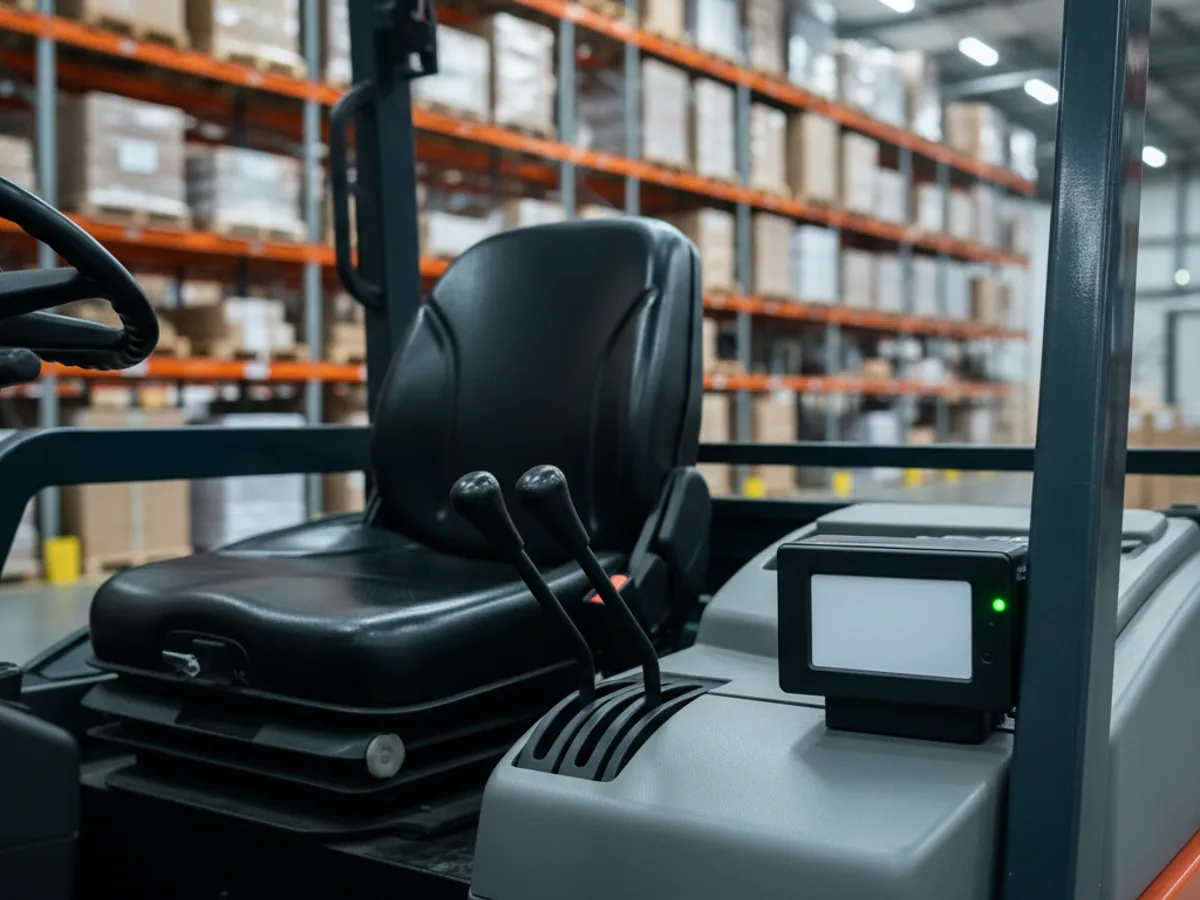
The operator presents a personal RFID card to the reader in the cab. If the card is not registered or is not authorised for that machine, starting can be blocked through a relay. The same cards used for entering the warehouse are often used, provided the card standard matches the reader.
The system keeps a log:
- who worked, when, and on which machine;
- how long each operator worked during the shift;
- attempts to start with someone else's or an unauthorised card.
The list of authorised operators and the expiry of their licences is maintained by your health and safety officer: the system applies that list but does not replace it.
A link to the WMS: what is possible and what it takes
The WMS knows which task was being carried out; telematics knows what the machine was doing at the time. Put them together and you can answer questions such as why picking in zone B is slower or how many machine hours go into one dispatch.
The exchange is built on the Wialon API and your WMS's own interfaces. The usual options are:
- exporting engine hours, impacts and the operator log to the WMS or the accounting system once a shift;
- passing the forklift's current zone to the WMS, if the warehouse has indoor mapping;
- matching WMS tasks against equipment activity in a report, on the customer's side or in BI.
There is no ready-made connector for every WMS. The amount of work depends on which interfaces are open in your system and who on the warehouse side is responsible for the integration. More about the options on the ERP and CRM integration page.
Optimising the equipment fleet
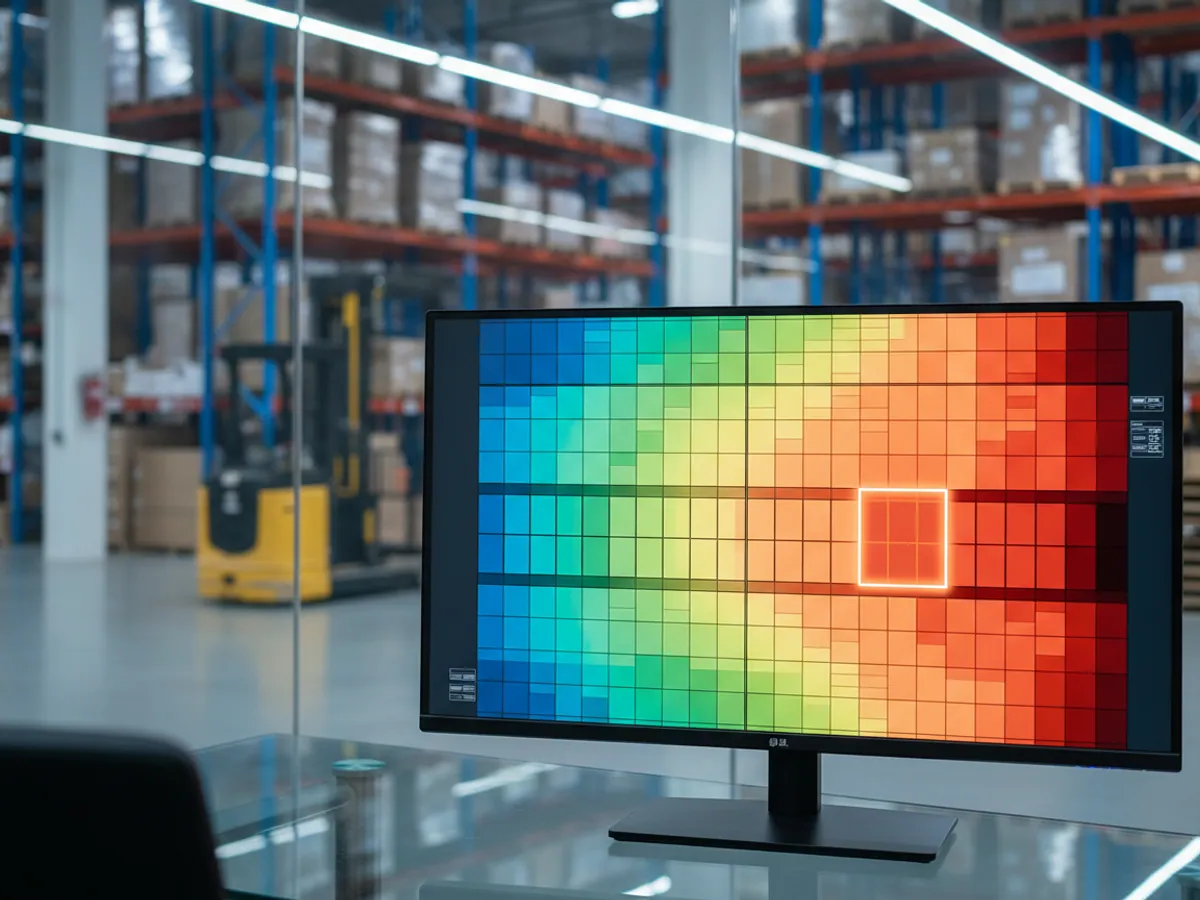
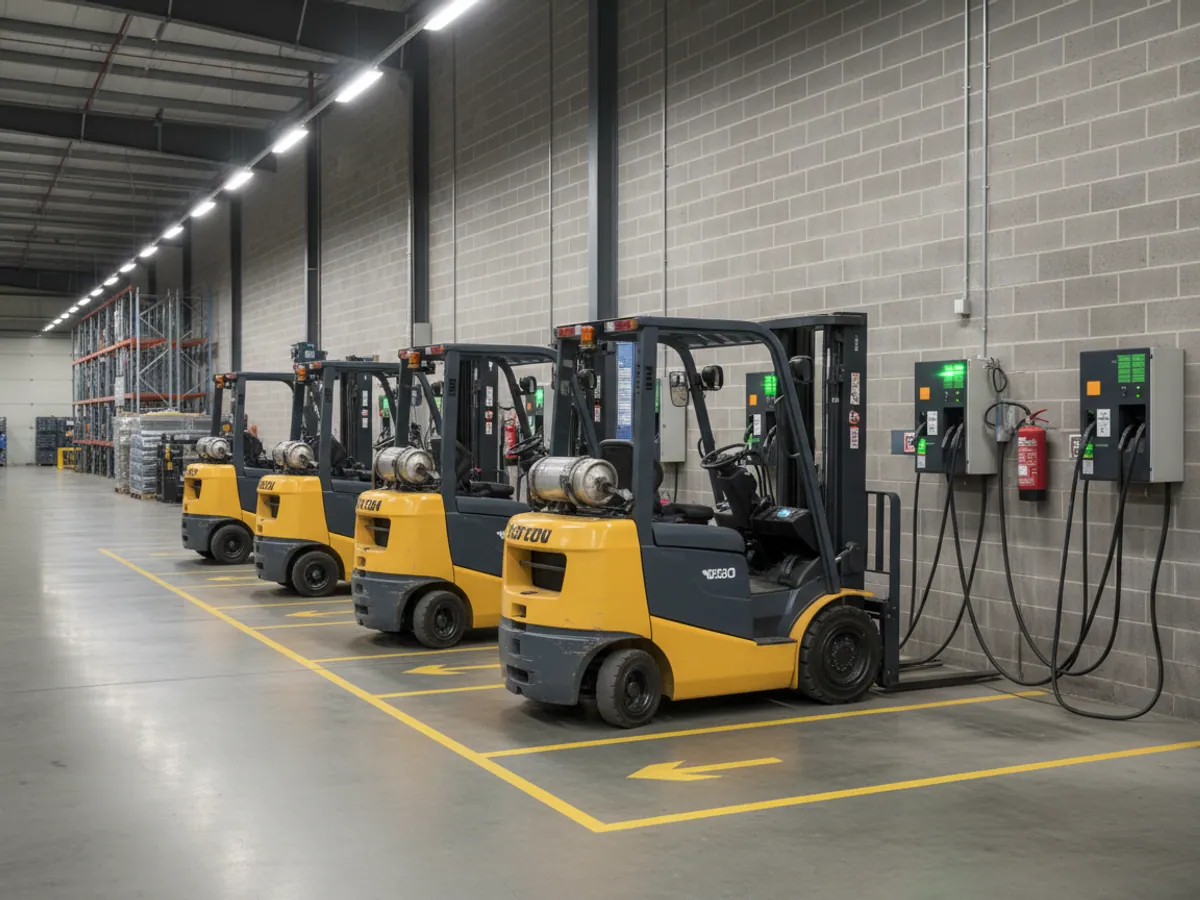
Utilisation data shows how many forklifts your warehouse needs for its current volumes and peaks. Quite often it turns out that the problem is not the number of machines but the shift pattern, the movement routes or the queue at the charging point.
Before cutting or expanding the fleet it is worth looking at data covering at least a few weeks, including the peak days. A one-off measurement in a quiet week will give a misleading picture.
Ahead of seasonal peaks, before Novruz or the sales for instance, the history of previous periods shows how many extra machines will be needed and for how long to hire them.
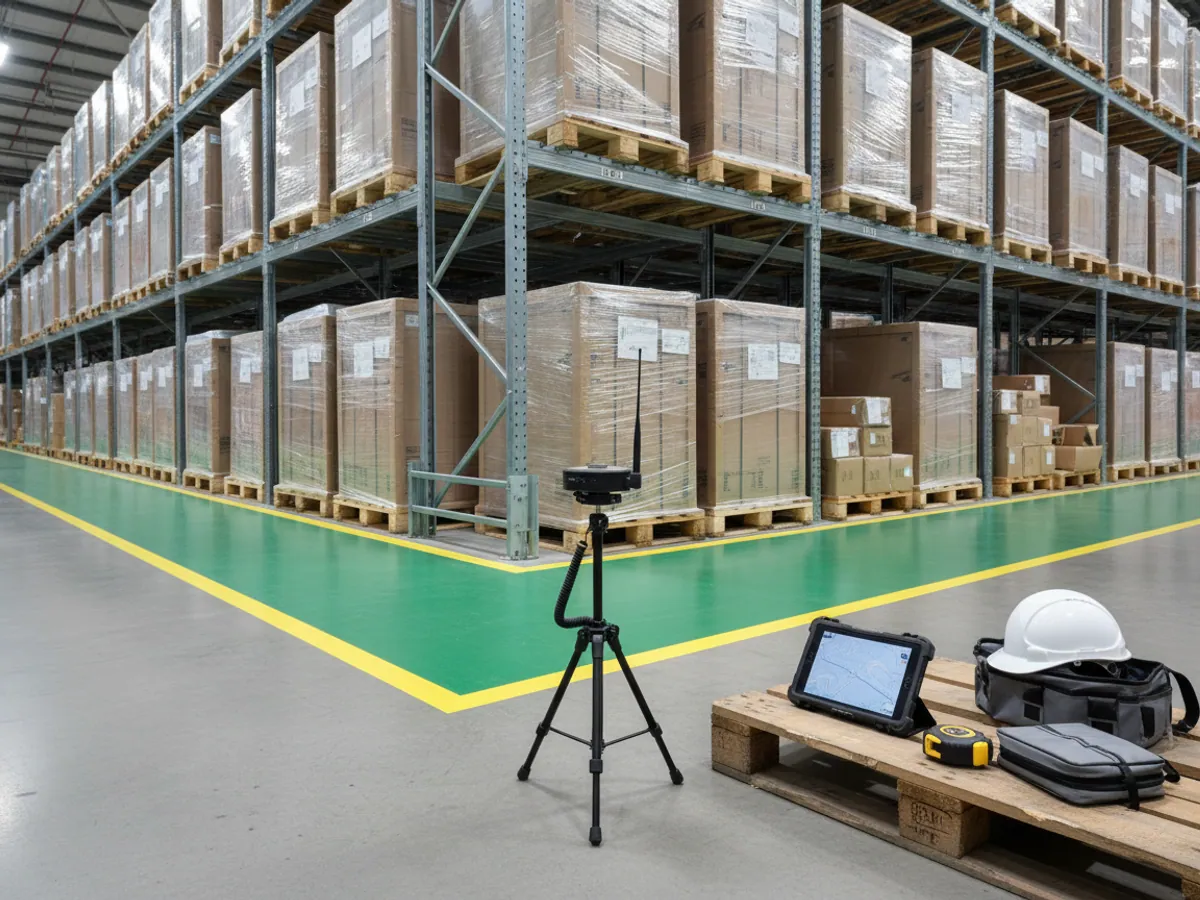
A warehouse pilot: survey, requirements and sign-off
A warehouse pilot begins not with fitting trackers but with a survey. The engineer looks at the equipment (models, power supply, where to fit the reader and the tracker) and, if indoor positioning is needed, measures the radio environment in several aisles.
What we need from the warehouse:
- a warehouse plan with zones, gates and pedestrian walkways;
- a list of machines and of operators with their authorisations;
- access to the building during working hours for measurements with the racking loaded as normal;
- a responsible person at the warehouse and, if a WMS link is wanted, a contact for its administrator.
We agree the sign-off criteria in advance, for example: the operator log matches the timesheet; impacts are recorded without a stream of false triggers; where there is indoor mapping, the forklift is placed in the correct zone at the check points; and the utilisation report for each machine per shift is produced automatically.
An example of a shift report: machine, operator, engine hours moving and with a load, idle time, and the number and force of impacts with their time and zone.
What monitoring warehouse equipment gives you
Occupational safety
Card-based authorisation and impact recording help in investigating incidents and in keeping outsiders off the equipment. The result depends on how the warehouse acts on the data.
Goods kept intact
Impacts and sharp manoeuvres are visible for each operator, so they can be discussed and reduced rather than discovered from broken stock.
Discipline
A shift log based on cards creates personal responsibility: you can see who was on the machine at the moment of an incident.
Fleet decisions based on data
Actual utilisation of each machine and engine hours for servicing help in deciding whether new forklifts are needed and in planning maintenance.
Frequently asked questions (FAQ)
What is used in this sector
What we do end to end
Wialon modules for this sector
How it is used in this industry
Case studies from “Logistics & Warehousing”
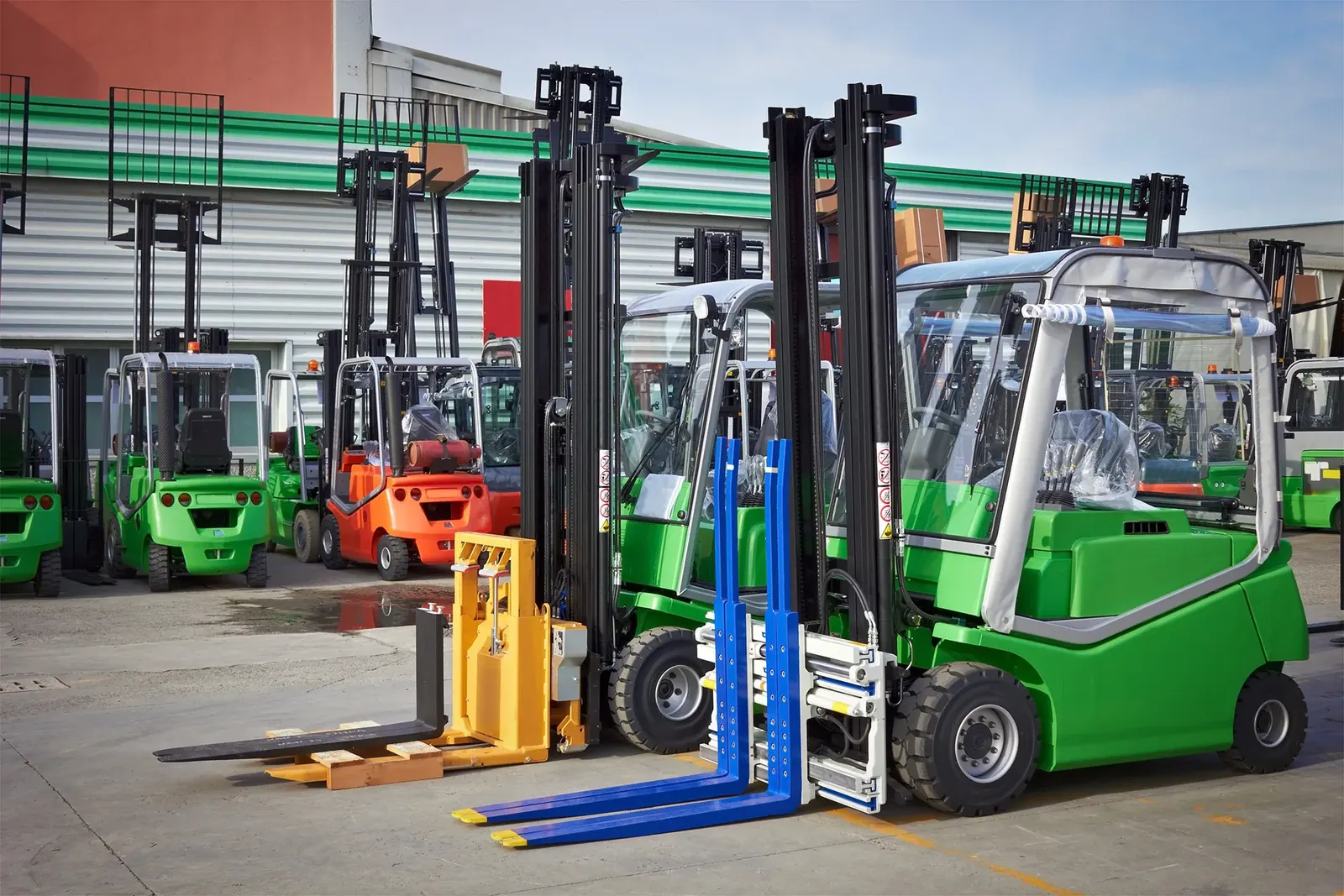
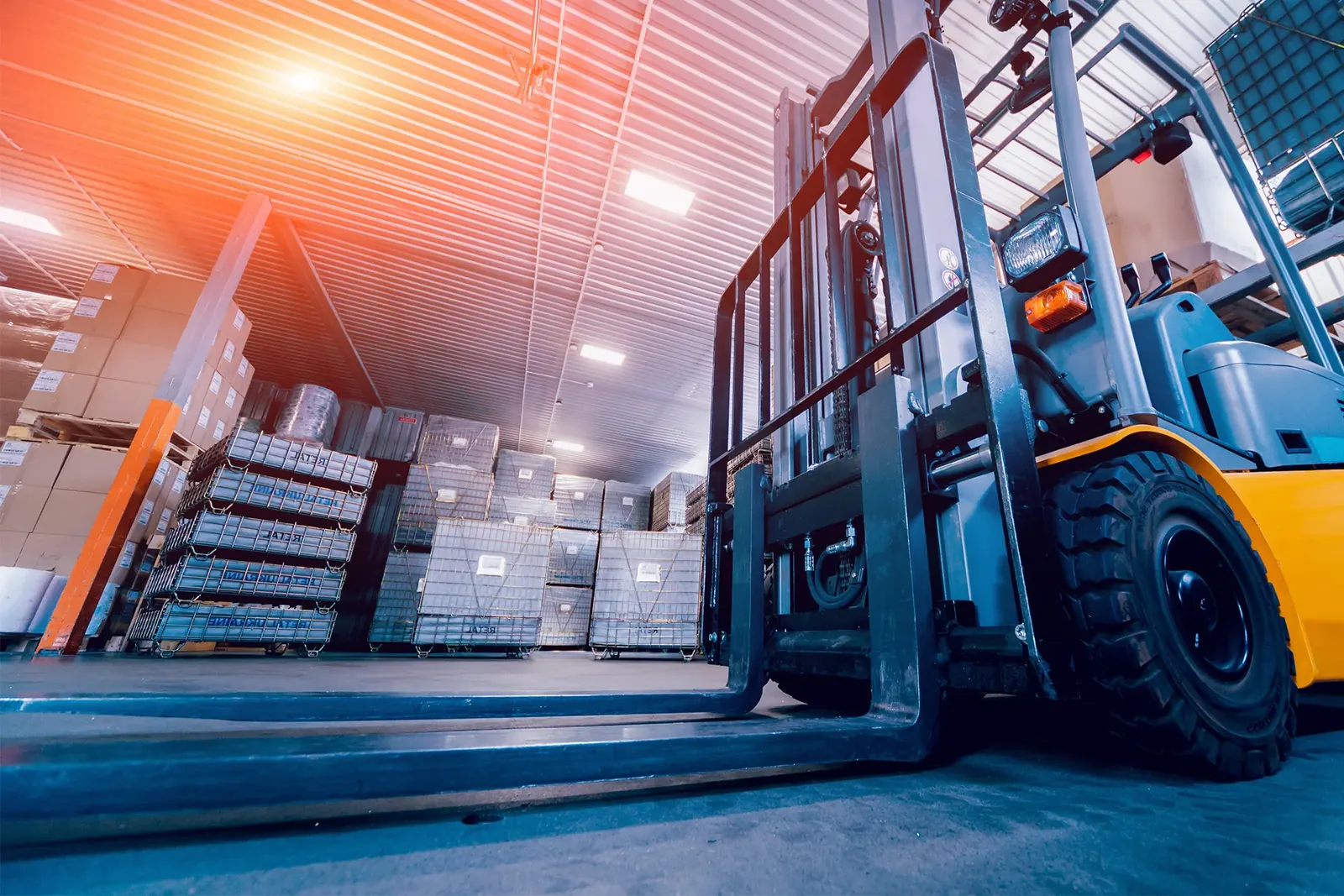
Thinking of rolling out GPS monitoring in “Warehouses and distribution centres”?
Send us an enquiry and we will price it up for your fleet and pick the hardware for this sector: logistics & warehousing.
- 1 We pin down the task
A specialist calls back and asks about the vehicles, how many there are and what you need to keep an eye on.
- 2 We put a solution together
We propose the hardware and the features, and set out the one-off and the monthly cost separately.
- 3 We agree the fitting
At your yard or at ours, on a schedule that keeps the vehicles working.
Request a call
A specialist will call back and match a solution to your fleet and your task.