
Monitoring electric forklifts with the FTC305
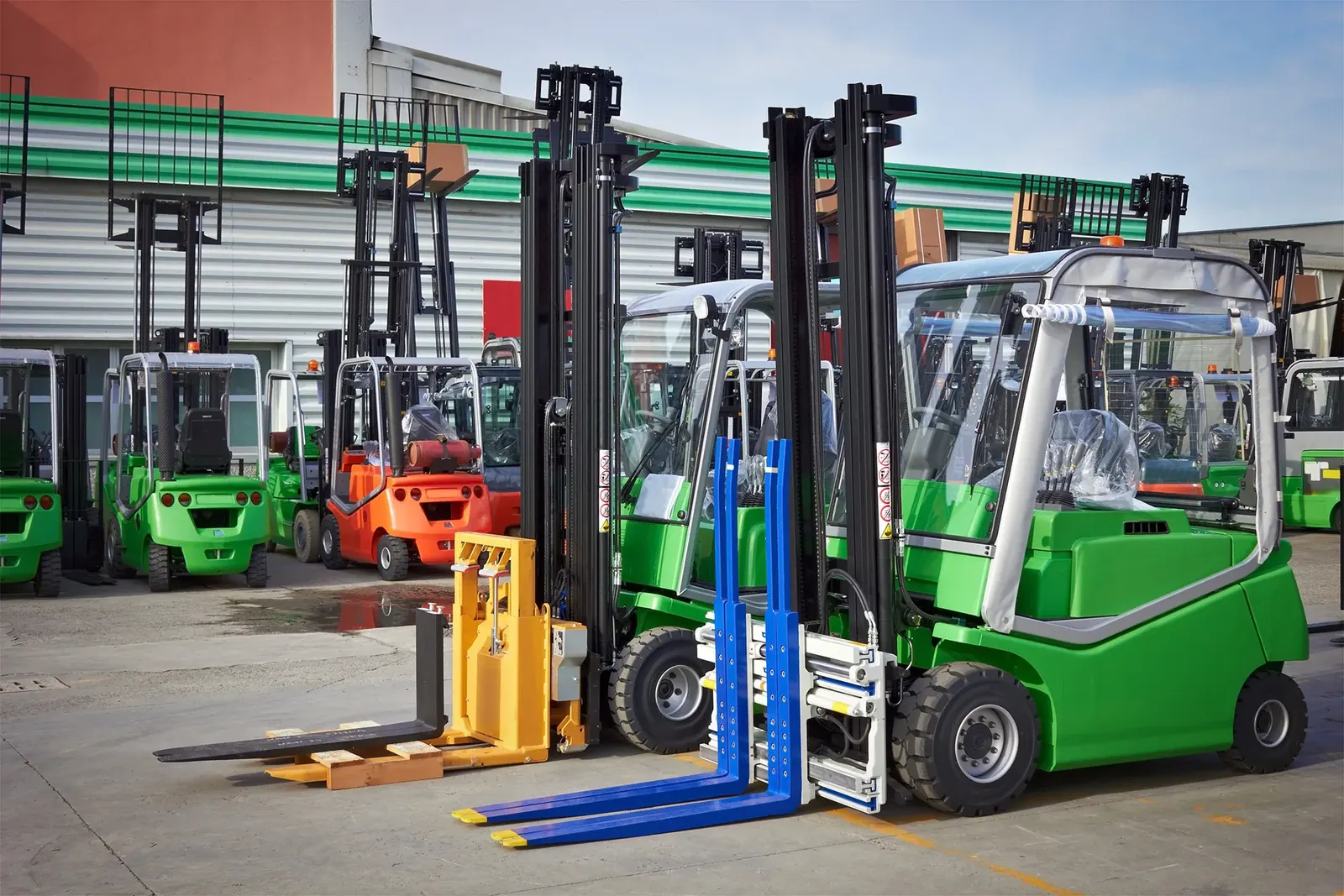
Teltonika proposes fitting electric forklifts with the FTC305 tracker: it runs off the traction battery at up to 97 V and shows how the machine is working, its charge, impacts and who is operating it.
Teltonika proposes fitting electric forklifts with the FTC305 tracker: it runs off the traction battery at up to 97 V and shows how the machine is working, its charge, impacts and who is operating it. In a warehouse or a production hall a forklift is rarely where the manager can see it. It can stand half a shift with a flat battery, run without its scheduled inspection until the first serious breakdown, or be driven by somebody who has no authorisation. While nobody can see this, the warehouse loses orders and repairs cost more than prevention would have. The Teltonika solution is built on the FTx305 series tracker, which collects data from each machine and sends it to the server. The fleet manager gets not a general impression that the forklifts seem to be working but figures for every unit: how many hours it is actually in use, how the charge is consumed, who is at the controls and what happened before a breakdown.
What this scenario solves
A forklift can stop mid-shift simply because the battery is flat, and this comes to light when the load is already waiting.
A warehouse manager usually does not know how many hours each forklift actually works in a shift.
A fault is found when the repair is already urgent and expensive.
Operators without authorisation, and those who race up the aisles, cannot be identified from paper logbooks.
A forklift can stop mid-shift simply because the battery is flat, and this comes to light when the load is already waiting. A warehouse manager usually does not know how many hours each forklift actually works in a shift. A fault is found when the repair is already urgent and expensive. Operators without authorisation, and those who race up the aisles, cannot be identified from paper logbooks.
An electric forklift is expensive equipment, and the cost of ownership is not only the purchase price. Added to it are the traction battery and the charger, regular servicing, electricity, and downtime that cannot be forecast without data.
The battery is not a simple matter. The life of a traction battery depends on how it is charged: how deeply it is discharged, how often it is put on an opportunity charge mid-shift, how long it spends charging. Left unmonitored, the battery has to be replaced before its time and the forklift stands by a socket in the middle of a despatch rush.
In describing the solution Teltonika cites research showing that preventive maintenance reduces equipment downtime by 30–50% and extends a forklift's service life by 20–40%. A planned stop for servicing is downtime too, but it is shorter and cheaper than a sudden breakdown. The trouble is that without engine hours data, servicing is scheduled by the calendar or by when something starts knocking.
The second task is fleet utilisation. In one place three machines work without a break while two stand in a corner. Without usage statistics it is hard to tell whether the warehouse has enough forklifts, how to redistribute them between areas and whether more should be bought. Safety is a subject of its own. Speeding in narrow aisles, harsh braking with a raised load, collisions with racking and with people — all of it happens, but it only reaches a report when someone is hurt or equipment is broken.
What Teltonika offers
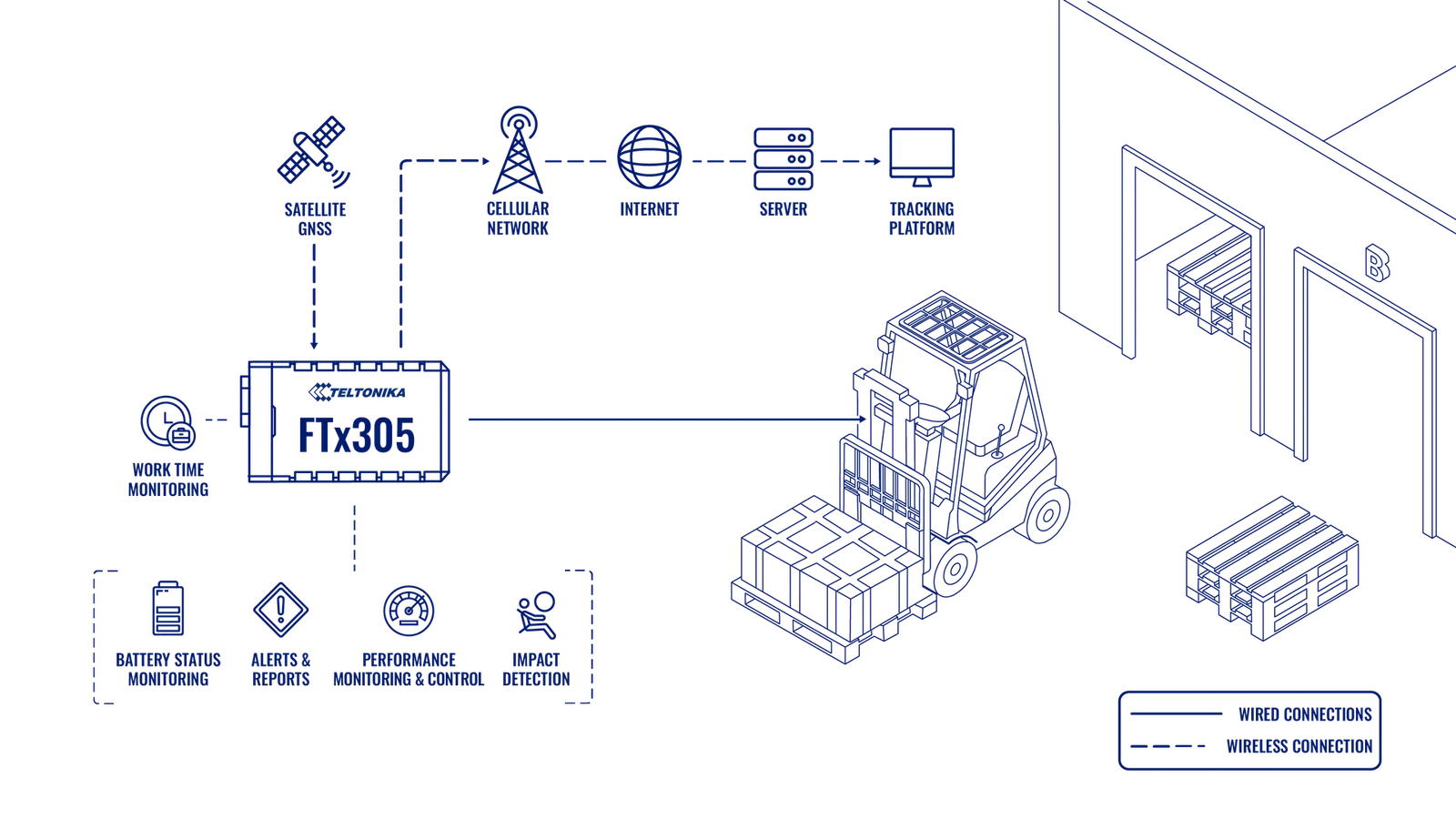
Each forklift gets an FTC305 tracker, which connects to the traction battery and reports engine hours, charge, speed, impacts and operator data to the server.
Installation and setup
Fitting the device and configuring it for the fleet scenario at hand.
Data transfer
The device collects data and sends it to the monitoring platform; how often depends on the model and its settings.
Analysis and control
The person in charge gets reports and alerts and looks into what stands out.
FTx305 is Teltonika's series for electric vehicles. Its main feature is a 10–97 V supply range, which means the tracker connects directly to a forklift's traction battery with no step-down converters. The housing is compact and protected against water and dust to IP67, which matters for machines that work in open yards and get washed. Inside are high-gain GNSS and GSM antennas, Bluetooth Low Energy and a 380 mAh internal cell that keeps the device online if the main supply is lost. The series includes the FTC305 with LTE Cat 1 and the FTM305 with LTE Cat M1.
How it works. A tracker is fitted to each forklift and configured for that particular model. From then on it reports location, movement, distance covered, speed, operating time and battery charge level to the server over the mobile network. The manager sees the whole fleet in one application from a computer or a smartphone and can open the history of an individual machine at any moment.
The most useful feature for electric plant is manual CAN scanning. Forklift manufacturers use their own protocols, and there may be no ready profile for a particular model. The FTx305 lets you configure by hand which parameters to read off the bus: controller fault codes, battery state, hours run. Real data on the condition of each machine makes it possible to schedule servicing on the facts rather than by the calendar, and to catch a fault before the forklift stops.
On the battery, the solution shows its current state on request. That helps you judge whether there is enough charge for a particular job and spot machines that are systematically run down to zero or left on charge too long.
For keeping track of operators, the iButton and immobiliser scenarios are used. The operator presents his key fob before starting work and the system knows who was driving the machine. If the key is not on the authorised list, the forklift can be prevented from starting. The same data shows the manager each employee's working time and driving manner.
If a collision happens, the crash detection and fall detection scenarios trigger. The tracker records the impact and the movement parameters at the moment of the event. That helps to work out what happened, find the cause and change the working rules in an area where incidents keep recurring.
One limitation has to be allowed for. Inside a closed warehouse under a metal roof, satellite positions are imprecise. For forklifts that never go outside, the real value is in engine hours, charge, operator identification and impacts, whereas an exact position in an aisle needs infrastructure of its own.
Compatibility with the BMS and the controller. Which battery parameters can be read depends on the forklift manufacturer and the charging system: on some, charge, current and fault codes are available over CAN; on others only part of that set, or nothing. Manual CAN scanning helps find the messages you need, but it takes time on one sample machine. So a pilot starts with one machine of each make and records which parameters actually come through.
Power and connectivity. The tracker is connected to the traction battery through a fuse, within the 10–97 V range. While the battery is out for servicing the device runs on its internal cell. Coverage inside the warehouse is checked in advance: if the signal is weak, the data builds up in memory and goes out when the forklift drives towards the doors.
What is needed from the client. A list of forklifts with makes, models and battery voltages, a list of authorised operators, the charging rules, and the servicing schedule currently in force.
What you get
Servicing by hours run rather than by the calendar
Engine hours and CAN data indicate when a machine needs checking, so there are fewer sudden breakdowns in the middle of a despatch.
You can see which machines stand idle
Usage statistics for each forklift reveal imbalances in workload and help decide whether to redistribute machines or buy more.
The battery lasts longer
Watching depth of discharge and charging time exposes the wrong charging habits that shorten a traction battery's life.
Only authorised operators at the controls
An iButton key and the immobiliser stop an outsider starting a forklift and tie every shift to a named person.
Less dangerous driving
Speeding, harsh acceleration and braking are logged, and collisions and falls are assessed from data rather than from written explanations.
Easier shift planning
The manager sees which machines are charged and free and allocates tasks without ringing round the warehouse.
Why this solution
For an electric forklift the key question is power. Ordinary vehicle trackers are designed for 12 or 24 V, whereas forklift traction batteries run at 48, 80 volts and more. The FTx305 works from 10 to 97 V and connects directly, with none of the adapters that become a point of failure in themselves.
Manual CAN configuration solves the second problem — the variety of models. One warehouse may run machines from three or four manufacturers, and a tracker that can only read a standard set of parameters will fail to understand half of them. The IP67 housing and the internal cell cover the everyday risks: washing, dust, the battery being disconnected for servicing.
Teltonika has been in telematics for a long time and produces a separate range for electromobility. Trackers in that range connect to the common monitoring platforms, so forklifts can be run in the same system that already holds the company's lorries and cars.
How this works in Azerbaijan. Fleets of electric forklifts are found at distributors and retail chains on the Absheron peninsula, at the warehouses by the port in Alat, at production sites in Sumgait and at large wholesalers in Baku and Ganja. Clients most often come with one of two questions: why the forklifts spend so much time under repair, and why the batteries have to be replaced early. In summer, in unheated warehouses and open yards, the temperature climbs above +40 °C, and a battery in that heat degrades faster — so monitoring charging habits is particularly useful here. When implementing this we establish the traction battery voltage and the forklift make in advance, so we can check which parameters can actually be read off CAN. For warehouses with poor coverage inside the building we choose the operator on the basis of a survey: Azercell, Bakcell or Nar. GPS.az fits the FTC305, configures the iButton and immobiliser scenarios and brings the forklifts into Wialon alongside the rest of the vehicles, with reports on engine hours, operators and events.
Related case studies
Related rollouts and equipment
Questions about the “Monitoring electric forklifts with the FTC305” scenario
Request a call
A specialist will call back and match a solution to your fleet and your task.