
Trailer data over EBS with no extra sensors
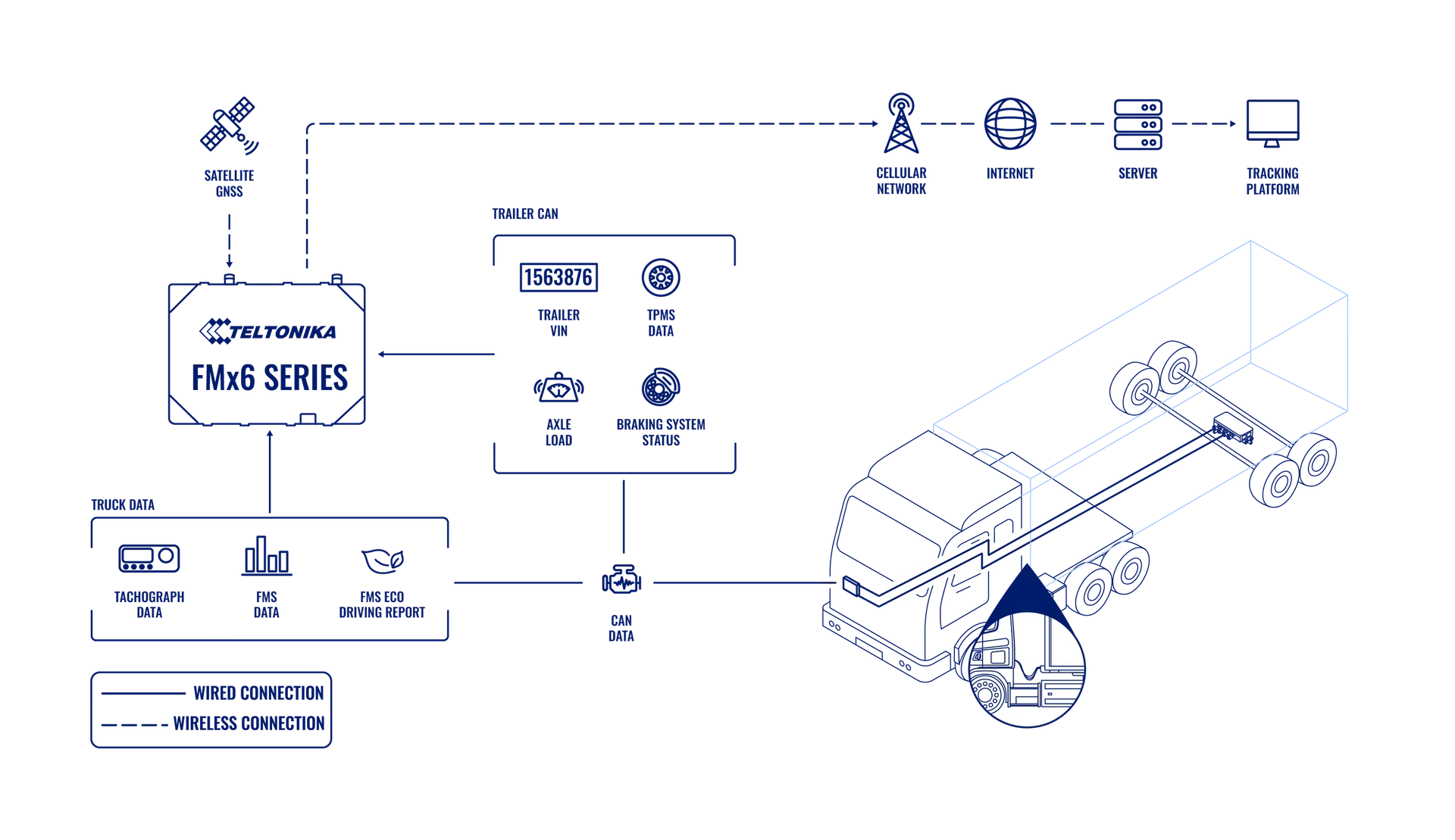
An FMC650 tracker in the tractor unit uses the TrailerCAN function to read data from the trailer's electronic braking system (EBS): the VIN, the brakes, axle loads and tyre pressures, so a separate tracker on the trailer is not needed.
An FMC650 tracker in the tractor unit uses the TrailerCAN function to read data from the trailer's electronic braking system (EBS): the VIN, the brakes, axle loads and tyre pressures, so a separate tracker on the trailer is not needed. Keeping an eye on a tractor unit is simple; on a trailer it is harder. Usually that means fitting a second device, buying sensors and running wiring, and customers dislike all of it because of the cost and the bother. In the Teltonika scenario you make do with what is already there in the combination itself. A modern tractor unit and trailer exchange data constantly over EBS in order to coordinate braking. Trackers in the FMx650 series can tap into that exchange and take the trailer information out of it. The solution suits hauliers and companies that hire trailers out alike.
What this scenario solves
A driver can set off with the wrong trailer by mistake, and it only comes to light on the road.
Drivers forget to connect external sensors on the trailer, and the data goes missing.
Under-inflated trailer tyres raise fuel consumption imperceptibly.
Regulators increasingly demand separate data on the trailer.
A driver can set off with the wrong trailer by mistake, and it only comes to light on the road. Drivers forget to connect external sensors on the trailer, and the data goes missing. Under-inflated trailer tyres raise fuel consumption imperceptibly. Regulators increasingly demand separate data on the trailer.
The cargo travels in the trailer. A refrigerated unit carrying medicines or a tipping semi-trailer full of aggregate — the value of the load is always at the back. That is why interest in trailer telematics is growing fast: Berg Insight forecasts (2025) that by 2028 there will be 22.4 million trackers fitted to freight units worldwide. Along with that grows the amount of equipment and data that has to be maintained.
Visibility breaks down over small things. If the trailer is not identified in the system automatically, a coupling error surfaces when the vehicle is already under way. Putting it right means phone calls, a repositioning run and a knock to the schedule. The coupling of tractor unit and trailer is standardised to ISO, but every additional sensor and every extra step for the driver adds complexity and another chance to get it wrong.
On the road the state of the trailer hits the purse. Fuel accounts for up to 30% of a fleet's costs. It is usually tackled through driving style, refuelling at partner sites and routing, while trailer tyres get less thought. With under-inflated tyres rolling resistance rises: a loss of 5% of pressure gives roughly 1% of extra consumption over a run. In the EU, TPMS requirements for new heavy trailers in categories O3 and O4 have applied since 7 July 2024. Applicability to trailers already in service needs separate assessment.
Regulators also look at the trailer as a separate unit. In the UK, DVSA guidance expects at least four laden brake tests a year when a suitable EBPMS is not used. Remote trailer data transmission alone does not replace those tests. In Switzerland the electronic road charging system takes money for trailers as well. Requirements like these are spreading, and trailer data is becoming necessary for compliance.
What Teltonika offers
One tracker in the FMx650 series is enough for the whole combination: the tractor unit and trailer exchange data over EBS in any case, and the TrailerCAN function takes the trailer's VIN, the state of the brakes, the axle loads and the tyre pressures out of that exchange.
Installation and setup
Fitting the device and configuring it for the fleet scenario at hand.
Data transfer
The device collects data and sends it to the monitoring platform; how often depends on the model and its settings.
Analysis and control
The person in charge gets reports and alerts and looks into what stands out.
How the exchange works. On coupling, the EBS modules of the tractor unit and the trailer link up through a standard electrical connector. The tractor unit coordinates braking of the whole combination, keeps an eye on tyre pressures and on how the safety systems are working, so the data flows continuously while the trailer is connected. TrailerCAN reads that flow.
Three ways of connecting.
Through the tractor unit's CAN bus. When the trailer is coupled, the FMx650 receives data about it straight from the lorry's bus. To avoid harming the wiring and losing the vehicle warranty, Teltonika recommends the contactless ECAN02 adapter.
Directly to the trailer's EBS module. The tracker is connected to the module's diagnostic or other CAN line through an OEM cable for the particular EBS manufacturer.
Through the trailer's ISO 7638 socket. The FMx650 is connected to the seven-pin ISO 7638 socket through which the trailer receives power and the EBS connection.
Which option to choose. If only the trailer matters — on hire, for instance, or at a company that owns trailers but not tractor units — connection to the EBS module or to the ISO 7638 socket is more convenient. The tracker stays on the trailer, whichever tractor unit is pulling it.
The full picture. If a fleet needs both the tractor unit and the trailer, the best option in Teltonika's view is an FMC650 in the tractor unit's cab. The tracker takes the lorry's data through an FMS cable and at the same time reads the trailer information from the EBS network through the ECAN02. One device, one SIM card, one unit in the monitoring system.
What that gives you on the tractor unit. FMS data allows fuel and repair costs to be reduced through the built-in driving style assessment. Tachograph data helps plan runs around drivers' hours, avoid fines and hold to the delivery schedule more accurately while allowing for refuelling at partner sites.
What that gives you on the trailer. The VIN, the state of the braking system, the axle loads, the TPMS readings and the operation of dynamic assistance systems such as traction and stability control are all visible in real time. The dispatcher can see immediately which trailer is coupled up and whether it is overloaded, and the mechanic gets a warning of a drop in tyre pressure before the driver notices it himself.
What this looks like in service. At a terminal a driver has coupled up the neighbouring trailer with a similar number. A minute later a VIN appears in the system that does not match the run order, and the dispatcher rings the driver before he has even left the yard. Without TrailerCAN the mistake would have been discovered at the customer's premises.
What the tracker knows about the trailer and what it does not. If the FMC650 is in the tractor unit, EBS data arrives only while the trailer is coupled: once uncoupled, the trailer stays at the last coupling point and its brakes and tyres are no longer visible. If a trailer travels behind tractor units of different hauliers, a tracker on the trailer itself, connected to the EBS module or the ISO 7638 socket, is more dependable. It works as long as there is power from the tractor unit, and for long periods standing you need a self-contained tracker. EBS says nothing about the load inside apart from the axle loads: for temperature or doors you need separate sensors. With no mobile network the tracker stores the data up and sends it on later.
What you get
The trailer identifies itself
The FMx650 reads the VIN on coupling, and the dispatcher knows exactly which trailer is travelling with which vehicle, with no mix-ups at loading.
The trailer's condition on screen
Brakes, tyre pressures and axle loads are visible in real time, and a fault is caught before a breakdown.
Fewer unscheduled repairs
Servicing is planned from data rather than after a failure, and trailers do not stand idle waiting for an urgent repair.
Savings on tyres and fuel
A drop in pressure is noticed at once, and even a 5% loss gives about 1% of extra consumption over a run.
One tracker instead of two
An FMC650 in the tractor unit sees both the vehicle and the trailer, with no separate device to fit and maintain.
Flexible fitting
The tracker goes on the tractor unit or on the trailer, depending on who owns the fleet and what data is needed.
Why this solution
The TrailerCAN function is built into the FMx650 series trackers rather than sold as a separate module. That same FMC650 works with FMS, the tachograph and the lorry's CAN, so a fleet gets tractor unit and trailer data from one device and one source. For connection without interfering with the wiring, Teltonika has its own ECAN02 adapter.
Three connection options make the solution applicable to different business models: a haulier with its own tractor units and trailers, a leasing or hire company answerable only for the trailers, and mixed fleets.
An honest limitation: TrailerCAN only works with trailers that have EBS and that transmit the data needed. On older trailers with no electronic braking system there will be no data on brakes, axles or tyres, and for those a self-contained tracker and separate sensors remain the answer. The set of parameters available depends on the EBS manufacturer and the trailer model, which is worth checking on one vehicle before buying for the whole fleet.
How this works in Azerbaijan. The scenario is of interest to international hauliers carrying loads along the Middle Corridor through the port of Alat, along the M-2 into Georgia and Turkey and on into Europe. On entering the EU, which requirements apply to a trailer depends on its category, registration and type of operation, so we check that route by route. TPMS and braking system data is no less useful there than the fuel saving. For companies whose tractor units and trailers swap around at the terminals in Baku and Sumgait, automatic identification of the trailer by VIN takes the confusion out of coupling. Summer heat on the roads of the Kura-Araz lowland raises tyre pressures and temperatures, and TPMS monitoring helps spot a problem in time. Fleets are often mixed, with newer European trailers and older ones without EBS, so we start by checking what data each type of trailer actually gives out. GPS.az fits the FMC650 with an ECAN02 or connects the tracker to the EBS module and the ISO 7638 socket, sets up TrailerCAN and presents the trailer data in Wialon along with reports and notifications on tyre pressures and the braking system.
Related case studies
Related rollouts and equipment
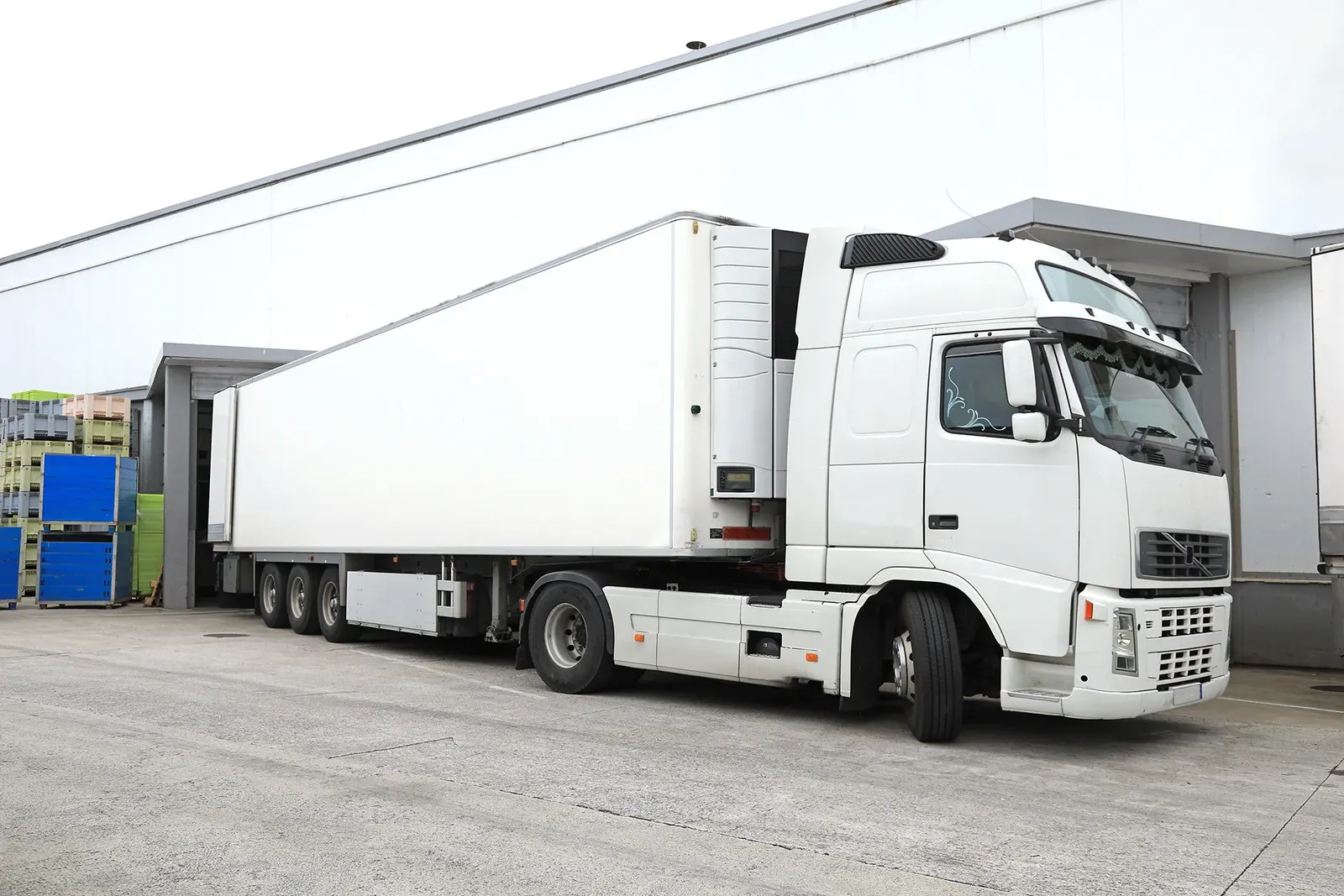
Cold chain: temperature recorder plus FMC650 tracker
Logistics and delivery
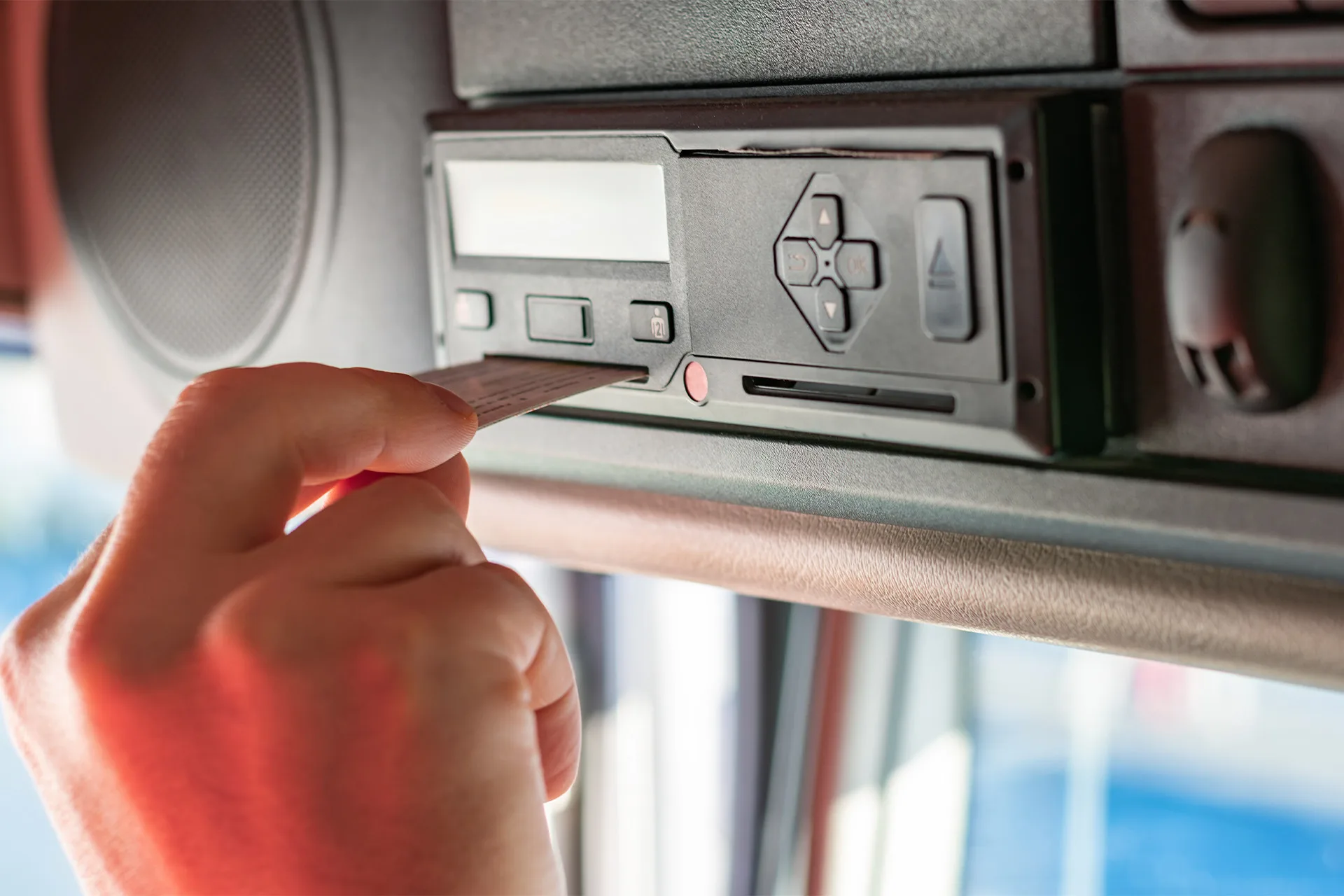
Remote tachograph downloads through the FMC650
Logistics and delivery

Remote reading of DTC faults on lorries
Logistics and delivery
Questions about the “Trailer data over EBS with no extra sensors” scenario
Request a call
A specialist will call back and match a solution to your fleet and your task.