
Automatic locking for a courier van
A Teltonika FMB130 tracker with a CAN-CONTROL adapter locks a delivery van by itself if the courier has gone off to the customer and left the doors unlocked, and the vehicle can then only be opened through the dispatcher or an app.
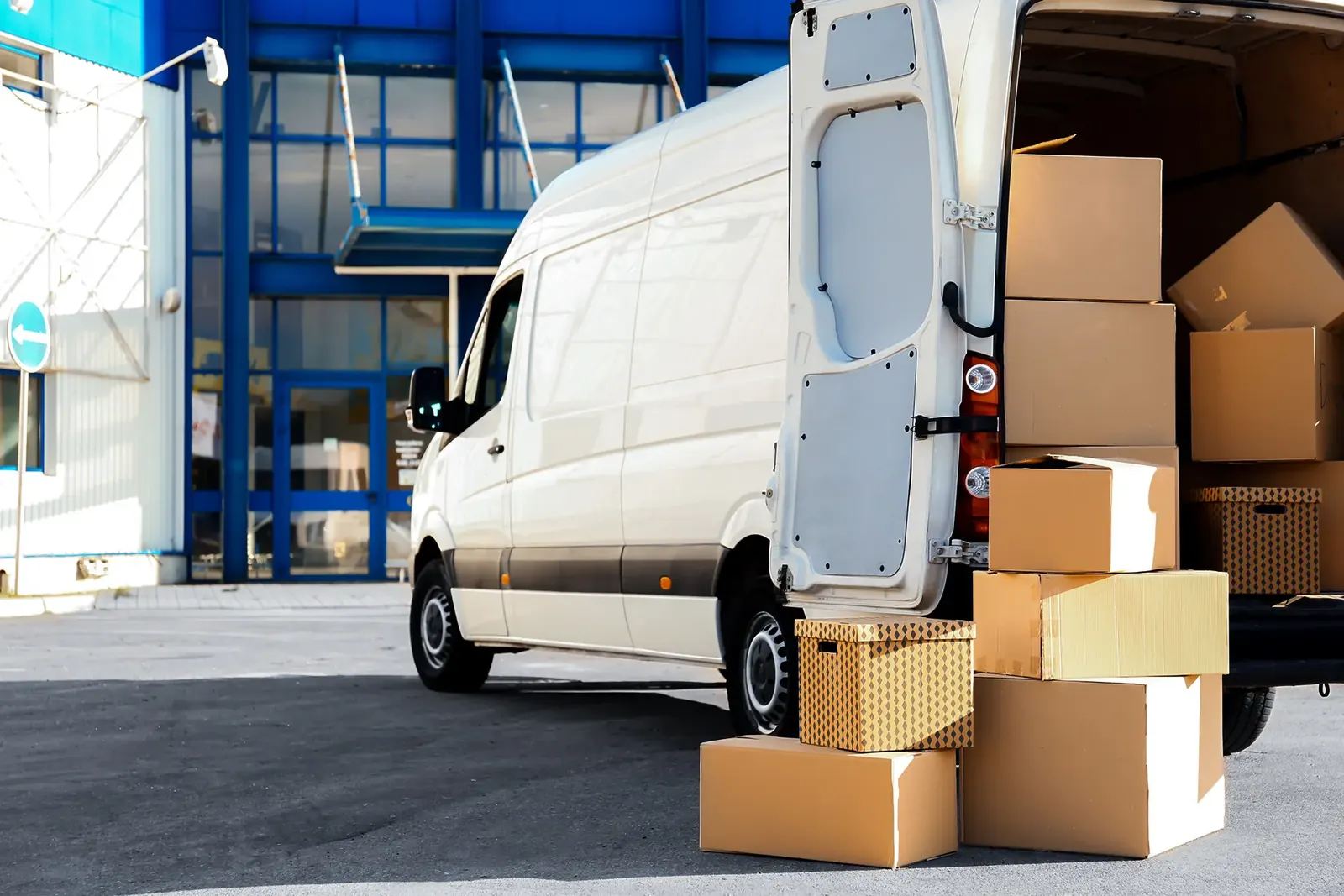
A Teltonika FMB130 tracker with a CAN-CONTROL adapter locks a delivery van by itself if the courier has gone off to the customer and left the doors unlocked, and the vehicle can then only be opened through the dispatcher or an app. The pandemic got people used to ordering everything to their door, and delivery volumes grew several times over. Thefts grew along with them: parcels from doorsteps, goods from vans, and sometimes the vans themselves. The courier is in a hurry, runs from the vehicle to the entrance twenty times a shift, and sooner or later leaves the vehicle unlocked, or even with the key in the ignition. In this case study Teltonika shows how to close that gap without expensive security systems, working directly through the vehicle's CAN bus.
What this scenario solves
Parcel theft has become a mass phenomenon.
In the United States alone, according to figures cited by Teltonika, 1.7 million parcels are stolen or lost, costing retailers roughly $9 billion a year.
Between March and May 2020, about 20% of American households reported a delivered parcel being stolen.
There are far more deliveries than there used to be.
Parcel theft has become a mass phenomenon. In the United States alone, according to figures cited by Teltonika, 1.7 million parcels are stolen or lost, costing retailers roughly $9 billion a year. Between March and May 2020, about 20% of American households reported a delivered parcel being stolen.
There are far more deliveries than there used to be. During the pandemic Walmart's online sales grew by 74% and Target's by 141%, while Amazon took on an additional 175,000 people to cope with the volume. More orders means more runs, more couriers and more stops outside front doors.
Couriers make mistakes. Some drivers systematically leave the vehicle unlocked while they carry a parcel in. Others leave the key in the ignition or on the seat. Sometimes the engine is left running to save time starting it again.
Thieves take advantage of this. An open van full of boxes outside a front door is easy pickings: minimal effort and almost no risk. While the courier is climbing to the fifth floor, several parcels can be carried out of the load compartment, or the whole vehicle driven away.
The company loses twice over. The stolen goods have to be made good, the customer does not receive the order on time and puts in a complaint, and the delivery service ends up with a poor reputation. Without telematics the dispatcher has no way of checking whether the courier locked the vehicle.
What Teltonika offers
The CAN-CONTROL adapter connects to the van's CAN bus and, together with the FMB130 tracker, sees that the ignition is off and that the doors have been opened and closed but left unlocked. After 15 seconds the doors lock automatically, and the load stays under lock and key even if the courier forgot.
Installation and setup
Fitting the device and configuring it for the fleet scenario at hand.
Data transfer
The device collects data and sends it to the monitoring platform; how often depends on the model and its settings.
Analysis and control
The person in charge gets reports and alerts and looks into what stands out.
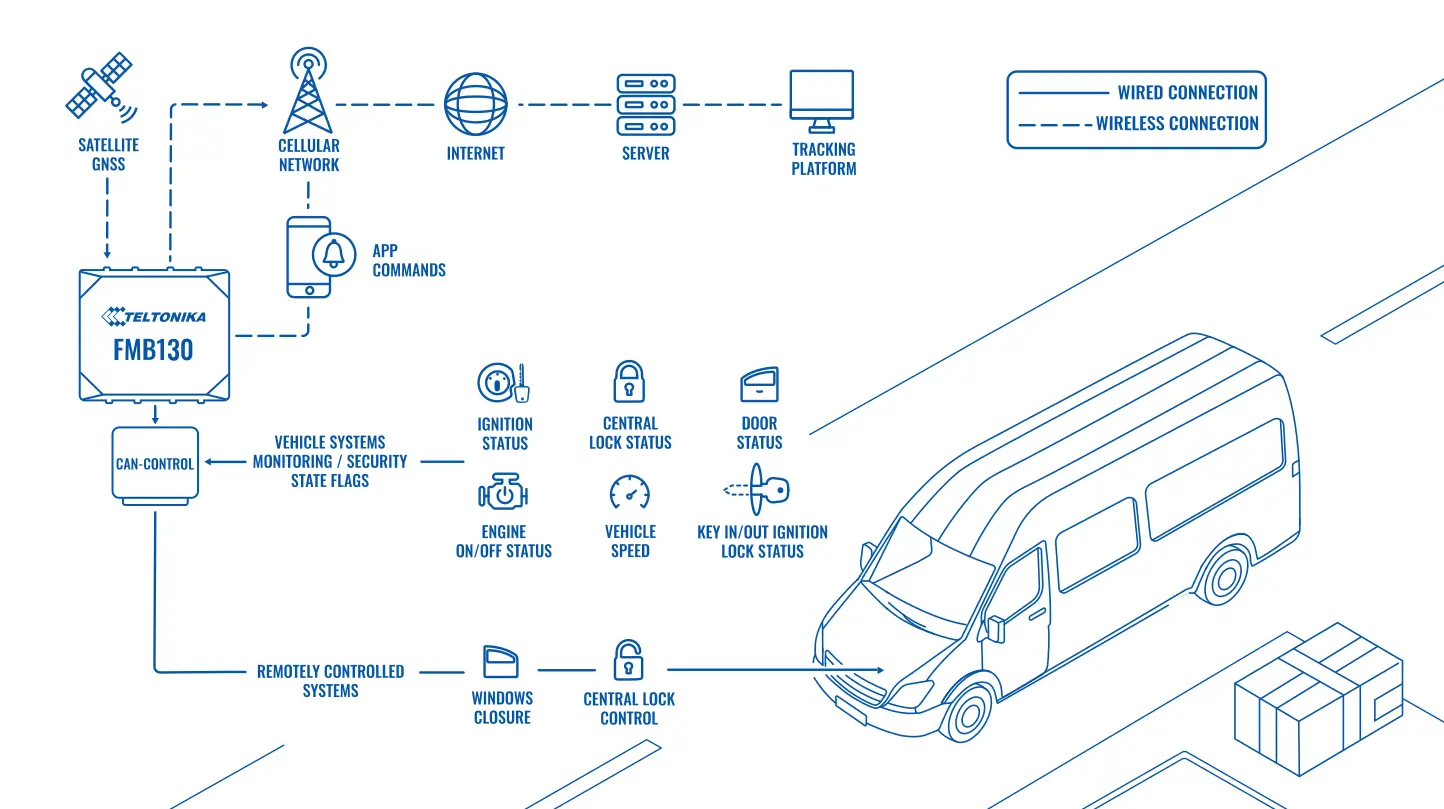
What is fitted in the vehicle. A Teltonika FMB130 tracker built on a modern platform, and a CAN-CONTROL adapter. The adapter connects straight to the vehicle's CAN line, so no separate relays or expensive security systems are needed to control the locks. The list of supported vehicle models runs to more than 1300 and keeps growing.
What the tracker knows about the vehicle. Through CAN-CONTROL, safety flags go to the server: whether the ignition is on, whether the key is in, whether the front, sliding and rear doors are open or closed, and whether they are locked. The FMB130's built-in accelerometer confirms that the vehicle is standing still.
How automatic locking works. The scenario is a typical one: the courier has stopped, switched off the engine, taken a box, slammed the sliding door and walked off to the front door without pressing the lock button. The system sees that the vehicle is stationary and the doors are closed but not locked. According to the settings made in advance, a command goes out after 15 seconds and all the doors lock. The parcels are safe, even though the courier slipped up.
Why 15 seconds in particular. It is enough for the courier to get the parcel out and walk away, but not enough for a thief waiting by the entrance to come over and open a door. The delay is set in the configuration and is worth choosing to match the real rhythm of the work: when unloading at a shop, where the load compartment is opened many times in a row, too short a timer will start getting in the courier's way and he will look for a way round it.
If the key is left inside. It happens: the vehicle has locked itself and the key is lying on the seat. There are two ways of opening it.
The first is to ring the monitoring centre. The dispatcher checks the situation and sends an unlock command through the server. That call in itself works as a disciplinary measure: every such request is recorded, and if they recur the company can apply penalties under its own internal rules.
The second is a mobile app, which the company either builds itself or commissions from outside developers. The courier opens the vehicle from his own phone, every such action is written to a log, and where it is abused measures can be applied to the driver too.
Control by command. Besides the automatic behaviour, the dispatcher can lock the doors or close the windows remotely with a command over GPRS or SMS. That is useful if the driver has reported leaving the vehicle open, or if the tracker's data shows that the van is standing unlocked.
CAN data for the fleet. The same adapter reads the bus parameters: fuel level and consumption, odometer mileage, engine revolutions and temperature, oil pressure, the state of the lights and the handbrake. The fleet manager sees where the money goes on maintenance and fuel, and plans servicing according to the real condition of the vehicles.
What automatic locking does not solve. If the courier has left the key in the ignition and the engine is running, an automatic locking scenario conditional on the ignition being off will not fire; separate rules are needed for that. And if the van is stolen after all, the tracker will show where it is, while getting the vehicle back is a job for the police.
Where else it comes in useful. The same arrangement suits car sharing, dealerships, hire and leasing companies — anywhere a vehicle is used by different people and it matters that it is not left open. The immobiliser function in Teltonika trackers additionally makes the van an awkward target for thieves.
What you get
The van is not left open
If the courier forgot to lock the doors, the system does it itself 15 seconds after he has walked away.
Locks without separate wiring
CAN-CONTROL operates the factory central locking over the CAN bus, so no relays or expensive security systems are needed, and there are more than 1300 supported models.
Couriers become more careful
Every request for an unlock is recorded, and together with an incentive scheme this soon breaks the habit of leaving keys and open doors.
Fewer thefts and fewer complaints
The load stays locked, parcels reach customers, and the delivery service neither spends money on reimbursement nor loses its reputation.
Vehicle data into the bargain
Fuel, mileage and the condition of the engine and lights from the CAN bus help cut maintenance costs and plan repairs.
Why this solution
The key thing in this solution is that it works through the CAN bus. Most modern vans control their locks over CAN, and the CAN-CONTROL adapter lets the tracker issue commands to the vehicle's factory system in the same way as the key fob does. That is cheaper and neater than cutting a relay into every lock, and when the vehicle is sold the adapter comes off without a trace.
The FMB130 is a tracker with a sufficient set of inputs and outputs, a built-in accelerometer and support for remote control over GPRS and SMS. It receives the safety flags from the adapter, takes a decision according to the configured scenario and at the same time performs the ordinary monitoring jobs: route, stops, speed, mileage.
The integration is open. Unlock commands can be sent from the monitoring server or from the company's own app, so the solution fits into a delivery service's existing processes.
Limitations: the list of supported models is large but not endless, and on a rare or older vehicle without CAN control of the locks automatic locking will not work. On such vehicles relays and the tracker's own inputs are used, but with a smaller set of capabilities. Before purchasing, it is worth checking compatibility for every model in the fleet.
How this works in Azerbaijan. Delivery in Baku has grown several times over in recent years: marketplaces, courier services, food and grocery delivery, distributors taking goods round the shops of Absheron and Sumgait. In the older districts of Baku a courier often cannot stop outside the entrance and leaves the vehicle in a courtyard or on the next street, sometimes for a while. It is exactly in situations like these that automatic locking insures you against theft. In summer drivers often leave the engine running for the air conditioning, and here data about engine running while parked also shows up the extra fuel being burned. When fitting the system we check whether CAN-CONTROL supports the van models in the particular fleet, choose the automatic locking delay to suit the couriers' real rhythm of work, and agree with the customer who will open vehicles remotely and how. GPS.az fits the FMB130 with CAN-CONTROL, configures the scenarios and brings the vans onto the Wialon platform, where the dispatcher sees door status, receives notifications about unlocked vehicles and can send a command to open or close them.
Related case studies
Related rollouts and equipment
Keeping track of trailers with EYE Bluetooth beacons
Logistics and delivery
Two trackers against the theft of leased vehicles
Car sharing and rental
Recording electric vehicle mileage without surveillance
Electric mobility
Questions about the “Automatic locking for a courier van” scenario
Request a call
A specialist will call back and match a solution to your fleet and your task.