
Car sharing: tracker, CAN-CONTROL and a camera
The Teltonika solution for car sharing: the FMC125 tracker, the CAN-CONTROL adapter and the DashCam camera give the operator the car's coordinates, remote control of the locks and video of any road traffic accident.
The Teltonika solution for car sharing: the FMC125 tracker, the CAN-CONTROL adapter and the DashCam camera give the operator the car's coordinates, remote control of the locks and video of any road traffic accident. Car sharing is growing fast: on the forecast Teltonika cites, by 2027 about 63.15 million people will be using it. The more cars and renters there are, the sharper the questions that rental businesses have always faced: who scratched the bumper, who was at fault in the accident, why the car is standing with a window open and an empty tank. In the Teltonika arrangement each of these jobs is covered by its own device, and the data come together in one monitoring system.
What this scenario solves
One renter in eight has taken a car that was already damaged before their trip began.
In a disputed road traffic accident, without video there is no way of proving who was actually at fault.
Some accidents are staged deliberately, to shift the blame and collect a payout.
The operator does not know whether the car is locked, where it is standing or how much fuel is in it.
One renter in eight has taken a car that was already damaged before their trip began.
In a disputed road traffic accident, without video there is no way of proving who was actually at fault.
Some accidents are staged deliberately, to shift the blame and collect a payout.
The operator does not know whether the car is locked, where it is standing or how much fuel is in it.
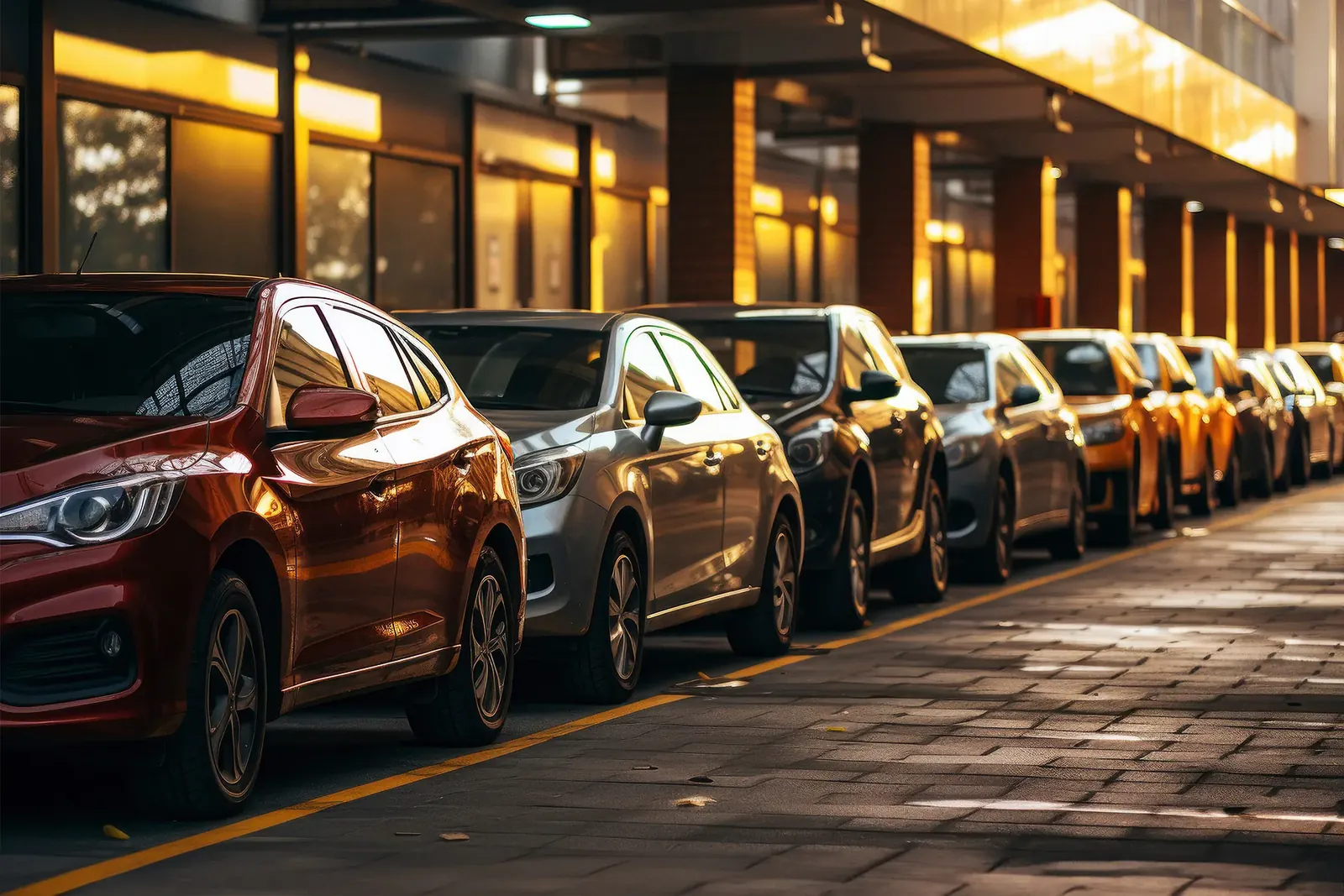
In car sharing there is a different person at the wheel every time. Some have twenty years of experience, others passed their test a month ago. Teltonika cites Forbes data: after car sharing appeared, the number of fatal accidents in cities grew by 2–4% each year. For the operator that is a direct risk: insurance, the car standing idle, repairs, court cases.
The hardest part of investigating an accident is the contradictory accounts. The renter insists he was cut up. The other party says the opposite. There are also staged accidents, arranged deliberately to collect compensation from a company that certainly has insurance. Without a video recording the operator loses disputes like that simply because there is nothing to show.
The second headache is damage between rentals. In a survey Teltonika cites, over five years 12% of renters, that is roughly one in eight, found that the car had been damaged before their trip. For an honest customer that means a spoiled impression and the risk of being blamed for the damage. For the operator it means money lost, because the real culprit can no longer be found.
And the third job is everyday operation. The car has to be unlocked for the customer without a key, locked after the trip, checked to make sure the windows are up and the lights are off; the range has to be known and the car sent for refuelling or charging in good time. Without access to the vehicle's own data, all of that means sending a member of staff out.
What Teltonika offers
For car sharing Teltonika puts together a set of three devices: the FMC125 handles position and communication, CAN-CONTROL handles vehicle data and control over the bus, and the DashCam handles video of accidents and dangerous manoeuvres.
Installation and setup
Fitting the device and configuring it for the fleet scenario at hand.
Data transfer
The device collects data and sends it to the monitoring platform; how often depends on the model and its settings.
Analysis and control
The person in charge gets reports and alerts and looks into what stands out.
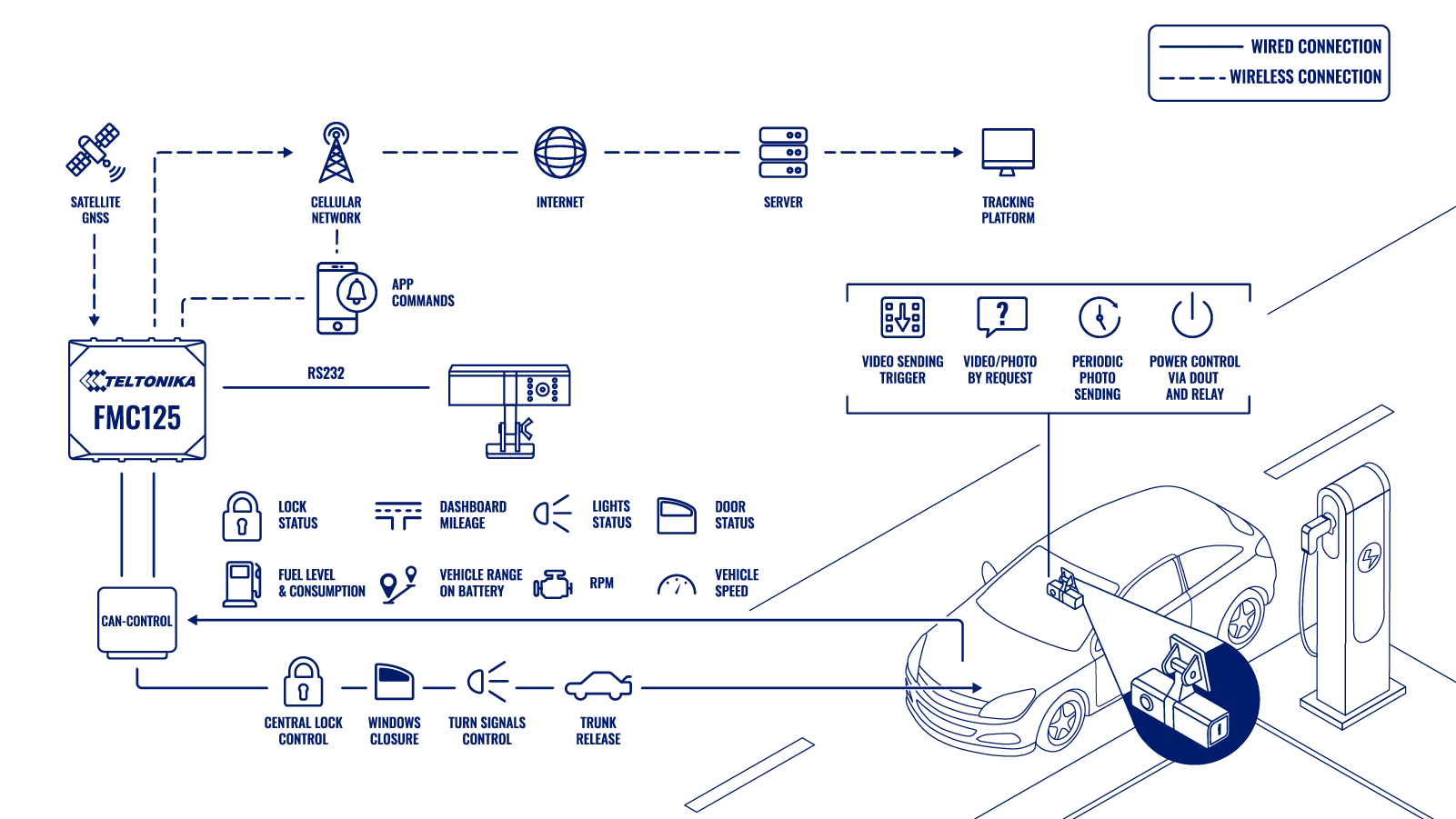
The FMC125 is a professional range tracker with LTE Cat 1 and 2G fallback. It sends the car's coordinates in real time and records trips, stops and events such as an impact or harsh braking. What matters for car sharing is that it has interfaces for connecting accessories, including a CAN adapter and a camera.
The CAN-CONTROL adapter connects to the vehicle's CAN bus and works with what is already in the standard electronics, without reflashing the car's control units. It reads more than 100 parameters on over 2100 models: engine revs, speed, fuel or charge level, mileage, dashboard readings, the state of the doors, the boot, the handbrake, the lights. And it can not only read but also control: unlock and lock the central locking, raise the windows, flash the hazard lights.
In practice it looks like this. The customer books a car in the app, walks up and presses the unlock button. The server sends a command to the FMC125, which unlocks the car through CAN-CONTROL. After the trip the system checks that the doors are closed, the windows are up and the lights are off, and only then ends the rental. The operator sees the range on every car and sends those already near empty for refuelling in advance.
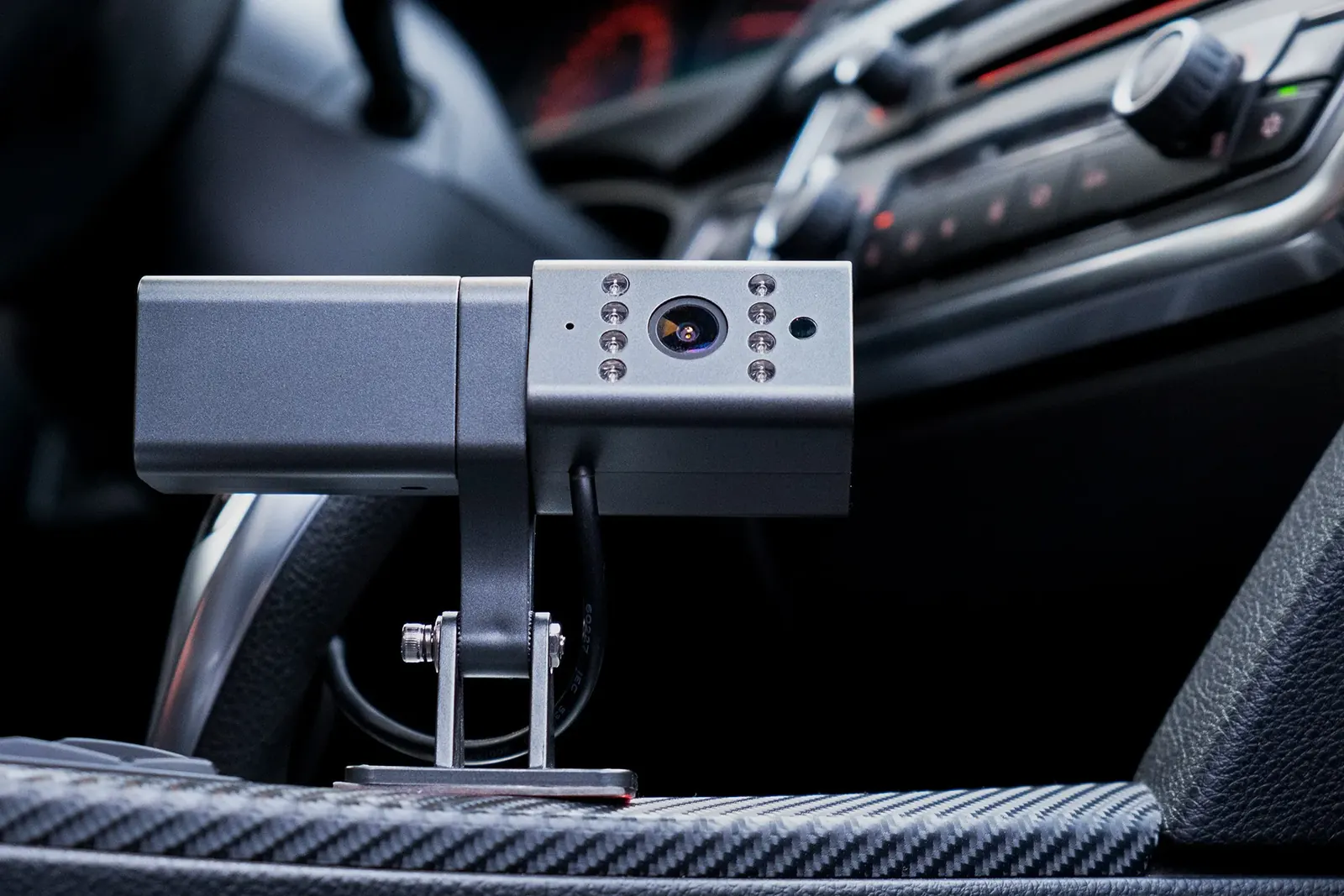
The third device is the DashCam, a camera on the windscreen that films the road ahead. On an accident, or when the panic button is pressed, it saves a clip: 5 seconds before the event and 5 seconds after. Those 10 seconds go to the server automatically. Triggers can be added: speeding, harsh braking, a dangerous manoeuvre. If you need a stretch the camera did not send by itself, you request it with a command over SMS or GPRS — up to 30 seconds of recording with a time stamp.
In continuous recording mode the camera holds up to 72 hours of video on a 64 GB microSD card, and with an update it supports 128 GB as well. If it turns out two days later that the car was knocked in a car park, the recording will still be in memory.
Video also works as prevention. When a renter knows the camera is recording, they drive less wildly. Teltonika cites a study of more than 10,000 accidents: video telematics could have cut the number of accidents involving buses by 35% and those involving heavy lorries by 20%. For car sharing passenger cars there is no direct figure, but the mechanism is the same.
In the monitoring system the operator sees it all together: the fleet map, the status of each car (free, on rental, in service), the fuel level, open doors and video clips tied to events on the track. Investigating an accident starts not with interviewing witnesses but with watching ten seconds of video and the speed at the moment of impact.
The episode all of this is installed for. In the evening a renter ends their trip and leaves the car in a courtyard. In the morning the next customer photographs a dent in the rear wing and refuses to pay. The operator opens the history: the tracker recorded an impact at 23:40, when the car was already standing with no driver, the camera saved a clip, and the recording shows an unrelated van reversing into the courtyard. There is nothing to blame either the first or the second customer for, and the insurer has video and an exact time.
There is a subtlety with immobilisation too. The engine must not be cut while the car is moving, so immobiliser commands are configured to take effect only after the car has stopped and the ignition is off. That protects both against theft and against a car being locked up accidentally out on the road because of a bug in the app.
Who issues commands and where that is visible. Unlocking and locking against a booking go from the server automatically, while manual operator commands are available only to duty staff with separate rights. Every command stays in the history with its time, its user and the tracker's response. If the car has not confirmed that it carried the command out — because it is standing in an underground car park with no coverage, for instance — the customer needs a fallback: a call to support and a repeat command once the car is back in coverage.
Where protection ends. Coordinates and immobilisation after a stop help to find the car and stop it being started, but they do not bring it back by themselves. If the main tracker has been disconnected, a second layer is needed — a hidden backup tracker or an EYE beacon.
On privacy. The solution is designed to work within GDPR and similar personal data laws, but the operator still has to think through video retention settings and how customers are told about the recording, to suit their own country.
What you get
Unlocking without keys
The locks, the windows and the hazard lights are driven by a command from the server through CAN-CONTROL, with no keys to hand out and no trip to the car.
Bus data without modifications
More than 100 parameters on 2100+ models: range, doors, boot, lights and mileage are visible to the operator for every car.
Video of any incident
The DashCam itself sends 10 seconds before and after an impact, and the stretch you need, up to 30 seconds, can be requested with a command.
Protection against staged accidents
The camera recording and the speed data make it possible to see off fraudulent claims and avoid paying for someone else's fault.
Honest handover of the car
Continuous recording of up to 72 hours helps work out which rental the damage appeared in, rather than pinning it on the next customer.
Less wild driving
A renter who knows about the camera behaves more carefully on the road, and the operator sees dangerous manoeuvres as events.
Why this solution
The Teltonika car sharing solution already runs at partners in several countries and is refined on their feedback. There is no home-made electronics in it: the tracker, the CAN adapter and the camera are made by one company and configured in one Configurator, so when something goes wrong you do not have to work out whose module is to blame.
What matters about CAN-CONTROL is that it supports thousands of models and receives regular updates to its vehicle database. A car sharing fleet is rarely uniform, and being able to connect different makes with the same arrangement saves time on fitting.
The camera is integrated with the tracker, so the video is tied to coordinates and to an event. There is no need for a separate dash camera with its own cloud and its own subscription.
For a small rental business it is also a question of budget: you can start the set with the tracker and the CAN adapter and add cameras later, only on the cars that end up in disputes more often. Which cars those are is best shown by the incident statistics from the first few months of operation.
How this works in Azerbaijan. Car sharing in Baku is still less developed than in neighbouring countries, but daily car hire, tourist rentals and corporate car pools in the capital and on Absheron face the same questions: damage between rentals, disputes after an accident, cars not returned on time, trips outside the permitted area. In summer tourist rentals head en masse to Gabala, Sheki and Guba, and the operator needs to see where the car is and what condition it is in. What to allow for: CAN-CONTROL has to be checked for compatibility with the specific models in the fleet, and the camera for how readable the recording is in bright summer sun through the windscreen. Video retention and telling the customer about the recording are best written into the rental agreement. GPS.az selects the equipment to suit the models in the fleet, carries out the fitting and configures events, video and remote commands on the Wialon platform.
Related case studies
Related rollouts and equipment
Questions about the “Car sharing: tracker, CAN-CONTROL and a camera” scenario
Request a call
A specialist will call back and match a solution to your fleet and your task.